What are the different types of Pilates equipment?
Pilates is much more than just a mat workout. Its true power and versatility often come from the ingenious equipment—known as the Apparatus—designed by Joseph Pilates himself. These machines were not meant to replace mat work but to help practitioners better feel connections within the body, understand balance and center of gravity, and ultimately perform better on the mat.
The Pilates equipment system can be broadly divided into Core Studio Equipment, Supportive Medium-Sized Apparatus, and Small Props. Here is a detailed introduction.
I. The Five Core Studio Apparatus
These are the "heavy hitters" of any Pilates studio and are the most iconic pieces invented by Joseph Pilates.
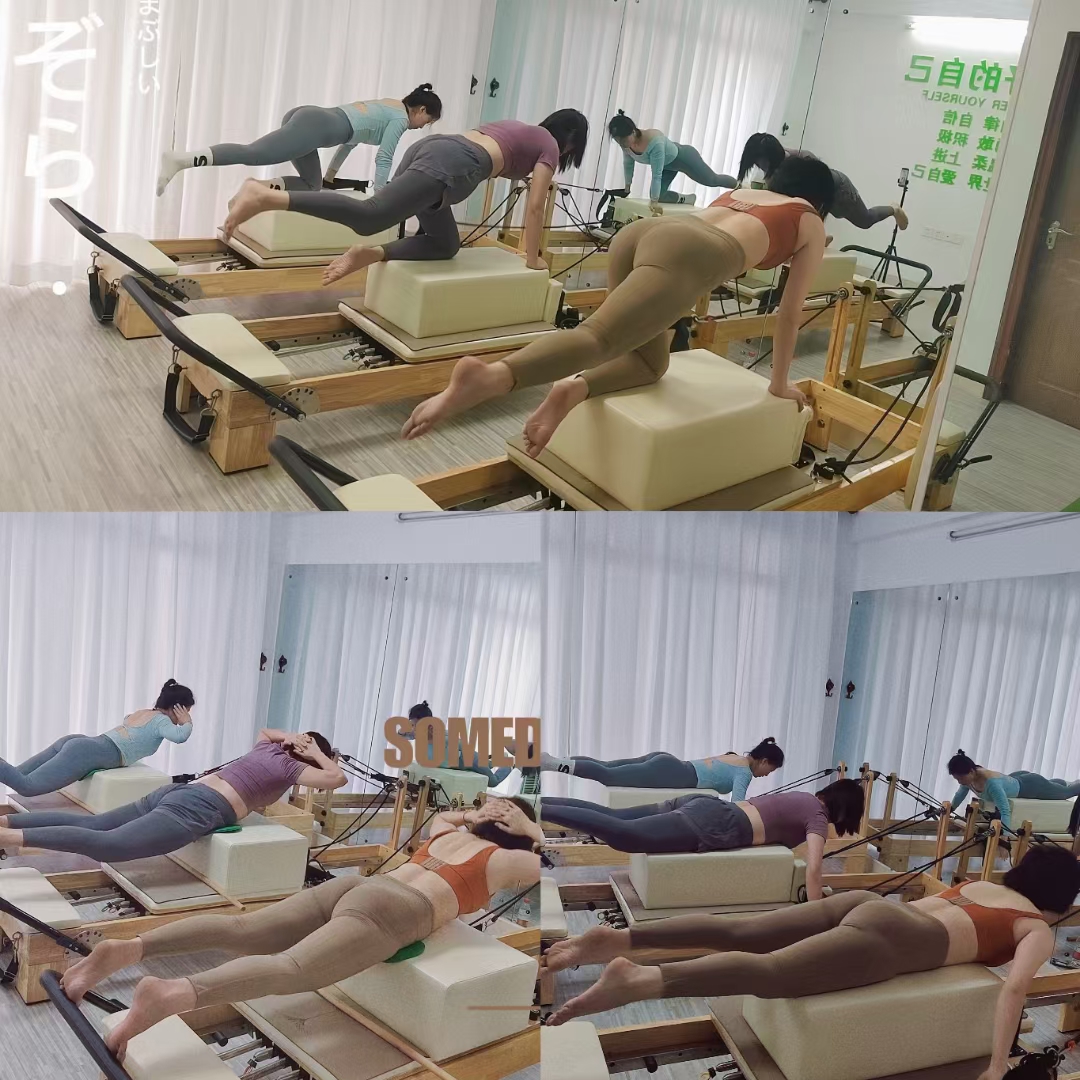
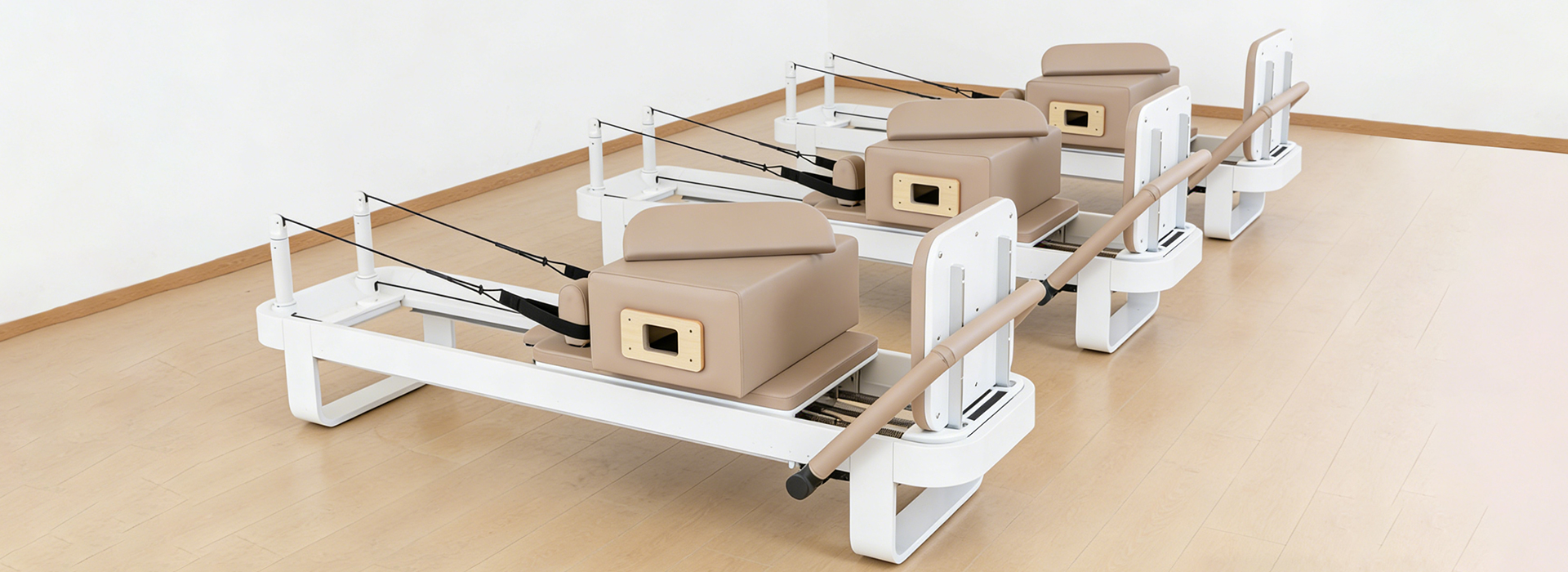
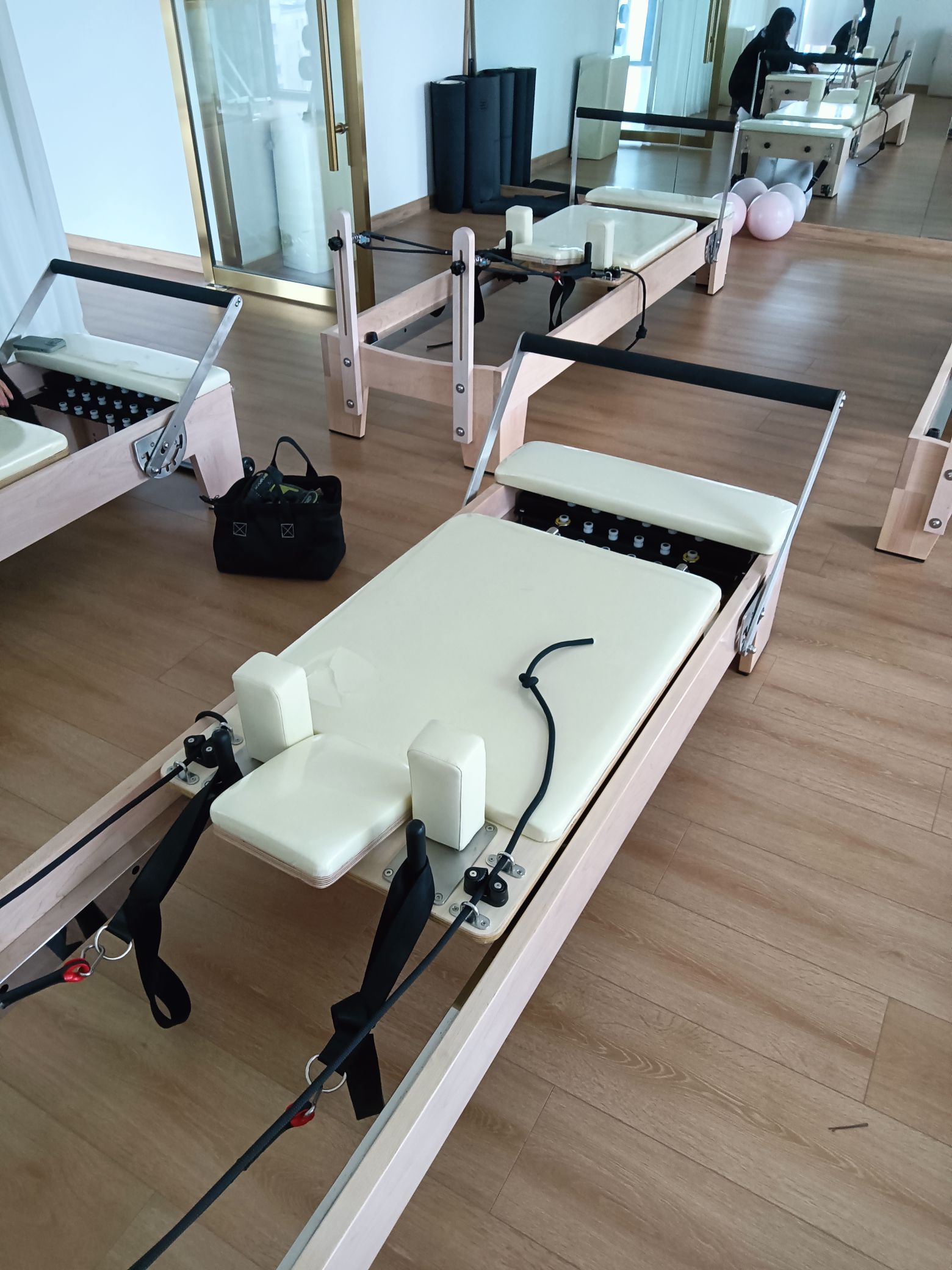
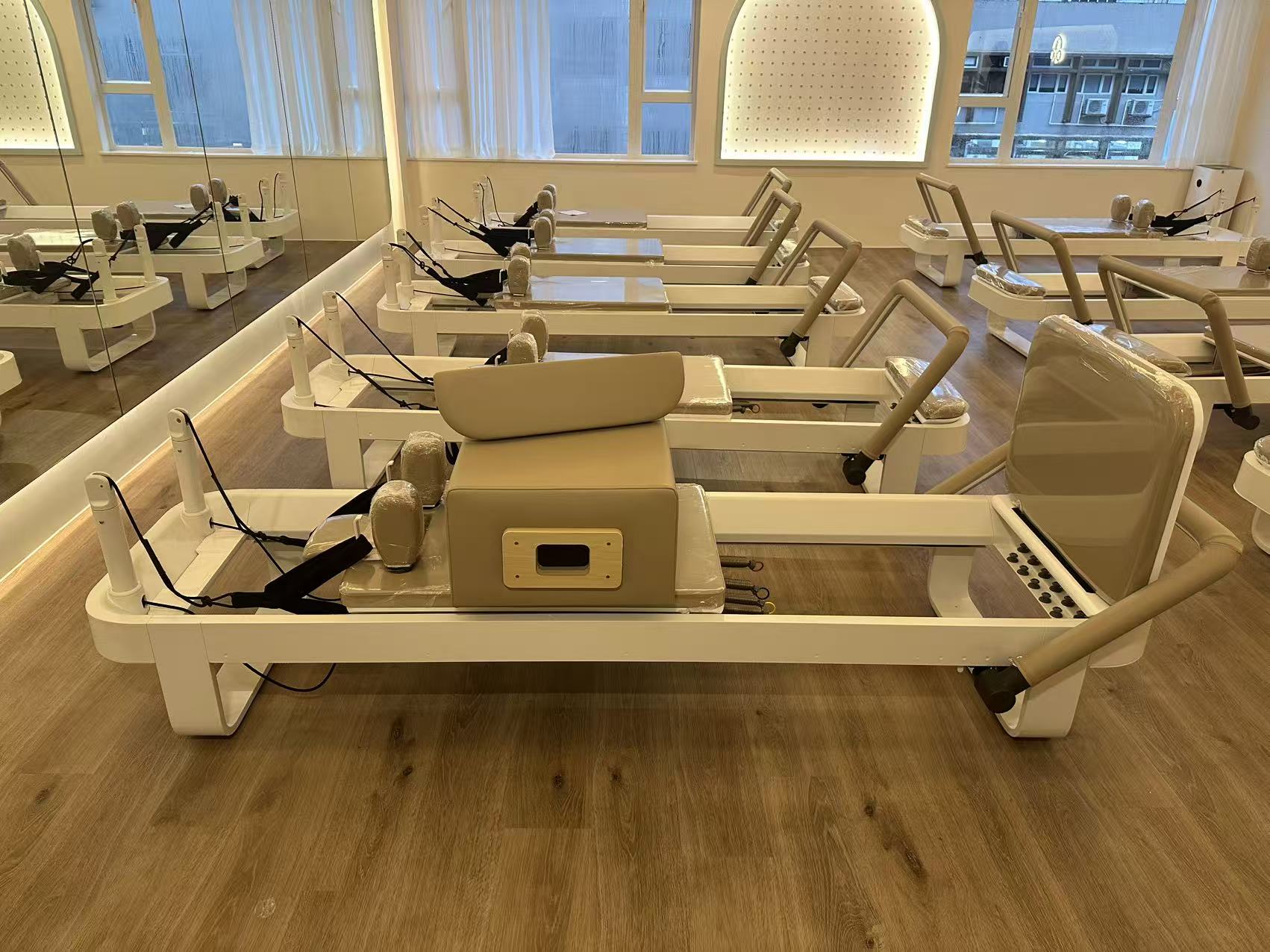
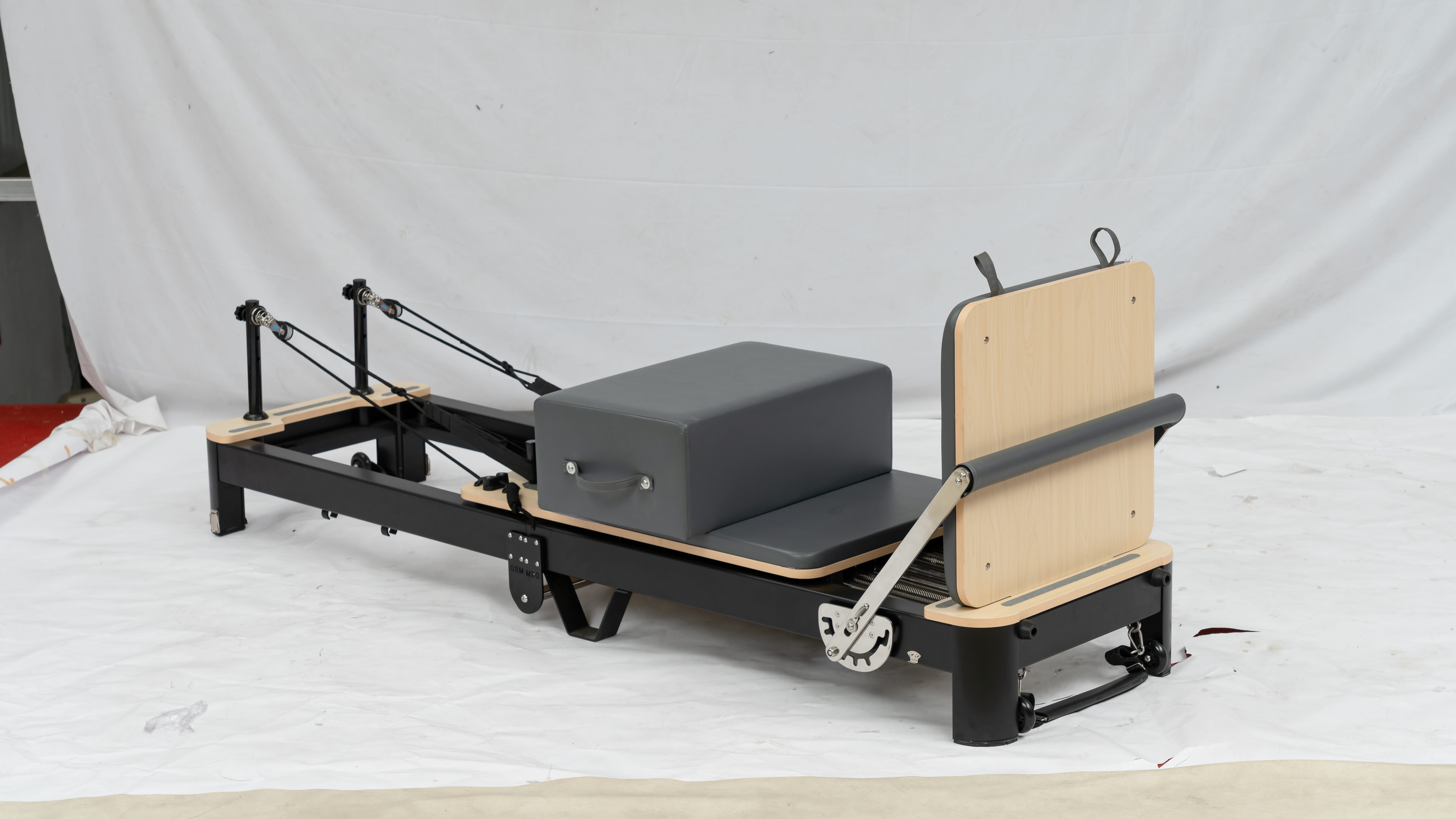
- The Reformer
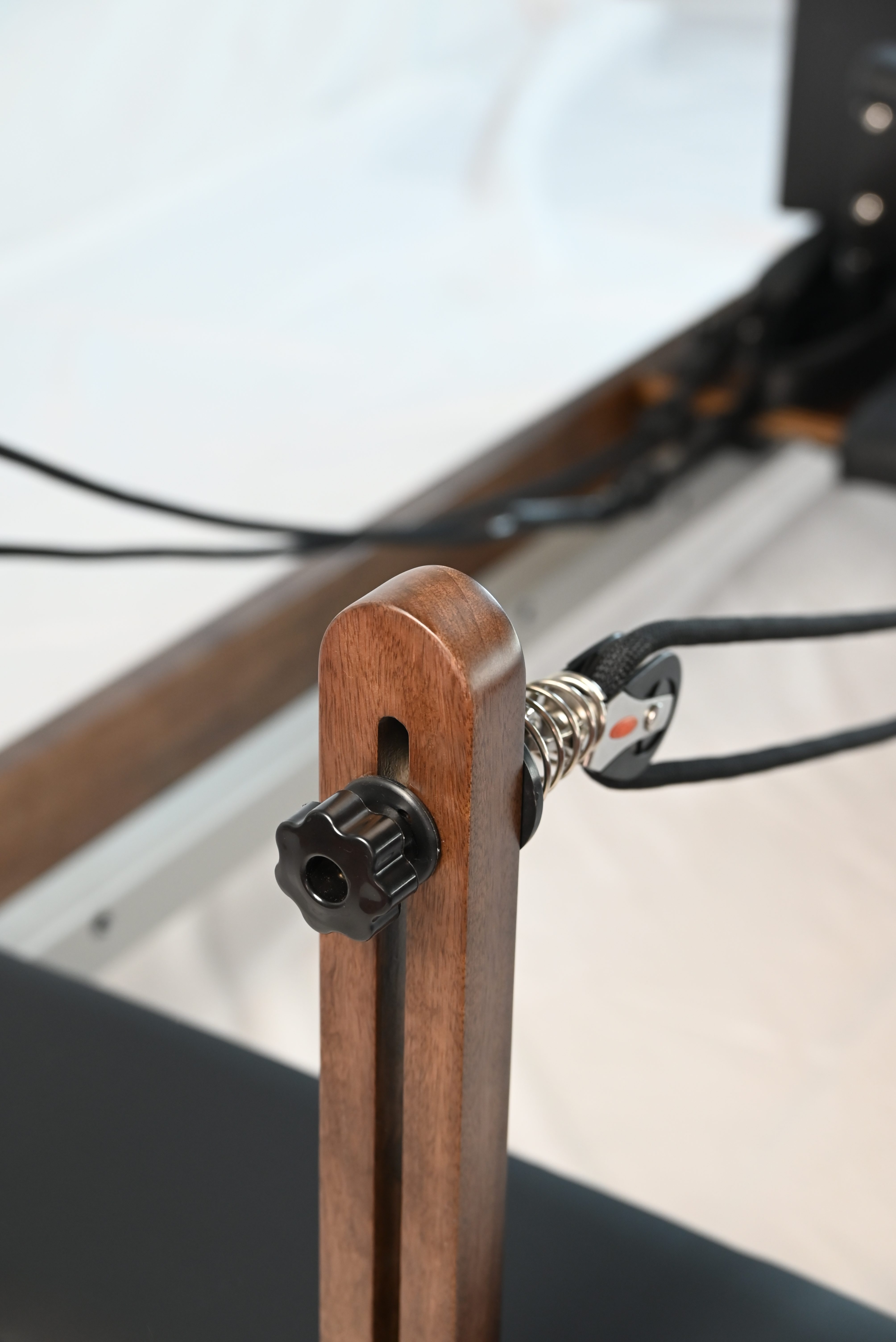
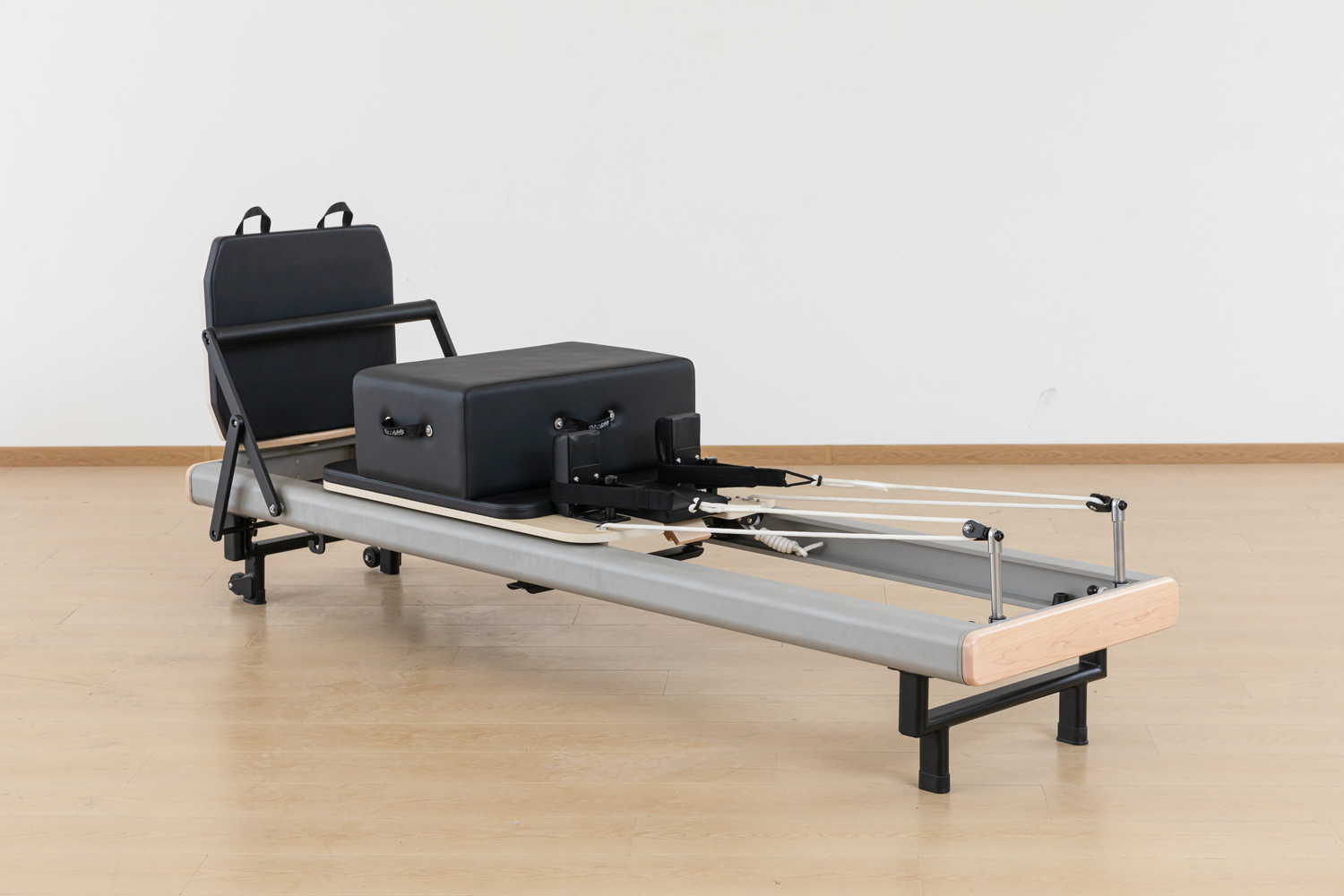
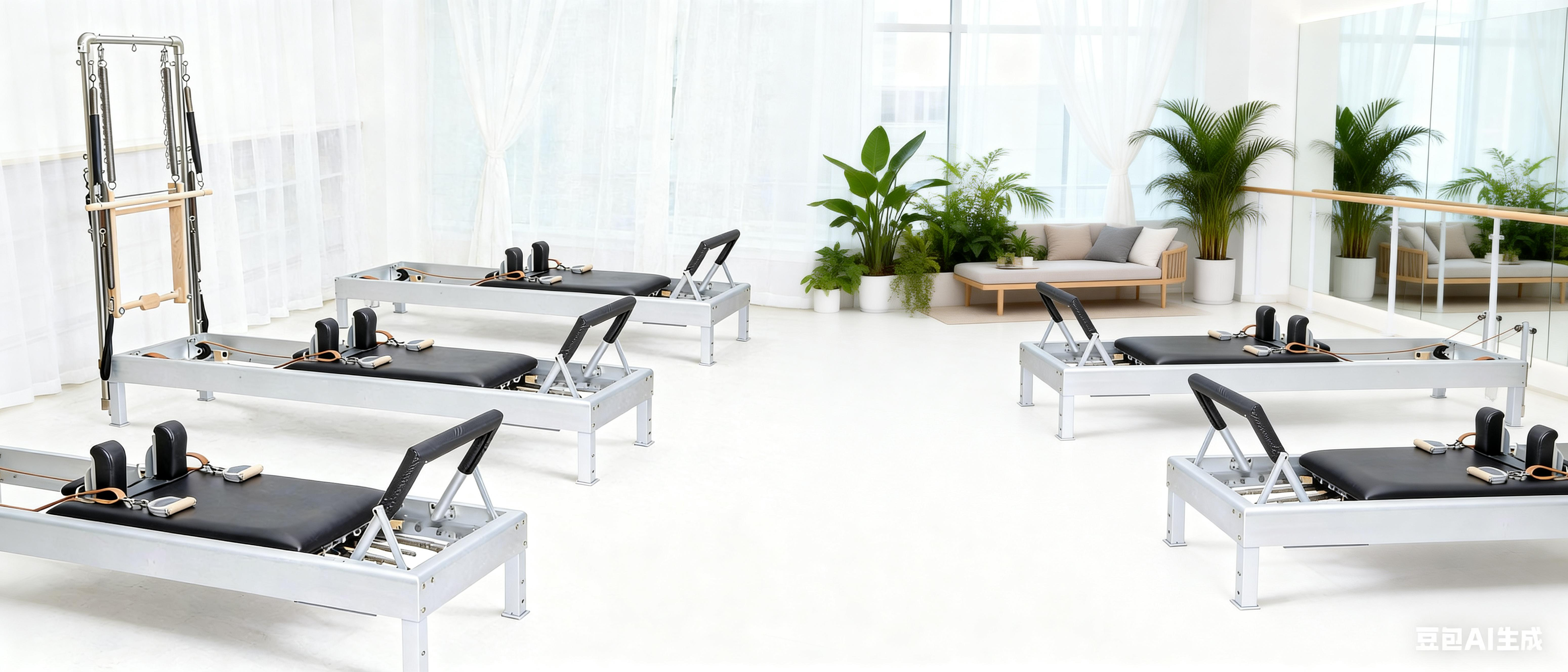
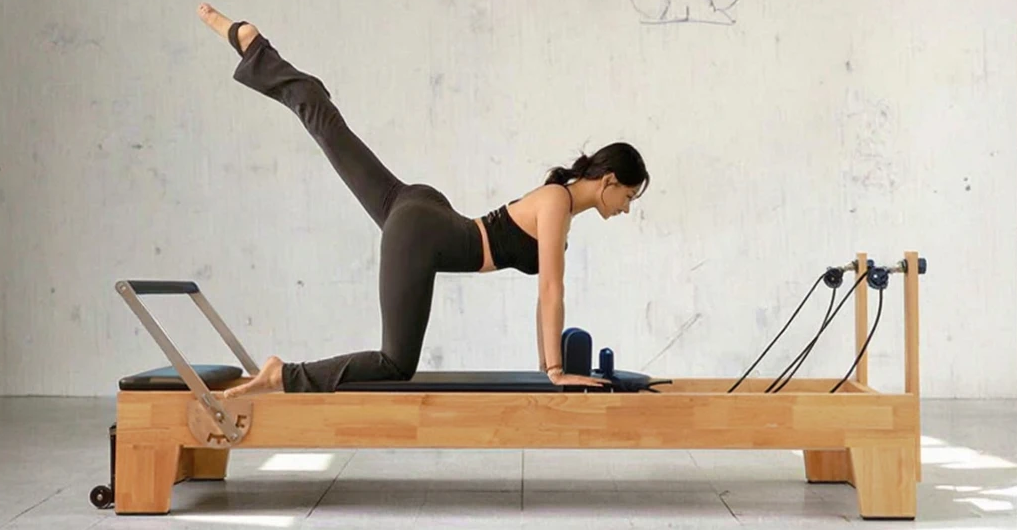
This is arguably the most iconic and widely used piece of Pilates equipment. It looks like a bed with a sliding carriage, equipped with springs, straps, ropes, a footbar, and shoulder rests.
·Features: By adjusting the tension of the springs, you can perform over 500 different exercises. It provides a full-body workout, targeting deep stabilizing muscles. It is excellent for both strengthening and rehabilitation, improving balance and coordination.
·Target Users: Suitable for everyone, from beginners to elite athletes.
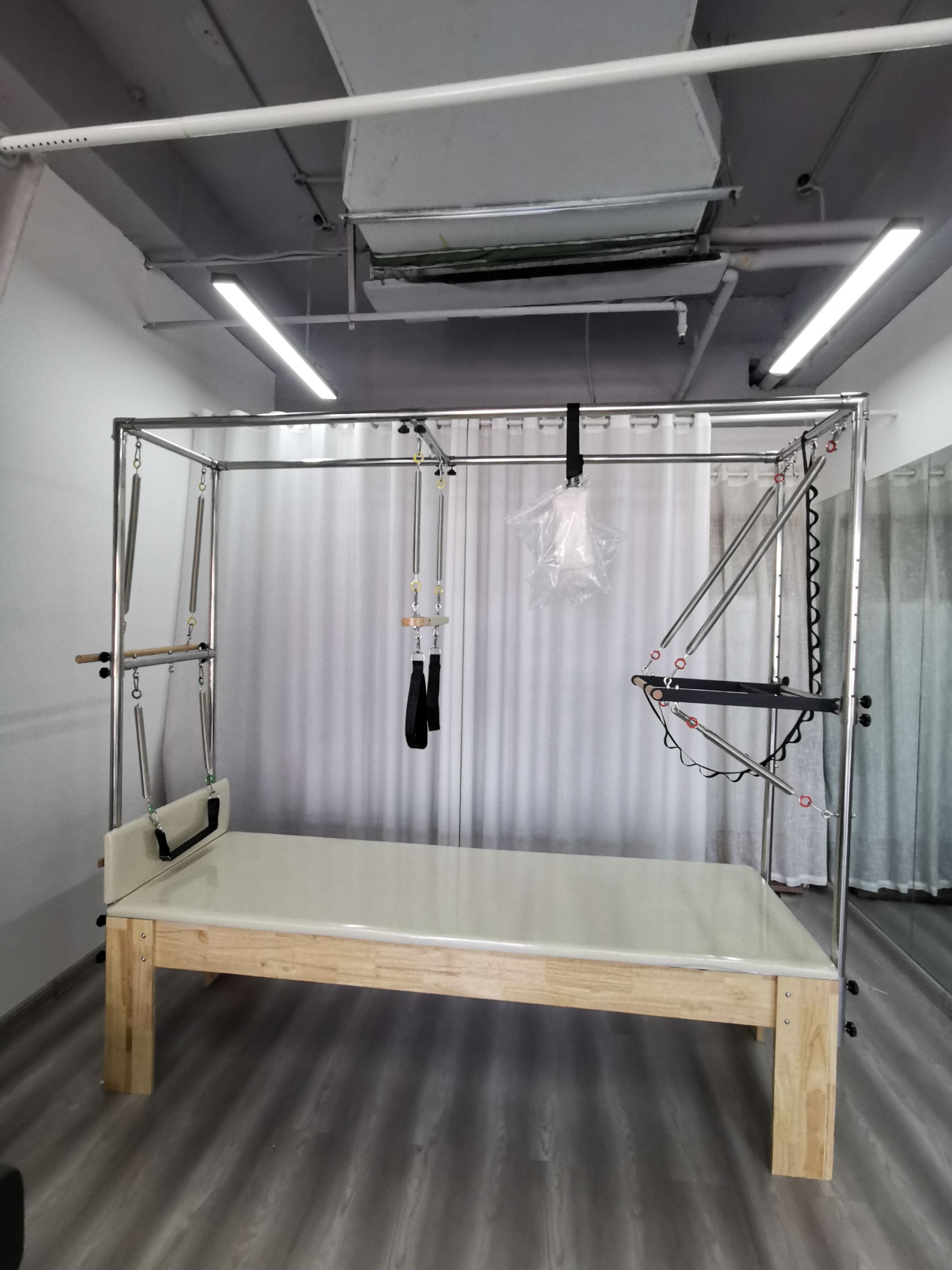
- The Cadillac (or Trapeze Table)
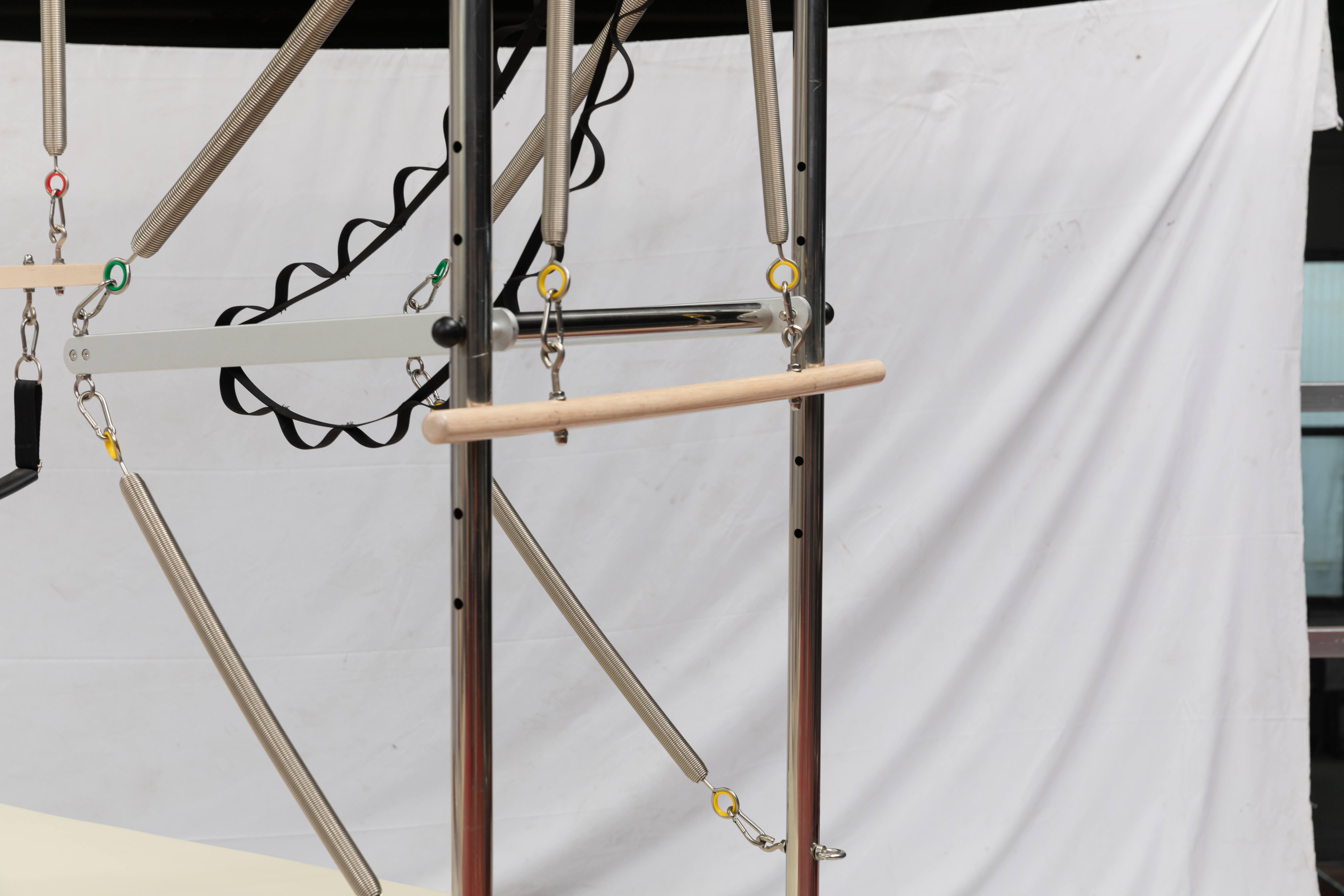
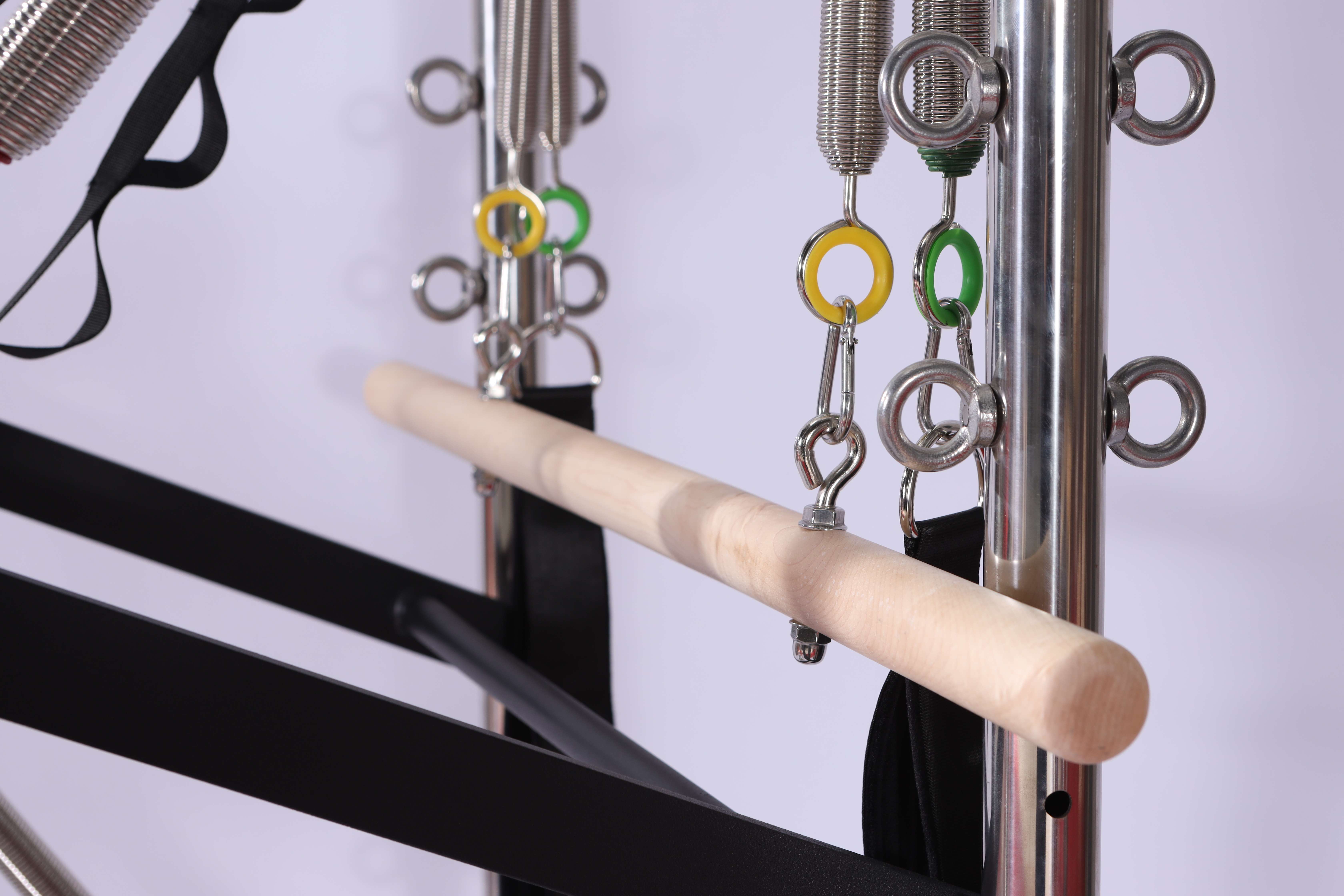
This is the "giant" of the Pilates studio, offering immense functionality. It consists of a raised platform surrounded by a metal frame, with an overhead trapeze, roll-down bar, and various springs and hanging loops.
·Features: Think of it as a 3D training cage. The combinations of different attachments allow for endless exercise variations. It’s perfect for stretching, strengthening, and postural alignment. Many rehabilitative exercises are performed on this apparatus.
·Unique Benefit: It effectively improves breathing patterns, core control, balance, and coordination.
- The Wunda Chair (or Pilates Chair)
It looks like a small bench or box with a pedal on one side, attached to the frame with springs. Removable wooden handles often add to its versatility.
·Features: It is a powerhouse for challenging balance, stability, and strength. Because you are often sitting or standing, it requires greater core control, serving as a natural progression from Reformer work. It is particularly effective for upper and lower body conditioning and hip/knee rehabilitation.
·Target Users: Its compact size also makes it a favorite for home studios.
- The Ladder Barrel
This apparatus features a small wooden ladder on one side and a curved barrel on the other. The base can be adjusted to change the distance between them, accommodating different heights.
·Features: It focuses on spinal flexibility and stretching. You can perform exercises standing, sitting, kneeling, or straddling the barrel, using the ladder for support and leverage. It effectively relieves muscle stiffness and improves spinal mobility.
·Ease of Use: Compared to other apparatus, the Ladder Barrel is relatively beginner-friendly.
- The Spine Corrector (or ARC)
This is the smallest and most portable of the five core apparatus. It consists of two curved surfaces and is often made of wood or foam.
·Features: As the name suggests, it's designed to align and mobilize the spine. The smaller curve can stabilize the pelvis, while the larger curve facilitates flexion, extension, and rotation of the spine. It helps correct postural issues like kyphosis and scoliosis.
·Versatility: It can be used alone or placed on top of a mat, Reformer, or Cadillac for combined exercises, making it an excellent tool for home practice.
II. Essential Supplementary Equipment and Small Props
In addition to the "big five," many "supporting actors" play a crucial role in a well-rounded Pilates practice.
·Magic Circle (Pilates Ring) : A flexible ring with padded handles. It is used to squeeze between the limbs, providing gentle resistance. It is especially effective for targeting the inner thighs, arms, and chest.
·Foot Corrector: A small device used to correct foot issues like fallen arches. By improving foot mechanics, it positively impacts the alignment of the entire body.
·Arc Barrel: A smaller, hump-shaped barrel. It supports the spine for various stretching and strengthening exercises and is particularly beneficial for those with lumbar spine issues.
·Resistance Bands: The most portable tool. They can be used on their own or as an accessory to larger apparatus to add assistance or resistance.
·Other Props: This category also includes arm chairs, spine corrector cushions, exercise balls, foam rollers, and hand weights, all of which add variety and precision to the workout