Pilates Studio Equipment Procurement Guide
Opening a professional Pilates studio requires strategic equipment selection — it's the cornerstone of class quality, client experience, and business profitability. With countless brands and models on the market, from core apparatus to accessories, every decision — materials, craftsmanship, after-sales support — impacts long-term operations. This guide, informed by 2026 market trends, systematically outlines the logic of equipment procurement, core configuration plans, and pitfalls to avoid, helping studio owners make rational decisions.
I. The Logic Behind Equipment Procurement: Three Questions First
Before browsing catalogs or contacting suppliers, complete this self-assessment — it's the first defense against "impulse buying."
1. Studio Positioning & Client Profile
Equipment is your studio's "brand calling card," directly influencing client perception and willingness to pay.
Community Studio:Practical, durable, cost-effective.Suitable for Low-Mid budgets
Boutique Private Studio:Premium feel, quietness, brand prestige.Suitable for Mid-High budgets
Luxury High-End Studio:Top brands, design aesthetics, premium experience.Suitable for High budgets
Key Question: If you cut a high-cost apparatus, could you achieve 80% of the training effect through props? How willing are clients to pay for "equipment premium"?
2. Space Constraints & Layout
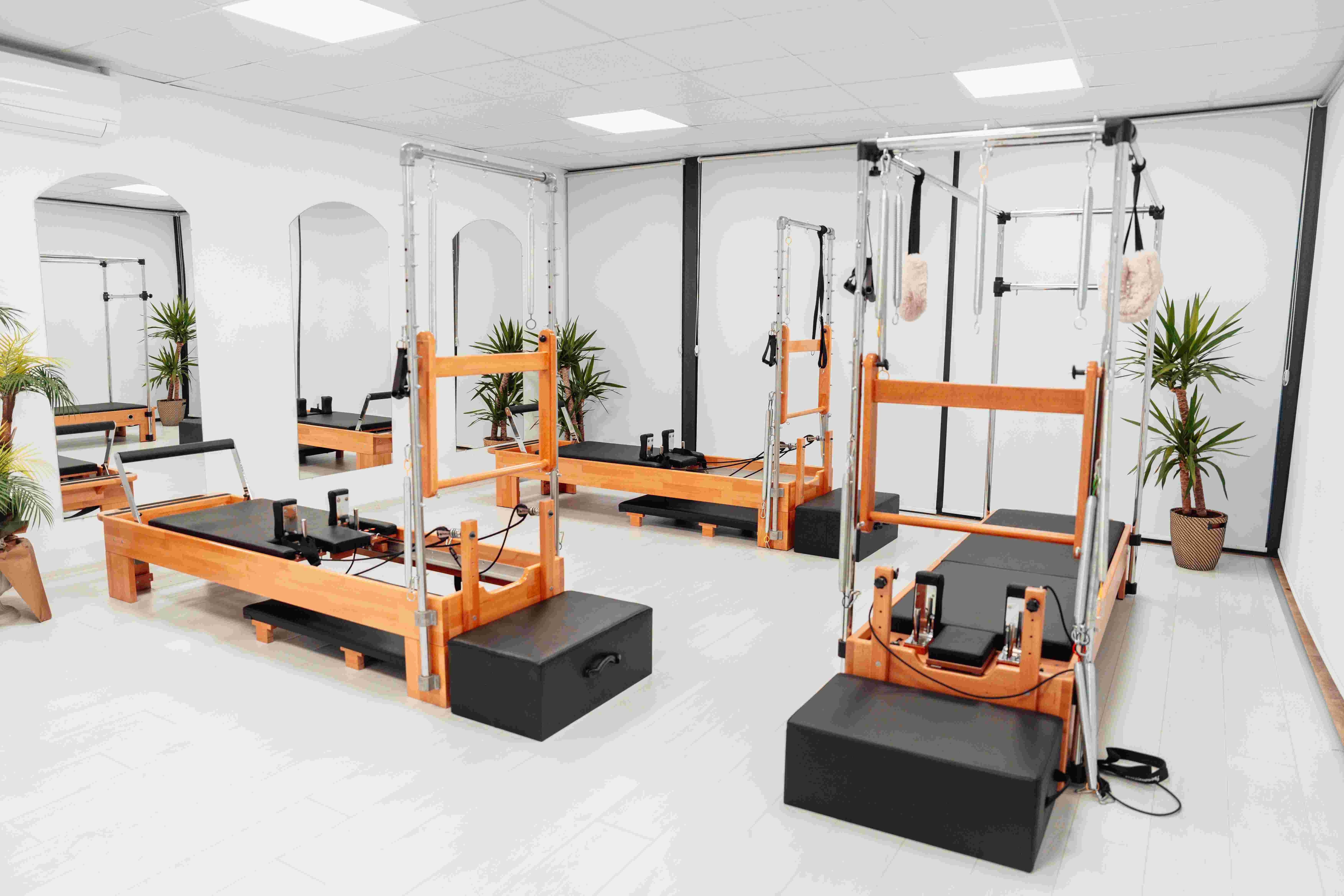
Pilates equipment is large — space adaptability is a hard constraint. Reformers are approximately 240-244cm long; commercial use requires at least 20㎡ of activity space per unit. The Cadillac requires at least 4㎡ of vertical activity space.
Space Allocation Reference: Equipment area, training pathways, and prop storage should be allocated in a ratio of roughly 1:1.5:0.5.
3. Budget Composition & Payback Period
Equipment investment shouldn't be viewed as just "unit price" — break it down: equipment cost, freight, installation, spare parts, training, etc. Allocate 4-6 weeks for the procurement cycle, allowing time for supplier due diligence and sample testing.
Reference Formula: Equipment investment ≈ cost per class × expected payback period.
II. Core Apparatus Configuration Plans
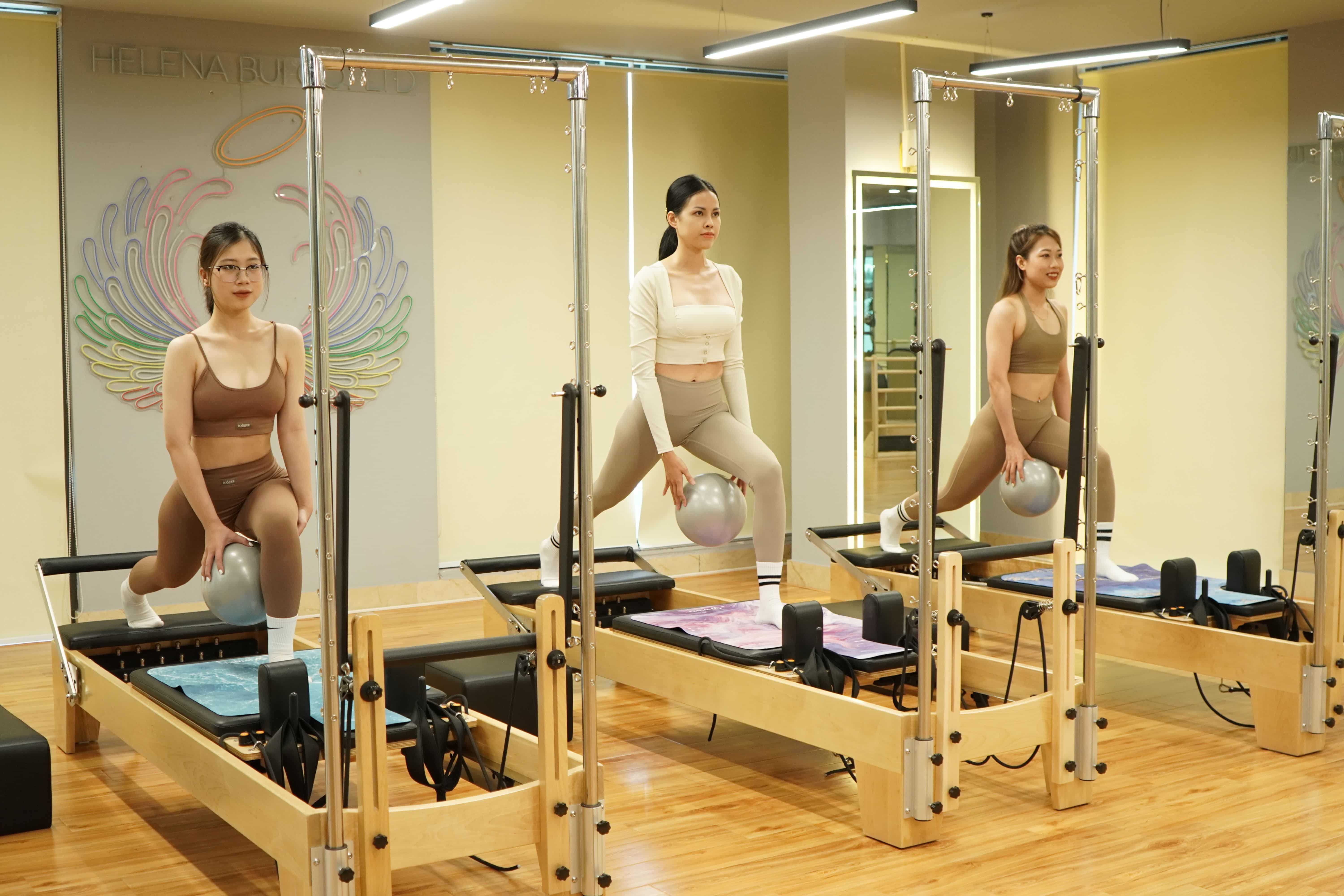
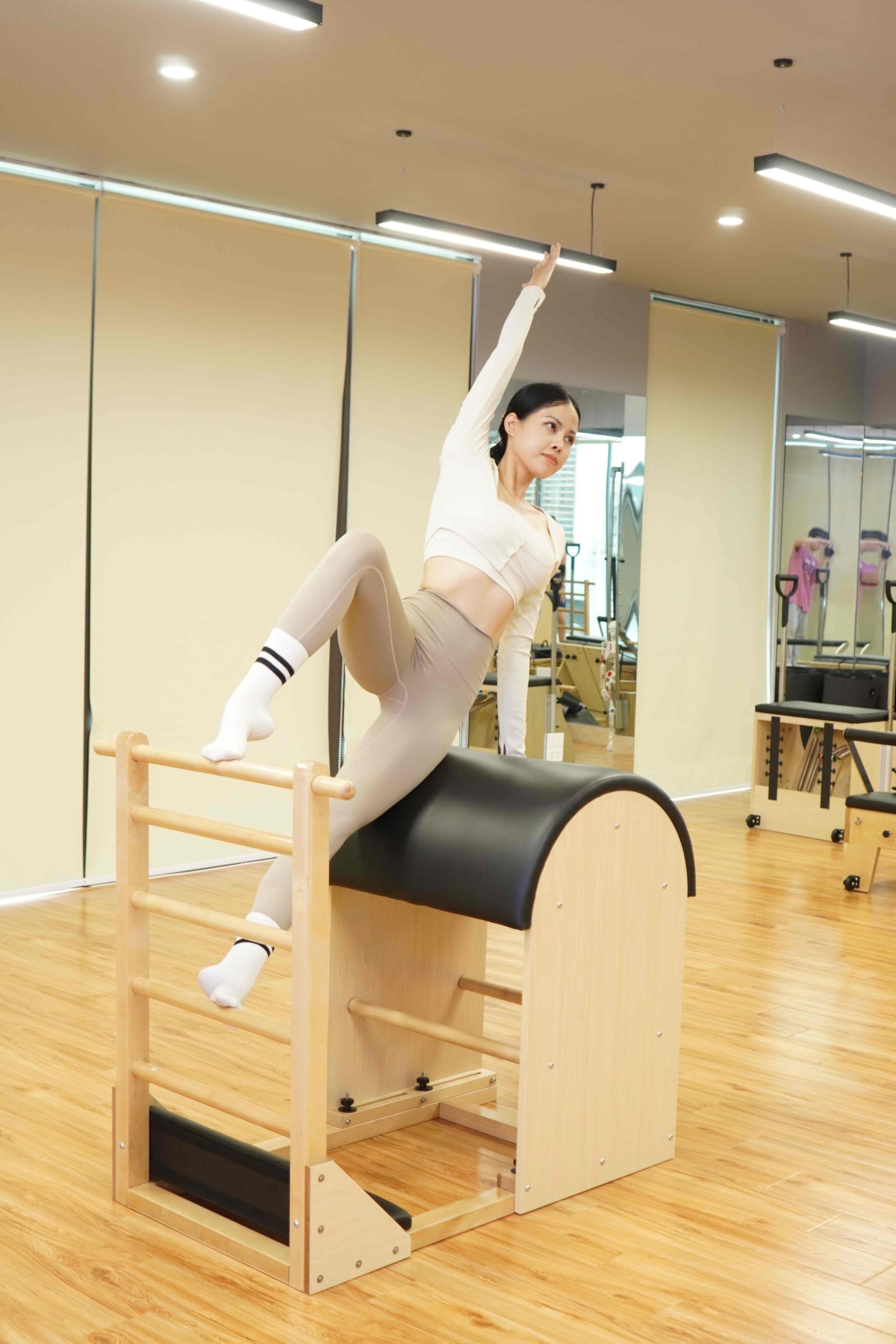
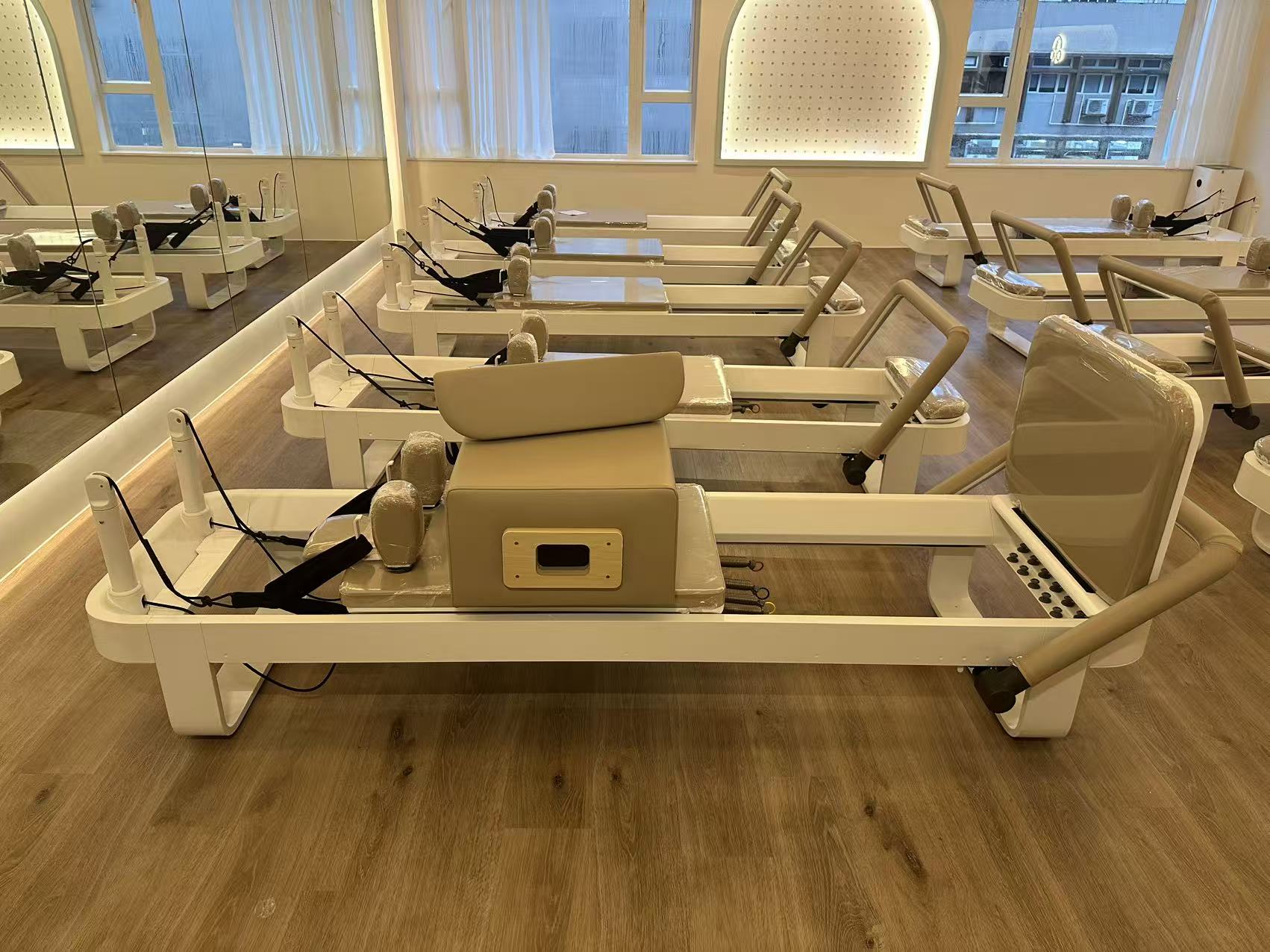
Pilates core apparatus includes the Reformer, Cadillac (Trapeze Table), Wunda Chair, Ladder Barrel, and Spine Corrector. Configuration logic varies by studio type:
Boutique Private Studio (80-100㎡)
·Reformer-3 units,Core equipment — private sessions and small-group classes
·Wunda Chair-1 unit,Lower body sculpting and muscle balance
·Spine Corrector-2 units,Spinal mobility and rehabilitation support
Mid-Size Comprehensive Studio (150-200㎡)
·Reformer-5 units,Core equipment — private sessions and small-group classes
·Cadillac-1 unit,Primary equipment — private, small-group, and group classes
·Wunda Chair-1 unit,Targeted strength training
·Ladder Barrel-2 unitsm,Spinal mobility and postural correction
High-Volume Group Studio
·Reformer (entry commercial):8-10 units,High-frequency group use
·Wunda Chair:2-3 units,Supplementary strength training
·Spine Corrector:4-6 units,Warm-up and cool-down support
Core Logic: Prioritize durability and easy cleaning; control per-unit costs.
III. Key Technical Specifications for Core Equipment
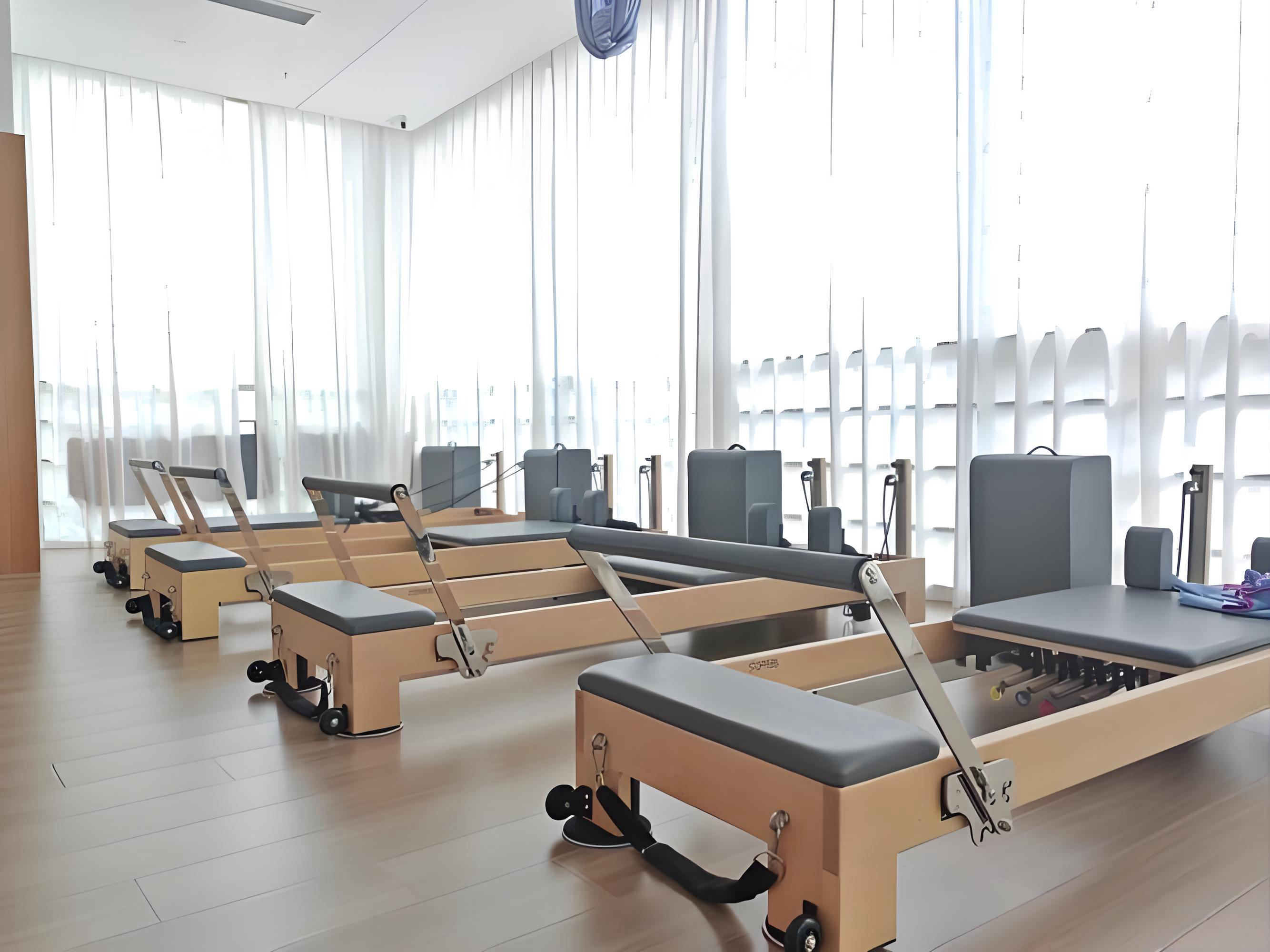
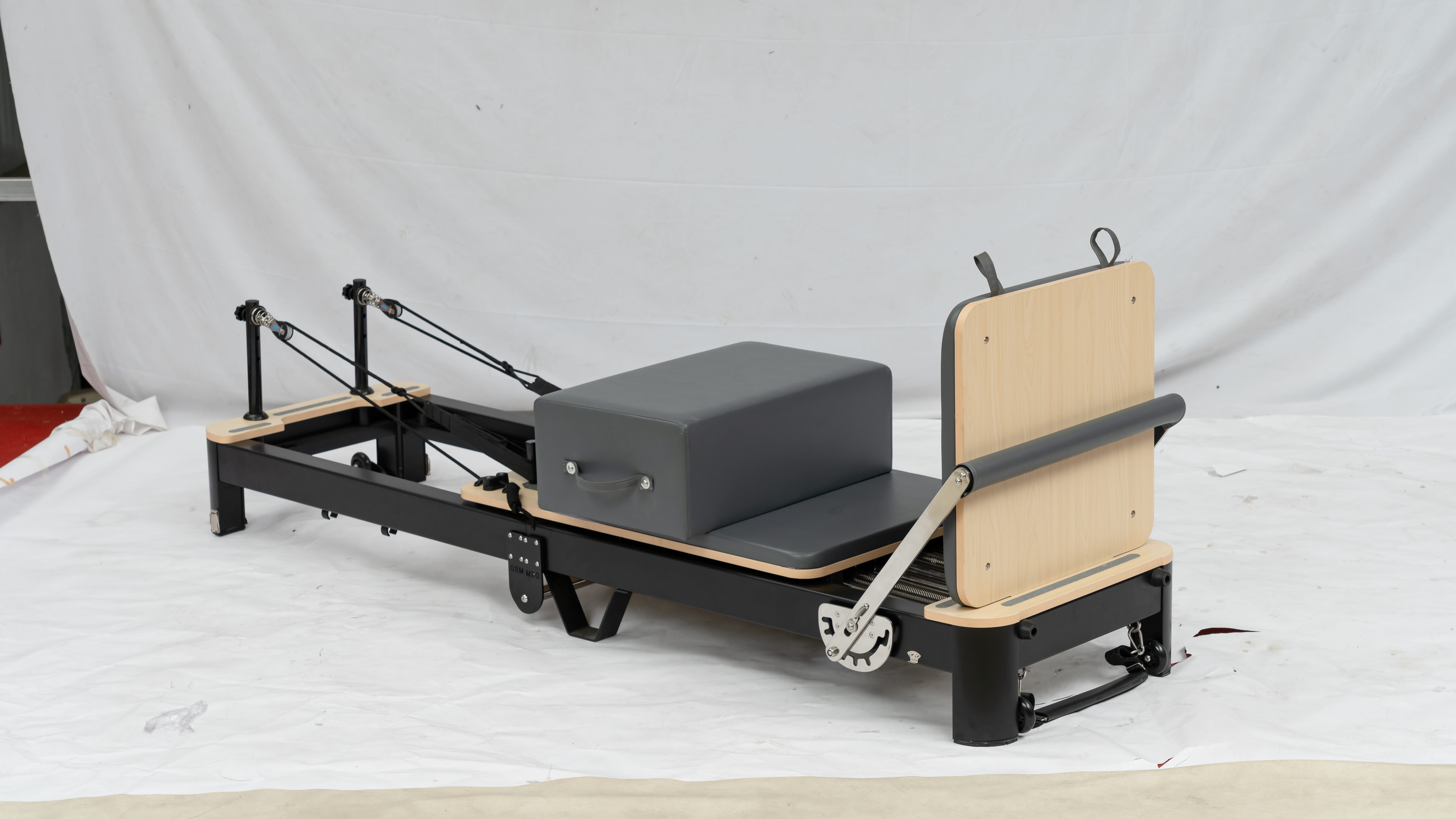
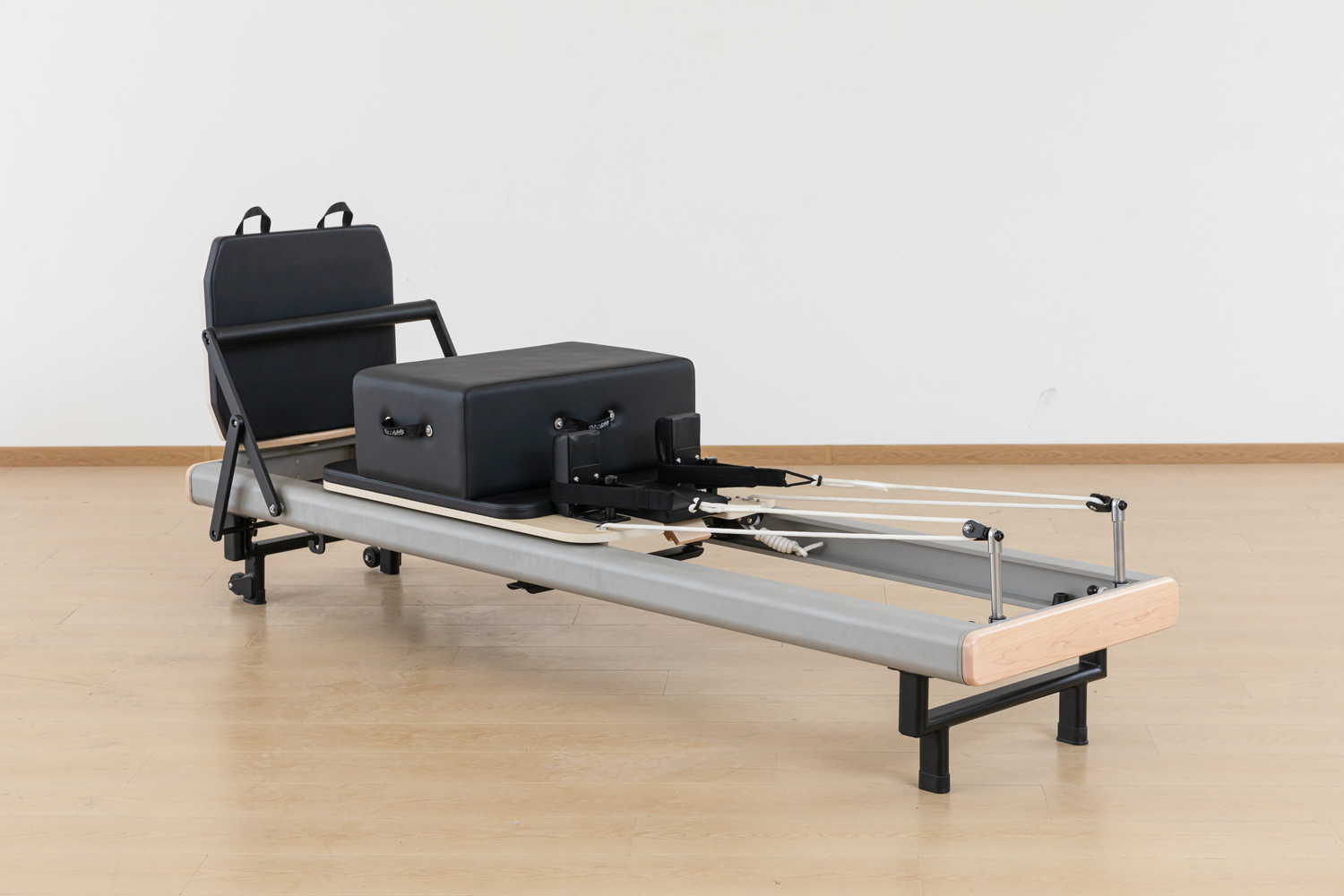
1. Reformer — The Priority Investment
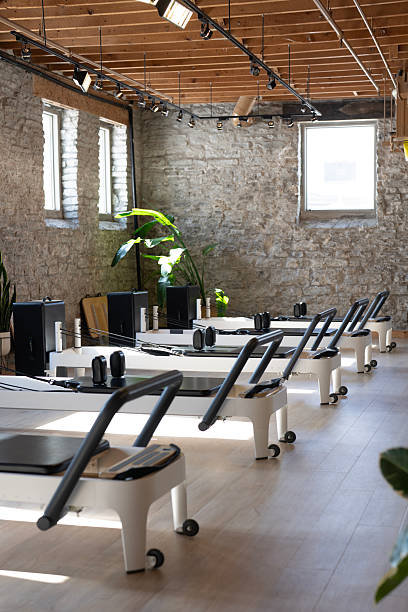
The Reformer is the absolute centerpiece of any Pilates studio and typically the largest single equipment investment. Focus on these dimensions during selection:
Frame Material:
·Metal frame (carbon steel/aluminum): 2026 market trends show 90% of new studios choose metal frames — rising solid wood costs make wood 30% more expensive per unit, with high-frequency use causing cracking and warping
·Commercial recommendation: thickened carbon steel (2mm+) or aluminum alloy, load capacity 200-300kg
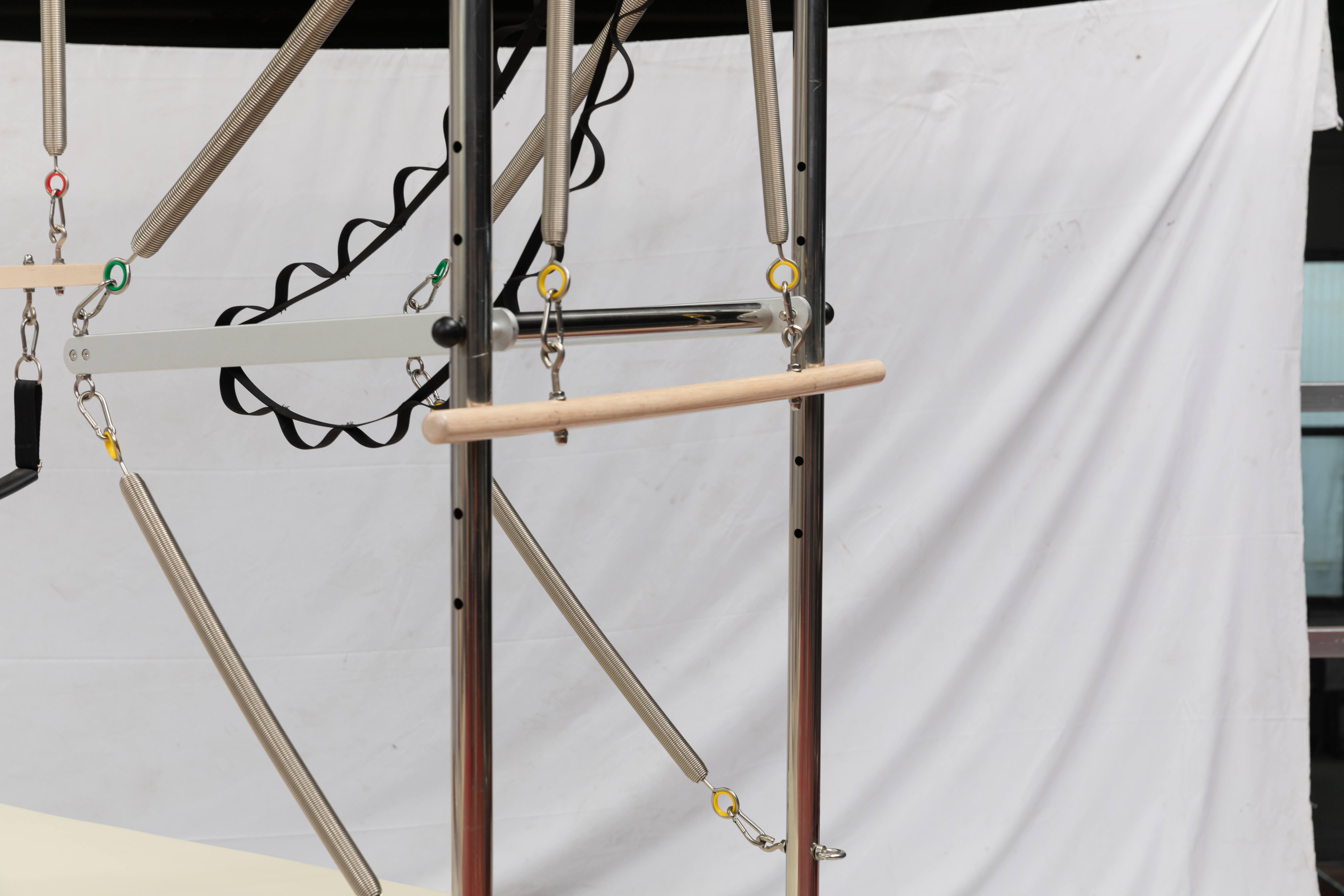
Spring System:
·Prefer German or Japanese imported music wire steel with 800,000-1,000,000 cycle life
·Spring tension consistency directly impacts training effectiveness — it's the "soul" of the Reformer
·Heat treatment at spring hooks is critical for breakage prevention
Carriage System:
·PU wheels with sealed bearings for quiet, smooth operation
·Anodized rails for wear resistance and silent sliding
·Noise under full load (~120kg) should be below 50 dB
Adjustability:
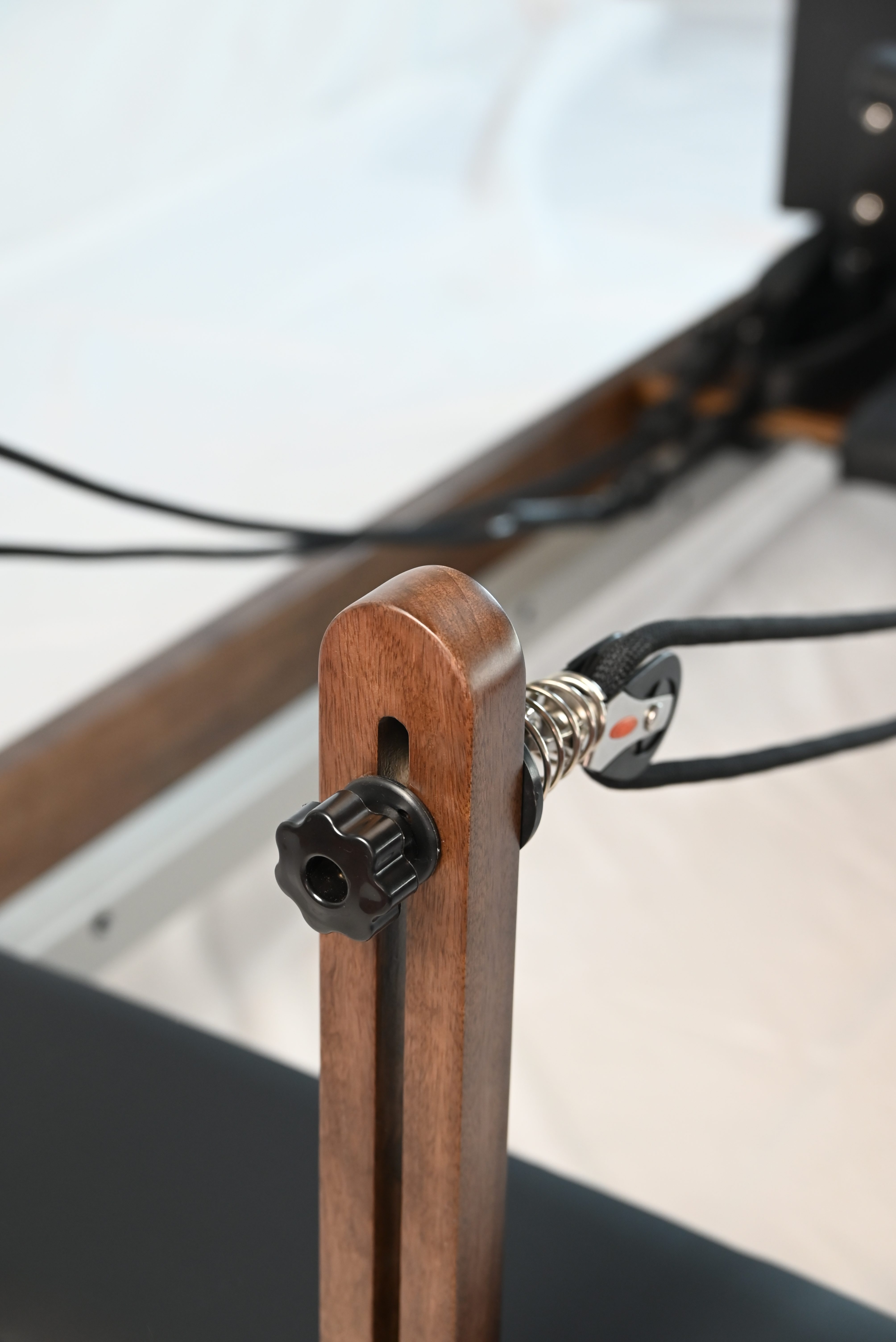
·Spring resistance: 5+ spring combinations, tool-free switching
·Footbar: multiple positions (3-5 settings) for different heights and leg lengths
·Headrest: 3-position adjustable; shoulder rests with secure locking
Carriage Dimensions:
·Length approximately 240-244cm; bed width 58cm+ recommended for tall client comfort
2. Other Apparatus
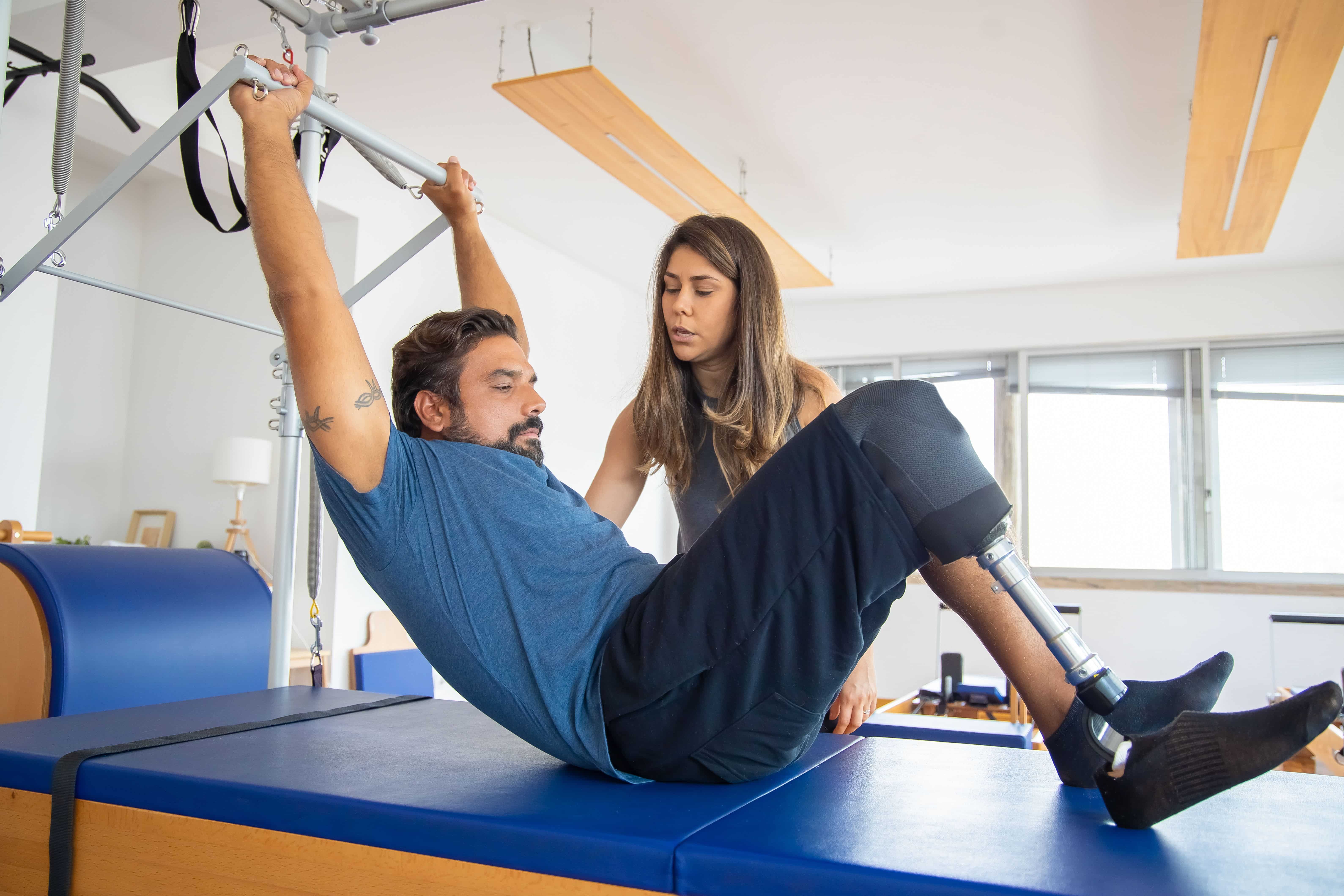
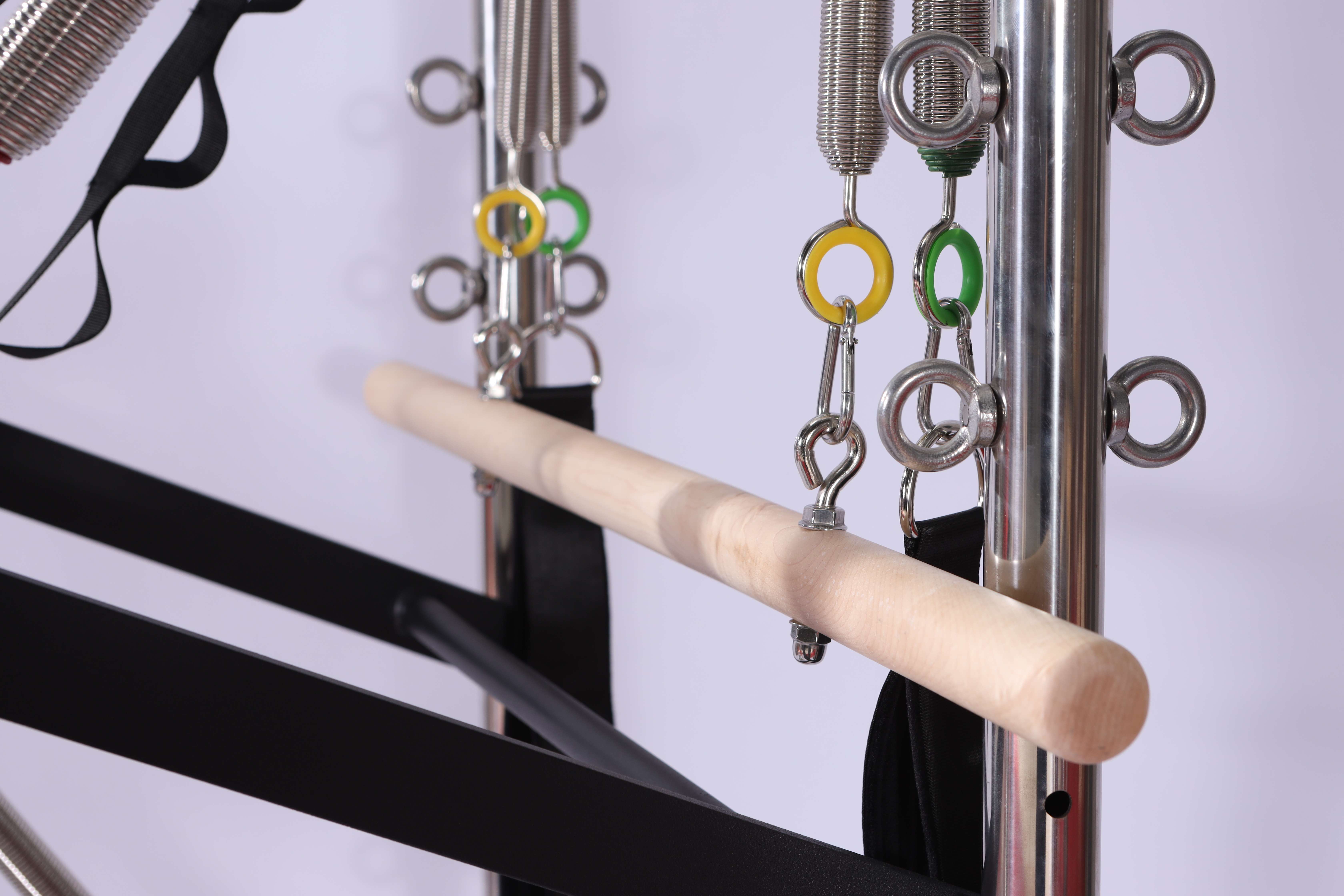
·Cadillac:Steel/aluminum frame; precisely calibrated springs.Suitable for rehabilitation and advanced training.
·Wunda Chair:Split-pedal independent adjustment; ~0.8㎡ footprint.Suitable for rStrength, balance and rehab.
·Ladder Barrel:Beech/birch barrel; smooth burr-free surface. Suitable for Spinal mobility and postural correction.
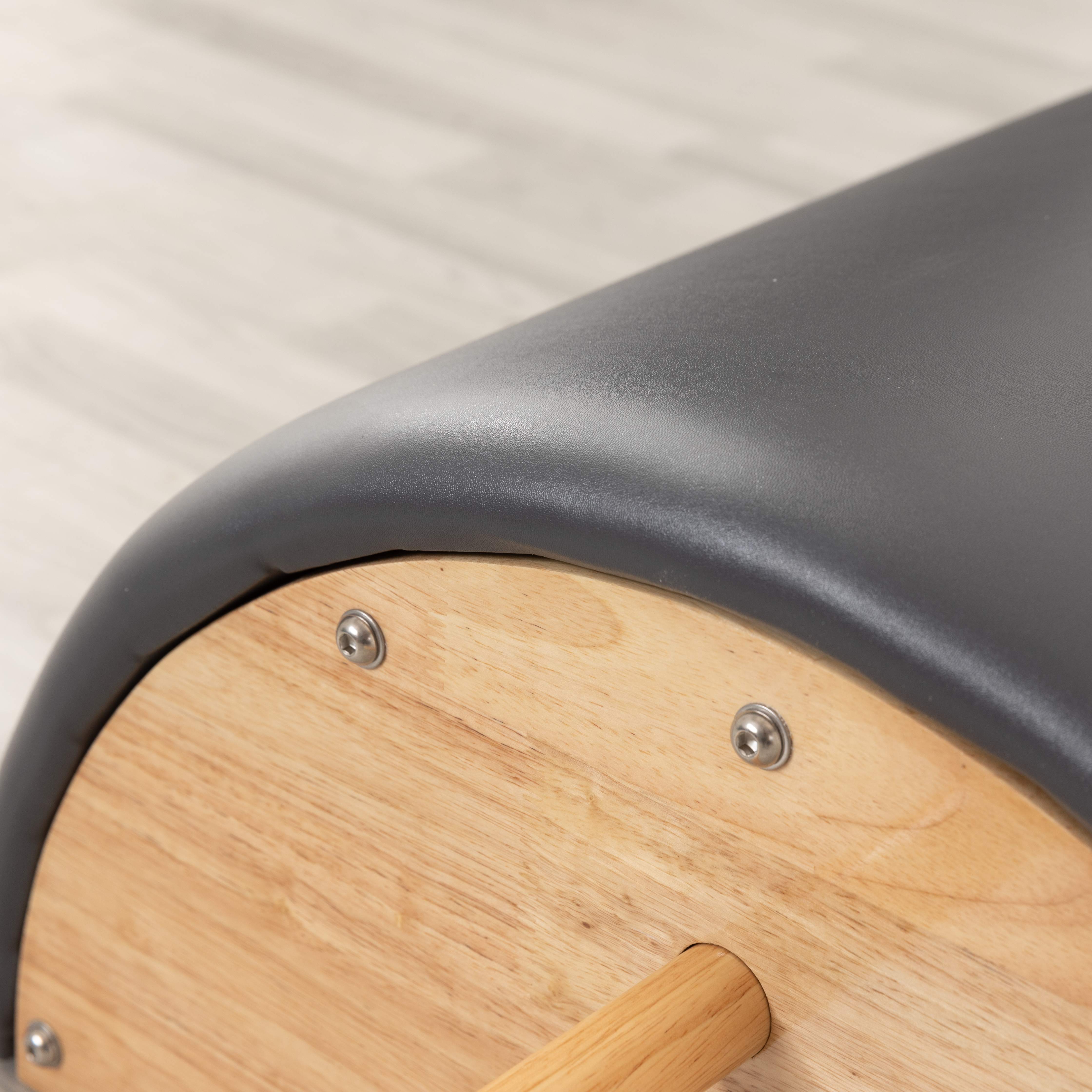
·Spine Corrector:Curve matches natural spine contour; 10-15kg.Suitable for segmental spinal control and rehab.
IV. Essential Accessories & Props
Accessories are critical for class variety and client retention. A quality prop collection empowers instructors to adapt sessions for clients at every level.
Essential Props:
·Magic Circle (Pilates Ring): Gentle resistance for inner thighs, arms, and chest
·Resistance Bands: Portable resistance training
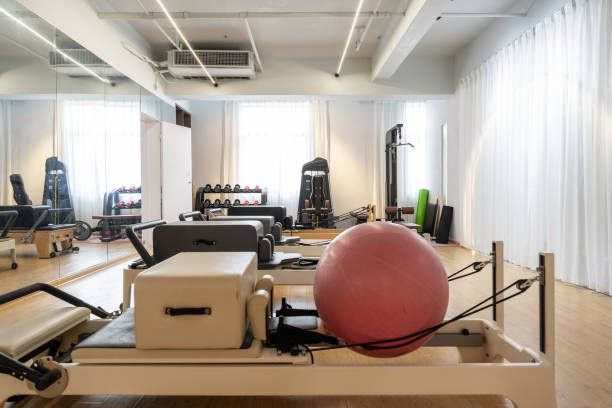
·Small Exercise Ball: Challenges balance, activates deep core muscles
·Foam Roller (Shore 60 hardness): Self-myofascial release
·Jumpboard: Attaches to Reformer for low-impact cardio
Additional Practical Props (from experienced studios):
·Yoga mat (PU material), Reformer mat + tail pad
·Stretching straps, knee pads, non-slip mats
·Kettlebells 5-10kg, dumbbells 2-5kg
·Yoga bricks (750-850g), beechwood sticks (2.5cm diameter, 150cm and 80cm)
V. Pitfall Guide: 5 Common Mistakes New Studio Owners Make
Based on industry experience, here are the most frequent pitfalls:
Myth 1: Blindly Chasing Imported Brands
Imported equipment premiums can reach 200-300%. Quality domestic commercial-grade products are comparable to international standards at half the price. Choose based on positioning, not simply the "imported" label.
Myth 2: Buying All Equipment at Once
Regardless of studio size and client base, start with core equipment (Reformers + Wunda Chair + essential props) and expand as needed. Avoid tying up capital and making ineffective investments.
Myth 3: Focusing Only on Appearance, Ignoring Materials
Steel thickness, spring elasticity, and leather texture directly determine equipment lifespan and client experience. Check: spring fatigue test reports, leather abrasion rating (Martindale >50,000 cycles), and frame rust-proofing.
Myth 4: Overlooking After-Sales Support
Broken equipment with no repair support means lost class revenue. Clarify before signing: warranty period, parts supply channels, and response time.
Myth 5: Following "Trendy" Models
They may look good but often have low utilization, taking up space without practical value. Choose based on curriculum needs, not trends.
Summary: Pilates studio equipment procurement is a systematic business decision requiring careful consideration of product quality, space adaptability, budget control, and long-term operations. Start with needs assessment, match core apparatus configuration to your studio type, then expand based on priority. Equipment is a "strategic resource" for your studio — not "decoration." Choose wisely, and you'll halve your costs while doubling client retention.