How Is a Pilates Reformer Made?
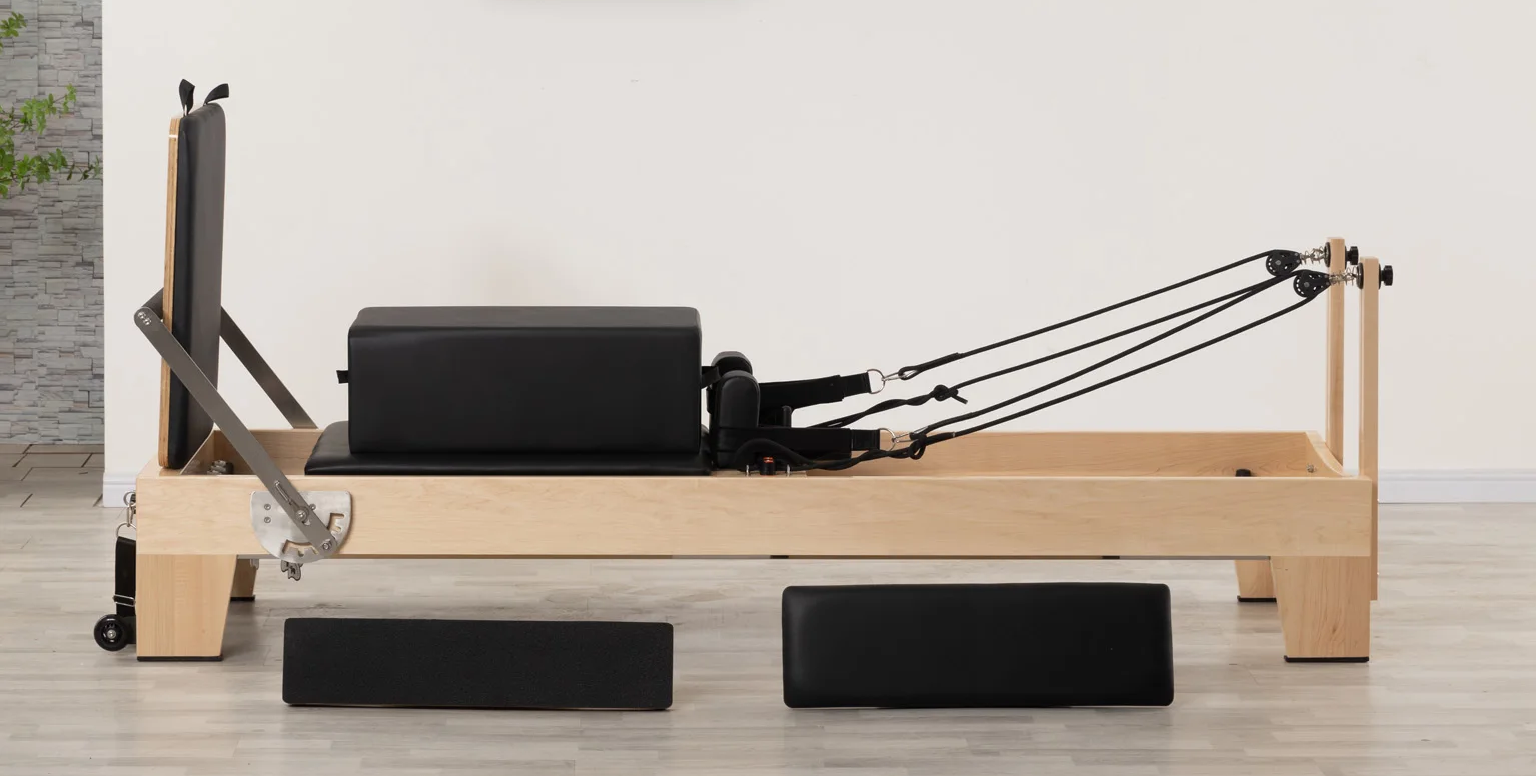
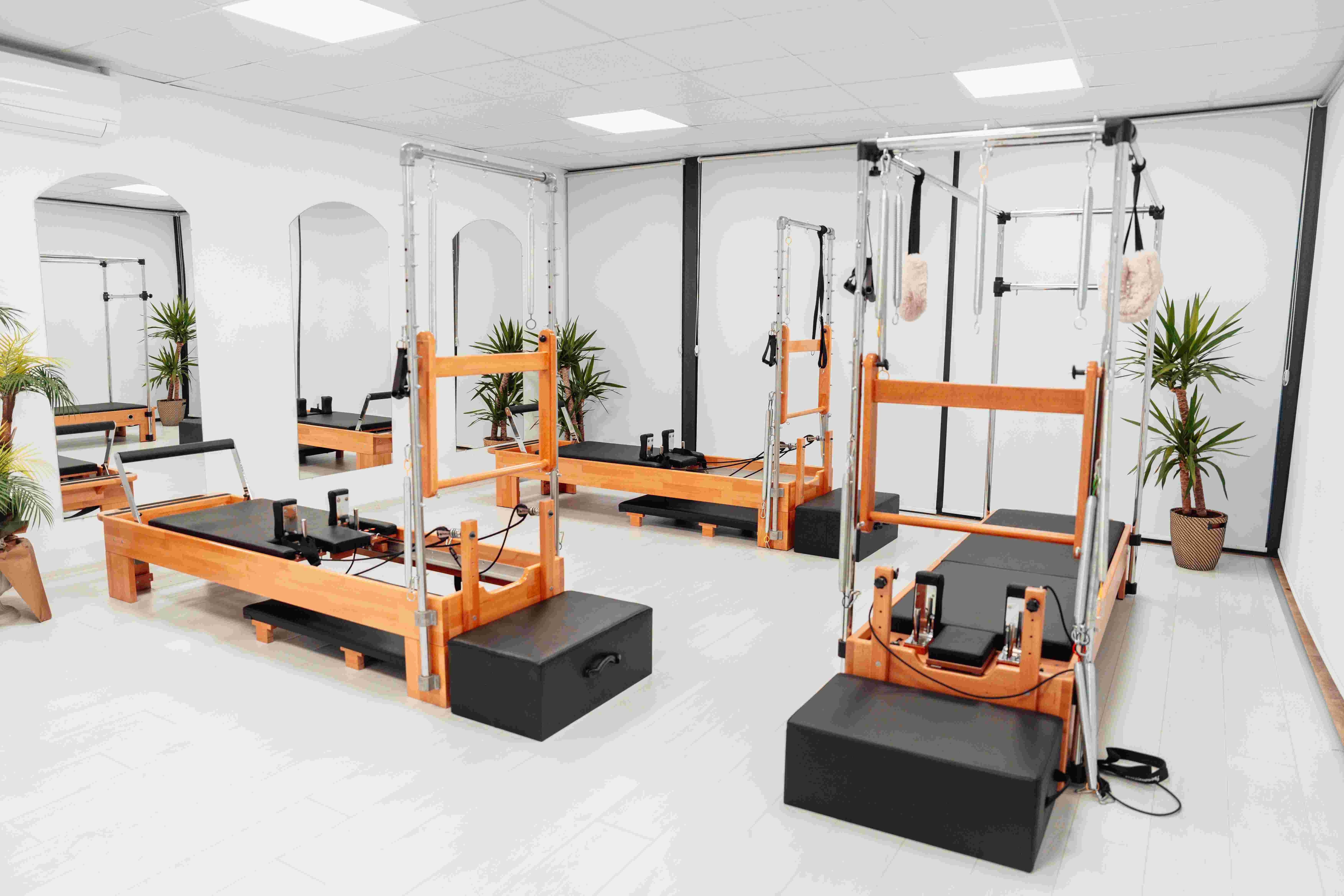
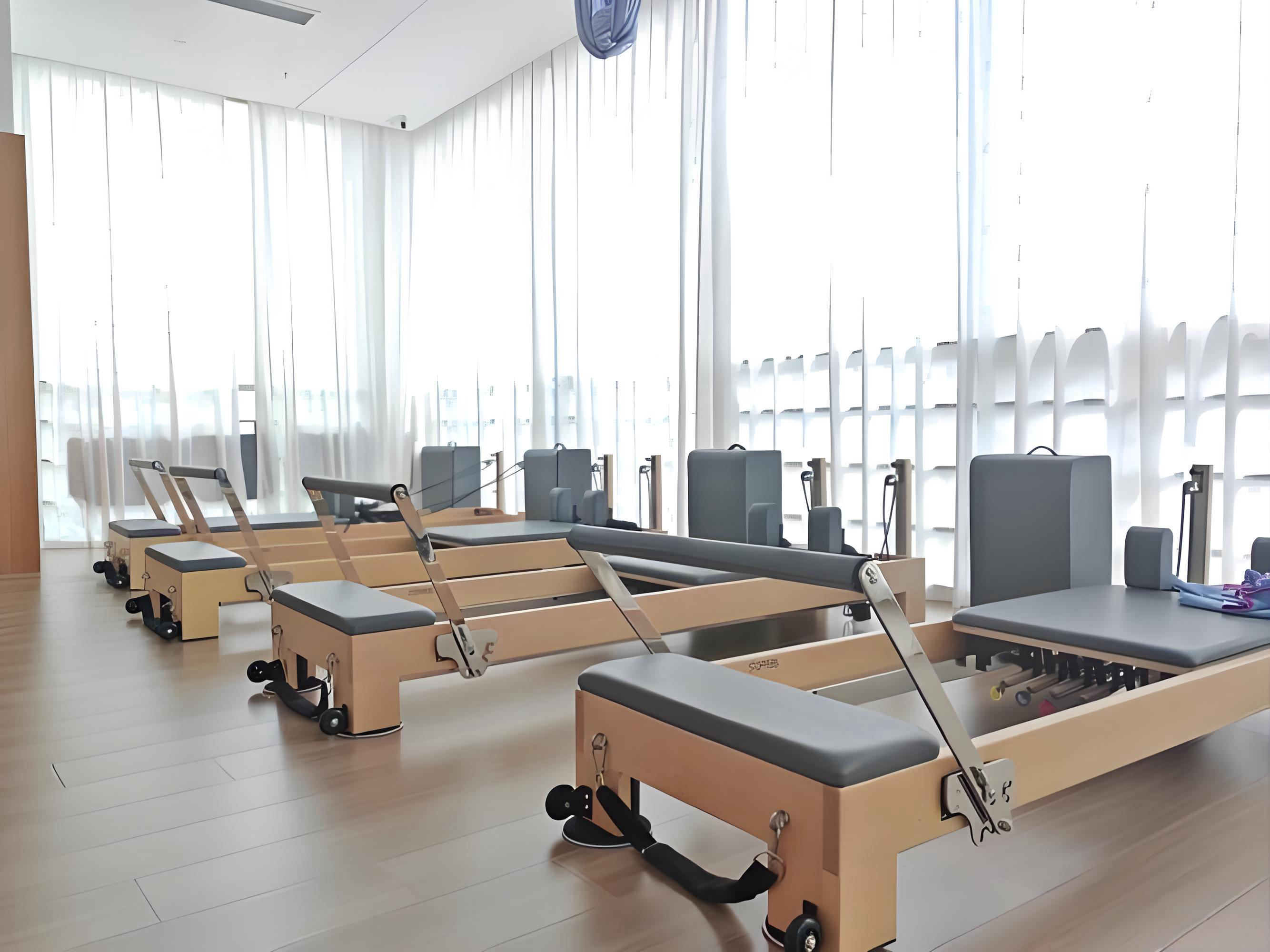
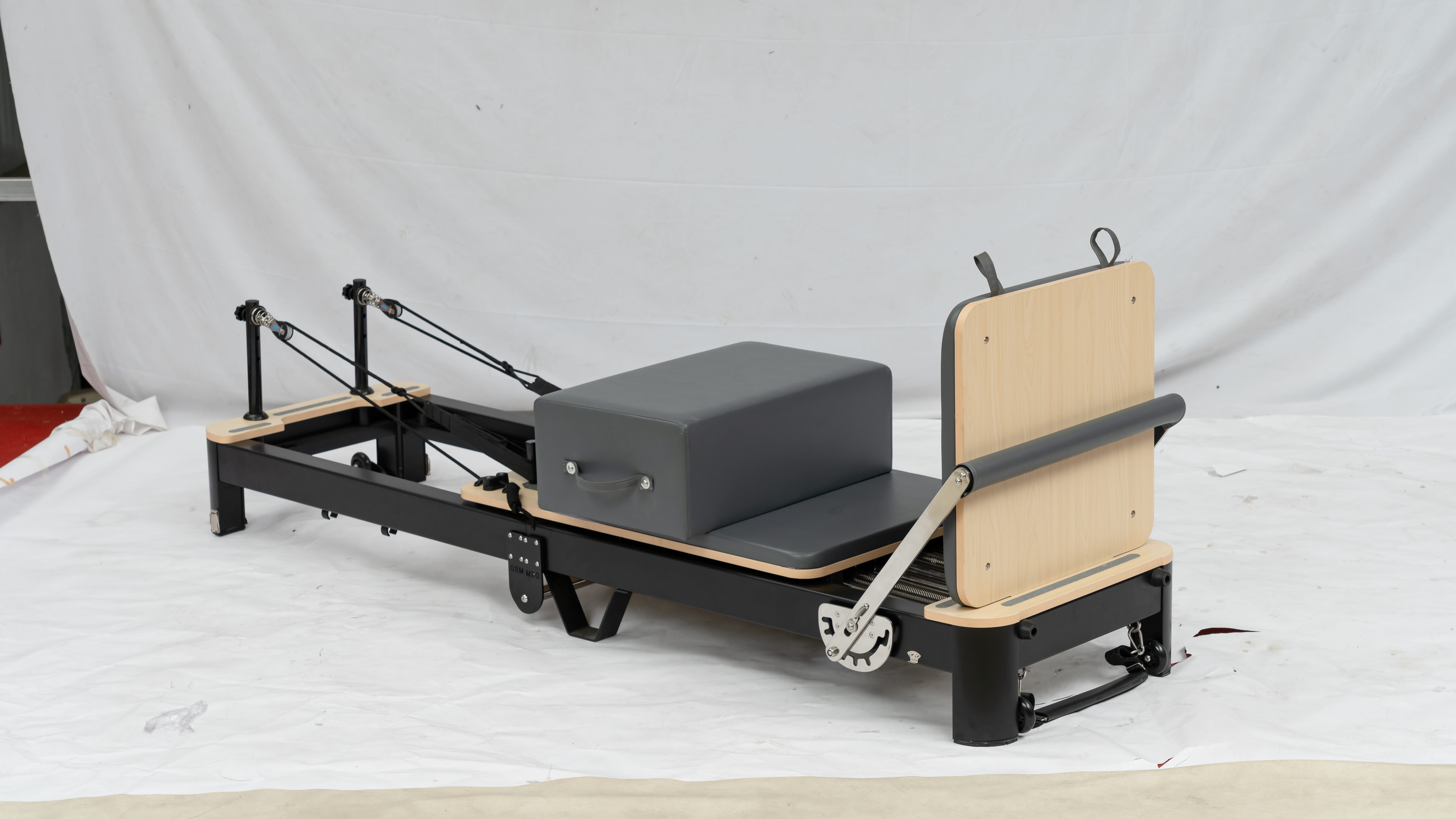
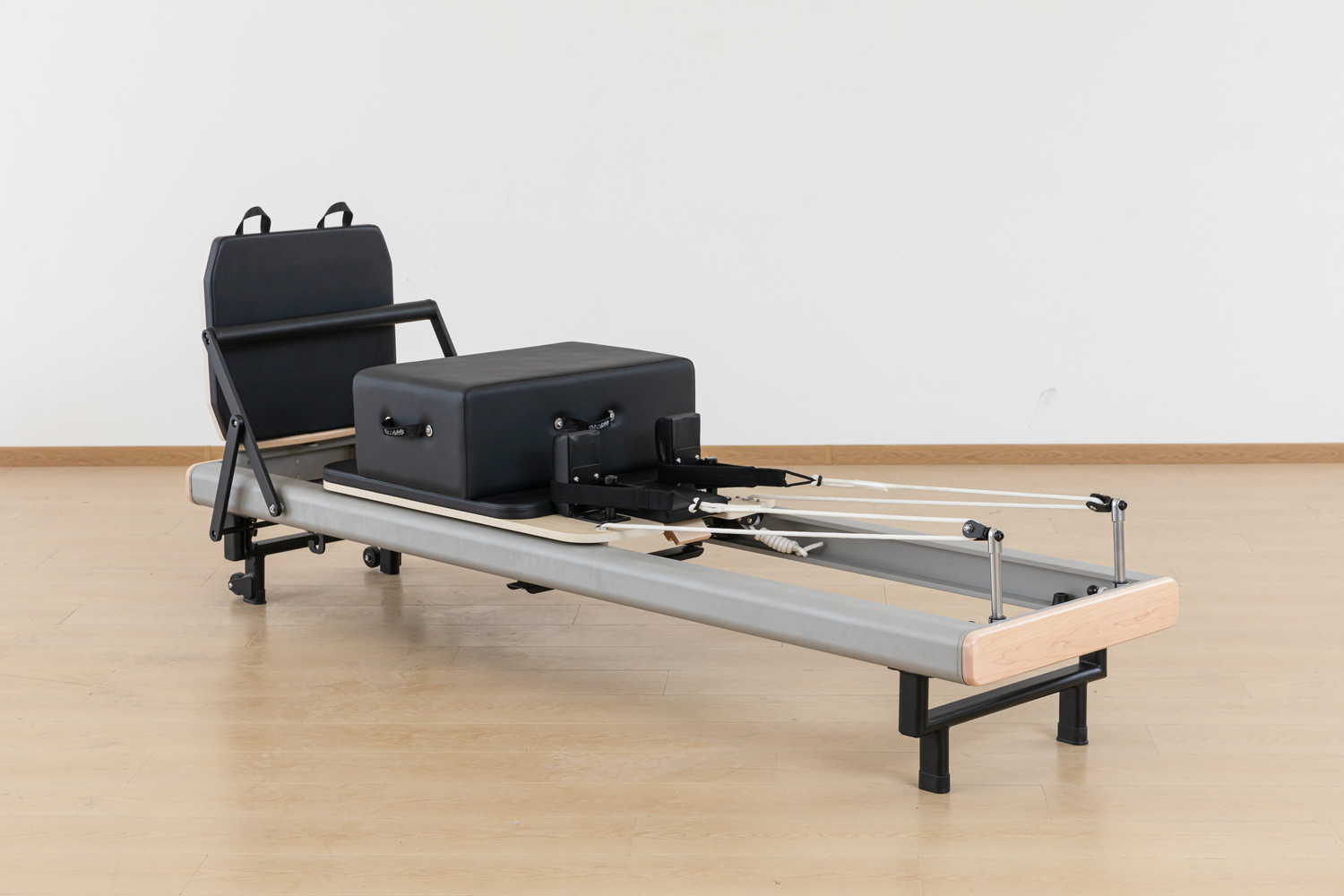
A Pilates Reformer may look deceptively simple — a padded carriage sliding on a frame, a set of springs, a footbar, and some ropes and pulleys. But from a manufacturing perspective, it is one of the most structurally complex and tolerance-sensitive products in the fitness equipment industry. Behind every quality Reformer lies a systematic integration of materials science, precision machining, spring engineering, and rigorous quality control. This article takes you inside the factory, step by step, to understand how a Reformer is made.
I. Design & Engineering Phase
It all starts with drawings. Before production begins, the R&D team must complete:
Structural Design: Determine frame material (solid wood or aluminum alloy), carriage travel length, rail precision, and spring layout. Typical commercial reformer dimensions: external length 2,200–2,500mm, external width 550–650mm, carriage travel 900–1,000mm.
Material Selection: Solid wood frames (maple, oak, or beech) undergo strict kiln drying to below 8% moisture content to prevent warping; aluminum frames (e.g., 6061-T6) focus on extrusion design and anodized surface treatment.
Spring Engineering: Wire diameter, coil diameter, active coil count, and free length determine the spring constant. Commercial springs must achieve a fatigue life of 500,000+ cycles.
II. Frame Fabrication
The frame is the “spine” of the Reformer — all other components depend on its rigidity and precision.
Wood Frames
Premium Reformers often feature solid hardwood frames, commonly beech, oak, or maple.
Process Steps:
1.Material Selection: Lumber is sorted by grain and color to ensure visual consistency across the finished unit
2.Cutting: Wood is cut to precise dimensions
3.Joinery: Mortise-and-tenon or dovetail joints ensure structural integrity — quality joinery holds tight without screws and won’t develop squeaks over time
4.Sanding: 3–4 stages from coarse to fine grit, achieving a silk-smooth surface
5.Finishing: 4+ coats of water-based varnish or catalyzed lacquer for protection and aesthetic warmth
Aluminum Frames
Aluminum frames prioritize dimensional precision and long-term stability, unaffected by humidity and temperature changes.
Process Steps:
1.Extrusion: 6061-T6 aluminum billets are heated and extruded into designed cross-sections
2.Cutting & Drilling: Cut to length and drill mounting holes
3.Welding or Bolting: End structures attached via welding or precision bolting
4.Surface Treatment: Anodized or powder-coated for wear and corrosion resistance
III. Carriage System Manufacturing
The carriage is the most active component — it moves along the rails while supporting the practitioner.
Key Components:
- Trolley base plate: MDF or plywood with a surface veneer; must be flat and warp-resistant.
- Wheels: Polyurethane or nylon composite material; must be quiet and wear-resistant, featuring sealed bearings.
- Wheel axle mounting: Precision-drilled for accurate positioning; the four wheels must be parallel to ensure straight-line movement.
The fit tolerance between wheel diameter and rail surface directly affects smoothness — too loose and the carriage wobbles, too tight and resistance increases. Premium brands perform a “glide test” under full load (approx. 120kg) to ensure silent, smooth movement.
IV. Spring System Production
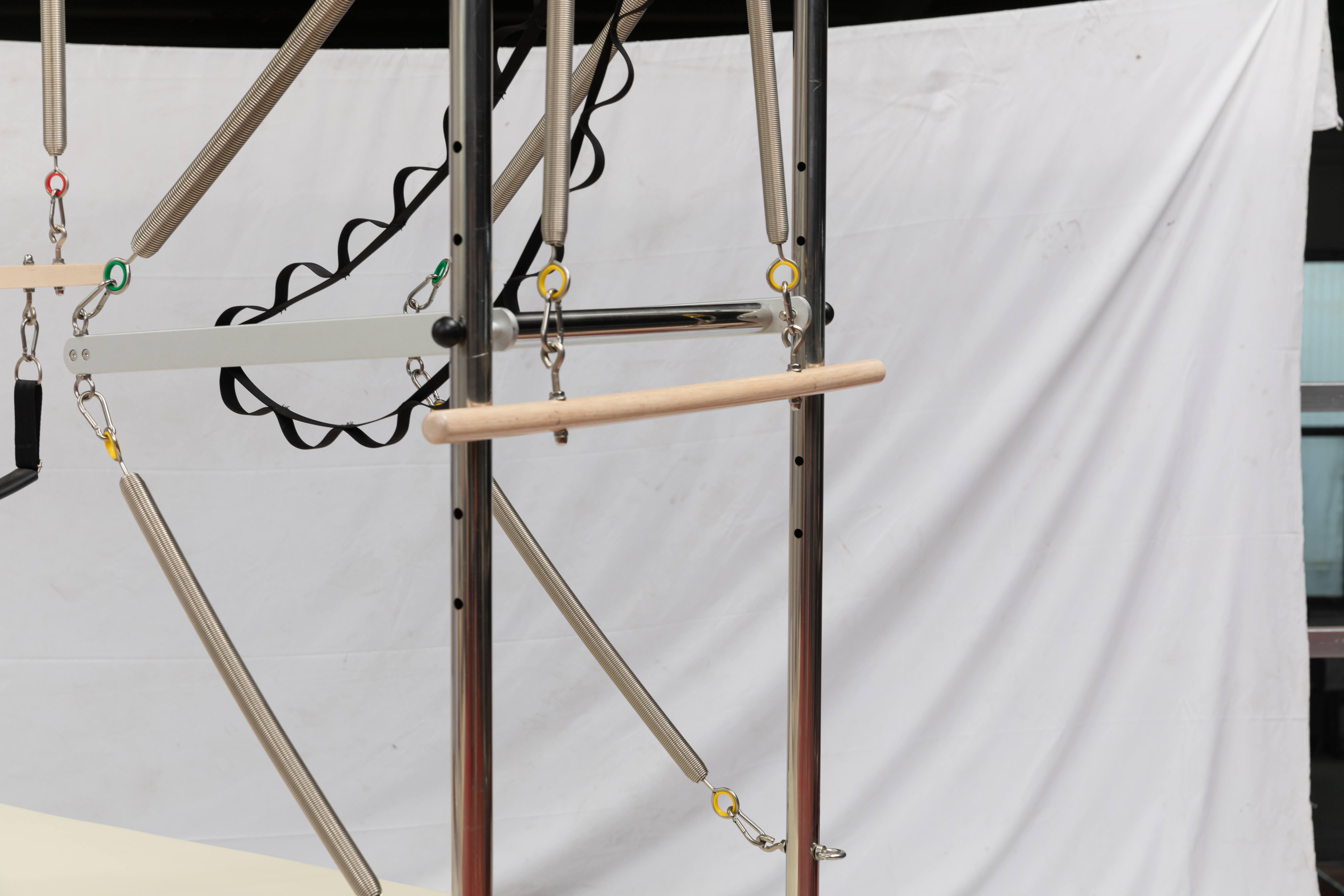
Springs are the “power heart” of the Reformer, directly determining user feel.
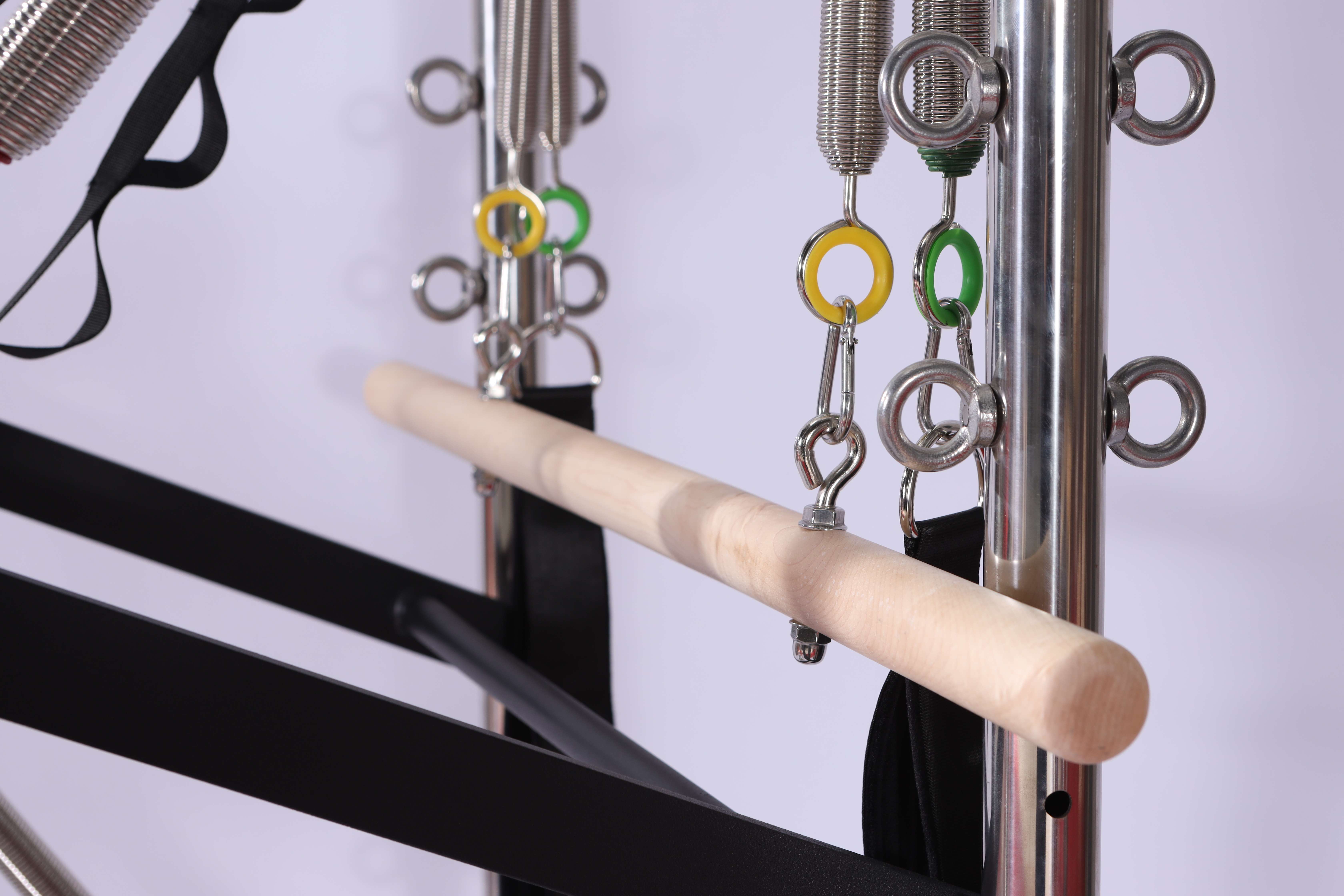
Raw Material: Premium springs use German or Japanese imported piano wire (high-carbon steel with 0.7–1.0% carbon) — high tensile strength and consistent elastic modulus.
Manufacturing Process:
1.Coiling: Automatic coiling machines form wire to specified dimensions
2.Heat Treatment: Stress-relief heat treatment for fatigue resistance; hook areas are reinforced — this is a stress concentration zone where poor treatment leads to breakage
3.End Forming: Hooks or loops are formed
4.Tension Testing: Each spring is force-tested at standard extension; commercial standard requires ±5–8% tolerance
5.Corrosion Coating: Nylon or PVC coating for rust prevention and improved feel
A commercial Reformer typically includes 4–5 springs with varying resistance levels (heavy, medium, light) that can be combined for multiple resistance profiles.
V. Upholstery
Upholstery impacts comfort, aesthetics, and durability — it’s the customer-facing “façade.”
Process Steps:
1.Foam Cutting: High-density foam (≥45kg/m³) cut to shape for carriage, headrest, and shoulder rests
2.Foam Bonding: Foam adhered to the base board or mold
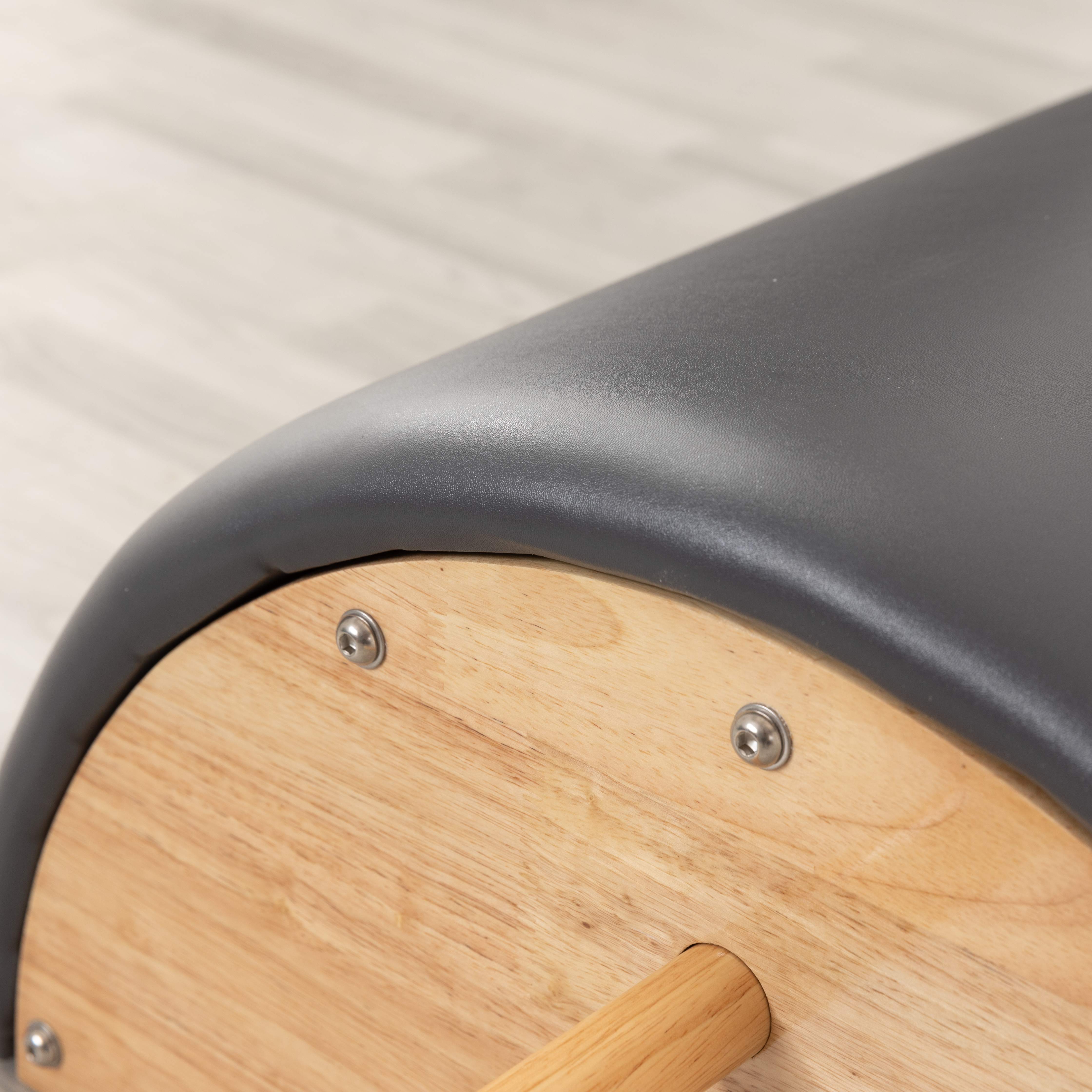
3.Leather Covering: High-wear PU leather (Martindale >50,000 cycles) stretched over foam
4.Pressing & Securing: Using molds to press leather tight over foam, then manually or mechanically securing edges for a wrinkle-free finish
5.Stitching: Double-stitching at high-stress areas to prevent tearing
VI. Final Assembly & Testing
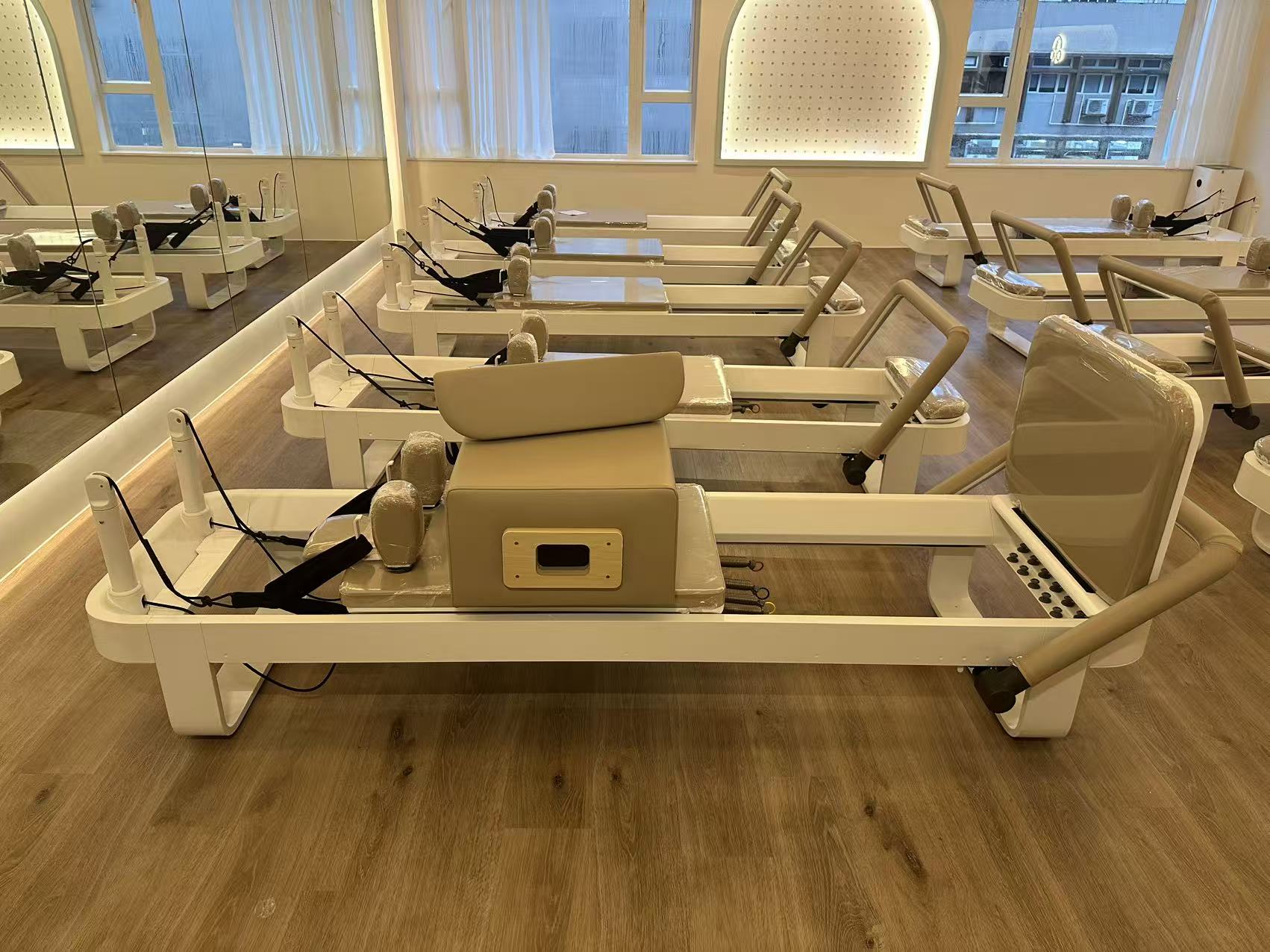
All components converge on the assembly line for final integration and tuning.
Assembly Sequence:
1.Mount carriage into frame rails; install wheels
2.Install spring bar and spring set
3.Install footbar with multi-position adjustment mechanism
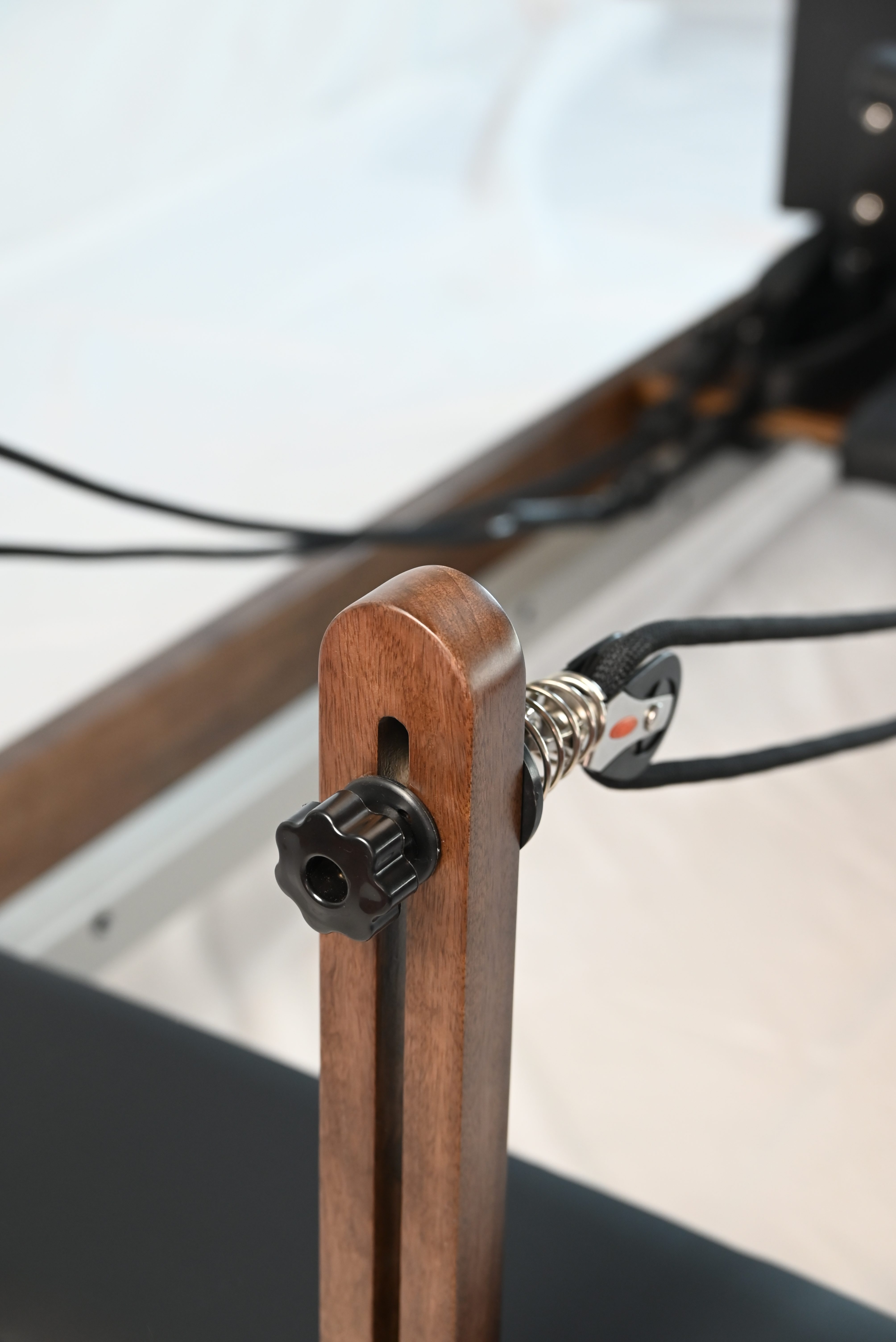
4.Install ropes, pulleys, and shoulder rests
5.Install headrest and all upholstered components
Quality Control (OQC):
·Function Test: All adjustments (footbar positions, headrest angle, shoulder rests) — smooth and secure locking?
·Glide Test: Noise level under full load (should be <50 dB) and smoothness check
·Spring Tension Spot Check: Random spring retesting against specification
·Visual Inspection: Scratches, coating defects, upholstery wrinkles, or stitching flaws?
VII. Packaging & Shipping
Reformers are bulky and heavy — a unit with tower attachment weighs approximately 120–130kg.
Packaging Options:
·Triple-wall cartons or fully enclosed wooden crates (required for ocean freight)
·Internal cushioning with foam, bubble wrap, or similar protective materials
·Accessories (springs, ropes, manual, etc.) packed separately within the box
Pre-Shipment: Order verification, destination labels, and complete documentation.
Summary: The journey of a Pilates Reformer — from raw lumber or aluminum extrusions through cutting, forming, sanding, finishing, assembly, upholstery, testing, and inspection — culminates in a piece of equipment that carries the hopes of fitness and rehabilitation. As one factory manager put it: “The final inspection before every unit leaves the factory is imagining it being shipped to an instructor who will use it through thousands of sessions — that responsibility is built into every weld, every spring, every stitch.”