What Tests Must Pilates Equipment Pass Before Leaving the Factory?
Pilates equipment is professional-grade gear that carries users' safety and training outcomes. Before a unit reaches the customer, it must pass through multiple layers of inspection—not to satisfy paperwork, but to ensure every user can move safely and smoothly through every exercise. As Gratz states in its quality management philosophy: "Quality is not a general claim. It is defined. It is measured. And it is enforced."
I. Incoming Quality Control (IQC)
Testing begins before production even starts. Steel thickness and composition, leather abrasion resistance, foam density and VOC emissions, spring wire diameter and material—every batch of raw materials must be inspected before entering the production line.
Common Inspection Items:
·Steel composition and thickness (commercial grade requires ≥2mm)
·Martindale abrasion test for leather (commercial standard >50,000 cycles)
·Foam density (≥45kg/m³) and VOC emission levels
·Wood moisture content (must be <8% to prevent warping)
For example, Zeren's IQC process covers all incoming raw materials, ensuring each batch meets design specifications before production begins.
II. In-Process Quality Control (IPQC)
Every production step requires synchronized inspection. Welding, sanding, coating, upholstery stitching—if issues are caught during the process, they can be reworked before moving to the next stage.
IPQC Focus Areas:
·Frame Welding:Weld uniformity, absence of cold shuts or cracks
·Surface Coating:Adhesion, thickness, bubbles or particle defects
·Upholstery Stitching:Seam strength, double-stitching at stress points
·Drilling Accuracy:Hole precision, parallelism of four wheel mounts
Gratz's practice shows that quality checks should occur "at every stage of the build process: welding, woodworking, finishing, upholstery, assembly, and even packing".
III. Outgoing Quality Control (OQC)
OQC is the final checkpoint before products leave the factory—and the most comprehensive. According to enterprise standards, OQC typically includes visual inspection and dimensional deviation checks. However, as load-bearing fitness equipment, Pilates apparatus requires much more.
1. Visual & Dimensional Inspection
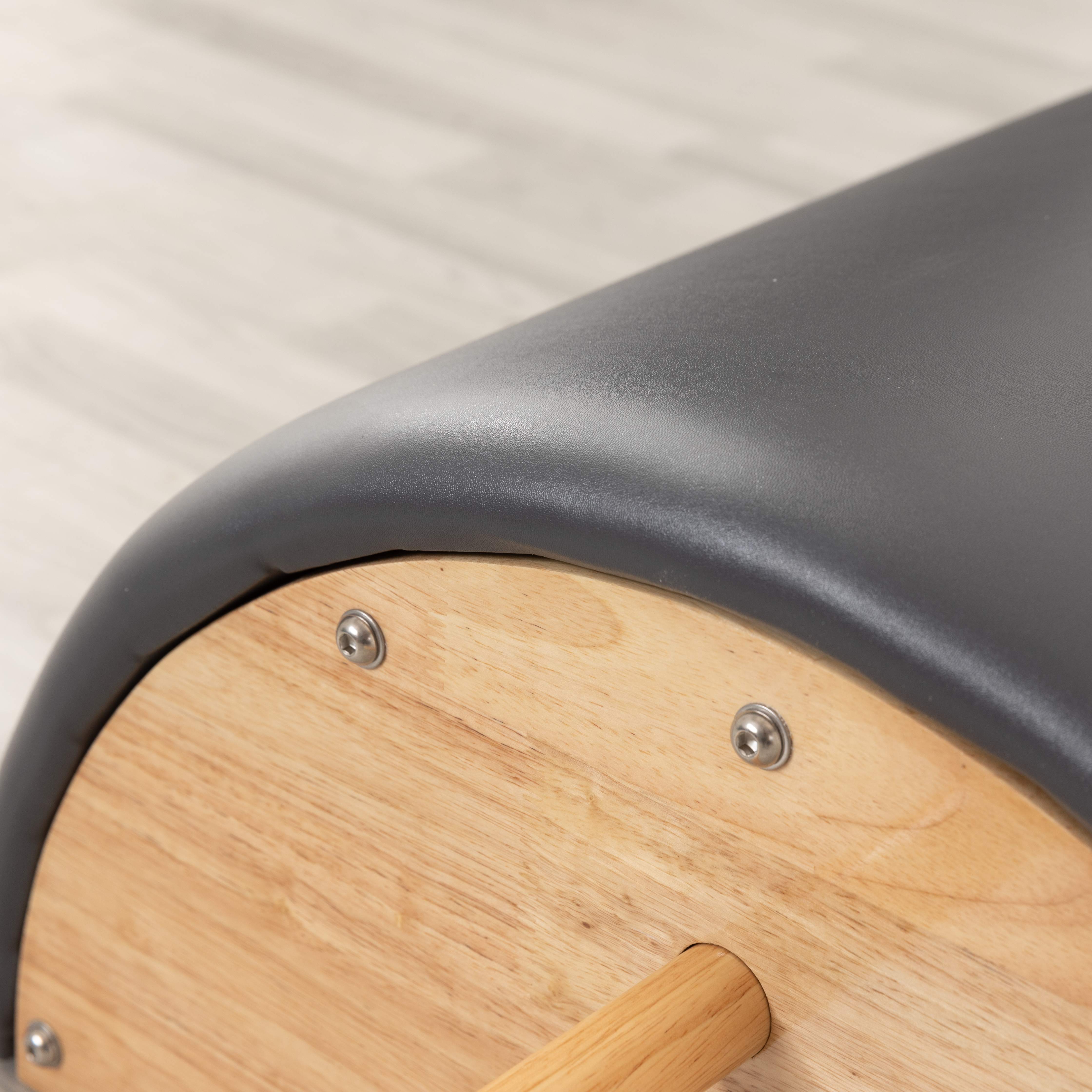
·All edges and corners radiused (≥3.0mm) to prevent user injury
·Coating free from scratches, peeling, or color variation
·Component dimensions within specified tolerances
·Labels and markings complete and legible
2. Structural Stability Testing
·Frame remains stable under rated load—no wobbling or tilting
·Anti-slip feet securely installed
·Ground adaptability—stable across different floor surfaces
3. Function & Adjustment Testing
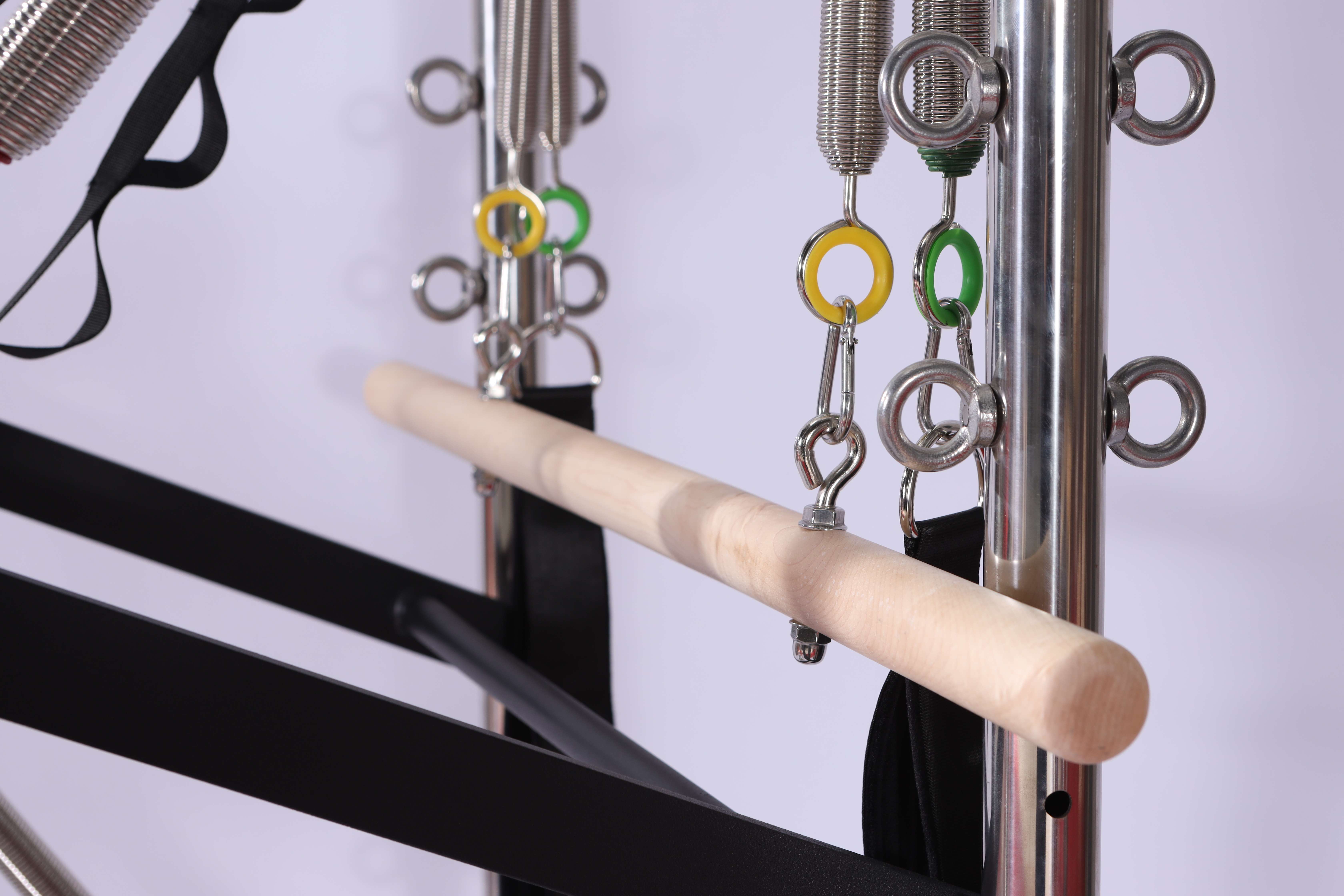
·Footbar position adjustments smooth and locks secure
·Headrest and shoulder rest angle adjustments functional
·Spring tension adjustment mechanism precise and reliable
·Locking mechanisms on all adjustable parts secure
4. Carriage System Testing
·Glide Smoothness: No sticking or abnormal noise during carriage travel
·Rail Parallelism: Carriage tracks straight without deviation
·Carriage Lock Reliability: Locking devices stable when engaged
5. Spring System Testing
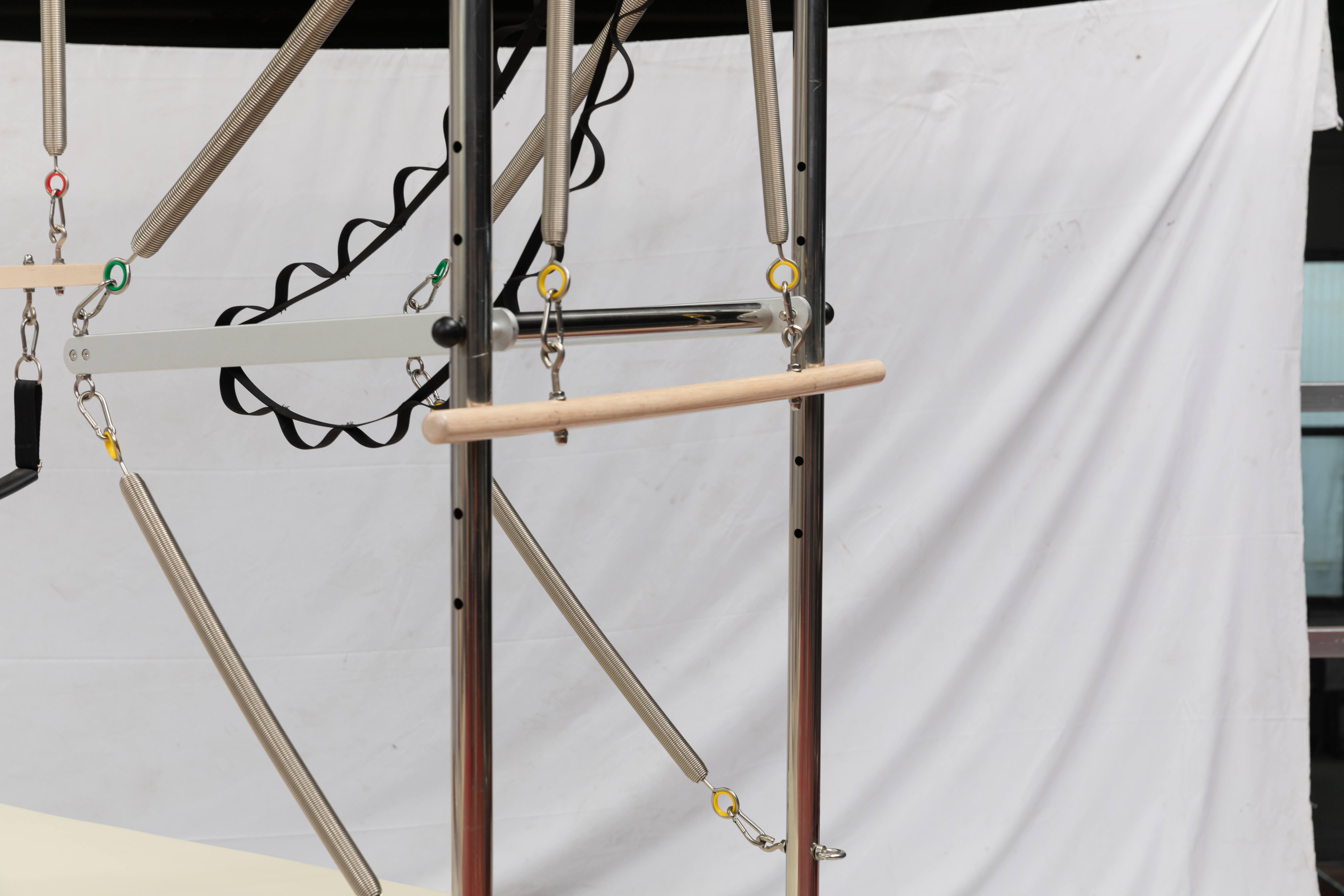
Springs are the "power heart" of Pilates equipment—testing is especially rigorous:
·Spring Force Testing: Each spring is force-tested at standard extension to ensure force consistency within ±5-8% tolerance. Gratz developed a precision testing device accurate to 0.01 lb, calibrated for traceability to NIST standards
·Spring Fatigue Testing: Simulates repeated stretching cycles to verify fatigue resistance. Commercial standard requires 500,000+ cycle life
6. Load & Weight Testing
·Static Load Test: Equipment must withstand 1.5× maximum rated load for 5 minutes to verify structural integrity
·Dynamic Load Test: Simulates actual use conditions with repeated motion under full load
Align-Pilates subjected its C8-Pro and A8-Pro Reformers to independent third-party testing to ISO 20957-1 (Class S)—with a 150kg maximum load, all springs attached, 80% carriage travel, completing 100,000 test cycles.
7. Safety Device Inspection
·Anti-slip bases effective
·Limit stops properly installed to prevent carriage over-travel
·Spring guards or stops in place to prevent pinch injuries
8. Noise Level Testing
·Glide noise under rated load below acceptable threshold
·No rigid impact between moving components
9. Material & Environmental Testing
·Surface materials free from hazardous chemicals
·RoHS/REACH compliance verified
IV. Type Testing
Type testing is a comprehensive evaluation of design, materials, and processes, required in the following situations:
·New product prototype validation:Verify design before first mass production
·Major structural/material/process changes:Ensure modifications don't compromise safety
·Annual random sampling:At least once per year to verify quality consistency
·Production resumption after 6-month halt:Confirm equipment and processes still meet standards
·Significant discrepancy between OQC and previous type test: Investigate root cause
V. Premium Brands: Going Beyond Standards
Top-tier brands like Gratz have built even more rigorous quality systems beyond standard testing:
·Dedicated QA Team: Professional quality staff overseeing the entire workflow
·Engineering Tolerance System: Dozens of defined specifications and tolerances per apparatus—for example, two leather straps must be within ¼ inch of each other at shipment
·High-Resolution Photo Records: 35 photos documenting each unit before shipping
·Hands-On Feel Testing: QA personnel physically test each unit for feel and sound
·Root-Cause Analysis: Every instance of customer dissatisfaction undergoes root-cause analysis and drives process improvement
Summary: Pre-shipment testing for Pilates equipment—from incoming materials to in-process checks, from visual inspection to functional testing, from static load to dynamic fatigue—forms a complete quality control closed loop. International standards ISO 20957-1 (Class S) and EN ISO 20957-14 set clear safety and performance benchmarks for commercial-grade Pilates equipment. For buyers, understanding these testing requirements is key to evaluating whether a supplier is truly reliable: the more transparent and clearly defined the testing process, the more trustworthy the equipment.