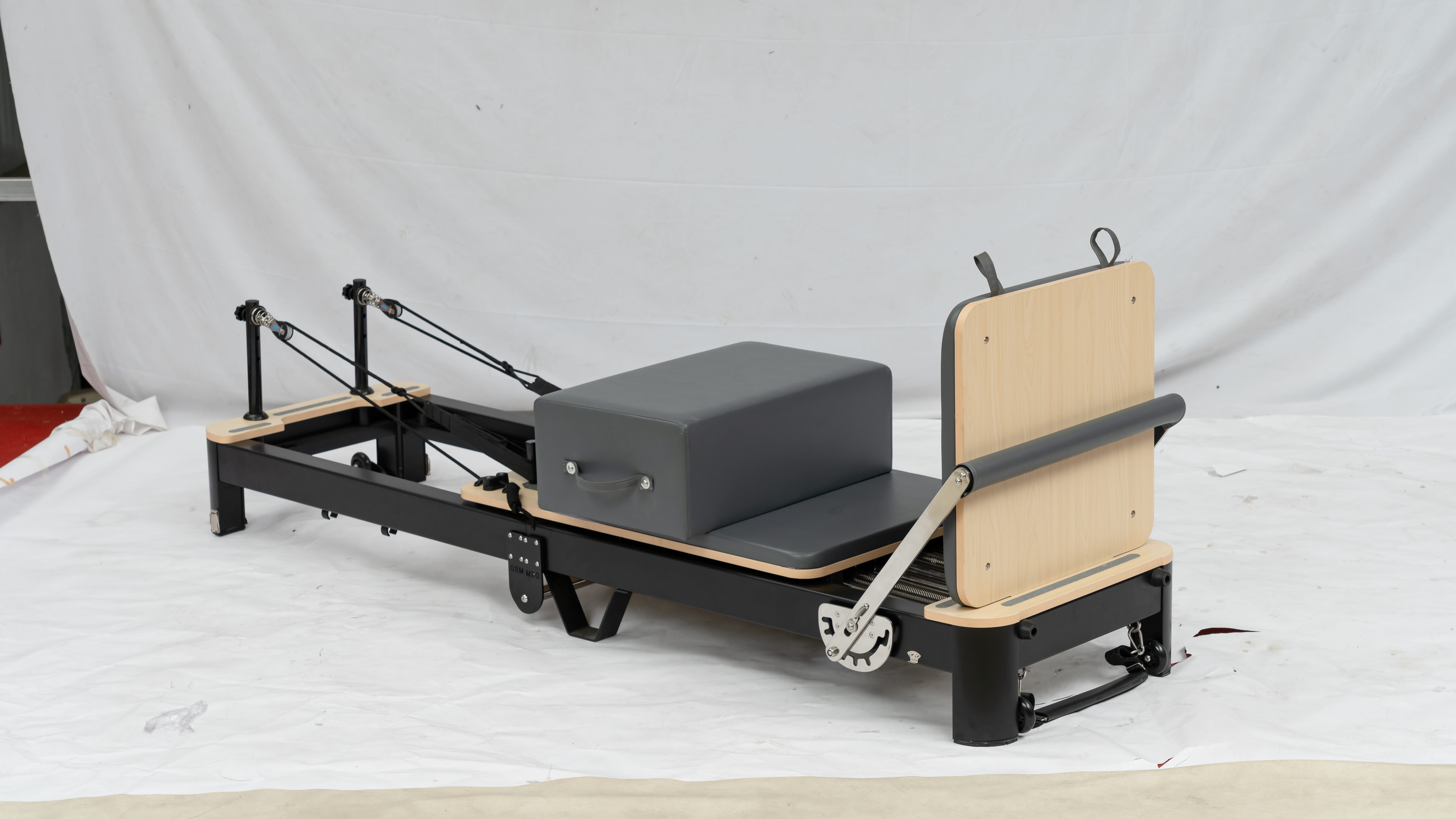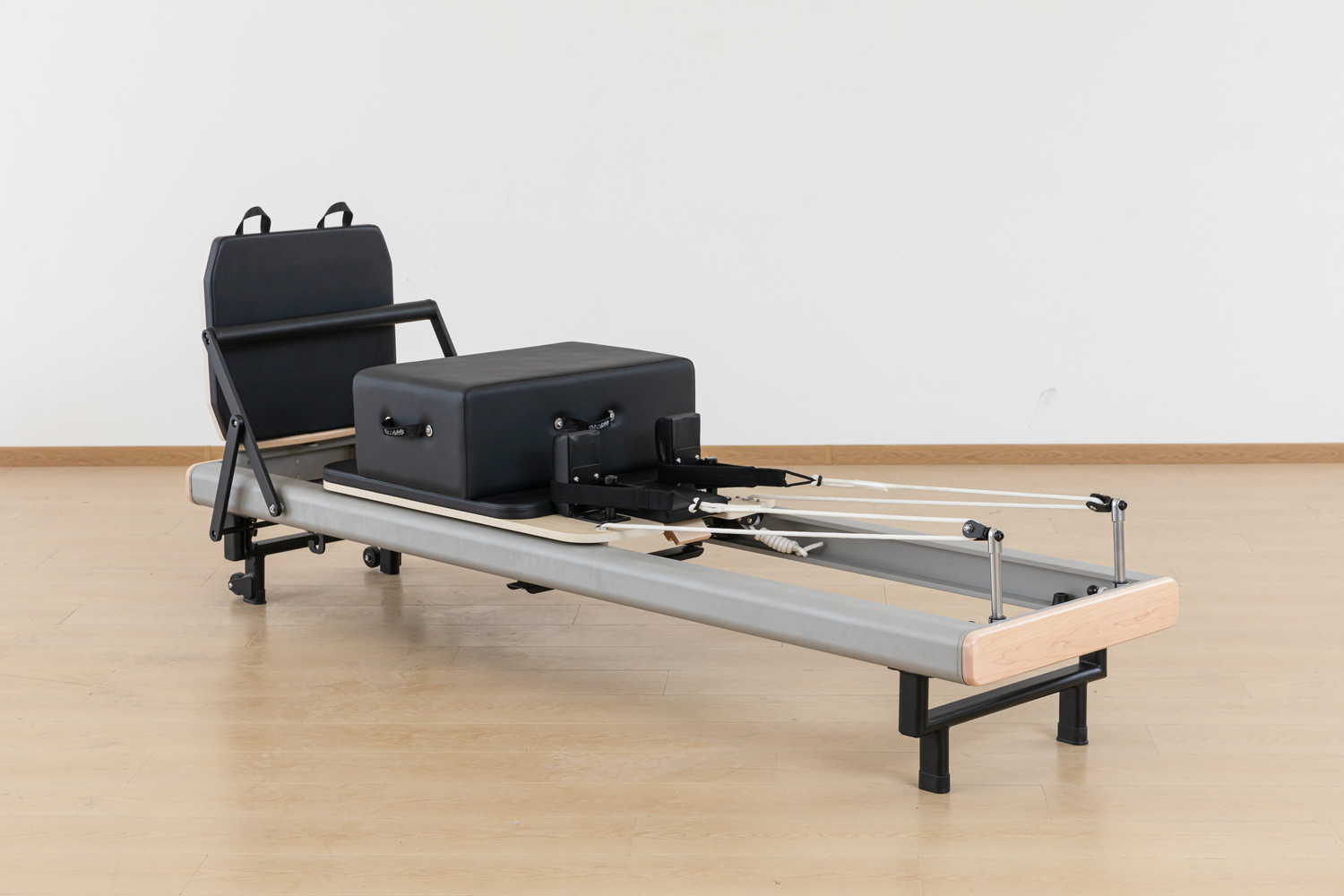
Introduction to Factory Quality Management System
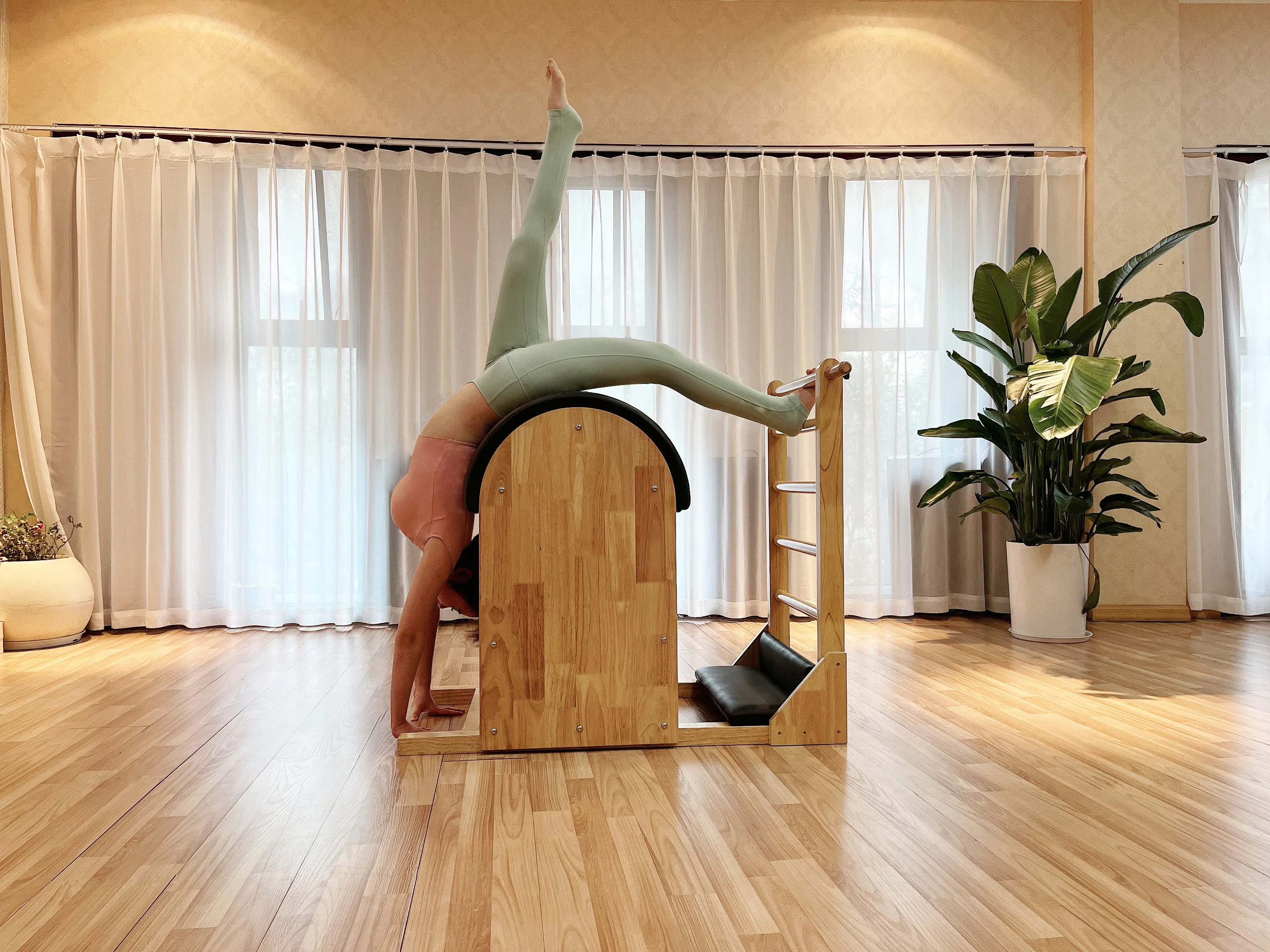
In Pilates equipment manufacturing, a Quality Management System (QMS) is not merely a certificate on the wall — it is a systematic control mechanism that spans incoming materials, production processes, finished products, and after-sales service. For buyers, whether a factory has established a robust QMS directly determines product quality consistency, delivery reliability, and the sustainability of long-term partnerships. This article provides a comprehensive overview of the factory QMS from three perspectives: system architecture, core processes, and implementation standards.
I. Overall Architecture of the Quality Management System
A factory's QMS typically follows the ISO 9001 framework, adapted to industry-specific requirements. Its core philosophy can be summarized as the PDCA cycle — Plan, Do, Check, Act.
The goal of quality management is not "zero defects" itself, but rather systematically reducing the probability of defects through process control, while possessing the capability to quickly identify, isolate, and correct defects when they occur.
A complete factory QMS generally consists of the following five modules.
The first module is quality policy and organizational structure. The factory must establish a clear quality policy and maintain an independent quality department separate from production, ensuring that inspection work is not compromised by production pressure. The quality manager reports directly to the highest management and has the authority to halt production lines when necessary.
The second module is the documentation system. This includes the quality manual, procedure documents, work instructions, and inspection standards. Every process step for every Pilates apparatus must have corresponding written standards, ensuring that operators and inspectors work to the same specifications, preventing quality variations based on individual experience.
The third module is inspection equipment and facilities. This includes coordinate measuring machines, tensile testers, hardness testers, salt spray test chambers, and noise meters, ensuring all technical indicators can be quantitatively measured.
The fourth module is personnel training and qualification management. Welders must hold valid certifications, inspectors must pass internal qualification assessments, and new employees must complete quality awareness training before starting work.
The fifth module is data recording and traceability. Every batch must have complete inspection records, with key process data archived. When quality issues arise, they can be traced back to specific batches, processes, and operators.
II. Incoming Quality Control — The First Line of Defense
Incoming Quality Control (IQC) is the starting point of the QMS and one of the most easily overlooked yet critical stages. Pilates equipment involves a wide variety of raw materials, including steel, wood, leather, foam, springs, pulleys, and bearings — each with its own specific quality standards.
Steel incoming inspection. Factories use spectrometers to verify chemical composition and grade conformity. Calipers and thickness gauges check material thickness — commercial-grade Reformer frames require a minimum of 2 millimeters. Surface quality checks cover rust, scratches, and oil contamination.
Wood incoming inspection. Moisture content is the critical indicator for solid wood frames — it must be controlled below 8 percent to prevent warping and cracking due to temperature and humidity changes during transport or use. Grain patterns, knots, and insect damage are also inspected, with substandard materials being rejected.
Leather and foam incoming inspection. Leather undergoes Martindale abrasion testing — commercial standards require exceeding 50,000 cycles. Color consistency, thickness uniformity, and odor are also checked. Foam density must be tested, with commercial-grade requiring a minimum of 45 kilograms per cubic meter, along with compression set testing and VOC emission measurement.
Spring incoming inspection. Wire diameter, outer diameter, and free length are measured. Sample springs undergo force testing at standard extension length, verifying that force values conform to design specifications within a tolerance of plus or minus 5 percent.
The core principle of IQC is that non-conforming raw materials do not enter the warehouse. When a batch fails inspection, the entire batch is returned to the supplier, and a supplier quality improvement process is initiated.
III. In-Process Quality Control — Real-Time Control During Production
In-Process Quality Control (IPQC) involves inspecting work-in-progress during manufacturing, with the objective of detecting and correcting defects before they move to the next process step. IPQC for Pilates equipment covers five major stages: machining, welding, surface finishing, upholstery, and final assembly.
Machining stage inspection. Parts produced by laser cutting or stamping are checked for critical dimensions against engineering drawings, particularly positional tolerances for mounting holes. CNC-bent angles must be controlled within plus or minus 0.5 degrees. Drilling accuracy directly affects subsequent assembly — insufficient precision leads to poor carriage-to-rail fit.
Welding stage inspection. Welding is one of the most critical processes in frame manufacturing. Welders must hold valid certification. Inspections cover weld bead uniformity, absence of cracks, porosity, undercuts, and cold shuts. Critical load-bearing welds undergo non-destructive testing via magnetic particle or ultrasonic inspection. Some high-end factories employ robotic welding, significantly reducing human-induced welding defects.
Surface finishing stage inspection. Coated or powder-electrostatically painted parts are checked for film thickness — typically requiring 60 to 80 micrometers — and tested for adhesion via cross-cut testing. Salt spray testing validates corrosion resistance. Anodized aluminum components are inspected for oxide film thickness and sealing quality.
Upholstery stage inspection. Foam must be bonded flat without bubbles. Leather covering must fit tightly against the foam surface. High-stress seams must be double-stitched, with seam strength verified through pull testing. Leather surfaces must be free from visible wrinkles, scratches, or color variation.
Final assembly stage inspection. After all components are assembled, bolt torque values are verified. The carriage is glide-tested for abnormal noise and sticking. All adjustment mechanisms — including footbar positions, headrest angles, and shoulder rest positions — are functionally verified for smooth locking. Spring hooks are checked for secure attachment to prevent disengagement during use.
The core principle of IPQC is that non-conforming work-in-progress does not flow to the next process. When anomalies are detected, they are immediately identified, isolated, root-cause analyzed, and corrective actions implemented.
IV. Finished Product Inspection — Comprehensive Verification Before Shipment
Finished product inspection is the final quality checkpoint before delivery, and the most comprehensive. Every Pilates apparatus must pass this stage before packaging.
Visual inspection. Under standard lighting conditions, the entire unit is visually examined. Coating must be free of scratches, bubbles, particles, and color variation. Leather must have no wrinkles, damage, or obvious seam marks. All labels and markings must be legible and complete, with LOGO placement accurate. All edges and corners must be radiused to a minimum of 3.0 millimeters to prevent user injury.
Dimensional and fit inspection. Overall dimensions are verified against specifications. The fit clearance between the carriage and rails must fall within standard tolerances — excessive clearance causes wobbling, while insufficient clearance increases resistance or produces noise. Footbar height dimensions at each position are individually measured.
Functional inspection. Every adjustable component is tested — the footbar locks securely at each position, shoulder rests adjust quickly and lock without slipping, headrest angle adjustment operates smoothly, and spring changes are convenient. Rope and pulley systems must run smoothly without friction noise.
Glide noise testing. Under rated load, the carriage is moved repeatedly through the full travel range while a noise meter measures sound levels. Commercial-grade standards require noise below 50 decibels under full load — comparable to a quiet library environment.
Stability testing. Simulating actual training movements with lateral forces applied, the entire unit is checked for wobbling or displacement. All anti-slip feet must be securely installed and effective, ensuring the equipment remains stable on various floor surfaces.
Load testing. The frame is subjected to 1.5 times the maximum rated load for 5 minutes, after which it is inspected for permanent deformation or weld cracking. This test is typically conducted on a sampling basis per batch rather than on every unit.
Spring force spot checking. Random springs from each finished batch are force-tested at standard extension length to confirm they fall within specification tolerances.
The core principle of finished product inspection is that non-conforming products do not leave the factory. Any failed inspection criteria render the unit non-conforming, sending it into rework or scrap processes, with defect causes recorded for quality analysis.
V. Type Testing — Comprehensive Product Design Validation
Type testing differs from routine IQC, IPQC, and finished product inspections. It is a comprehensive validation of product design, material selection, and manufacturing processes, conducted under the following circumstances.
Before first mass production of a new product. Type testing verifies that the design meets safety, performance, and durability requirements.
After major changes to product structure, critical materials, or manufacturing processes. Ensuring modifications have not negatively impacted product quality.
On an annual schedule during normal production. At least once per year to verify ongoing quality stability.
When production resumes after a halt of more than six months. Confirming that production line conditions and operator skill levels still guarantee product quality.
Type testing includes substantially more items than routine inspections, covering but not limited to the following.
Static load testing. Equipment withstands 1.5 times maximum rated load for 5 minutes to verify structural integrity.
Dynamic load testing. Repeated motion testing under full load — typically 100,000 cycles — to verify fatigue life of the frame and moving components.
Spring fatigue testing. Springs are repeatedly extended and retracted at rated stroke — commercial standards require exceeding 500,000 cycles without fracture and with force degradation under 10 percent.
Drop testing. Simulating potential drops during transportation to verify packaging protection and equipment integrity.
Environmental adaptability testing. Equipment is placed in high-temperature, high-humidity environments to verify wood, leather, and coating weather resistance.
Internationally recognized type testing standards for Pilates equipment include ISO 20957-1 — general safety requirements for stationary fitness equipment — and EN ISO 20957-14, which sets specific requirements for Pilates equipment. Compliance with Class S commercial-grade standards indicates the equipment is suitable for high-frequency use in gym and studio environments.
VI. Non-Conforming Product Handling and Corrective/Preventive Actions
Even with the most robust QMS, non-conforming products will occasionally occur. The key lies in how the factory identifies, isolates, analyzes, and improves.
Identification and isolation of non-conforming products. Upon detection, quality inspectors immediately affix red non-conforming labels to the equipment and move it to designated non-conforming areas, preventing commingling with conforming products. Quantity, batch numbers, and defect descriptions are recorded.
Root cause analysis. Quality engineers lead joint investigations with production, process engineering, and procurement departments. Common analytical tools include the "5 Whys" and fishbone diagram analysis. Root causes may arise from raw materials, equipment, operating methods, measurement tools, or personnel skill levels.
Corrective action development and implementation. Targeted corrective actions are developed based on analysis findings — replacing non-conforming materials, adjusting equipment parameters, revising work instructions, or retraining operators. Corrective actions must specify responsible parties and completion deadlines.
Preventive action implementation. Corrective actions are converted into standardized prevention mechanisms — updating inspection criteria, increasing inspection frequency, optimizing process flows — ensuring similar issues do not recur in other batches or products.
Disposition of non-conforming products. Minor defects may be reworked after evaluation, with products released only after re-inspection passes. Severe defects rendering products irreparable are scrapped. All rework and scrap records are fully archived.
The core principle of non-conforming product handling is that every defect is an opportunity for improvement. Each occurrence is analyzed, corrected, and prevented across the entire system.
VII. Documentation and Traceability — The "Memory" of Quality Management
Quality management without documentation has no memory. All inspection activities must generate written or electronic records to ensure traceability.
Every product batch must have complete inspection records. This includes incoming inspection reports, in-process inspection logs, finished product reports, and type testing reports.
Critical process data must be archived. This includes welding parameters, torque values, spring force measurements, and noise decibel readings — supporting future traceability and analysis.
Record retention periods should meet customer requirements or industry practice. Typically one year beyond the product warranty period.
Traceability is the prerequisite for rapid root cause identification when quality issues arise. Through records, issues can be traced to specific batches, production dates, operators, and inspectors.
Trend toward digital management. An increasing number of factories are adopting MES systems to manage production processes and inspection data, enabling real-time data collection, automated alerts, and reporting.
VIII. Supplier Quality Management and Continuous Improvement
A factory's quality management capabilities extend beyond its own operations to upstream suppliers. The final quality of Pilates equipment depends significantly on the quality of incoming raw materials and components.
Supplier qualification assessment. New suppliers must pass qualification reviews, sample testing, and on-site evaluations before being added to the approved supplier list.
Supplier tiered management. Suppliers are classified into A, B, and C tiers based on incoming quality performance — A-tier suppliers are prioritized for procurement, while C-tier suppliers are given improvement deadlines or eliminated.
Regular supplier audits. Annual or semi-annual quality system reviews for major suppliers ensure they continue to meet standards.
Continuous improvement mechanisms. Quality targets are established — including first-pass yield, customer complaint rates, and return rates — with regular statistical tracking, analysis, and improvement. Quality review meetings are held periodically to evaluate performance and deploy improvement plans.
Closed-loop customer feedback handling. Every customer quality feedback must enter the QMS closed-loop process — receive feedback, analyze root cause, develop corrective actions, implement improvements, respond to the customer, and verify effectiveness. A complete closed loop is the true expression of customer accountability.
Summary: A factory's quality management system is not defined by certificates stored in filing cabinets, but by the rigor of incoming inspections, the real-time nature of process control, the comprehensiveness of finished product testing, the closed-loop handling of non-conforming products, and the persistence of continuous improvement. For Pilates equipment buyers, when evaluating a factory's quality system, one should not simply accept "we have ISO certification" at face value. Instead, walk through the incoming materials warehouse to inspect the pending and qualified material zones, walk to the production lines to see whether inspection records are filled out in real time, and walk through the finished goods area to review non-conforming product handling procedures. True quality is visible, tangible, verifiable, and traceable. Choosing a factory with a robust quality system is the most reliable "insurance policy" for long-term product quality consistency and partnership trust.