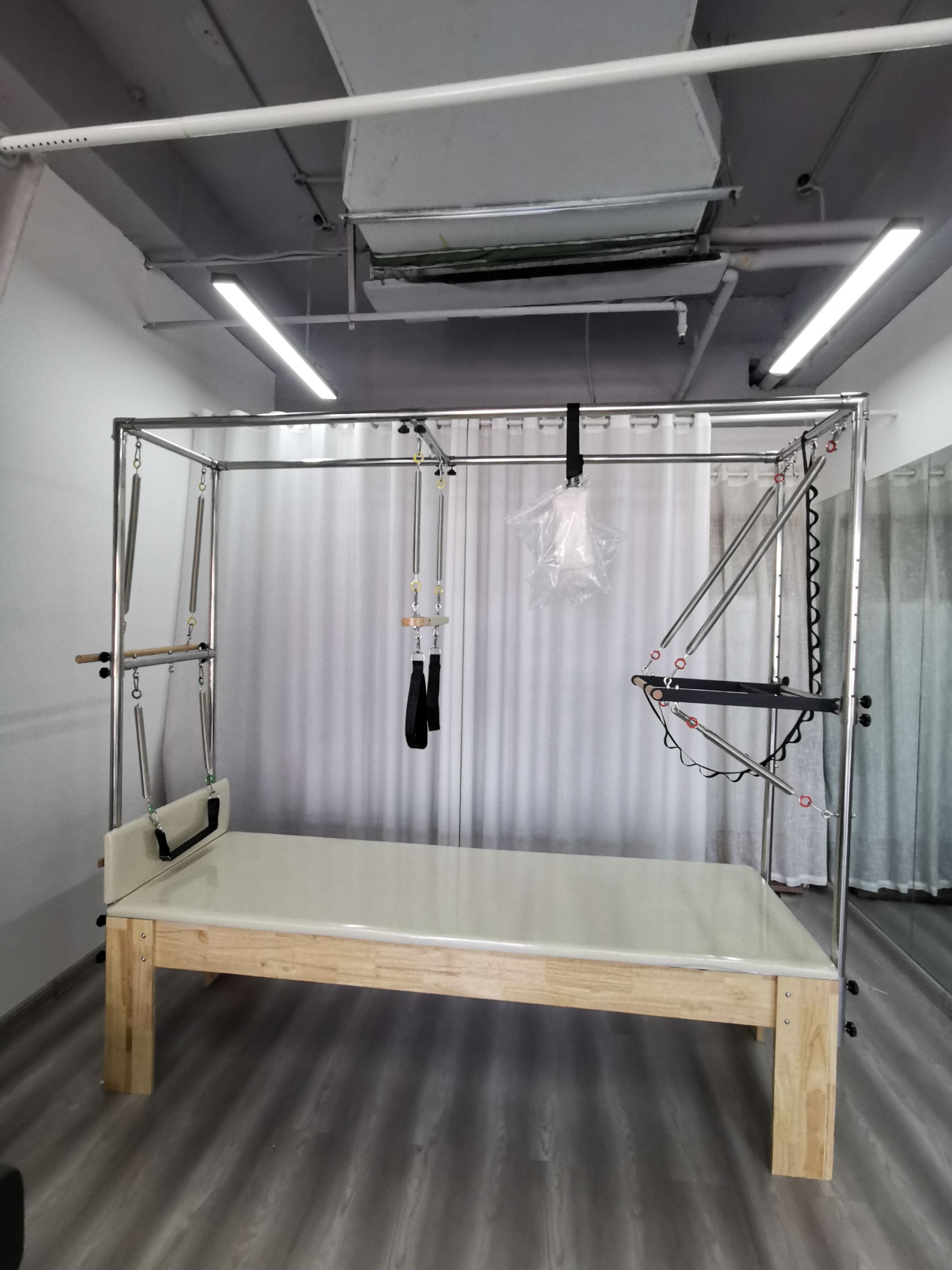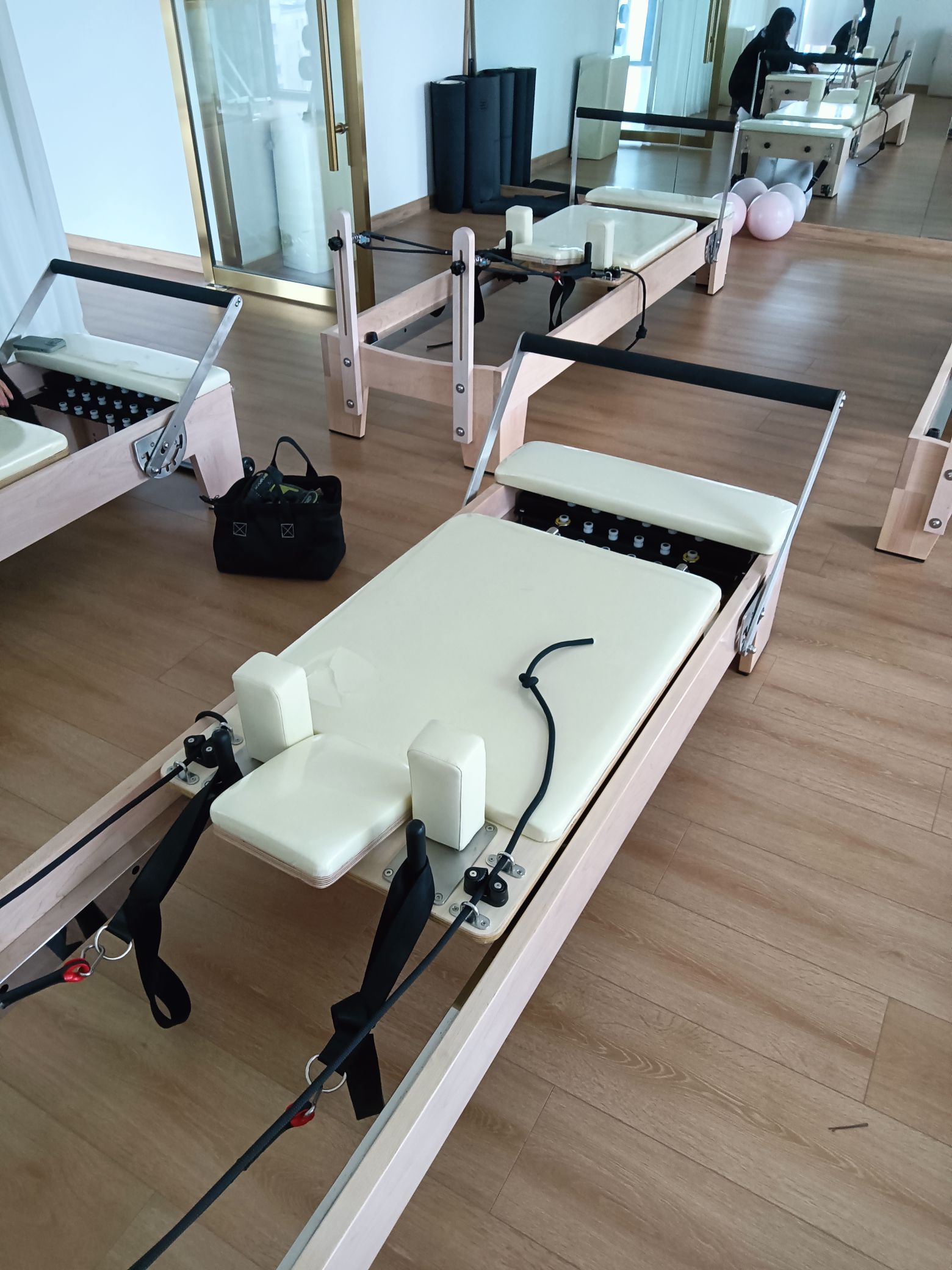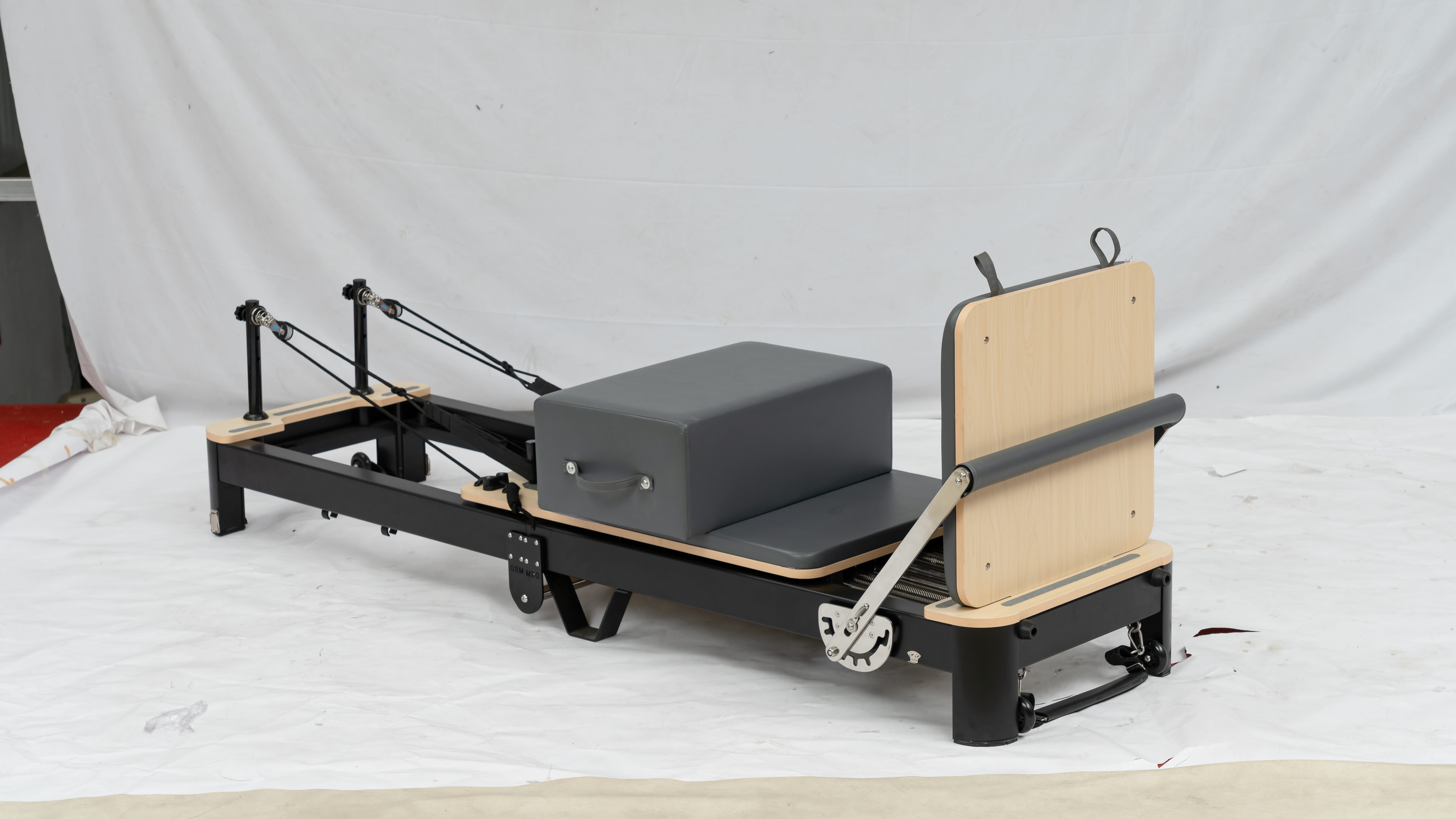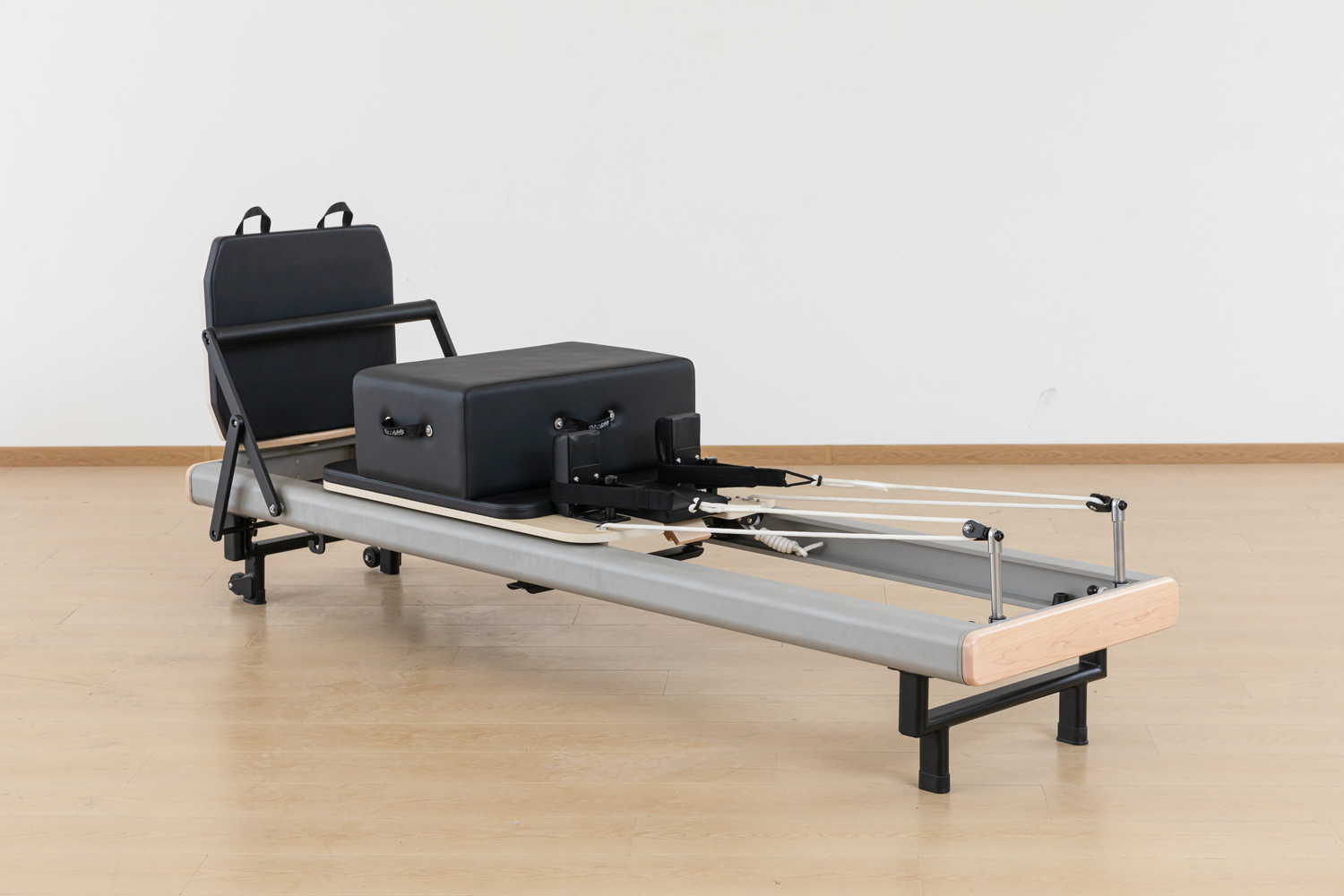
Sturdy Pilates Reformer Machine | Ideal for Home & Commercial Use

The value of a Pilates Reformer is largely determined by its sturdiness — whether the frame holds firm, the carriage glides smoothly, and the springs deliver consistent resistance over years of use. Whether for home practitioners or studio owners, sturdiness is a non-negotiable baseline. This article breaks down the qualities of a "truly sturdy" Pilates Reformer from three angles: structural design, core components, and use cases.
I. Structural Design: Sturdiness Starts with the Frame
The frame is the "skeleton" of the Reformer. A sturdy frame isn't just about weight — it's about smart structural design.
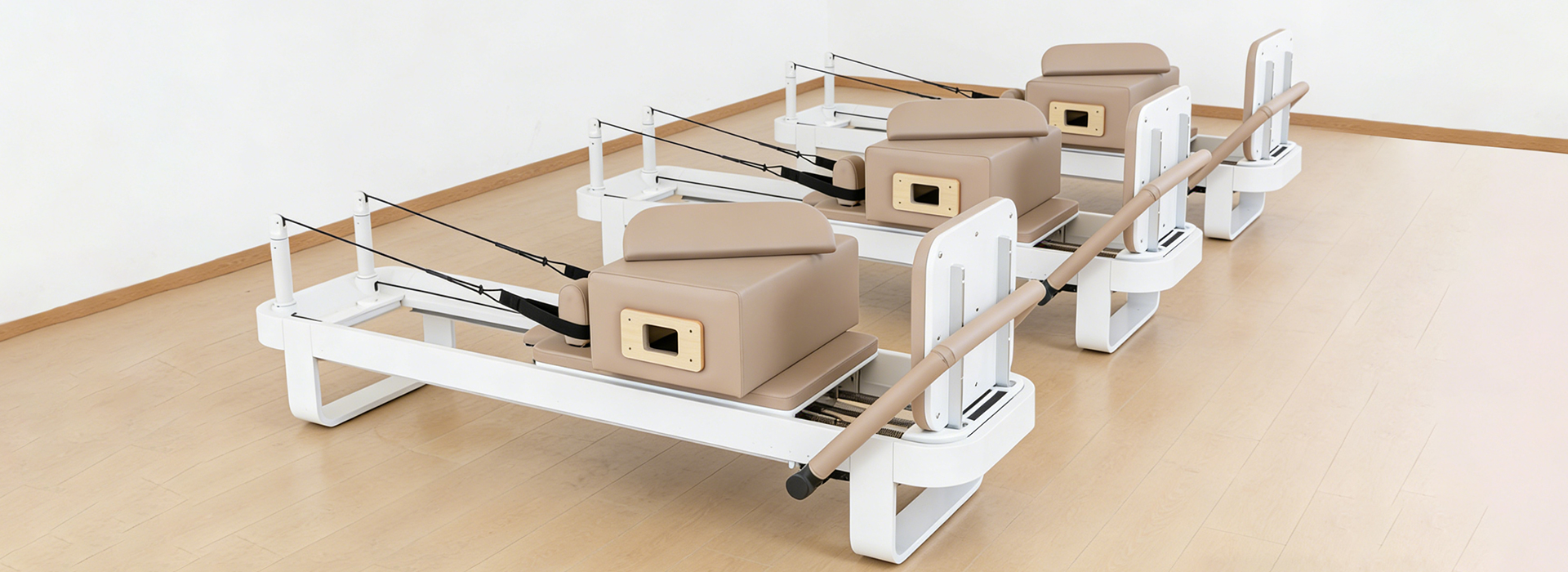
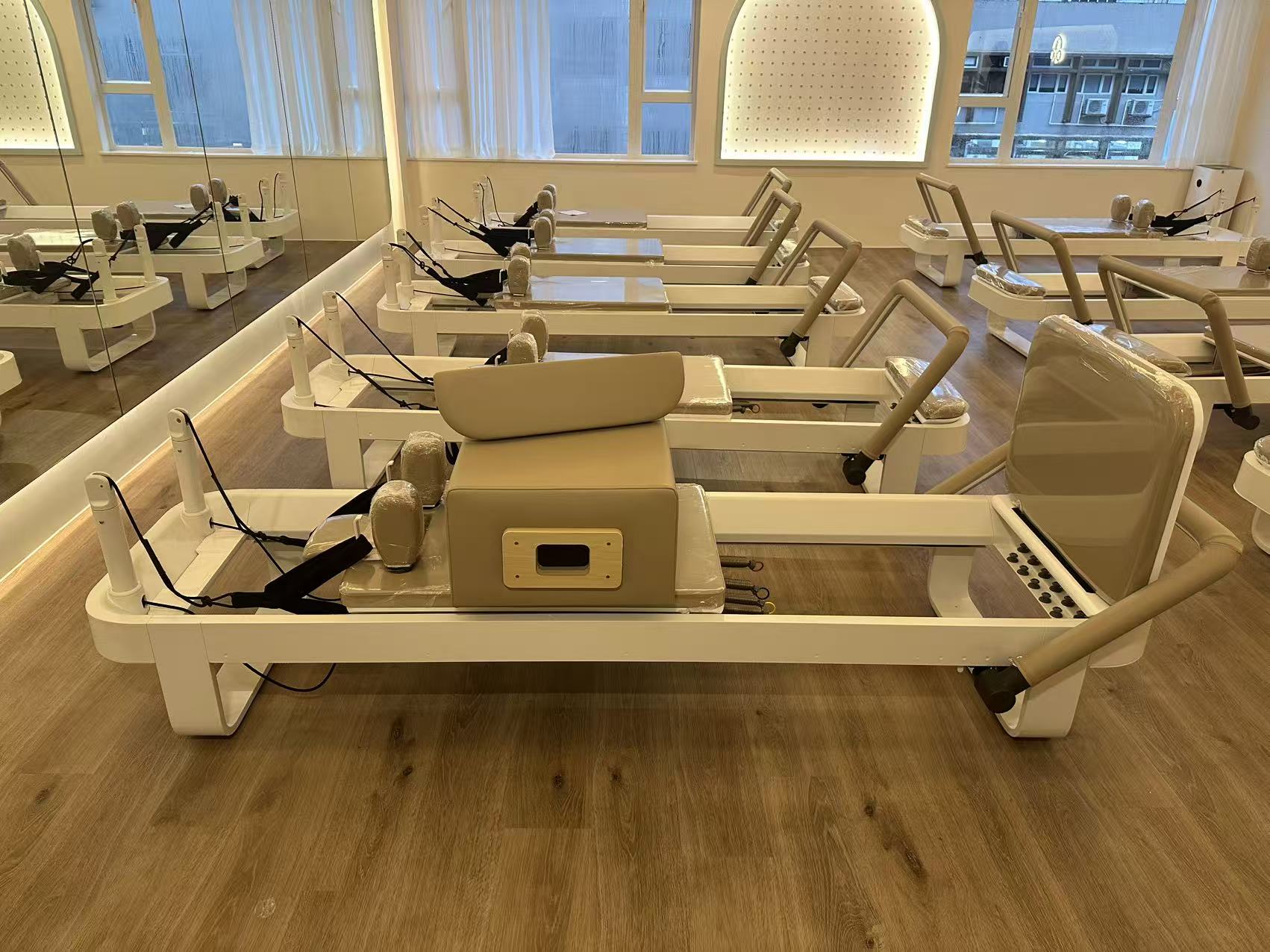
Heavy-gauge steel or high-strength aluminum separates commercial-grade from home-grade equipment. Commercial frame steel thickness should be at least 2mm, with no elastic deformation under full-load gliding and high-intensity exertion. Premium models use integrated bent-form construction to reduce weld joints and increase overall rigidity.
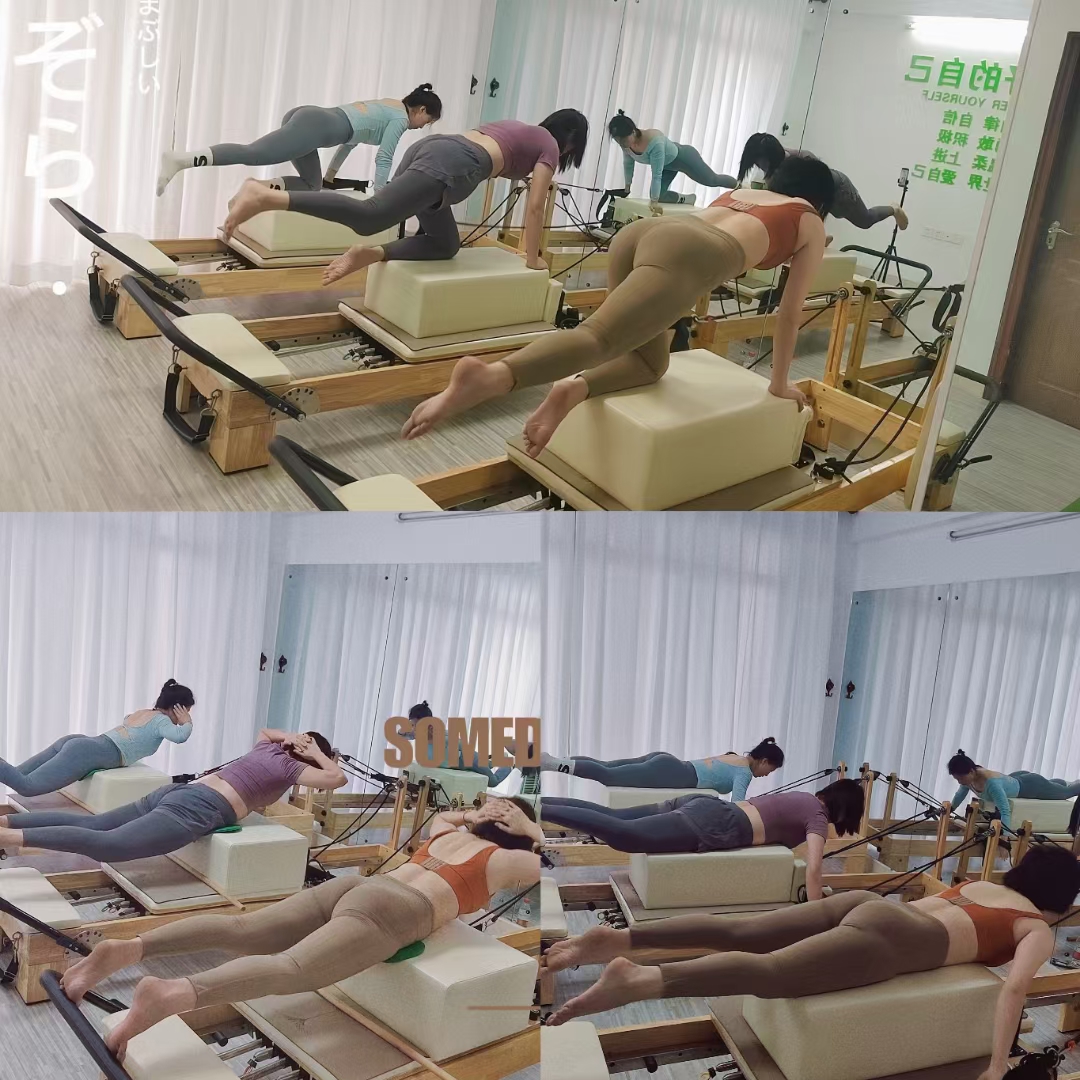
Reinforced integrated rear columns are a clear indicator of frame sturdiness. Budget equipment often uses spliced rear columns that separate under pressure, while sturdy equipment uses integrated reinforced construction that remains solid even during intensive exercise. As one experienced user observed: "A well-built machine stays absolutely still no matter how hard you push."
Adjustable anti-slip feet also affect stability. A sturdy frame needs secure feet to perform — with all four feet making even contact and no rocking on uneven floors.
II. Carriage System: Sturdiness Expressed in Smoothness
The carriage is the Reformer's most active component. Sturdy equipment shows its quality through glide feel.
8-wheel carriage systems are the commercial standard — two wheels at each corner for even load distribution across the full travel range. Quality systems operate quietly and smoothly under full load (approximately 120kg), with no sticking or step-like resistance.
Precision rails and bearings are the heart of glide quality. Aluminum rails with precision bearings deliver consistent smoothness at both high-speed and slow-controlled movements. Anodized rails offer improved wear and corrosion resistance.
Silent wheels matter in both home and commercial settings. Glide noise should remain within acceptable levels — not disturbing family members at home or creating distracting noise overlap in multi-reformer studios. Many premium models now achieve near-silent operation.
III. Spring System: Sturdiness Means "Durable and Precise"
Springs are the "power heart" of the Reformer — their quality directly affects both feel and longevity.
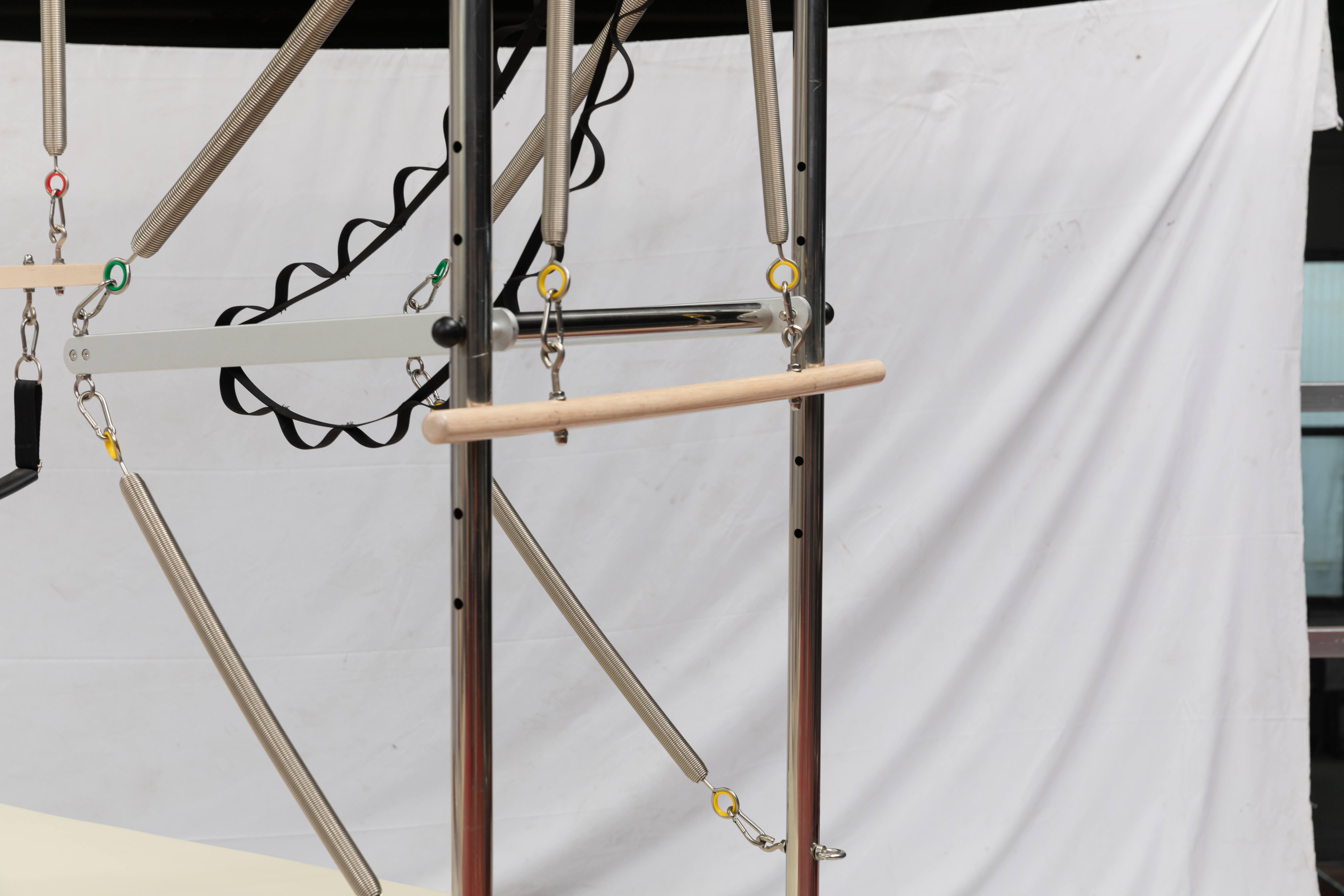
High-quality spring material is the foundation of durability. Commercial-grade springs use German or Japanese imported piano wire with strict heat treatment to eliminate residual stress. Premium springs maintain acceptable force retention after 50,000+ cycles, ensuring consistent feel after years of use.
Spring force consistency is an often-overlooked but critical metric. Springs of the same specification on the same machine should feel nearly identical when stretched. Inconsistent force leads to asymmetric loading, affecting training effectiveness and body symmetry.
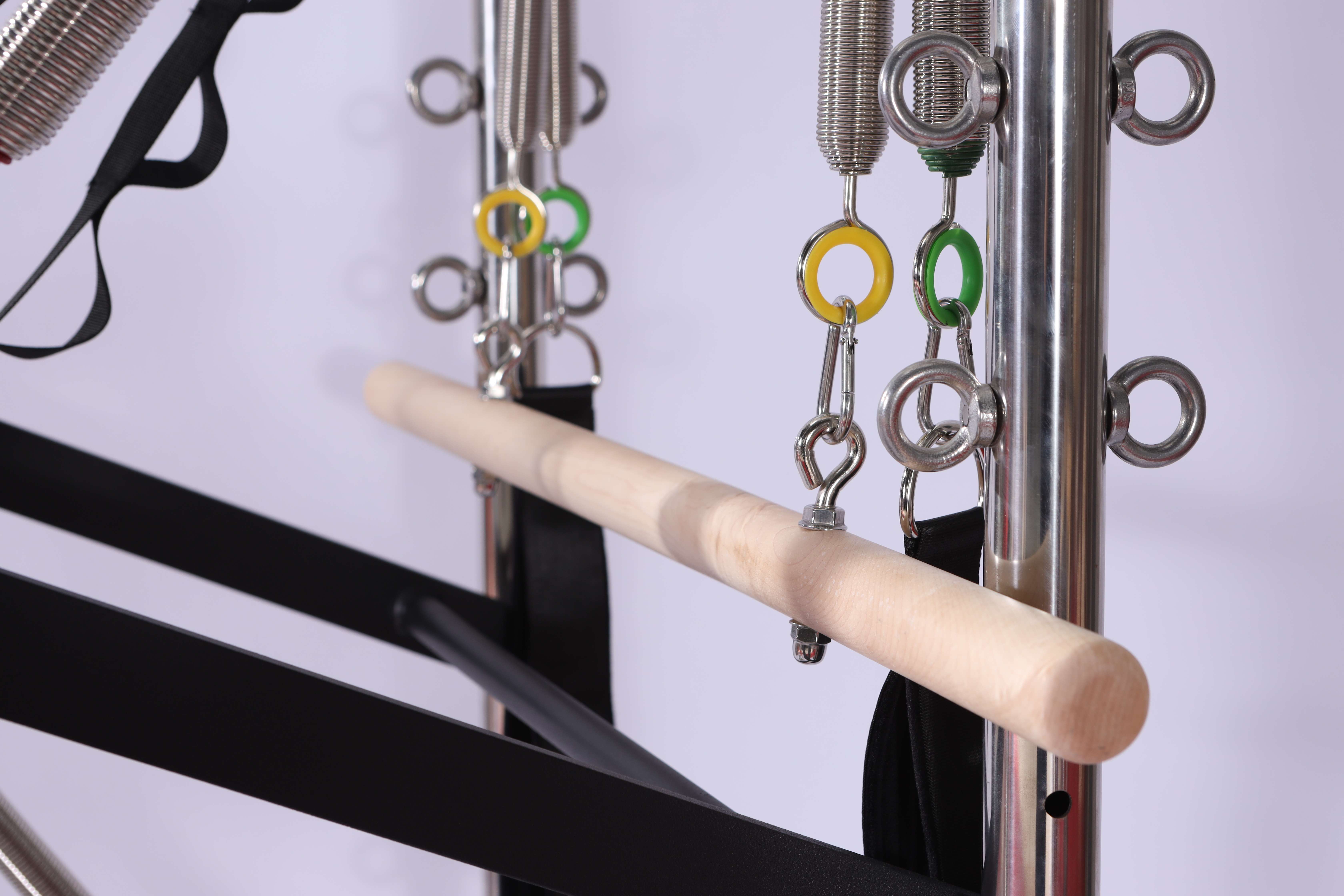
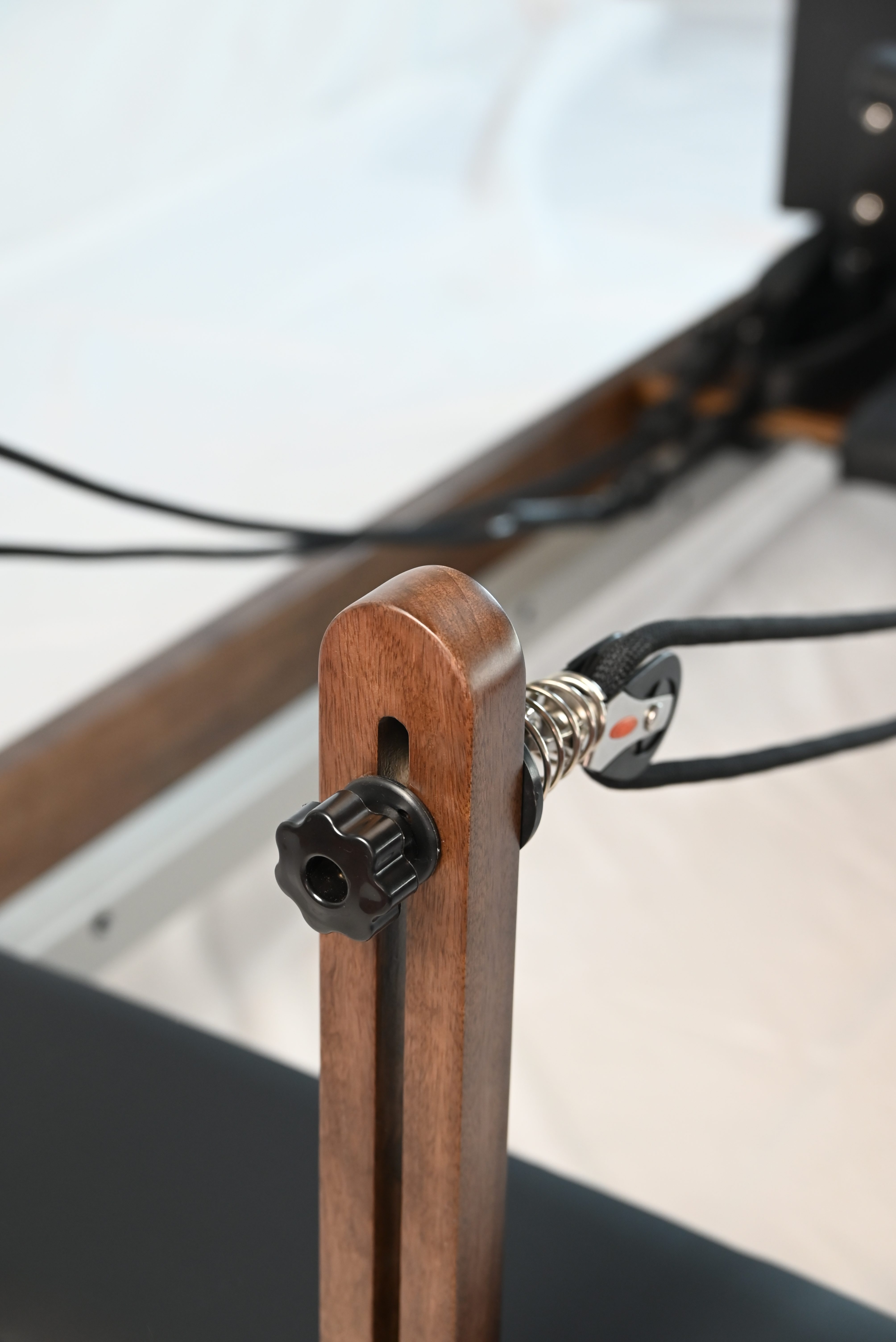
Easy spring change system is a plus for long-term use. Sturdy equipment uses tool-free spring hook designs for quick resistance adjustments to suit different training needs.
IV. Upholstery and Details: Sturdiness Hidden in Plain Sight
Upholstery and finishing details often reveal whether a machine is truly sturdy.
High-density foam (≥45kg/m³) is the foundation of durable upholstery. Low-density foam develops permanent indentations within months, while high-density foam maintains rebound and support after years of use.
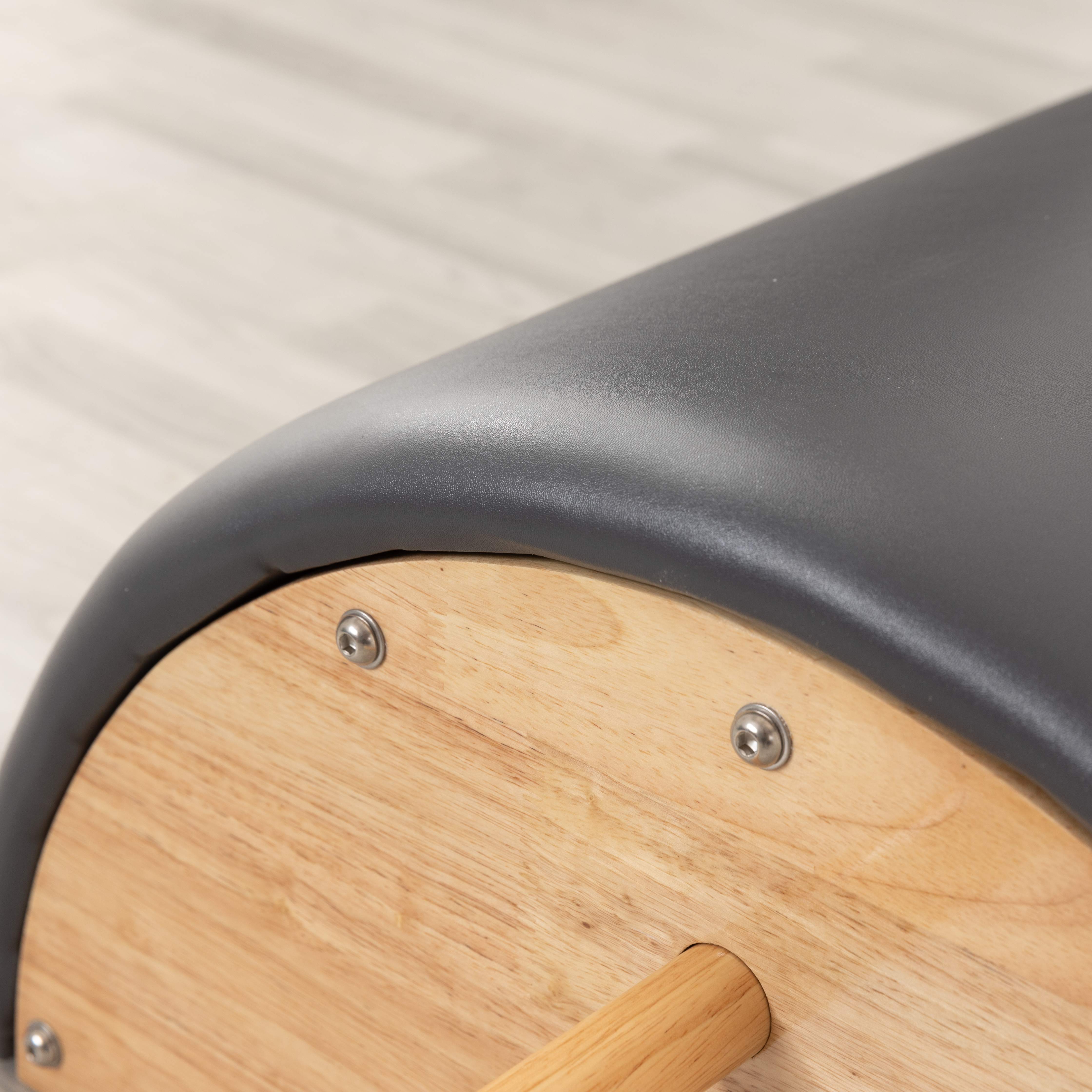
Double-stitching and reinforcement are hallmarks of quality construction. Stress-bearing seams should be double-stitched with even, uniform stitching and reinforced edges. Single or loose stitching tears under frequent use.
Leather-to-foam fit indicates attention to detail. Sturdy upholstery is tightly bonded to foam with no looseness or hollow spots — edges are fully wrapped with no exposed foam.
V. Use Cases: Balancing Home and Commercial Use
A truly "sturdy" reformer should perform well in both home and commercial settings.
Home Use: Sturdy means "stable without wobble, quiet without disturbing, and storable when not in use." Wooden frames offer natural sound absorption and warm aesthetics that integrate into living spaces.
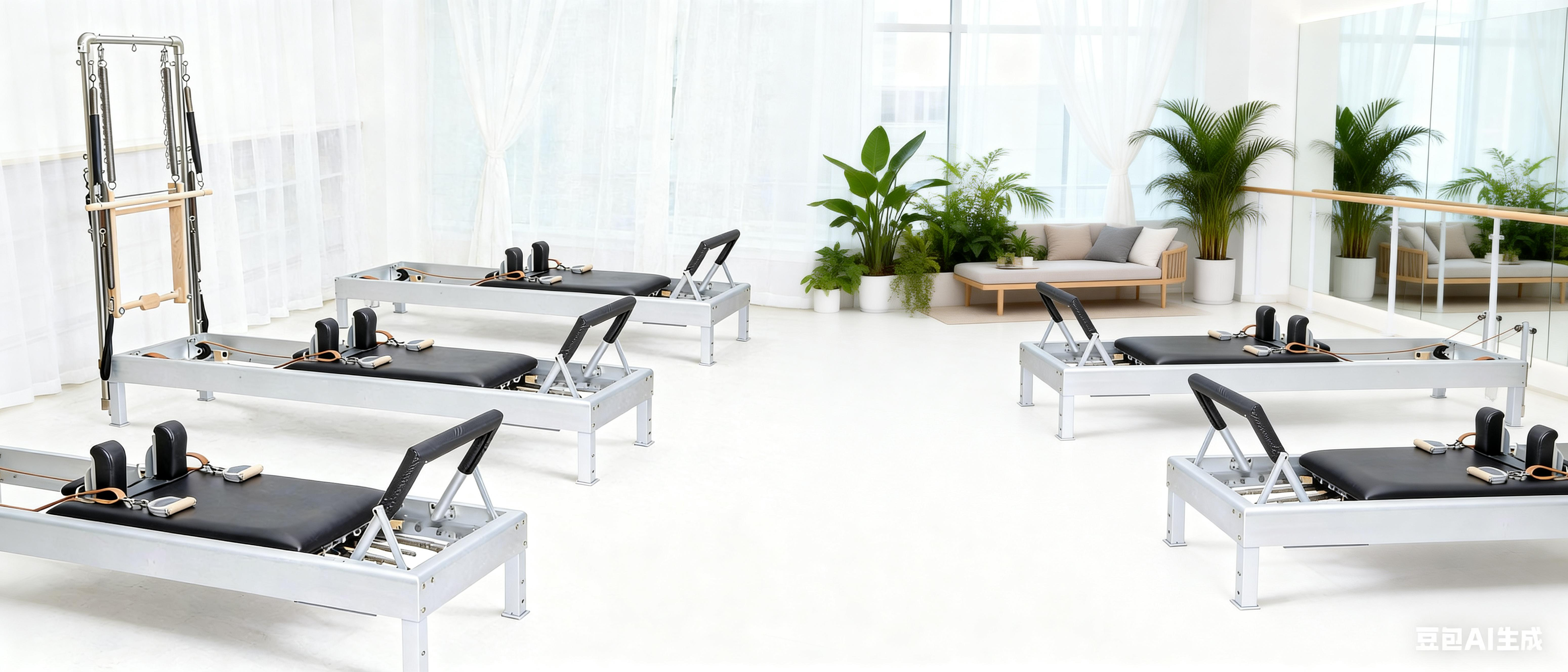
Commercial Use: Sturdy means "withstanding 8-12 hours of daily use without failure, with 5-10 year frame warranties, and replaceable springs with available parts." Commercial equipment prioritizes heavy-gauge steel or aluminum frames, imported piano wire springs, and 8-wheel carriage systems.
Dual-Use Models: In recent years, many brands have introduced models that bridge home and commercial use — offering commercial-grade frame and spring standards while accommodating home users' folding/storage and noise requirements. These products typically price between pure home and pure commercial models — ideal for high-frequency home users and smaller studios.
VI. Quality Assessment: From Appearance to Real-World Feel
To judge whether a Reformer is truly sturdy, evaluate from these angles:
Frame stability test: Perform lateral exercises on the equipment and observe whether the entire machine wobbles or shifts. Sturdy equipment stays solid even under high-intensity movement.
Glide smoothness test: Sit on the carriage and glide from one end to the other at consistent speed, feeling for even resistance throughout. Sturdy equipment has no step-like resistance.
Noise test: Glide in a quiet environment — listen for metal friction or wheel impact sounds. Sturdy equipment produces no extra noise beyond gentle wheel movement.
Weld point inspection: Visually inspect all metal welds — uniform fish-scale patterns are a mark of quality construction.
Summary: A truly sturdy Pilates Reformer is defined by four dimensions: a solid frame, smooth carriage operation, precise springs, and durable upholstery. When selecting, prioritize load capacity, glide quality, spring material, and warranty terms. Sturdy equipment may not be the most expensive, but it is the one that doesn't compromise on any critical component — because genuine sturdiness isn't achieved by adding weight, but by making careful choices at every detail level.