Home-Use Pilates Reformer vs Commercial Grade: Core Construction Differences
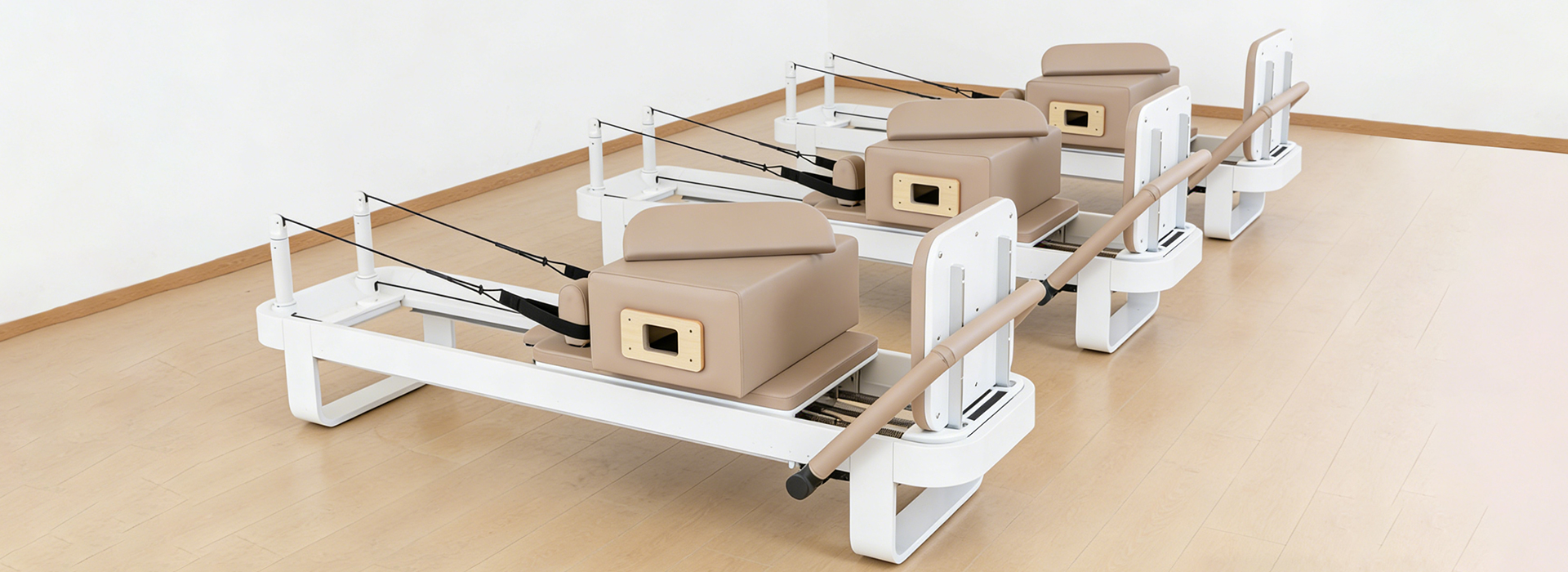
When sourcing Pilates reformers for resale, studio operation, or retail distribution, global importers and buyers often face a critical choice: home-grade or commercial-grade equipment. While home-use and commercial Pilates reformers look nearly identical in appearance, their internal construction, material durability, structural stability, and load-bearing design differ drastically. These core construction differences directly determine service life, user safety, daily bearing capacity, and after-sales failure rates.
For B2B buyers, distinguishing structural gaps between home and commercial reformers is essential to avoid wrong inventory positioning, customer complaints, and profit losses. This article analyzes the key construction differences from frame structure, sliding system, spring configuration, accessory durability, and overall workmanship, helping distributors and studio owners make accurate purchasing decisions.
1. Frame Material & Structural Stability
The frame is the backbone of a Pilates reformer, and it creates the biggest structural gap between home and commercial models.
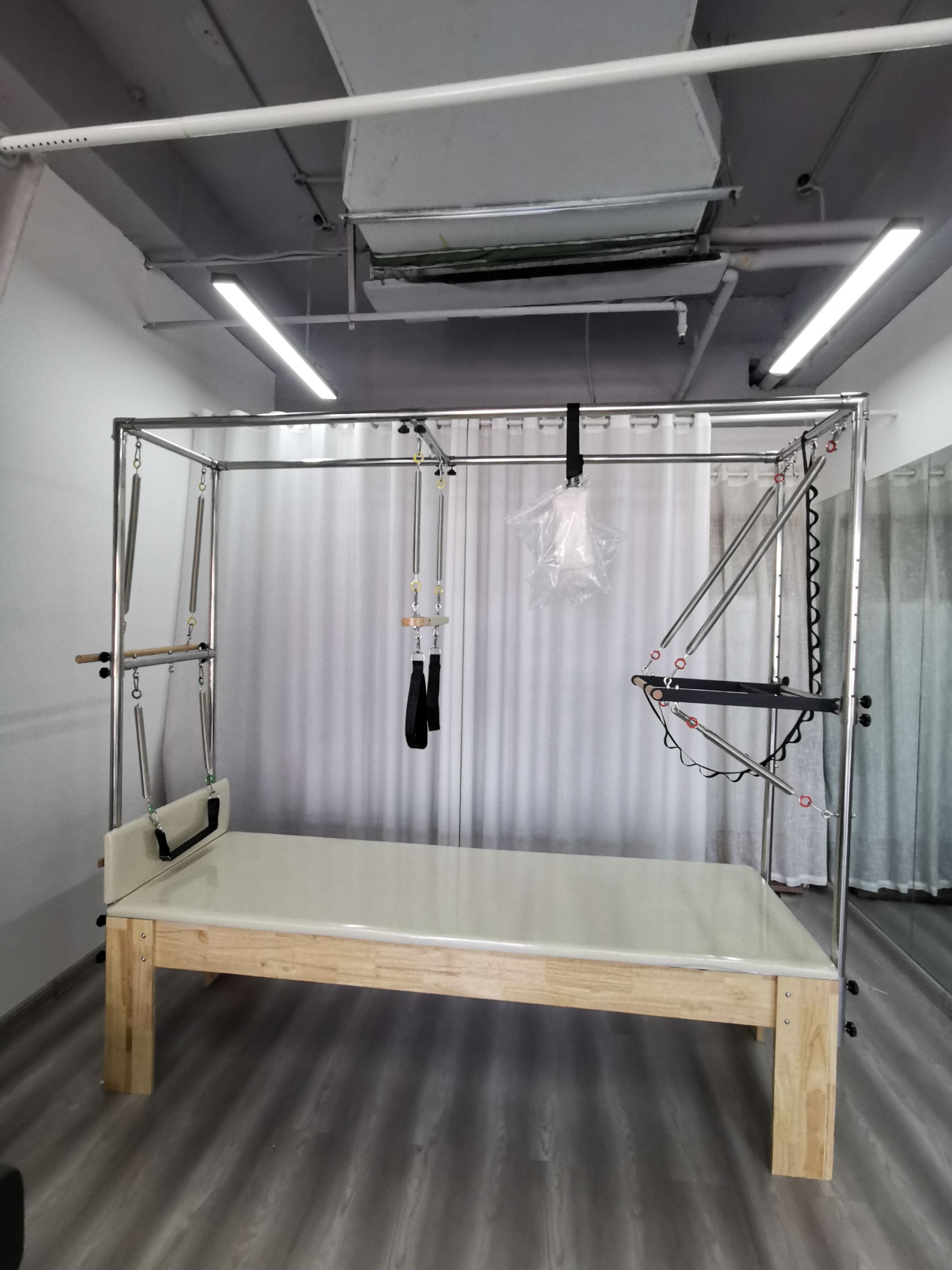
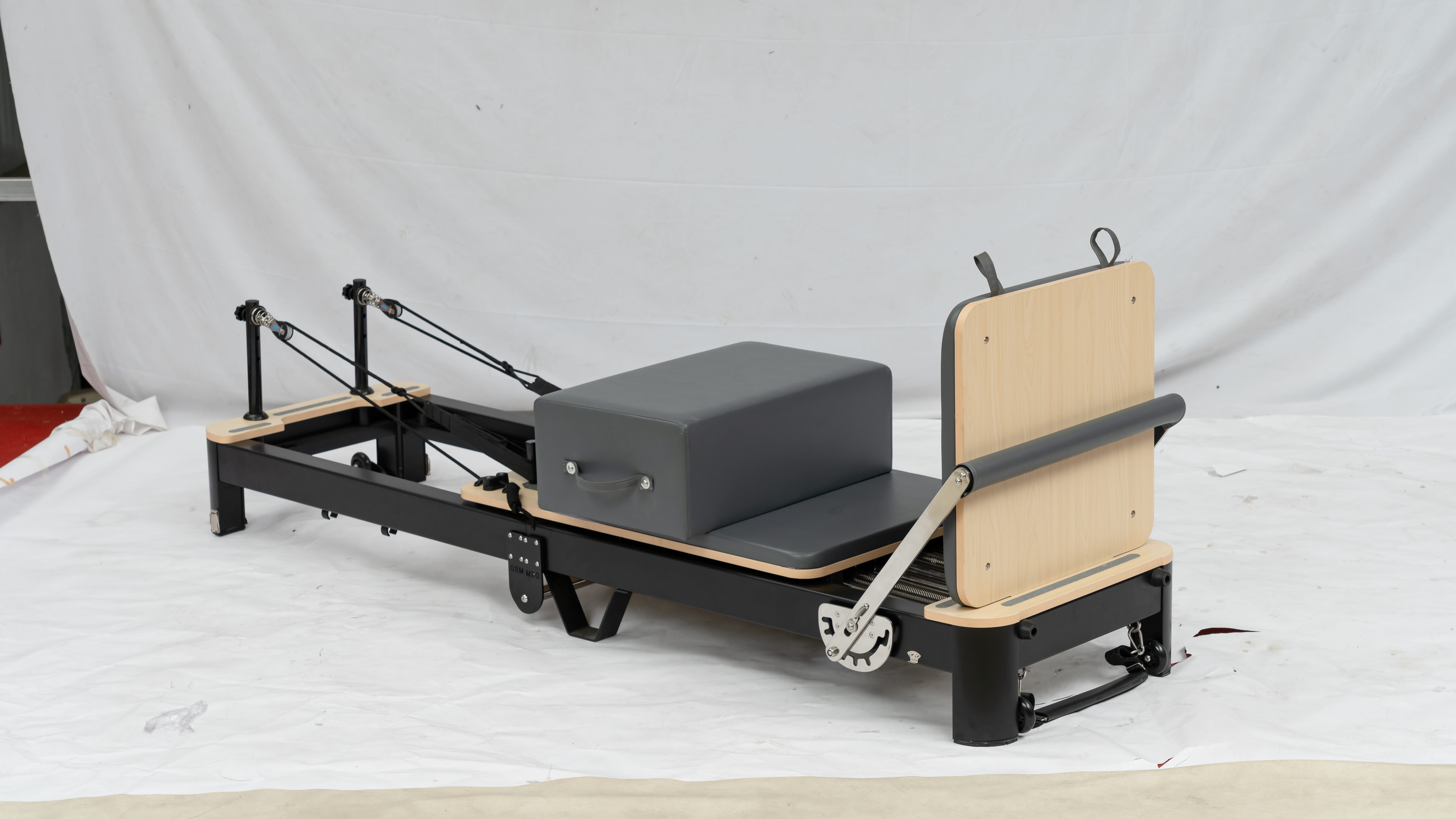
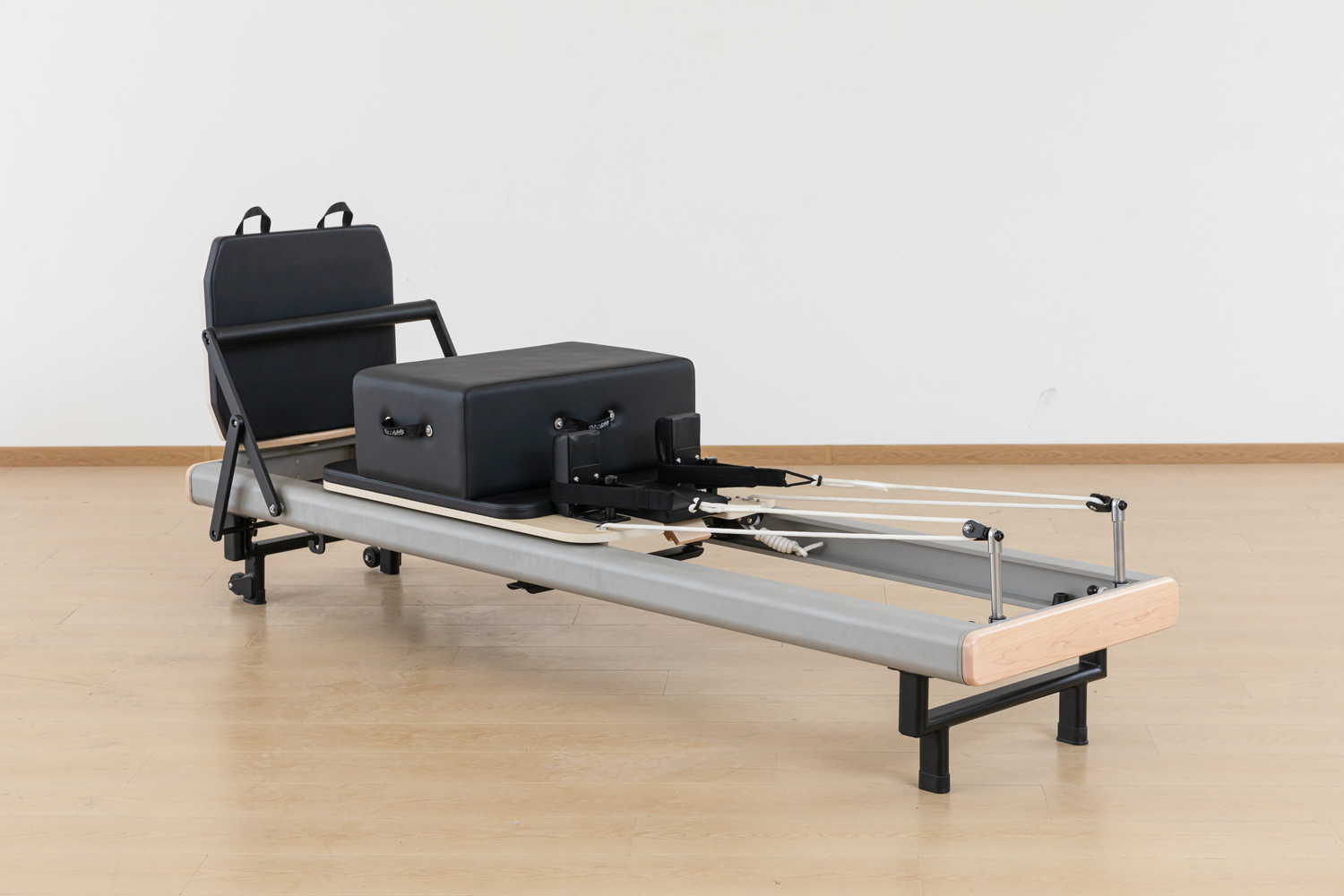
Home-use reformers adopt lightweight and cost-effective frame designs. Most use thin-walled steel tubes, low-density solid wood, or spliced wood panels to reduce production costs and overall weight for easy household movement. The frame structure is simplified with fewer reinforcing support points. It can fully meet low-frequency, short-time personal training but cannot withstand long-term continuous pressure and frequent dynamic movement. After long use, deformation, shaking, and loose joints commonly occur.
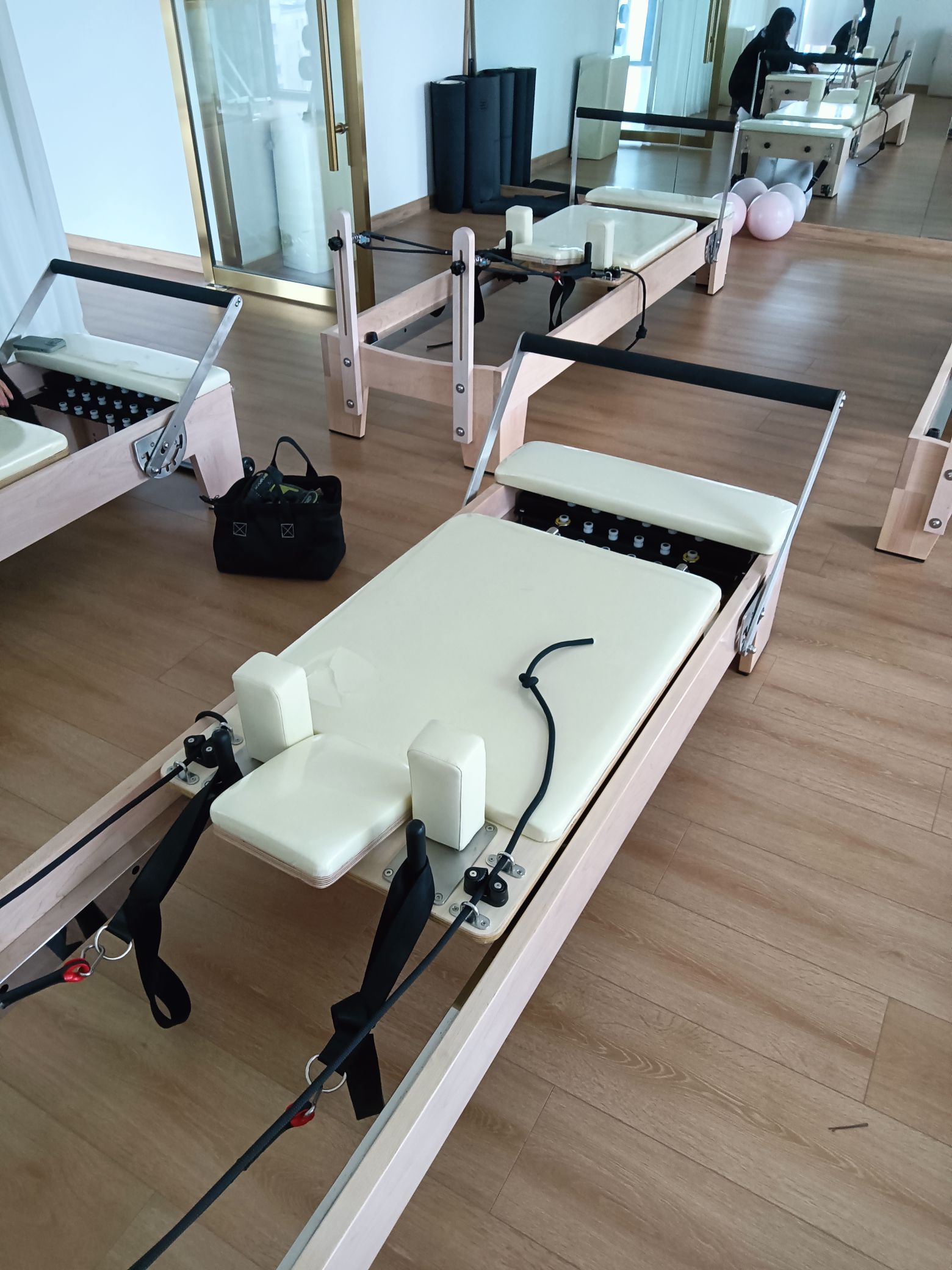
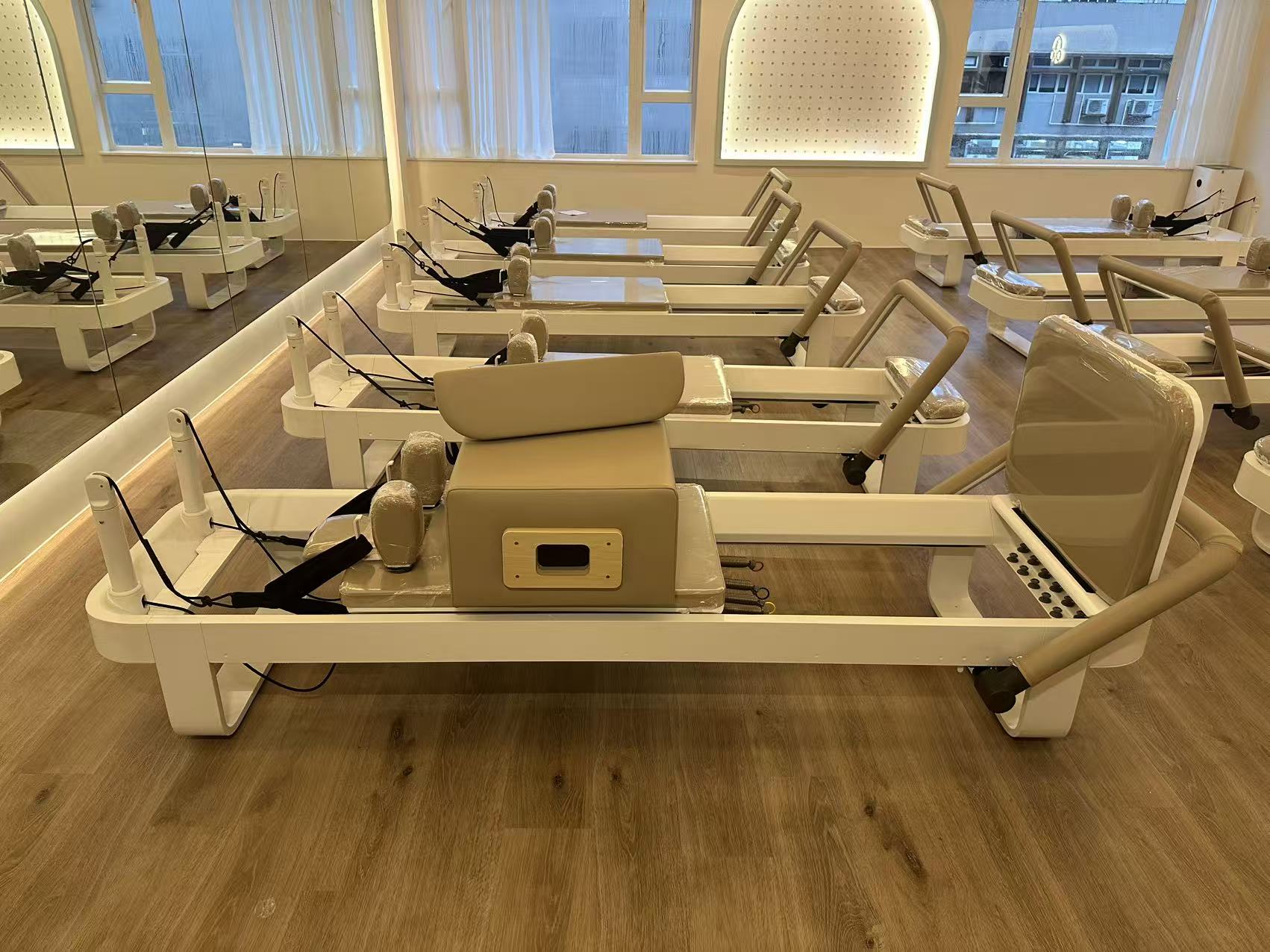
Commercial-grade reformers focus on extreme stability and load resistance. They adopt thickened high-strength steel frames or high-density imported maple wood with integrated molding technology. Multiple reinforced support beams and cross-bracing structures are added at key stress points. The whole frame is tightly connected with high-precision fixing parts, ensuring no shaking or displacement even under long-term high-frequency commercial use. The structural stability supports 24/7 studio scheduling and heavy-load professional training.
2. Sliding System & Wheel Construction
The carriage sliding system including vertical wheels and horizontal guide wheels is the most frequently worn part and another core difference between the two grades.
Home reformers are equipped with ordinary plastic or thin silent wheels with simple single-buffer structure. The wheel gap tolerance is large, and the guiding precision is low. During repeated sliding, the carriage is prone to deviation, jitter, and slight noise. The wheel shaft structure is relatively simple, only suitable for occasional household use, and will wear out rapidly under continuous commercial operation.
Commercial reformers adopt upgraded professional silent wheel systems. Matching high-precision vertical and horizontal guide wheels features wear-resistant, shock-absorbing, and anti-slip structures. The sliding track is finely polished with zero jitter and mute operation. The wheel shaft and limit structure are thickened and reinforced to adapt to thousands of sliding movements every day. It maintains smooth, stable, and noiseless sliding for years without deviation or abnormal wear.
3. Spring Tension & Structural Durability
Spring configuration directly affects training effect and equipment fatigue resistance.
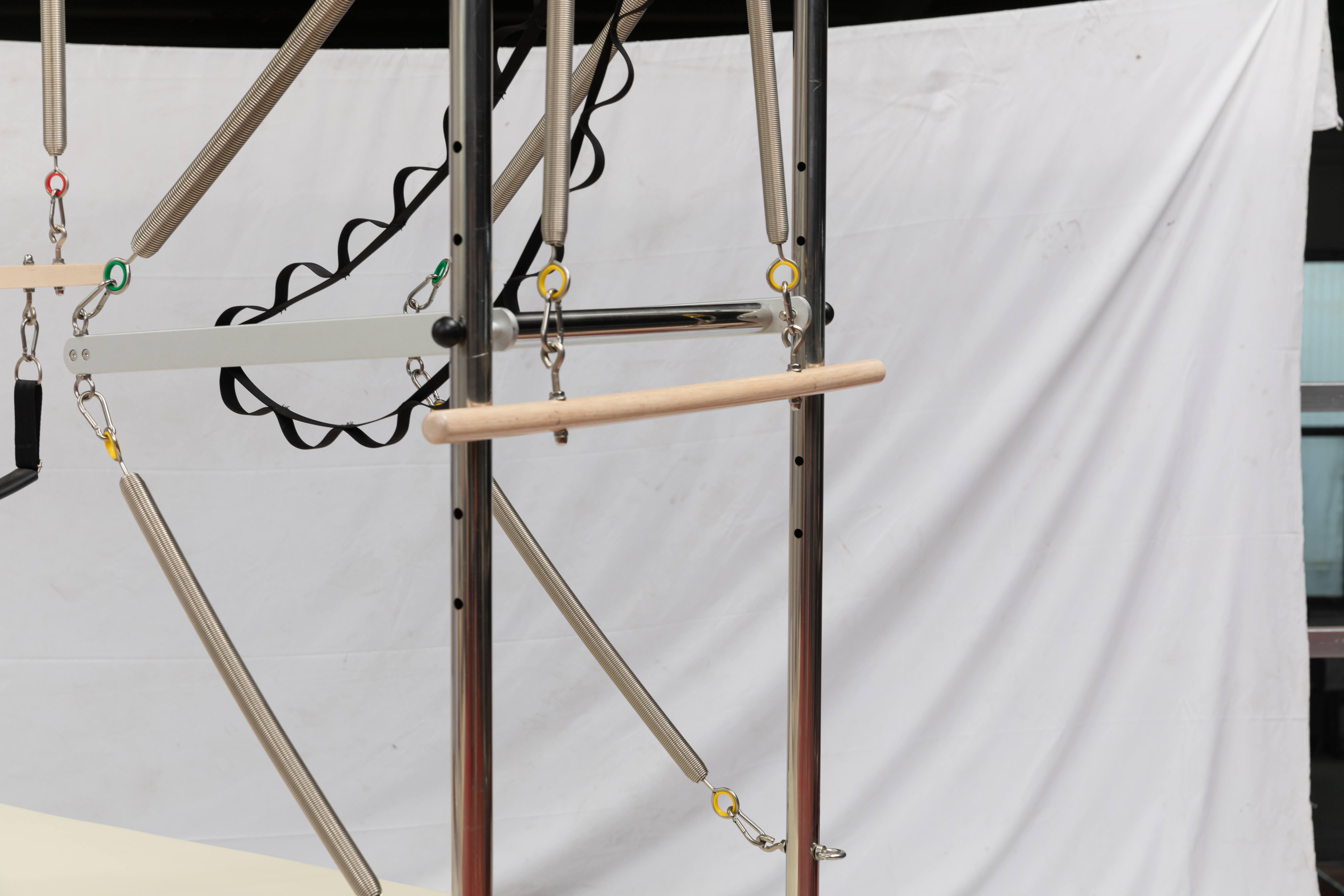
Home Pilates reformers are configured with conventional ordinary springs with single tension range and ordinary elasticity. The spring steel material is standard, with limited fatigue resistance. Long-term high-intensity stretching will cause elastic attenuation, deformation, and even breakage. The tension grading is simple, unable to meet professional multi-level strength training needs.
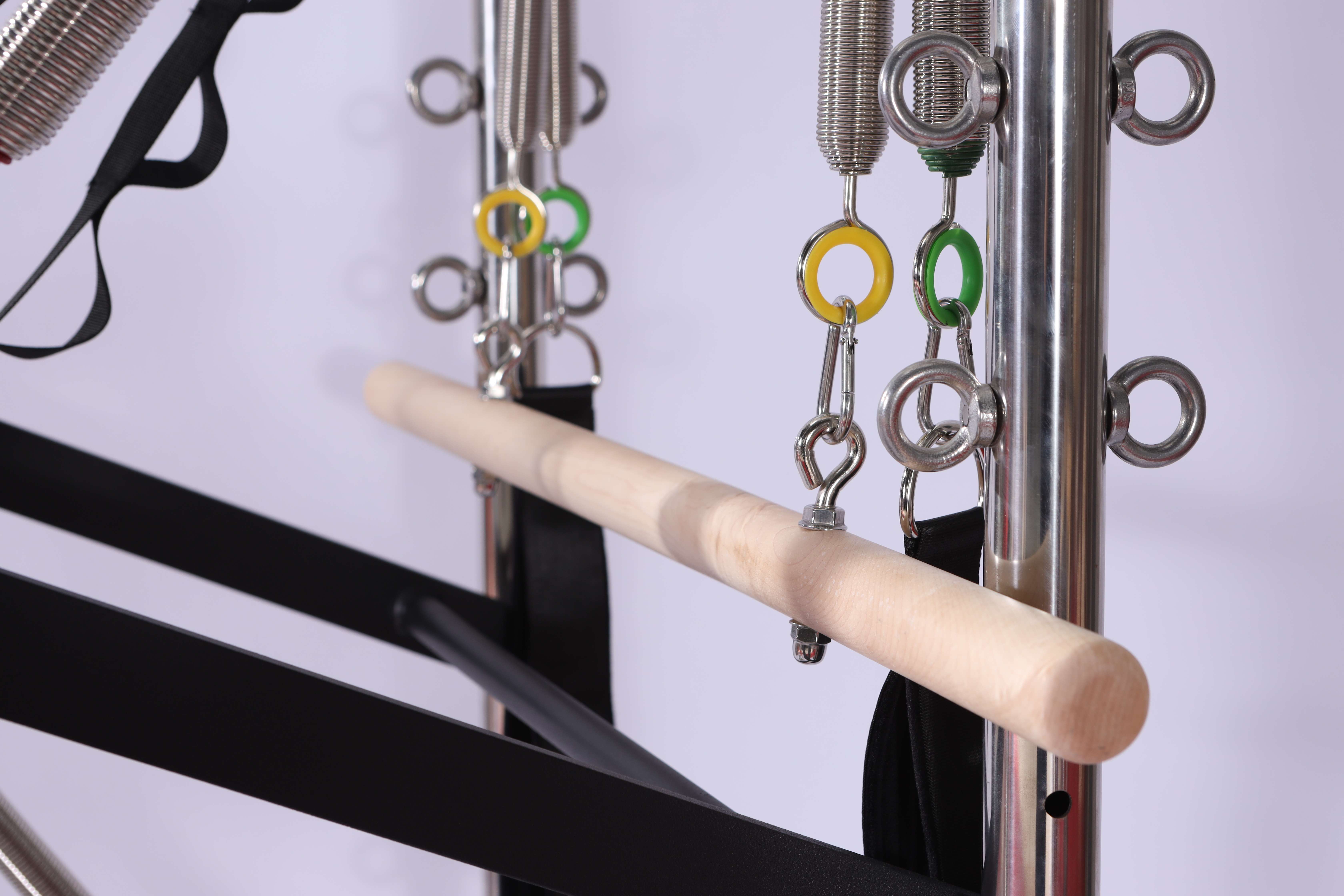
Commercial models use high-tension imported alloy springs with multi-stage precise tension grading, covering beginner, intermediate, and professional training intensity. The springs undergo special anti-fatigue and anti-rust treatment, supporting long-term high-frequency stretching without elastic loss or deformation. Meanwhile, the spring fixing base and connecting structure are thickened to avoid loosening and falling off during high-load movement, ensuring long-term structural safety.
4. Anti-Slip & Shock-Absorbing Construction
Commercial studios require stable, silent, and floor-protective equipment, while home equipment simplifies these auxiliary structures.
Home reformers are fitted with simple thin rubber foot pads with basic anti-slip functions but no professional shock-absorbing gaskets. During intense training, the equipment is easy to shift and produce vibration noise, and the hard contact easily scratches the home floor.
Commercial-grade reformers adopt an all-round buffered anti-slip structure. Thickened high-friction non-slip foot pads fix the equipment firmly on any studio floor. Multiple shock-absorbing gaskets are installed at the track contact points and limit positions to eliminate metal collision noise and vibration. This professional construction ensures zero displacement, zero noise, and floor protection during high-frequency commercial classes.
5. Accessories & Connection Structure
Small accessories fully reflect construction grade differences, including star knobs, foot bars, headrests, and limit stoppers.
Home-use accessories are lightweight and simply structured. Ordinary plastic star knobs are easy to slip and age. Foot bar and headrest filling are thin with poor resilience. The connection gap is large, resulting in loose assembly after a period of use.
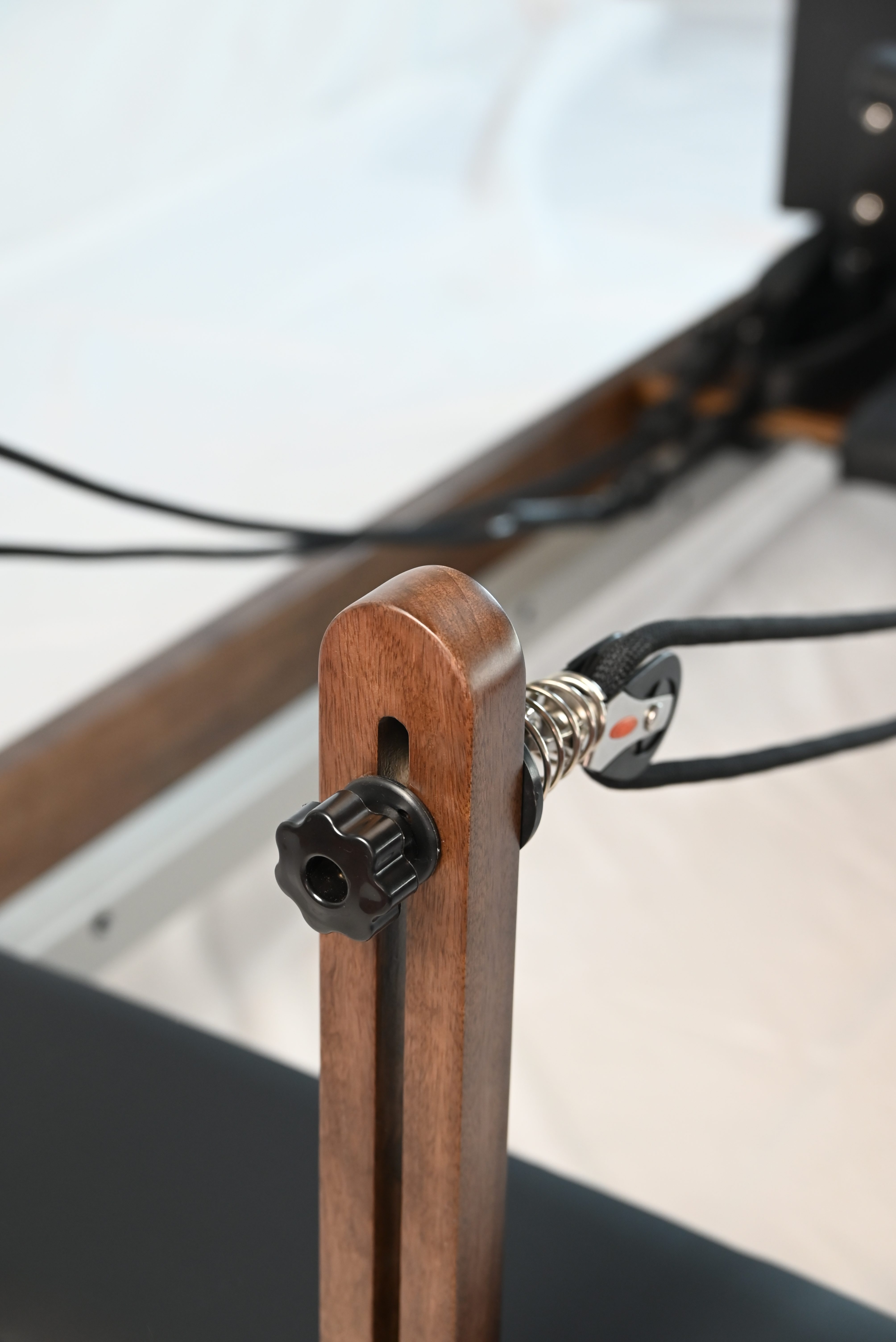
Commercial reformers adopt reinforced all-metal star knobs, anti-slip thickened foot bars, and high-elastic durable sponge headrests. All connecting parts are precisely matched with tight tolerance. Every adjustable position is locked stably without shaking or slipping. The accessory construction is designed for long-term repeated adjustment and high-intensity use, greatly reducing replacement and maintenance costs.
6. Load-Bearing Standard & Service Life
Due to the overall construction differences, the load capacity and service life of the two types of equipment are vastly different.
A standard home Pilates reformer supports low-frequency use, with a service life of 2–3 years. Long-term high-intensity use will accelerate structural aging and failure.
Commercial reformers strictly comply with EN ISO 20957 commercial fitness equipment safety standards. The whole machine is designed for high-frequency daily use, with a stable service life of more than 8–10 years. The anti-aging, anti-wear, and anti-deformation construction fully meets the long-term operation needs of Pilates studios and rehabilitation institutions.
Conclusion
The essential difference between home-use and commercial Pilates reformers lies in core construction durability and structural stability, not just appearance. Home models are suitable for personal low-frequency fitness, while commercial-grade reformers adopt upgraded frames, sliding systems, spring structures, and shock-absorbing configurations to adapt to high-intensity, long-term studio operation.
For fitness importers, distributors, and studio buyers, selecting standard commercial construction equipment is the key to reducing after-sales risks, improving customer reputation, and maintaining long-term competitive advantages in the global Pilates equipment market.