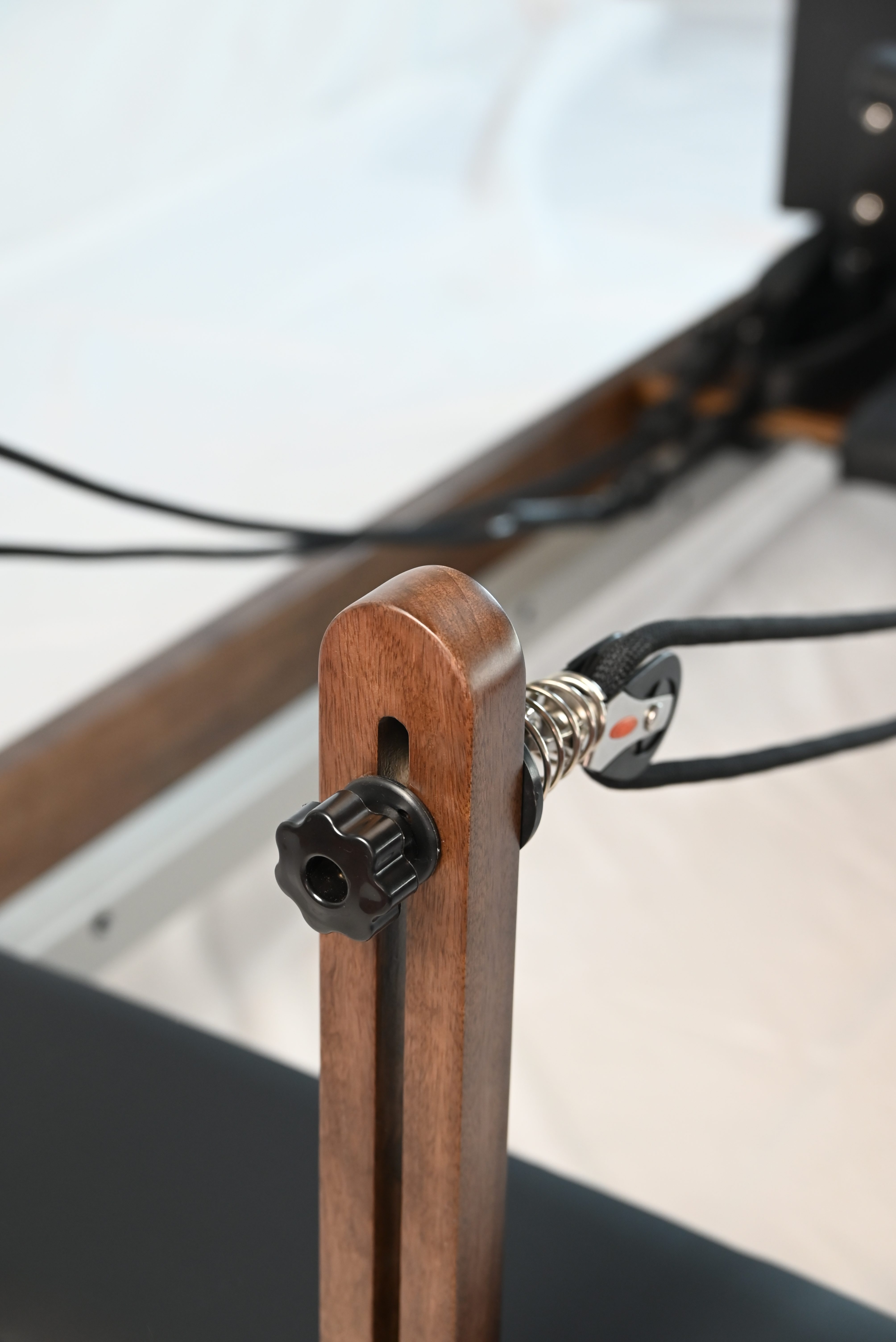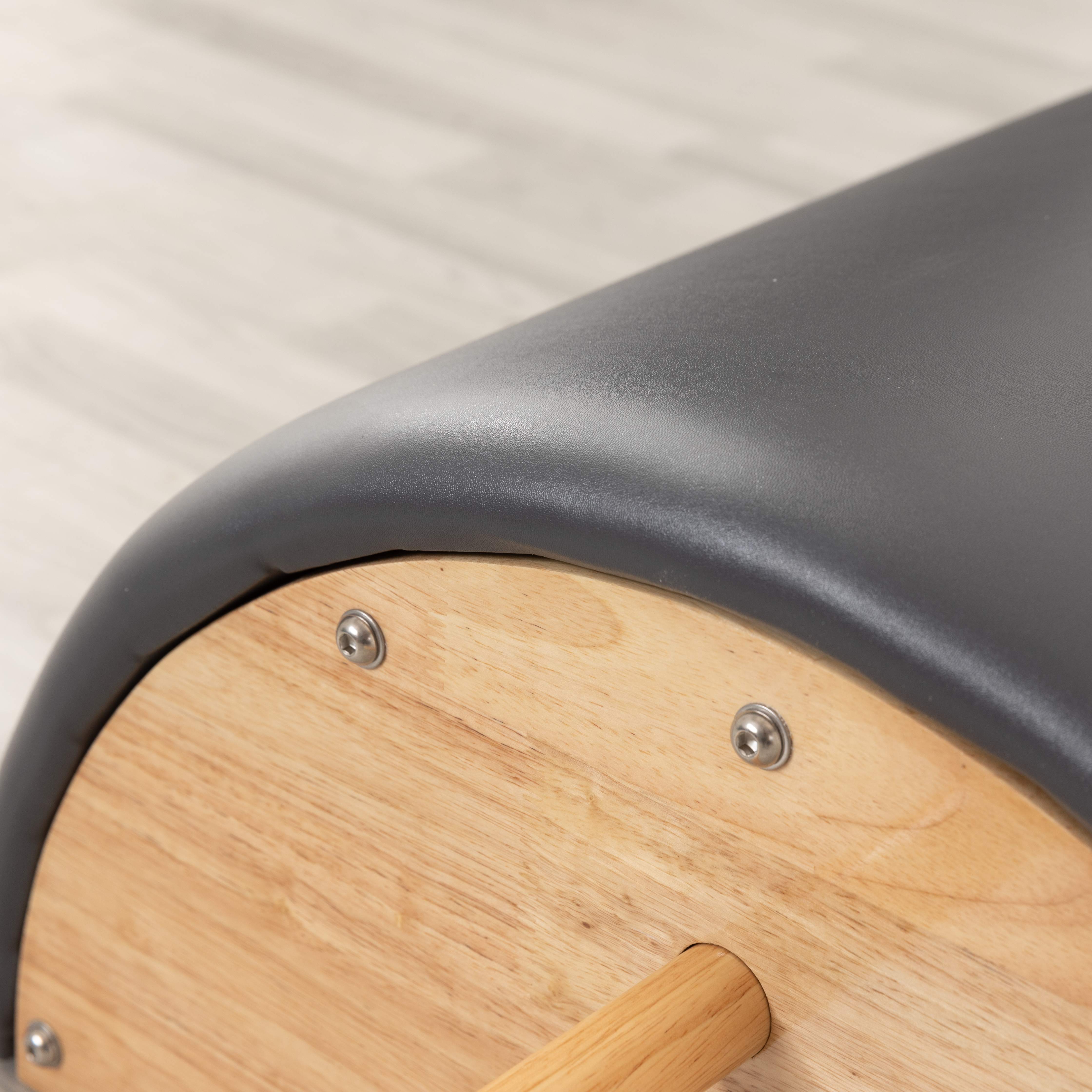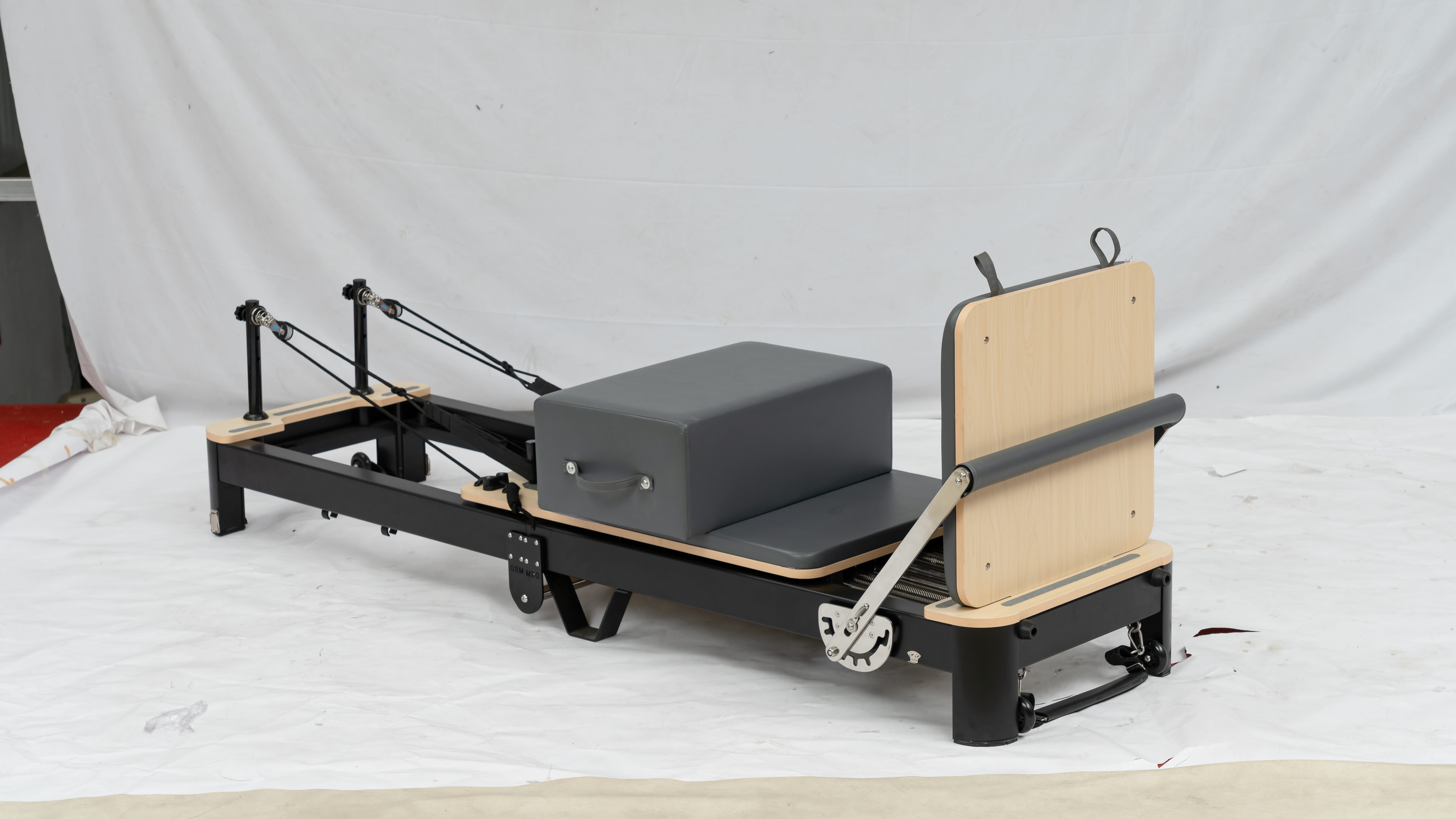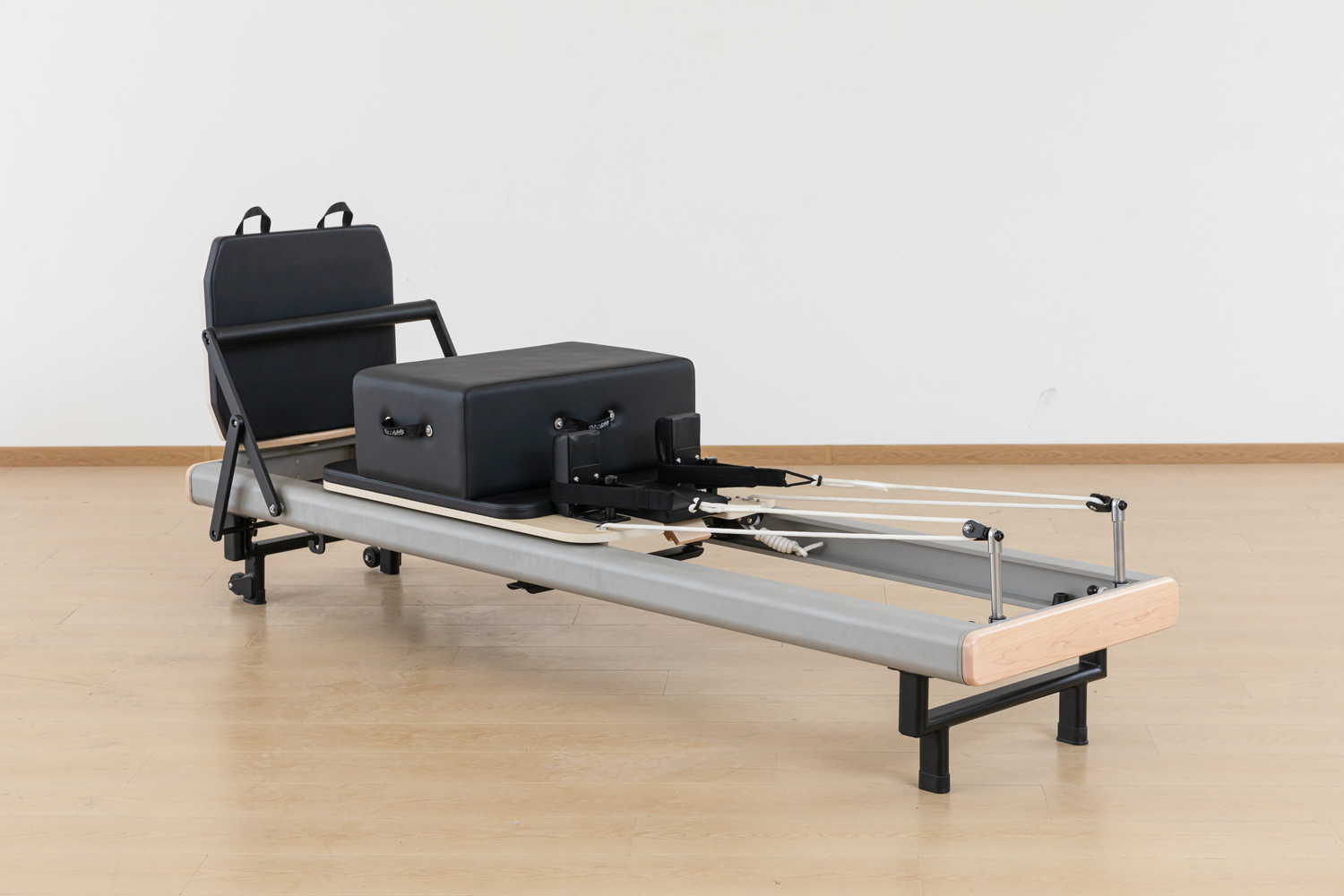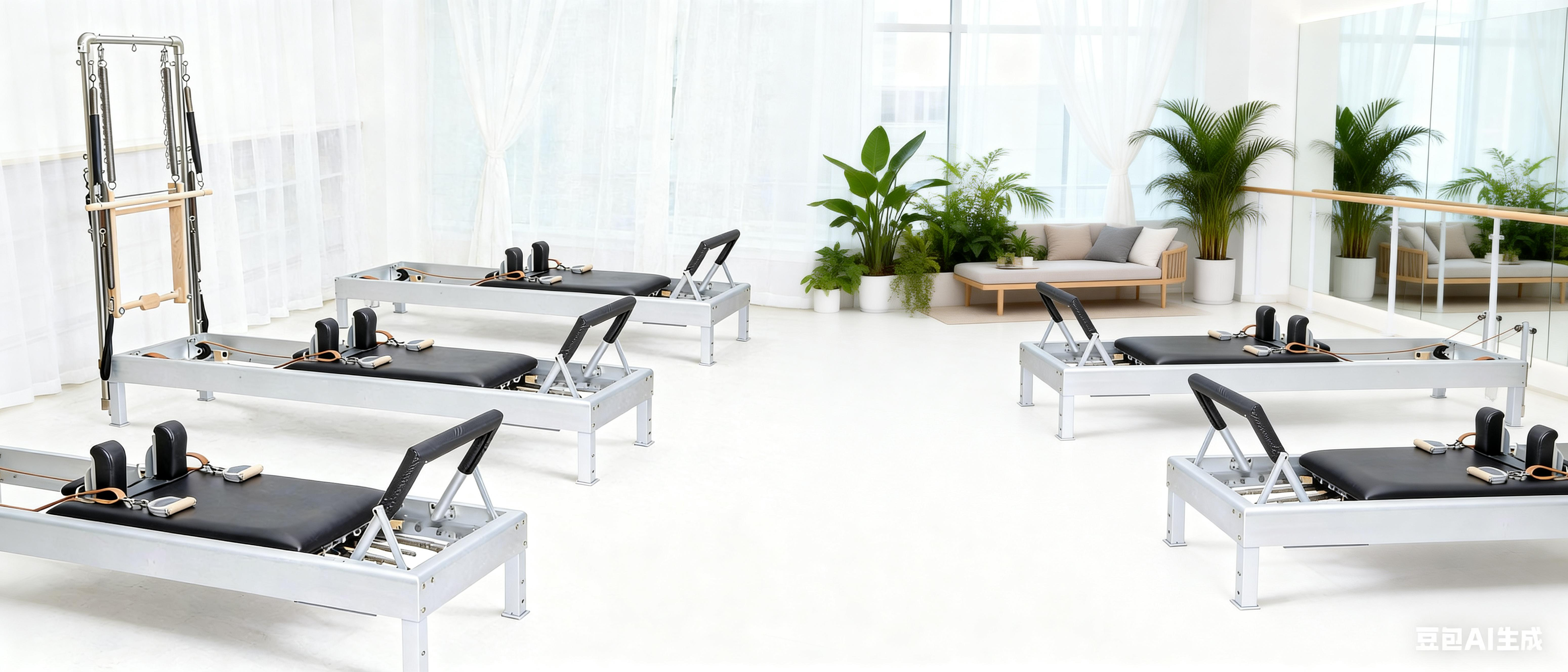
Premium Solid Oak Pilates Reformer | Long‑Lasting Fitness Equipment
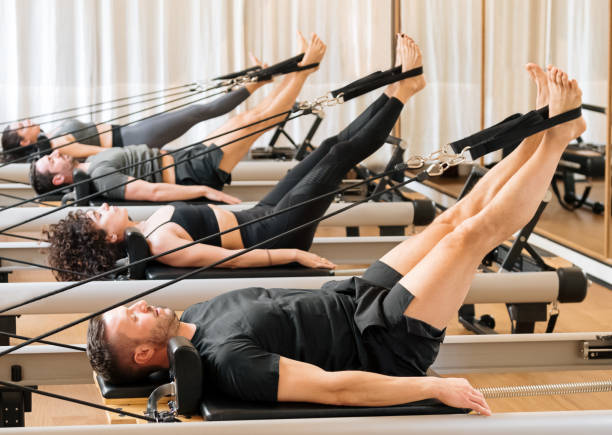
In the Pilates equipment market, oak reformers represent a specific value proposition — not the lightest, not the cheapest, not the most "modern" — but prioritizing durability, stability, and natural texture above all else. For users who want equipment that will last a decade or more, and perhaps even become a piece of "fitness furniture" in their home, solid oak is a choice worth serious consideration.
I. Why Choose Oak?
Pilates reformer frames come in three main material categories: carbon steel, aluminum alloy, and solid wood. Among hardwoods, maple, beech, and oak are the three most common choices, each with a distinct character.
Oak's core advantage is hardness and density. Oak has a Janka hardness of approximately 1,360 lbf — higher than most common hardwoods except maple (approximately 1,450 lbf), and far exceeding softwoods like pine. This means oak frames resist dents, scratches, and deformation far better in daily use. For Pilates equipment that bears repeated carriage movement and body weight daily, this hardness translates directly into longer service life.
Oak's grain is highly recognizable. The bold, distinct cathedral grain gives oak frames a solid, substantial visual character. Compared to maple's fine texture and beech's uniformity, oak's grain communicates "durable" and "sturdy" visually.
Oak supply is relatively stable. North American red oak and white oak are abundantly available with mature supply chains, making oak equipment generally more competitively priced than equivalent maple products while maintaining high quality.
II. Durability Performance of Solid Oak Reformers
"Durability" is the core selling point of oak reformers, demonstrated in several ways:
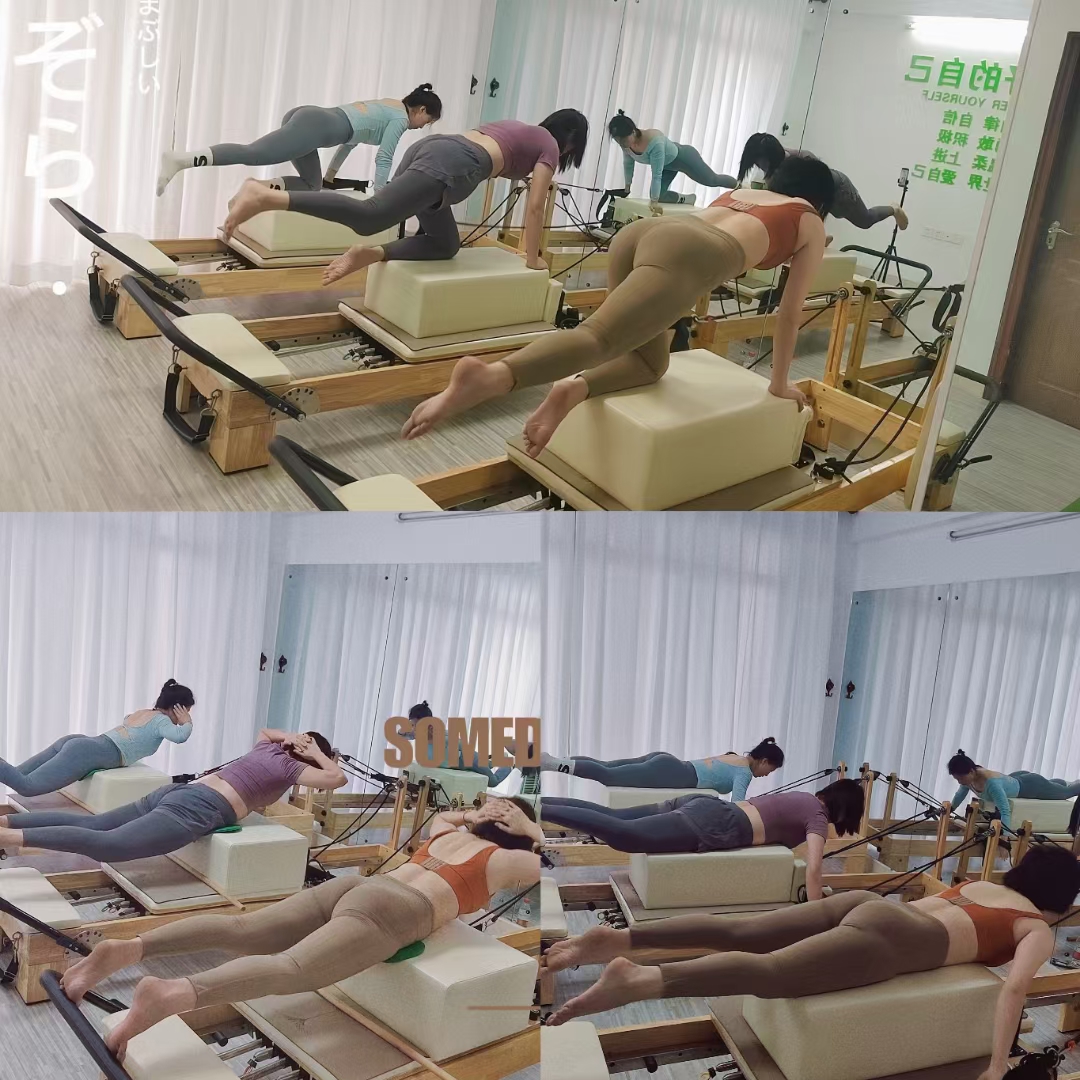
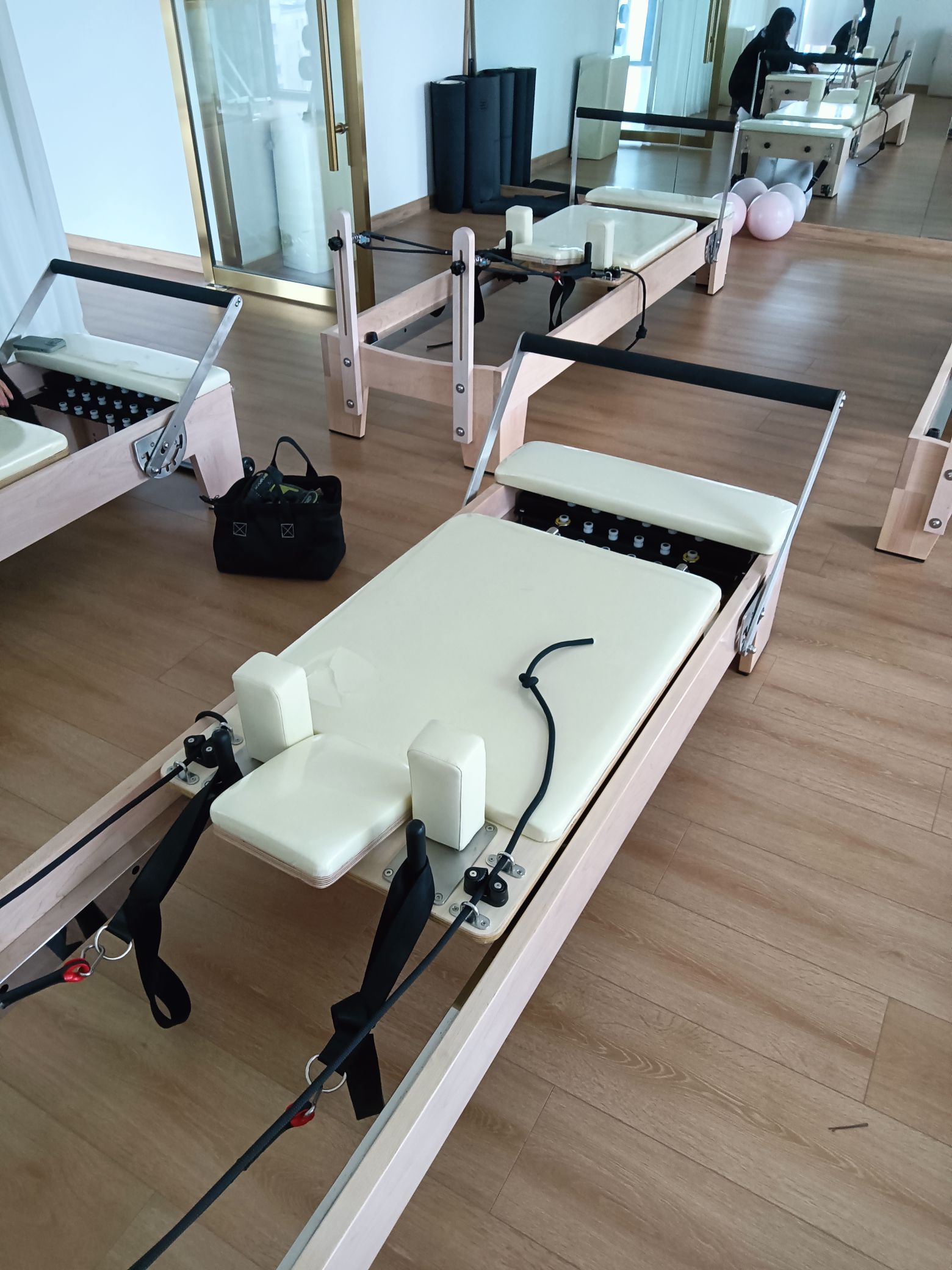
Long-term frame stability. Solid wood frames typically use mortise-and-tenon or bolt-reinforced joinery. Combined with oak's high density, the machine remains stable after years of use. Users report that solid wood frame reformers "after five years, the carriage still glides smoothly, and the frame hasn't budged".
Superior resistance to deformation. Compared to aluminum frames that may flex elastically under heavy loads, oak frames show minimal deformation under body weight and spring tension. This characteristic is particularly important for exercises requiring stable support, such as pelvic curls and single-leg stretches.
Stability from low center of gravity. Solid wood frames are heavier, giving the equipment a lower center of gravity. During lateral movements or large-range gliding, the machine shows virtually no shifting or wobbling. Users describe the feeling as "stable as if rooted into the floor".
Better repairability than metal frames. Solid wood frames can be repaired through sanding and re-oiling when minor scratches or dents occur. Metal frames are harder to repair once the coating is damaged, often leaving difficult-to-conceal marks.
III. Oak vs. Maple vs. Beech
Oak — Hardness: High | Grain: Bold cathedral | Tone: Warm yellow-brown | Price: Medium-High | Style: Classic, substantial
Maple — Hardness: Very High | Grain: Fine, uniform | Tone: Bright, pale | Price: High | Style: Modern, bright
Beech — Hardness: Medium-High | Grain: Uniform, fine | Tone: Warm reddish | Price: Medium | Style: Cozy, traditional
Selection Advice: Choose maple for maximum hardness and refined feel; choose beech for balanced quality and price; choose oak for a substantial, classic aesthetic.
IV. Where Oak Reformers Shine
Home studios are the most typical application for oak reformers. Home users want equipment that meets training needs while blending with their living environment. Oak's warm texture and natural grain make it easier to integrate than metal-framed equipment — some users even regard it as "breathing fitness furniture".
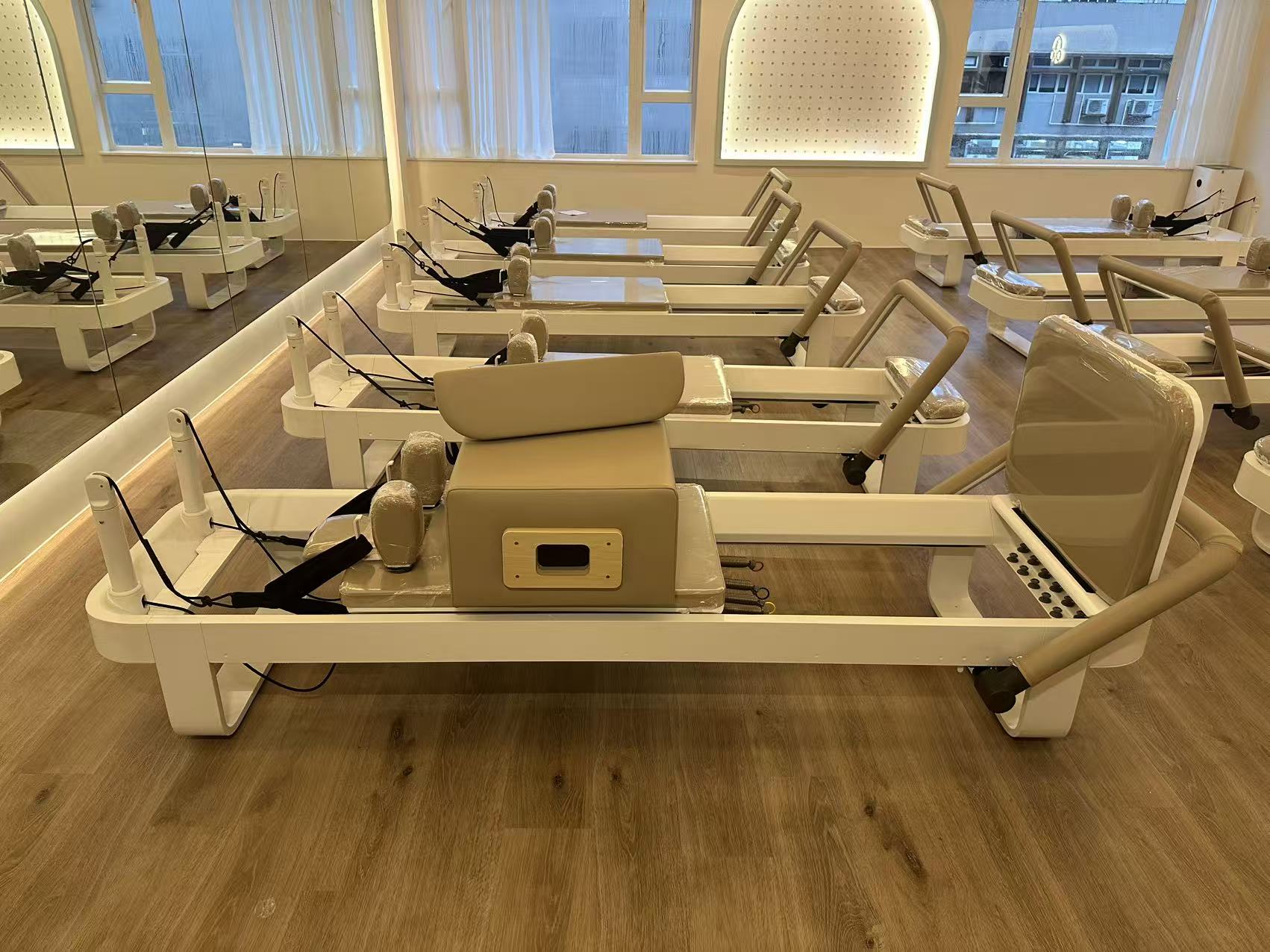
Boutique private studios are equally well-suited. Private clients have higher expectations for equipment feel and spatial atmosphere. Solid wood frames' quiet operation and visual quality enhance the overall class experience, while oak's durability withstands multiple daily private sessions.
Rehabilitation and posture correction settings particularly benefit from oak frames' stability. Rehabilitation training often requires absolute stability during slow, precise movements. Solid wood frames' low center of gravity and high rigidity provide support that metal frames struggle to match.
V. Key Criteria for Buying an Oak Reformer
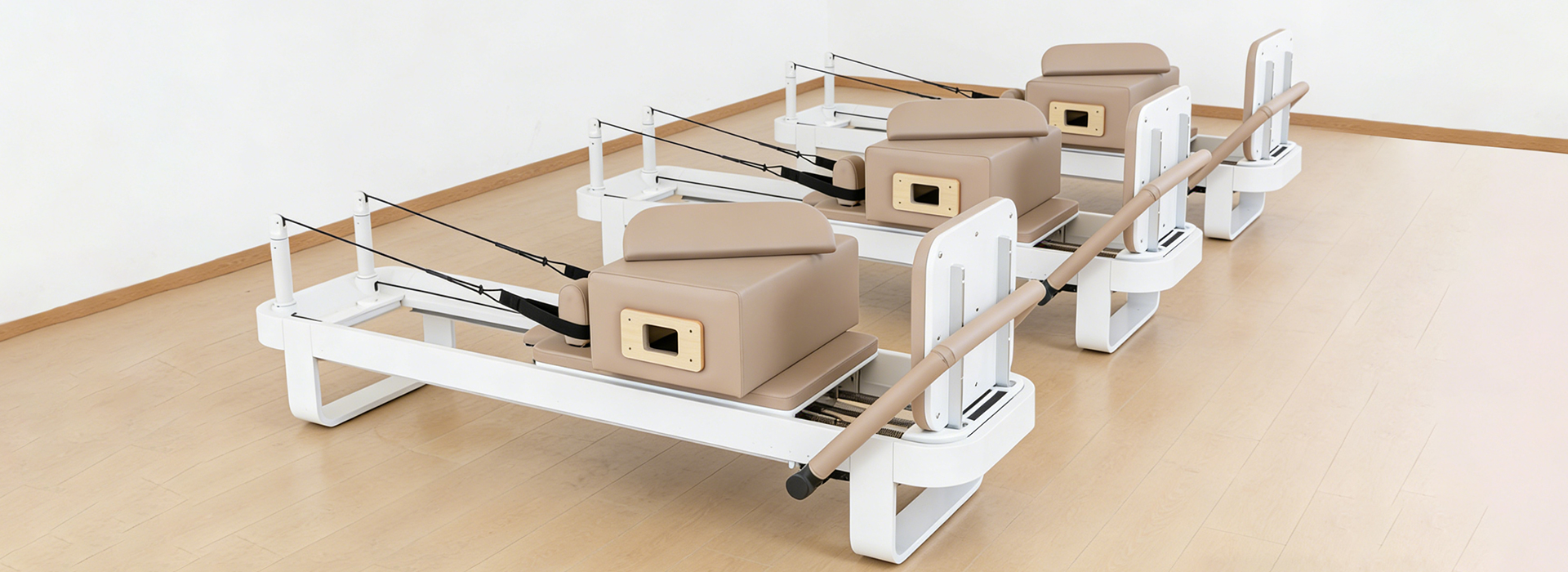
Confirm it's a full solid wood frame. Some products marketed as "oak" are actually veneered boards or only partially oak. Verify that the main frame is solid wood, properly kiln-dried (moisture content below 8-10%) to prevent cracking and warping.
Check joinery quality. Solid wood frame durability depends heavily on joinery. Mortise-and-tenon joints, reinforced bolts, and metal corner brackets are common high-quality methods. Check for tight, gap-free, secure connections.
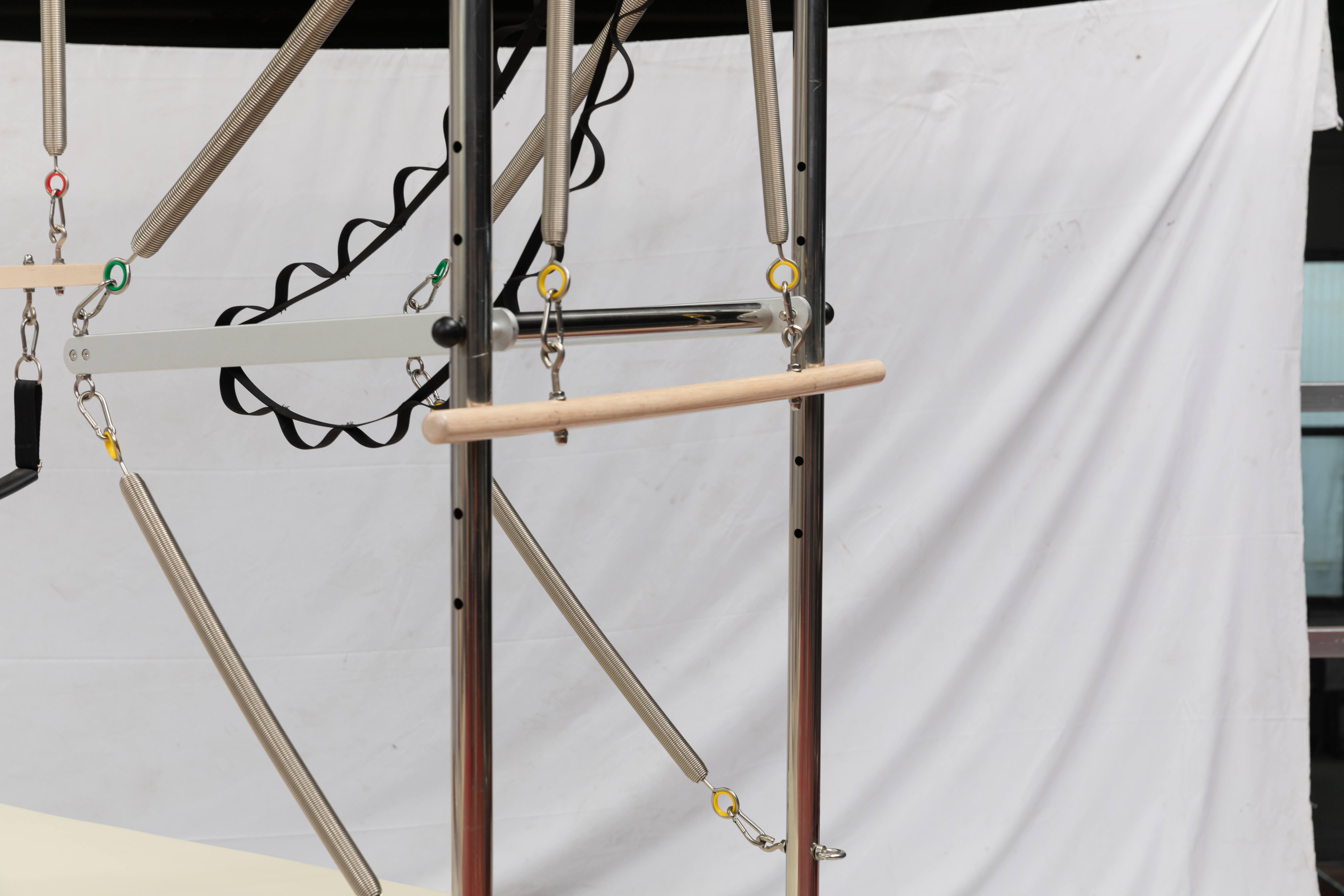
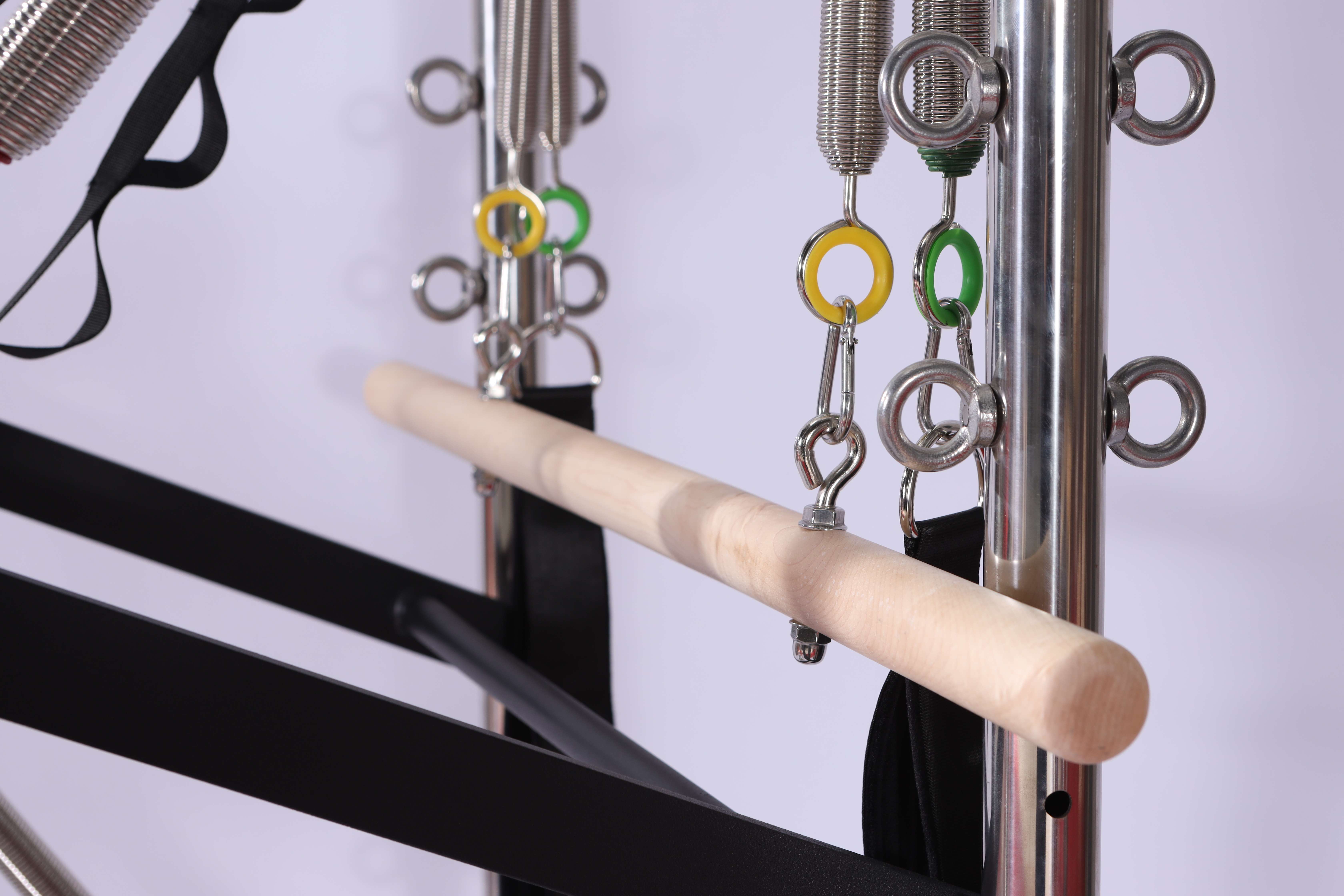
Evaluate upholstery and spring system. The frame is the foundation, but upholstery and springs determine daily experience. Choose high abrasion-rated PU or microfiber leather; springs should specify material (e.g., high-carbon steel) and force configuration.
Confirm warranty terms. Quality solid oak reformers typically offer limited lifetime frame warranties. Verify coverage scope for frame, springs, wheels, and upholstery, along with respective warranty periods.
Summary: The value of a solid oak Pilates reformer lies in trading natural material hardness and density for stability, quietness, and repairability that metal frames struggle to replicate. For home studios and boutique private studios, an oak frame is not just a material choice but a long-term investment — a well-maintained oak reformer can accompany a practitioner for a decade or more, gradually developing a unique patina over time. When purchasing, the key is confirming "full solid wood frame + mature joinery + reliable spring and upholstery configuration" — these three factors determine whether an oak reformer truly delivers on its "long-lasting" promise.