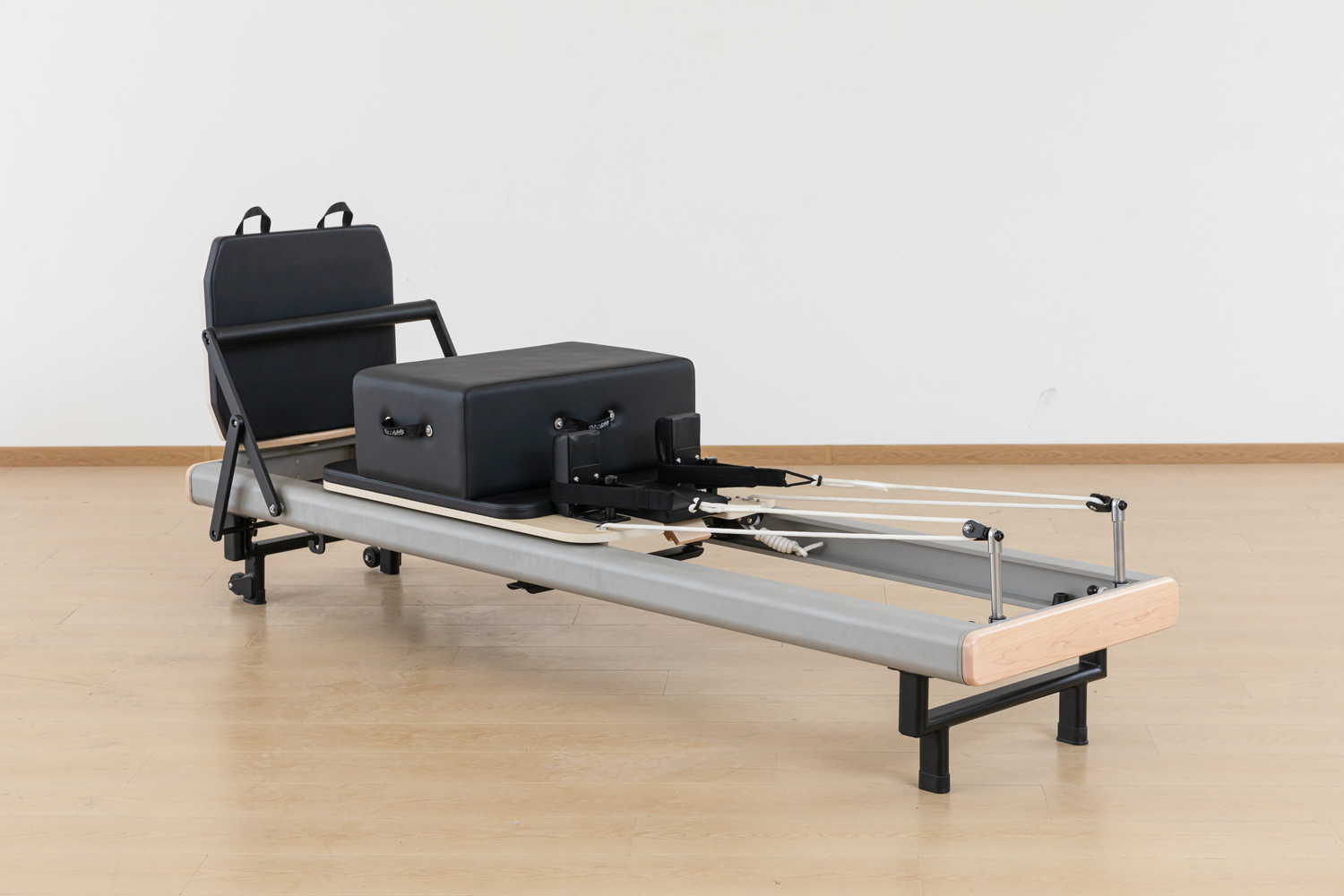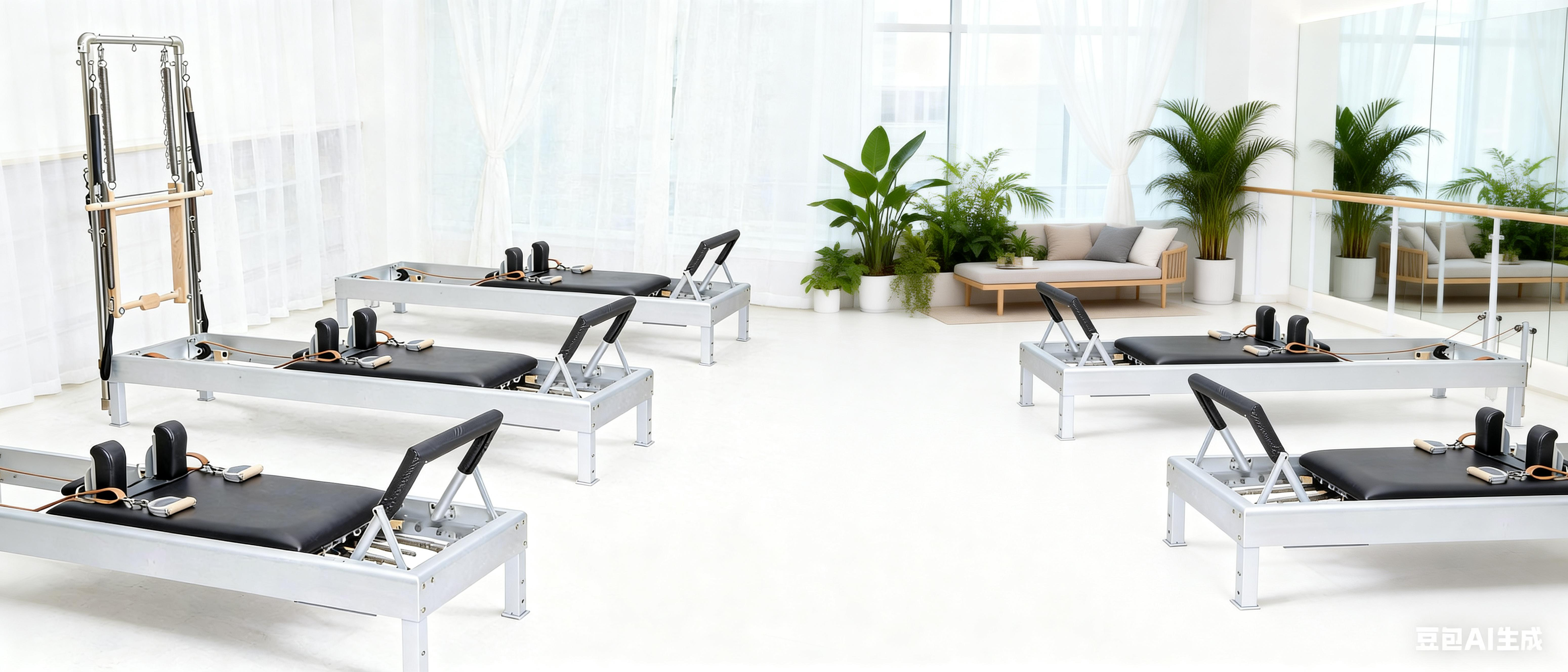
Bulk Order Professional Pilates Machines for Fitness Studios

For fitness studios, franchise brands, and distributors, bulk purchasing professional Pilates equipment is a strategic decision involving capital planning, space design, and long-term operations. Unlike single-unit purchases, bulk procurement is about more than unit price — it's about supply chain stability, quality consistency, after-sales support, and brand synergy. This article provides a systematic procurement framework covering four dimensions: core advantages, configuration options, supplier evaluation, and contract essentials.
I. Core Advantages of Bulk Purchasing
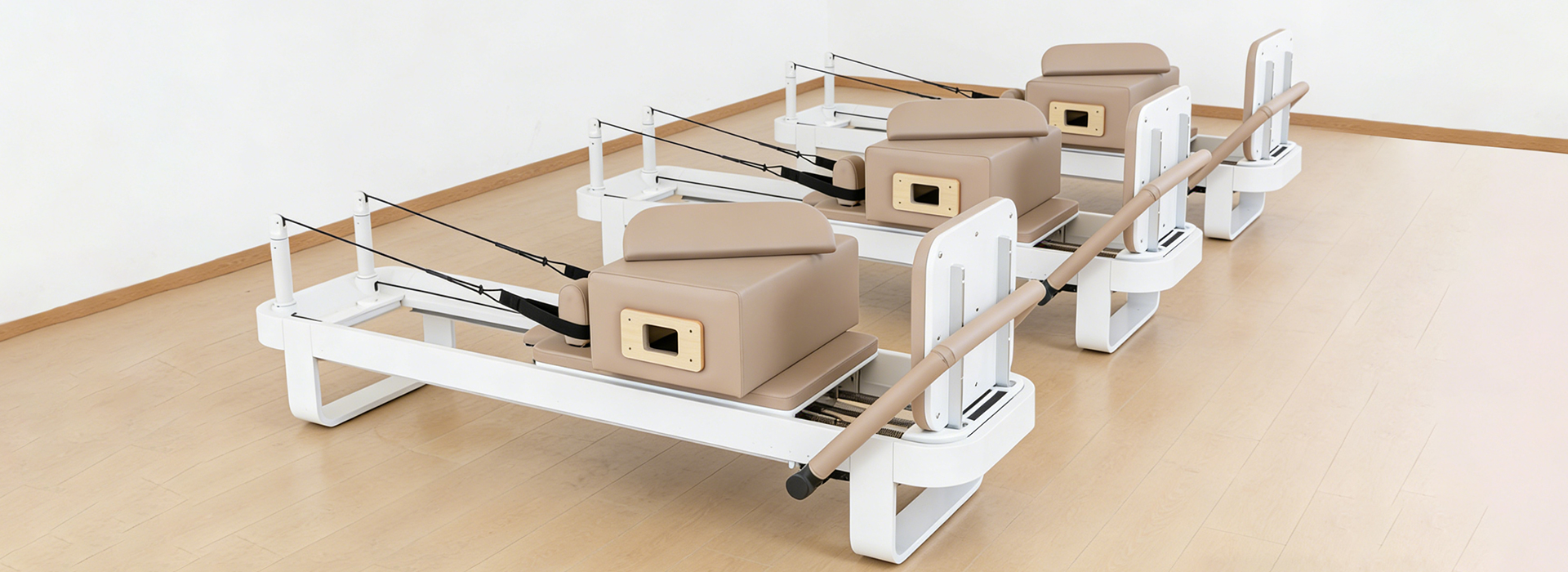
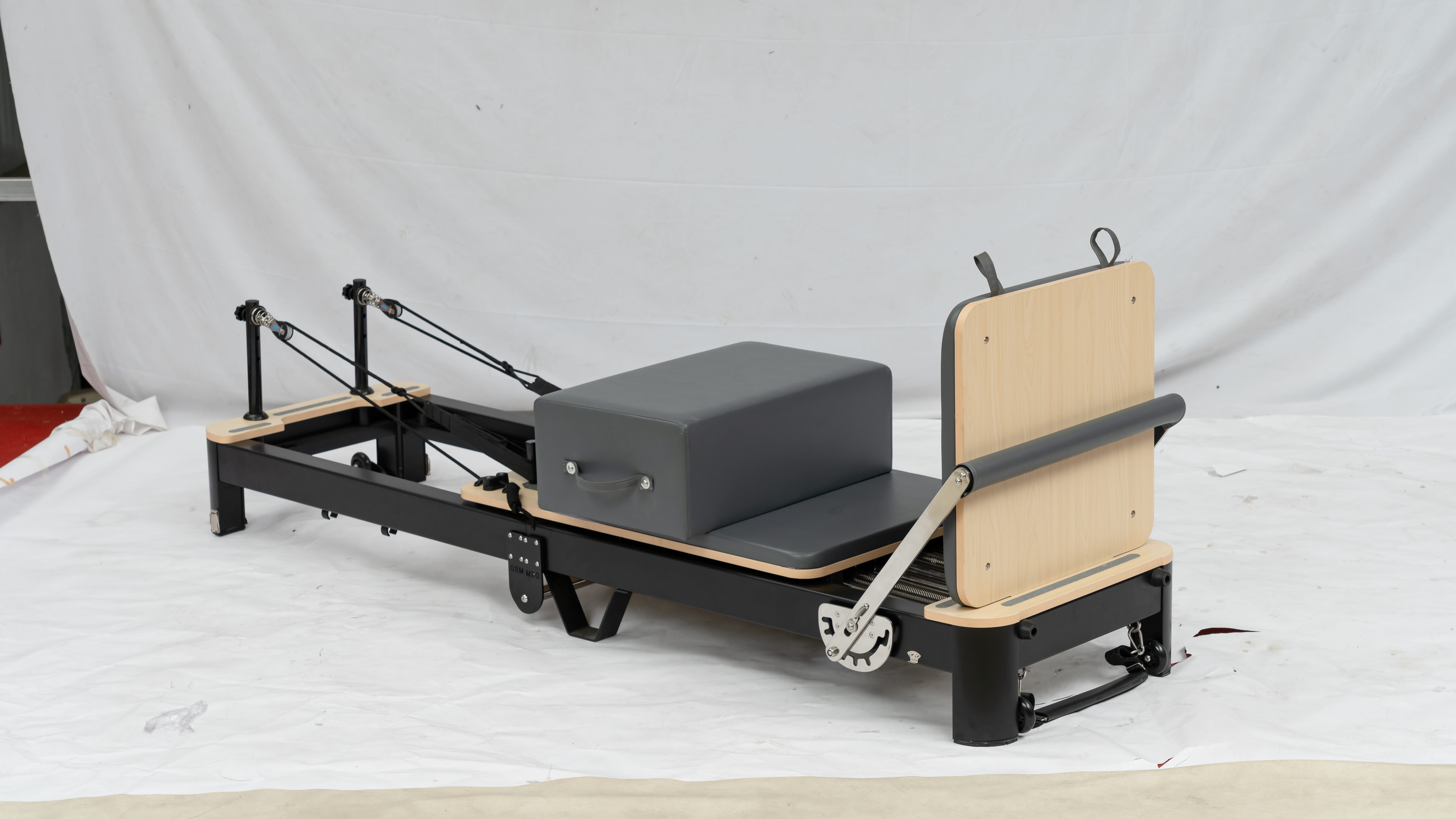
Significantly lower per-unit costs. Once a factory production line is running, marginal costs per unit decrease with volume. A commercial-grade Reformer typically retails between $3,000 and $5,500, while bulk pricing can be 20% to 40% lower, depending on order scale and customization depth. For orders exceeding 50 units, negotiation room expands further.
Consolidated logistics costs. Bulk orders enable full-container-load (FCL) shipping, substantially reducing per-unit freight. Compared to less-than-container-load (LCL), FCL typically saves 20% to 40% per unit. Factories can also assist with customs clearance, warehousing, and distribution, simplifying supply chain management.
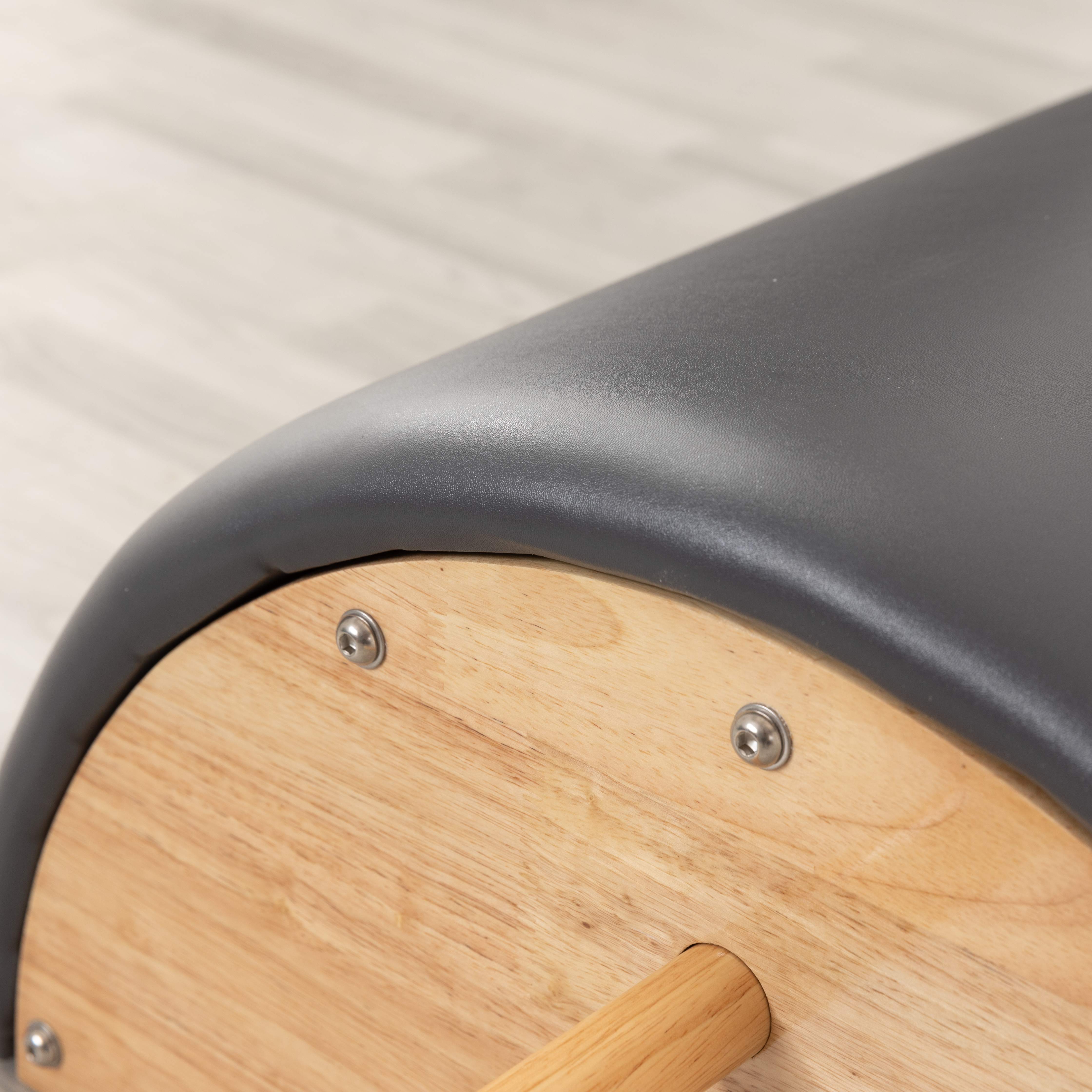
Better quality consistency. Bulk orders are typically completed within the same production cycle, with highly uniform material batches, process parameters, and inspection standards. This is especially important for franchise brands — consistent feel, performance, and appearance across all locations ensures a unified client experience.
Greater customization flexibility. Bulk purchasing opens the door to deeper customization. From brand logos and exclusive colorways to functional configurations and packaging design, factories are typically more willing to offer flexible customization options and lower minimums for bulk clients.
II. Bulk Configuration Options
Equipment configuration strategies vary significantly by studio size and positioning. Here are three typical approaches:
Boutique Private Studio (80-100㎡)
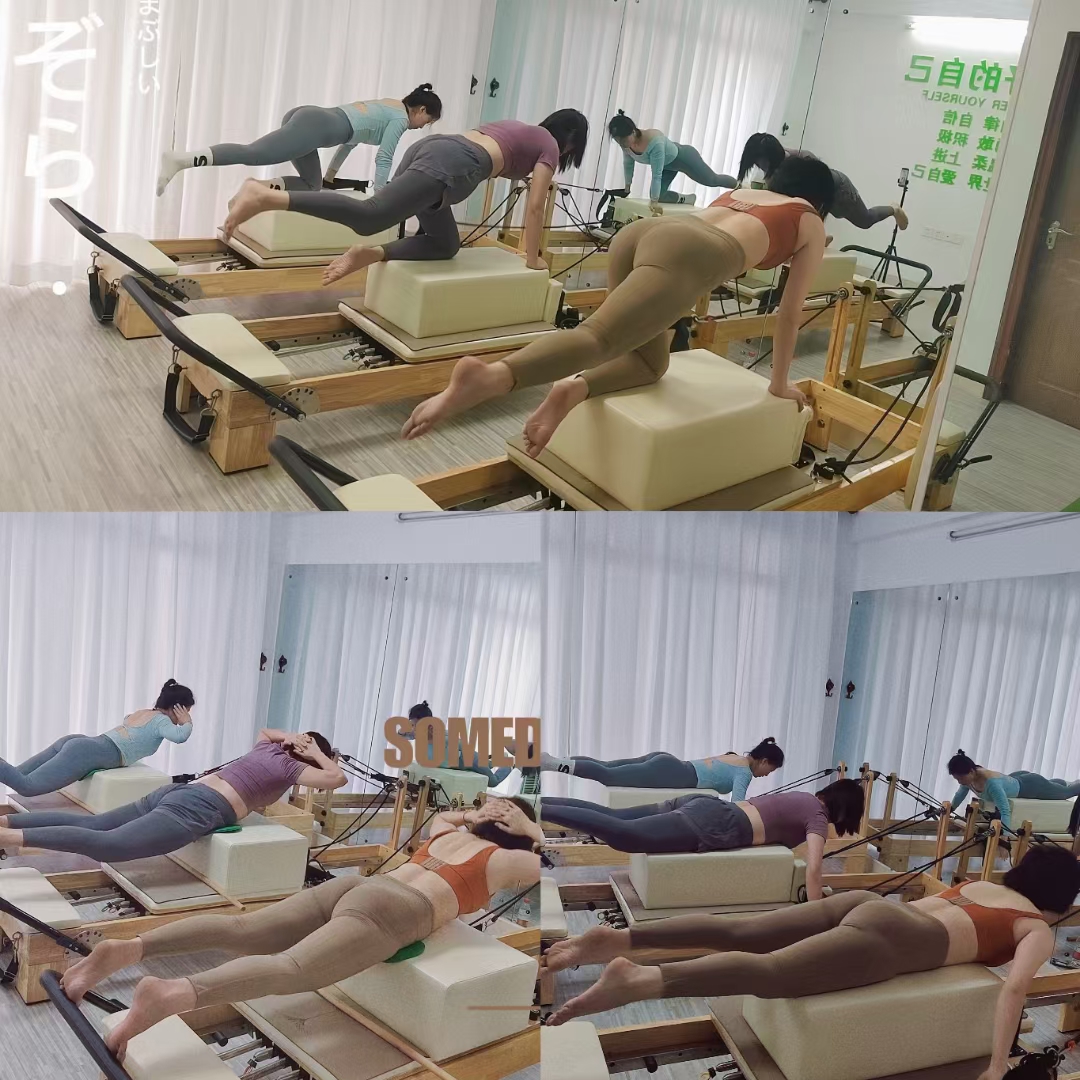
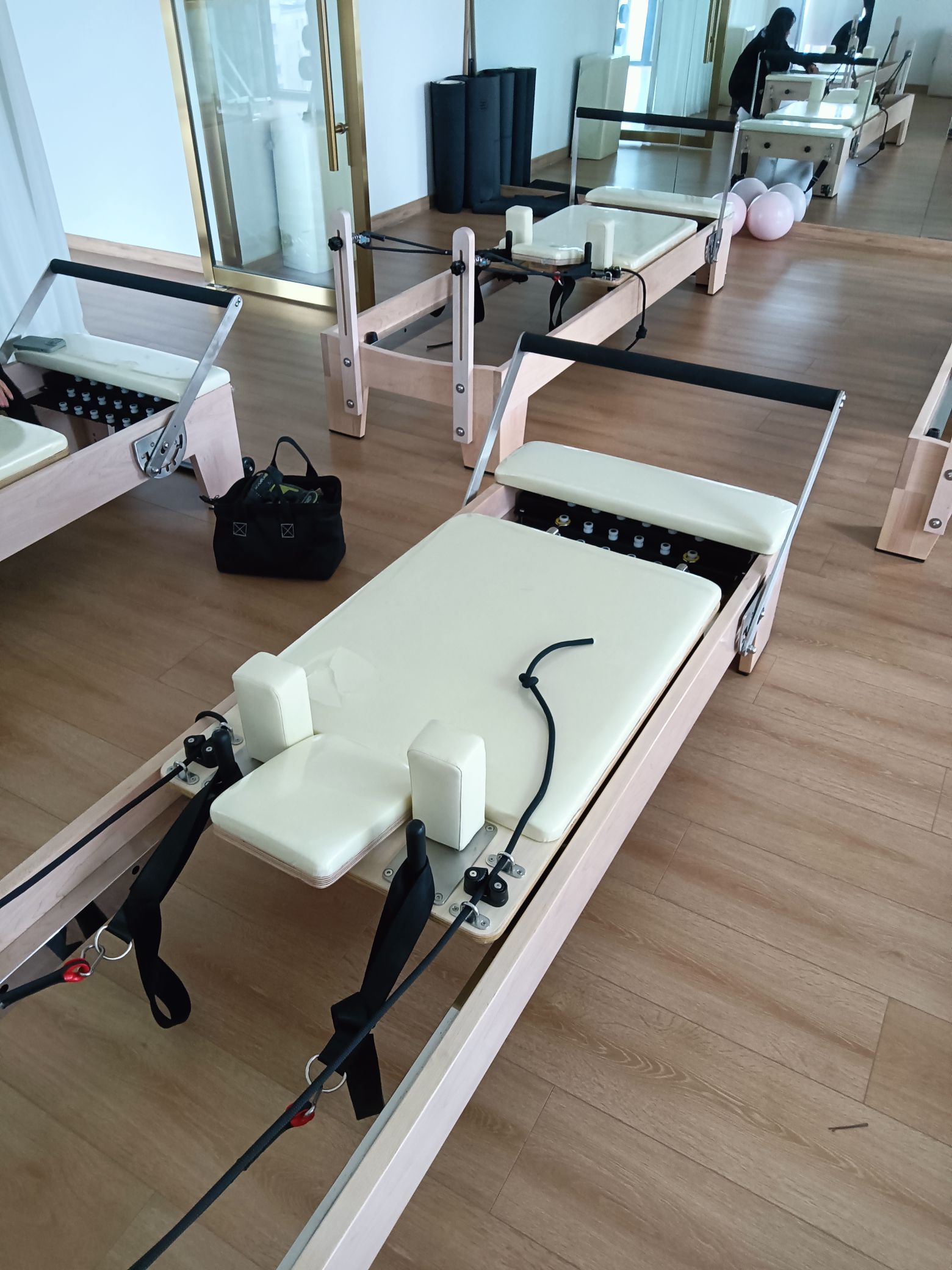
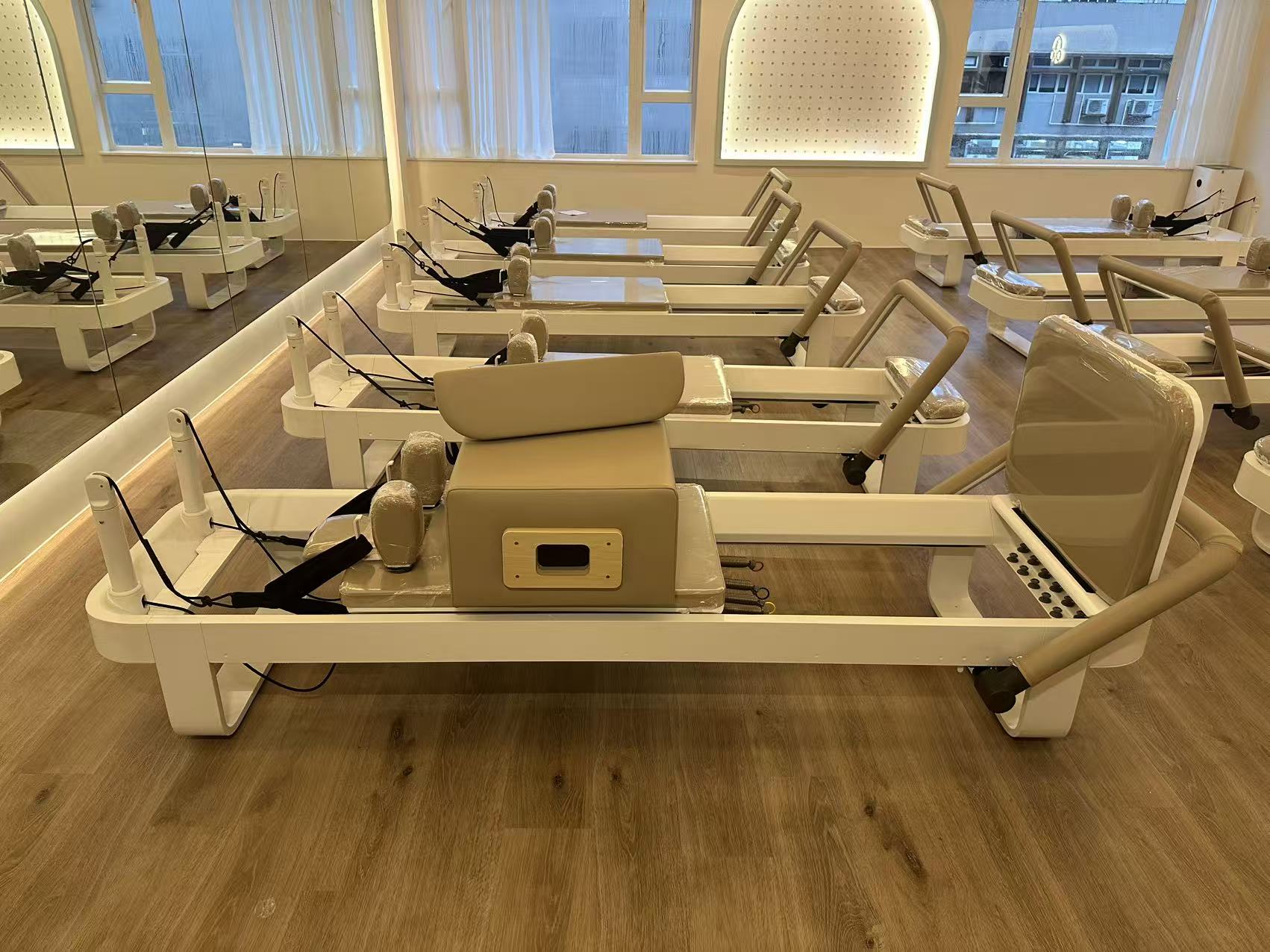
Configuration: 3-4 Reformers + 1 Wunda Chair + 2 Spine Correctors + full prop set
Budget reference: Approximately $15,000–$30,000 USD
Logic: Focused on private sessions and 2-4 person small groups; equipment quality takes priority over quantity.
Mid-Size Comprehensive Studio (150-200㎡)
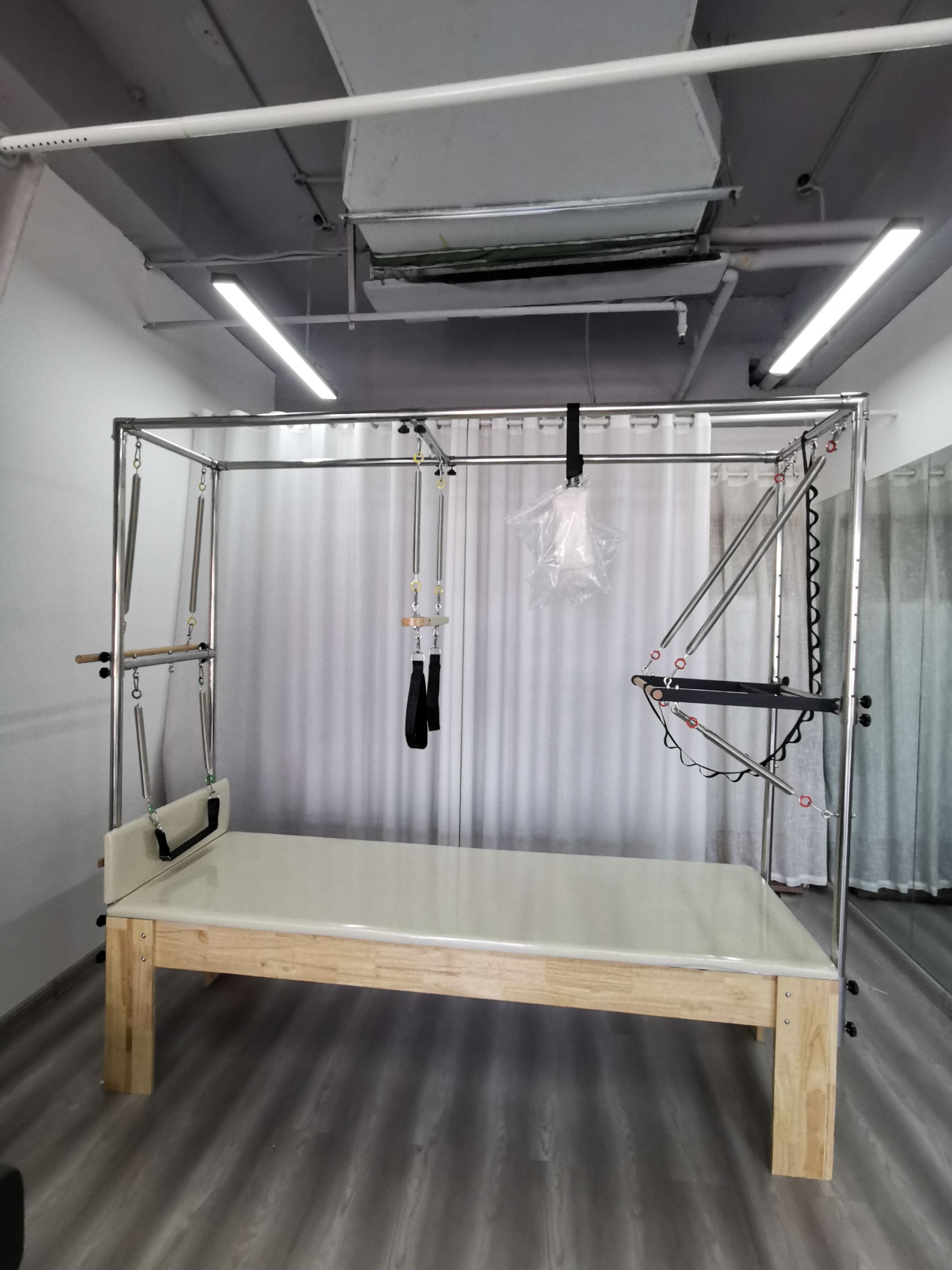
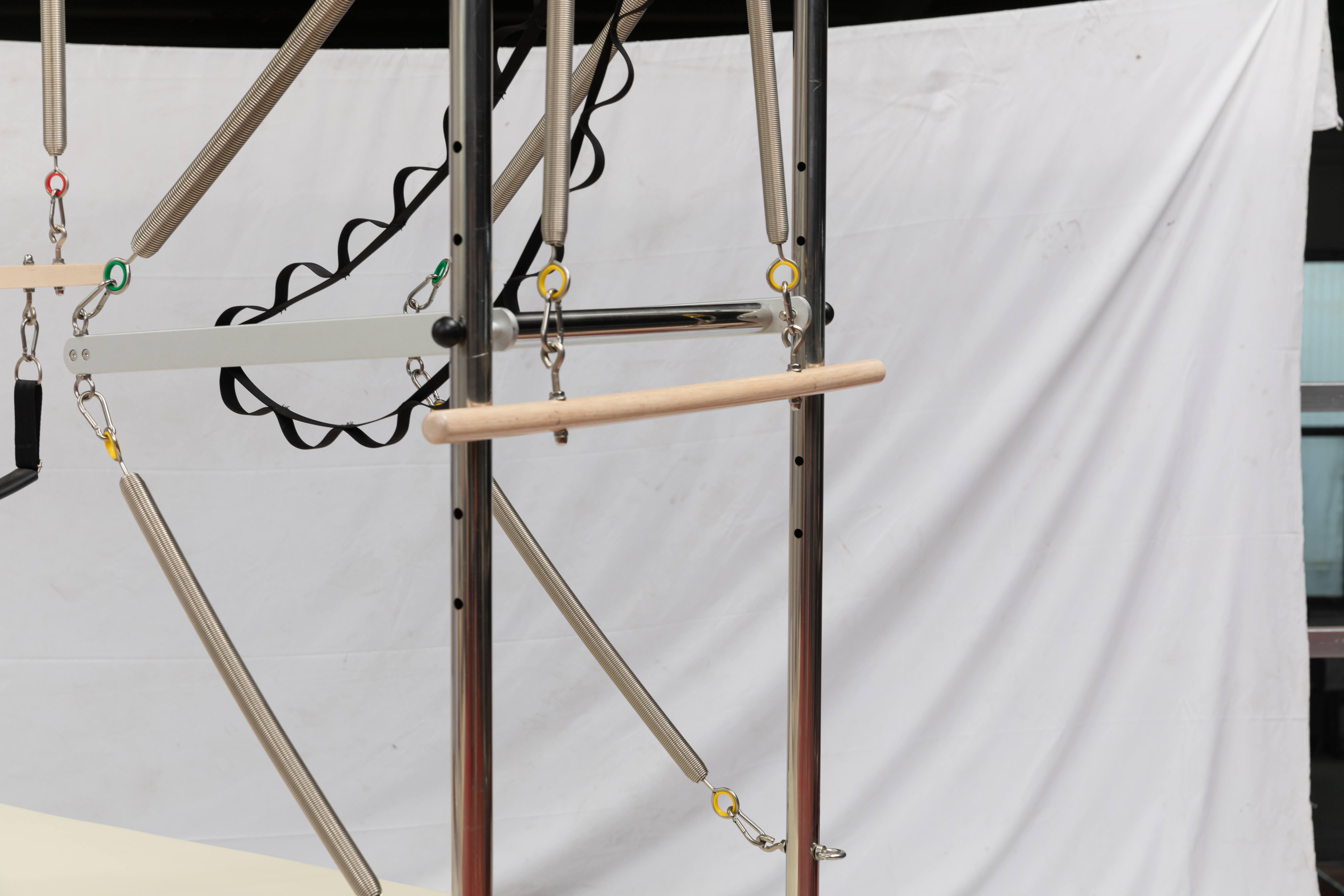
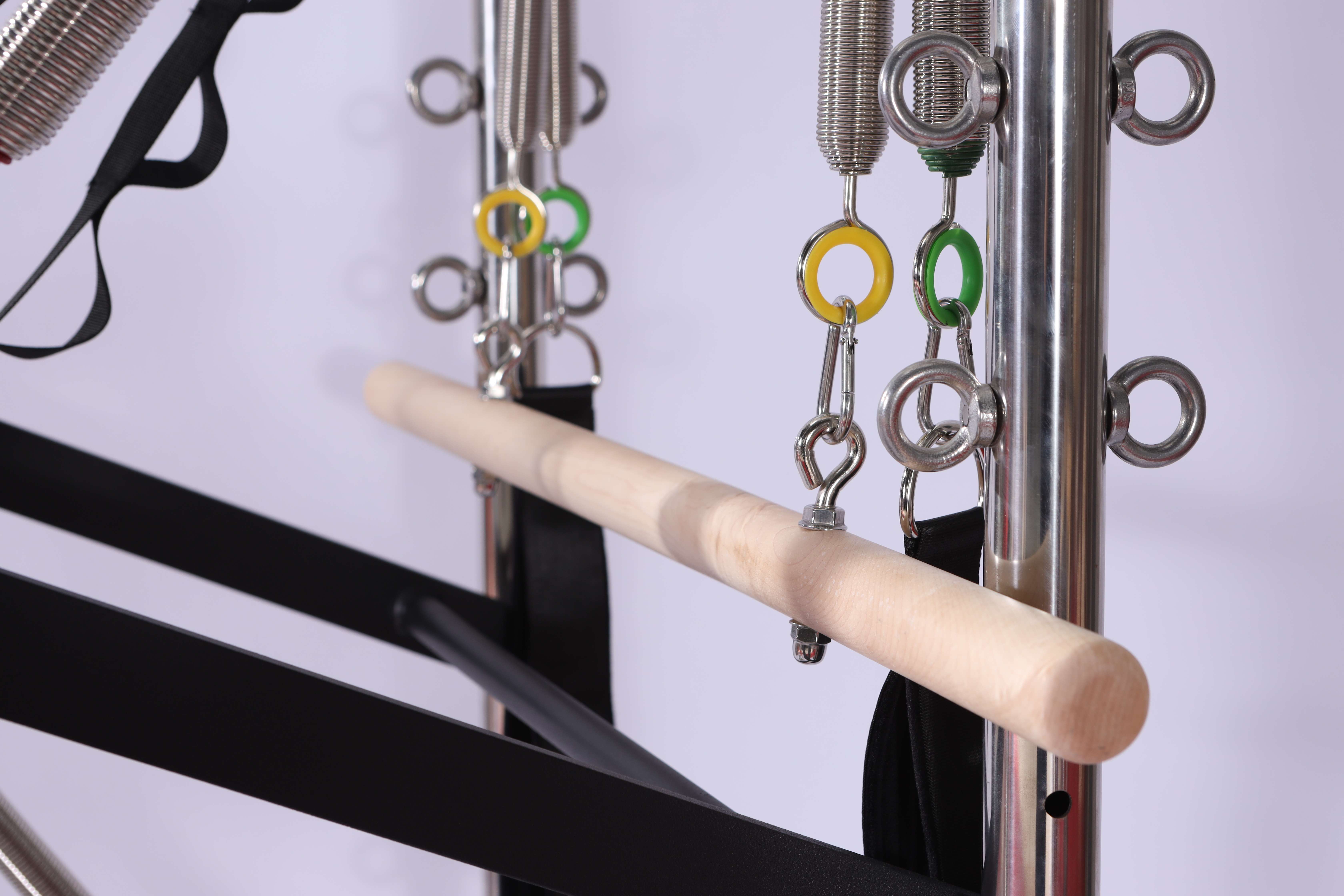
Configuration: 5-6 Reformers + 1 Cadillac + 2 Wunda Chairs + 2 Ladder Barrels + full prop set
Budget reference: Approximately $30,000–$60,000 USD
Logic: Balancing private sessions, small-group classes, and group classes; balanced equipment variety and quantity.
Large Group Studio / Franchise Brand
Configuration: 8-12 Reformers + 2 Cadillacs + 4 Wunda Chairs + 4 Ladder Barrels + Jumpboards and accessories
Budget reference: Approximately $80,000–$150,000+ USD
Logic: High-frequency multi-user environment; durability and maintainability are primary considerations, prioritizing commercial-grade frames and replaceable component designs.
III. Five Core Dimensions for Supplier Evaluation
The success of bulk procurement depends largely on supplier selection.
Manufacturing capacity: Evaluate factory floor space, production line count, workforce size, and annual capacity. Ask about current order backlog to assess on-time delivery capability. Factories with export experience and ISO 9001 certification are generally more reliable.
Quality control transparency: A trustworthy factory should clearly demonstrate its IQC, IPQC, and OQC processes. Clearer inspection standards and more traceable records ensure better product consistency.
Customization capability: Factories accepting 50-100 unit MOQs generally demonstrate higher commitment to client needs. Factories with ODM capabilities can collaborate deeply from the product design stage.
Delivery track record: Request past delivery records or check industry reputation for on-time delivery rates. 97%+ on-time delivery is an industry benchmark.
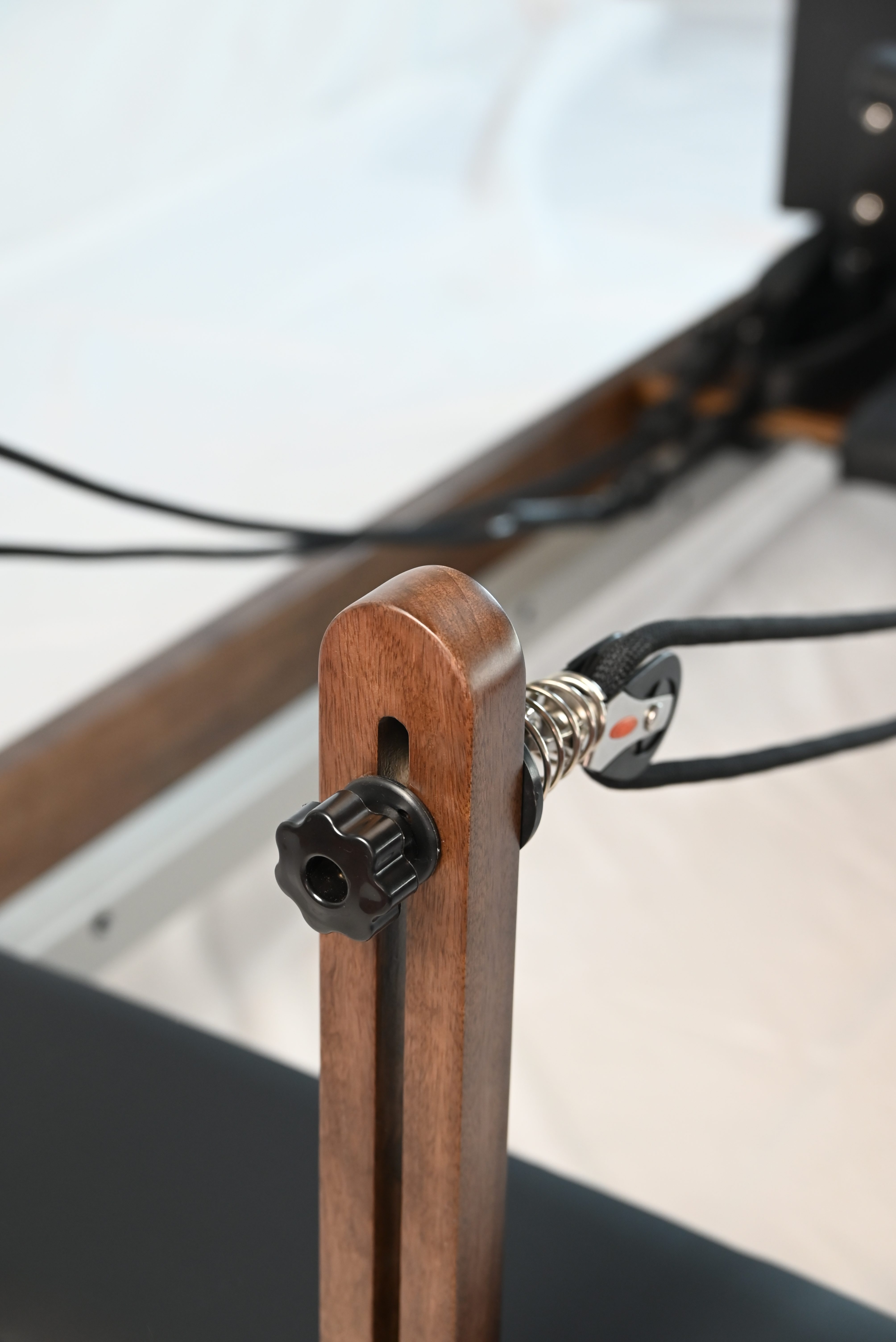
After-sales and warranty commitments: Warranty periods (typically 5-10 years on frames, 2 years on moving parts), parts availability, and response mechanisms should be clearly specified in contracts — not left to verbal promises.
IV. Contract and Delivery Essentials
Specification sheet as contract appendix: Attach detailed product specifications as a contract appendix, listing materials, dimensions, colors, component brands, spring specifications, and quantities. Any changes require written buyer confirmation.
Acceptance criteria and process: Specify the inspection timeframe after delivery and procedures for non-conforming goods (replacement/return/partial refund).
Late delivery penalty clauses: Specify daily penalty percentages (typically 0.5%-1% of order value per day) with a maximum tolerance period.
Phased payments: Typically 30% to 50% deposit to initiate production, with balance paid before shipment. Specify payment conditions and timelines for each stage in the contract.
Sample approval first: For large orders, produce 1-2 samples first to confirm quality and customization before mass production. Sample fees are typically partially or fully deductible upon bulk order confirmation.
V. Common Pitfalls in Bulk Purchasing
Comparing only price, not total lifecycle cost. Cheap equipment may need replacement within 2-3 years, while quality equipment can last over a decade. Consider repair frequency, parts costs, and resale value in procurement decisions.
Neglecting space planning. Each Reformer requires approximately 40-50 square feet (3.7-4.6 square meters) of operating space including instructor pathways. A 6-Reformer studio's main room requires about 30-40 square meters. Complete space measurement and flow planning before purchasing.
Ignoring after-sales response speed. Equipment downtime losses far exceed the equipment price itself. One reformer with 3-6 days of annual downtime can lose approximately $1,000-$2,000 per downtime incident at typical rates of $35-$60 per session with three classes daily. Choosing suppliers with fast after-sales response and adequate parts inventory is critical.
Summary: Bulk purchasing professional Pilates equipment is a systematic process — from needs assessment and configuration planning to supplier evaluation and contract signing, every step requires rigor. Before placing a formal order, validate supplier quality and responsiveness through sample production, then sign the bulk contract based on sample approval. Choose the right equipment, and your studio's success has a solid hardware foundation; choose wrong, and future repair costs and client churn will far exceed the initial savings.