Best Practices for Storing Pilates Reformers in Warehouse Before Studio Installation
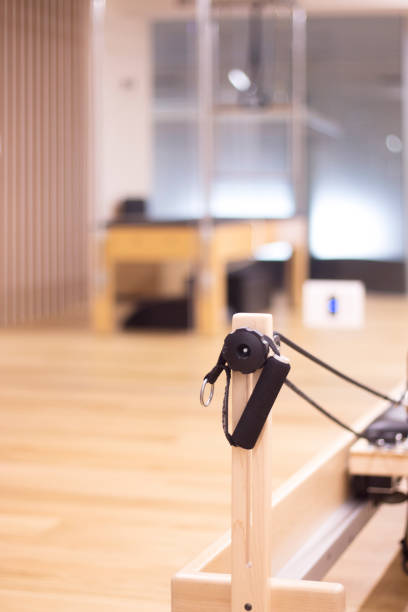
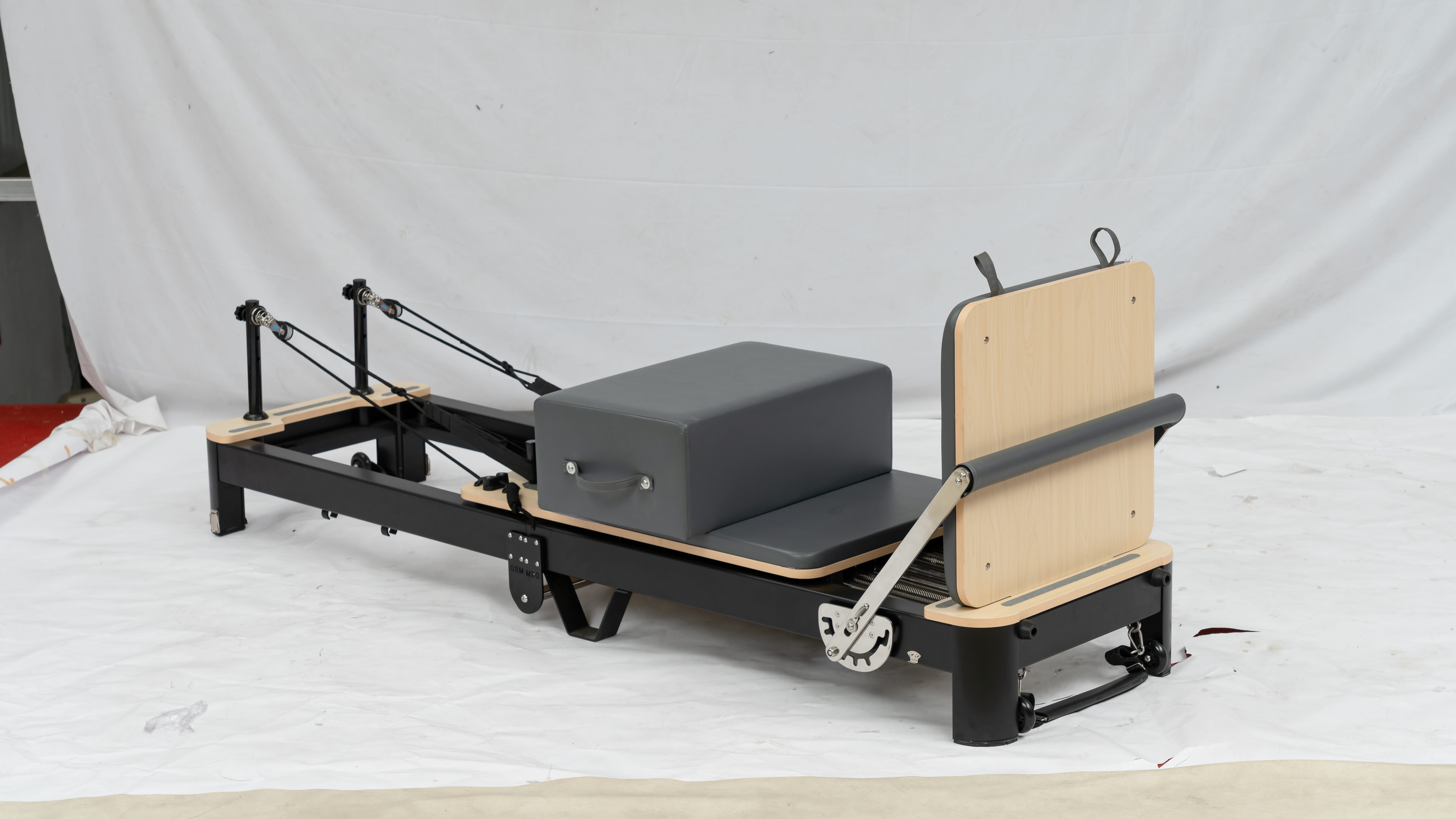
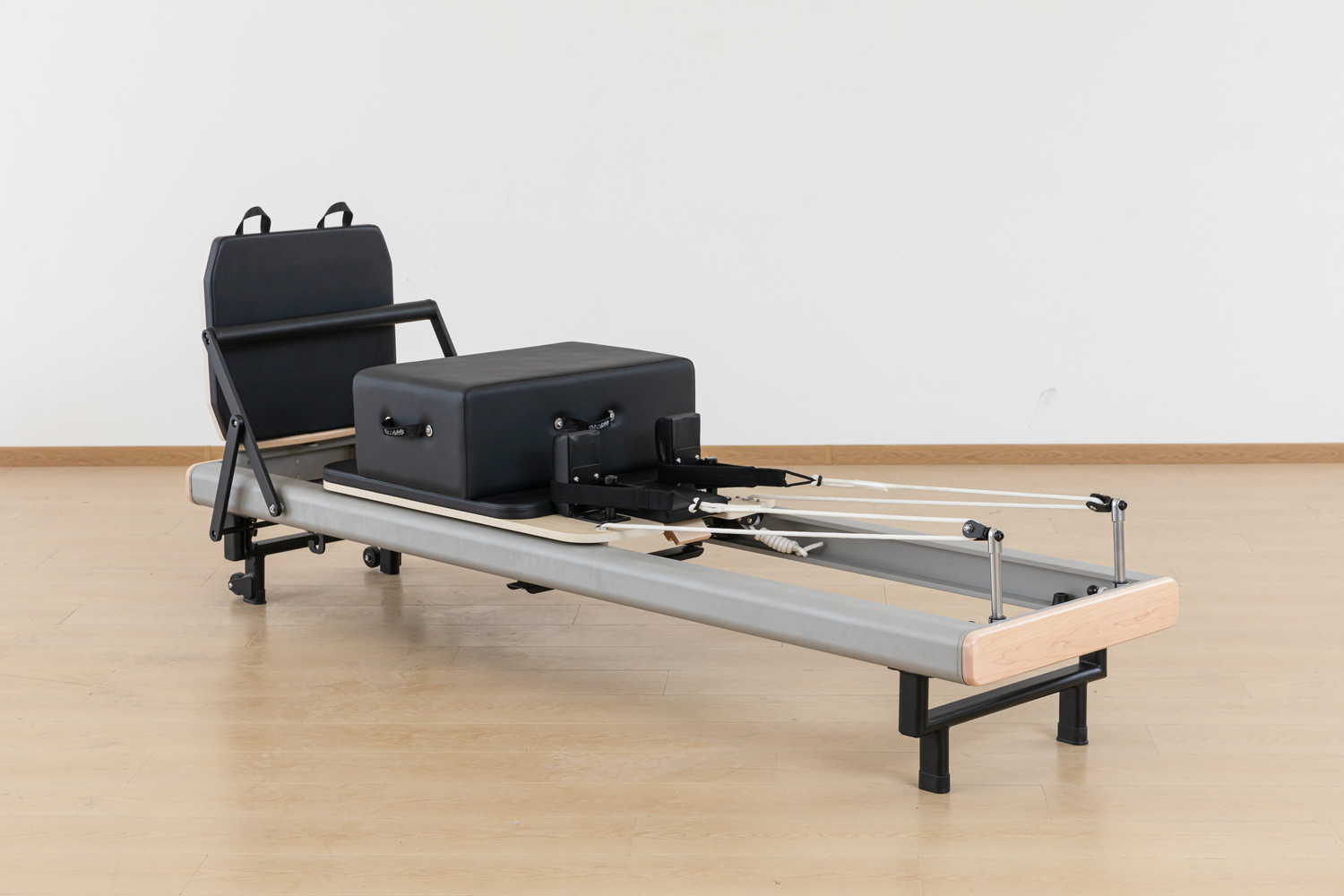
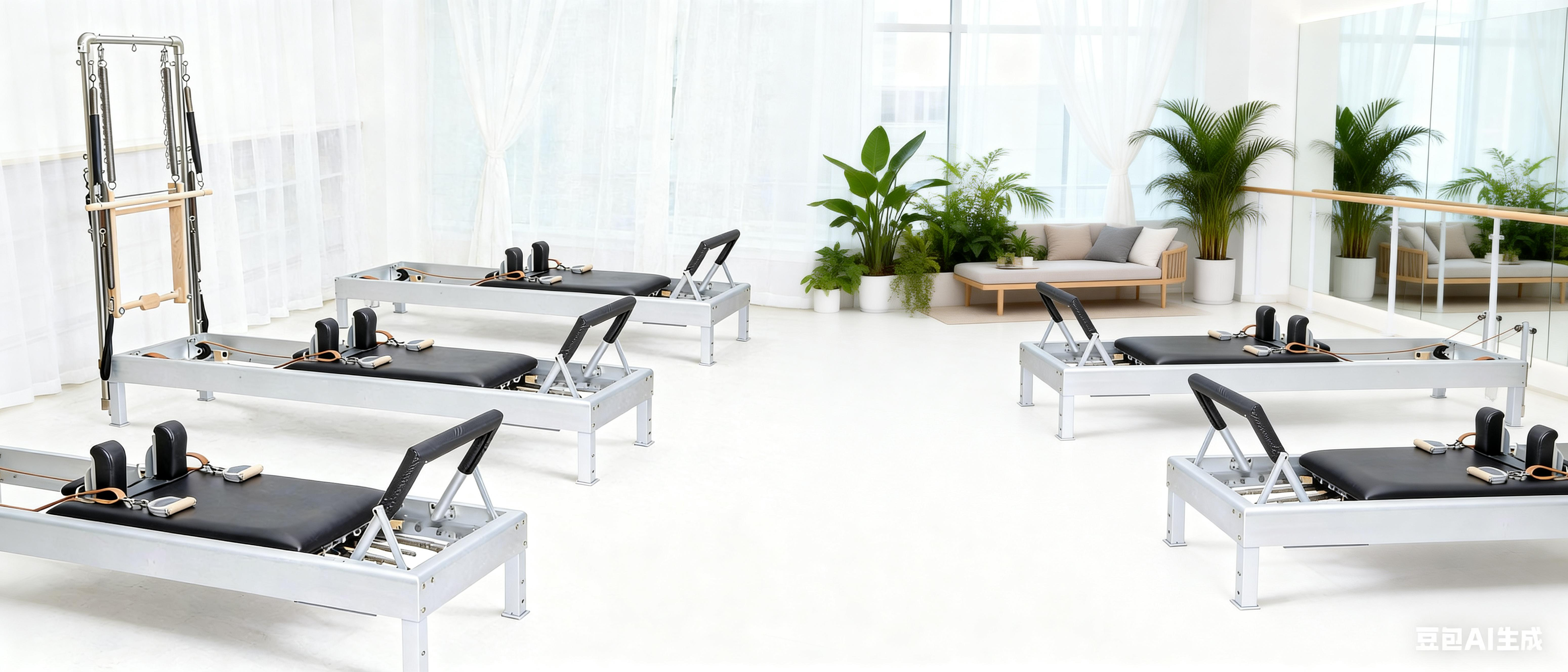
Pilates reformers are high-precision commercial fitness equipment with delicate wooden frames, precision sliding systems, elastic springs, and premium upholstery. For fitness importers, studio chain operators, and equipment distributors, bulk shipped reformers often require weeks or even months of warehouse storage before final studio installation. Improper warehouse storage can lead to common issues including wood deformation, upholstery mold, spring rust, wheel jamming, and hardware loosening. These storage damages cause unnecessary replacement costs, delayed studio opening schedules, and poor customer satisfaction. To preserve full equipment quality and maintain commercial-grade performance, professional warehouse storage standards are essential. This article shares the best practices for storing Pilates reformers safely and effectively before studio installation.
1. Control Warehouse Environment: Humidity, Temperature and Ventilation
Environmental control is the foundation of long-term safe storage for wooden and aluminum Pilates reformers. Most warehouse damage occurs due to excessive humidity, extreme temperature changes, and poor air circulation.
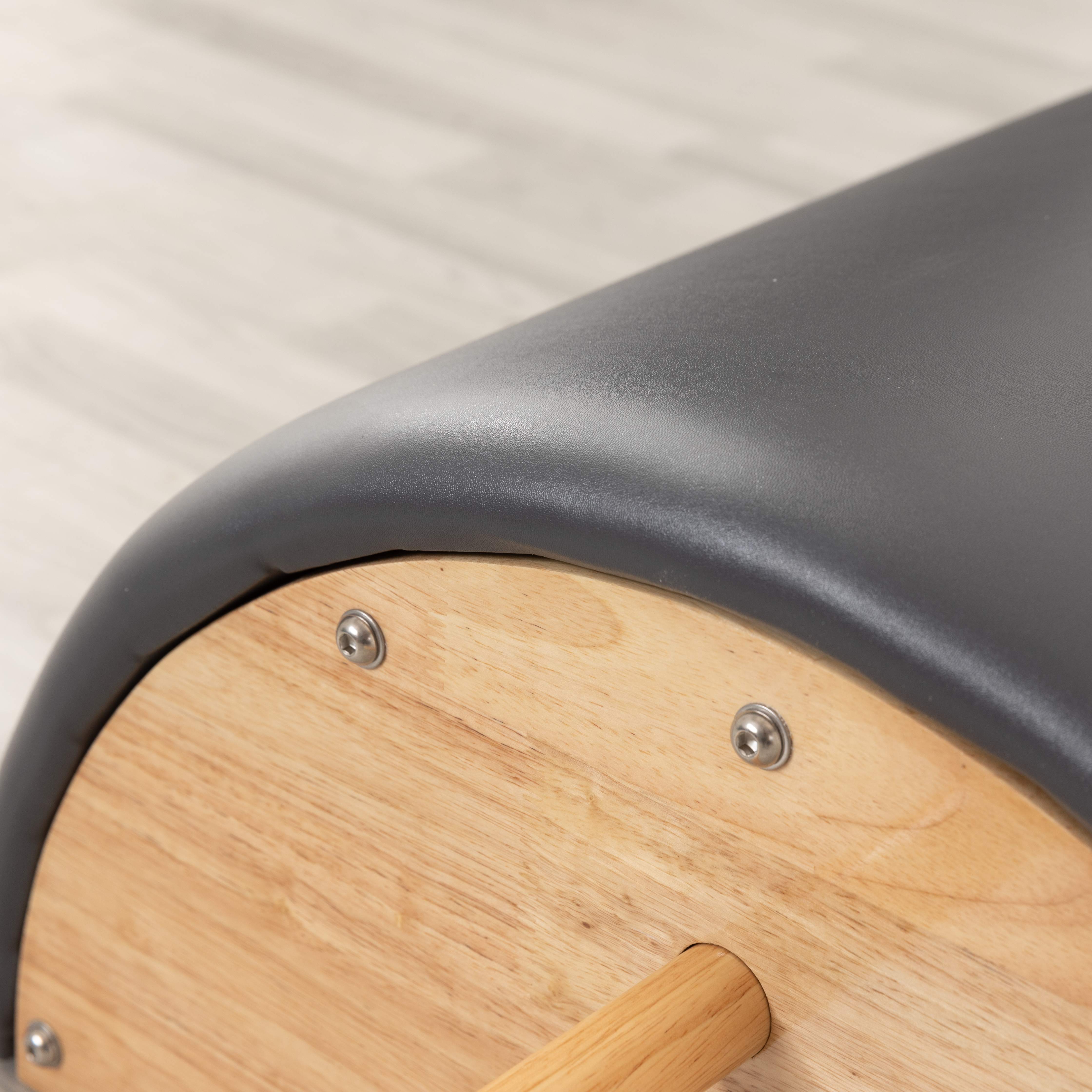
Ideally, Pilates equipment should be stored in a dry, ventilated warehouse with a stable temperature range of 15–28°C and relative humidity below 65%. High humidity will cause birch wood frames to absorb moisture, resulting in warping, bending, and mildew. Meanwhile, metal parts including springs, wheel shafts, and locking hardware are prone to oxidation and rust in humid environments, directly affecting sliding smoothness and structural safety. For coastal warehouses or rainy seasons, installing dehumidifiers and keeping air fans running continuously can effectively avoid moisture damage.
In addition, avoid storing reformers under direct sunlight. Long-term ultraviolet exposure will fade upholstery colors, age sponge padding, and crack surface paint, greatly damaging the equipment’s commercial appearance.
2. Maintain Original Export Packaging Before Installation
Many warehouse operators mistakenly remove wooden cases and cartons after container unloading for space-saving purposes. However, premature unpacking exposes precision Pilates components to dust, collision, and moisture risks.
The factory’s original export packaging, including thick wooden crates, shockproof foam, plastic wrapping, and protective corner guards, is professionally designed for long-term storage and transportation protection. It effectively isolates dust, moisture, and external pressure. It is recommended to keep all reformers in original packaging until 1–3 days before official studio installation. This simple practice can avoid over 90% of storage-related quality problems. For partially unpacked units, cover the entire machine with waterproof dust covers for secondary protection.
3. Adopt Scientific Stacking and Placement Rules
Irregular stacking and squeezing are the main causes of frame deformation and accessory damage during warehouse storage. Pilates reformers cannot be stacked randomly like ordinary gym equipment due to their precise linear structure and fragile upholstery.
For wooden-cased reformers, flat ground vertical placement is the standard method. Keep each wooden box upright and spaced slightly for ventilation, avoiding horizontal flipping or side squeezing. Do not stack heavy goods on the top of reformer packaging boxes, as continuous pressure will deform the internal carriage and frame structure.
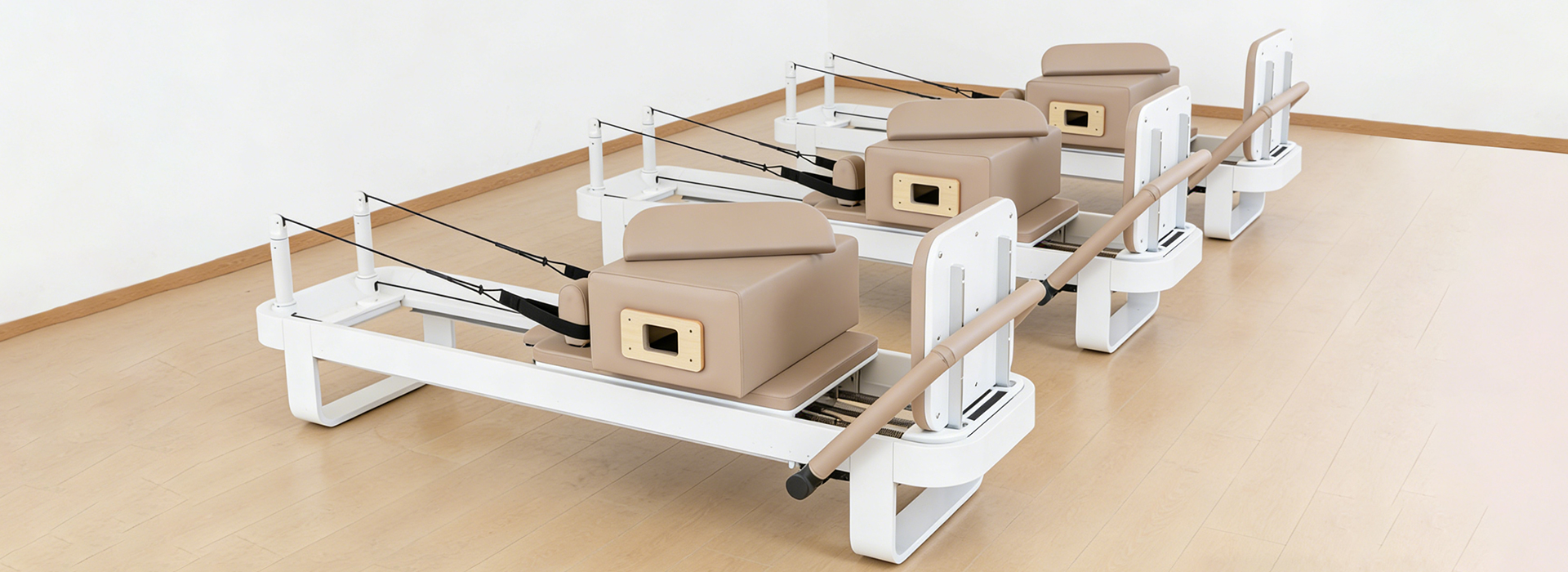
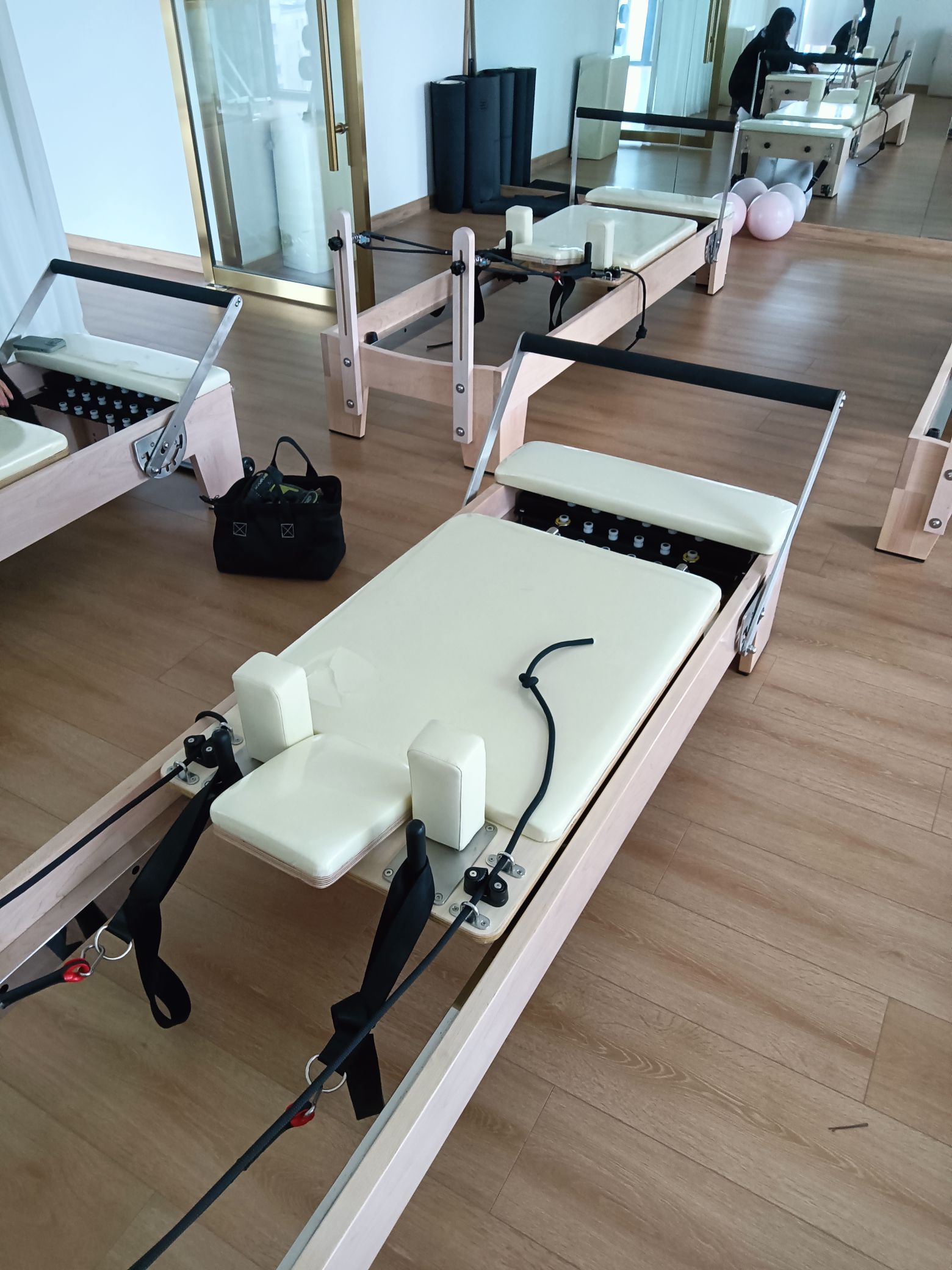
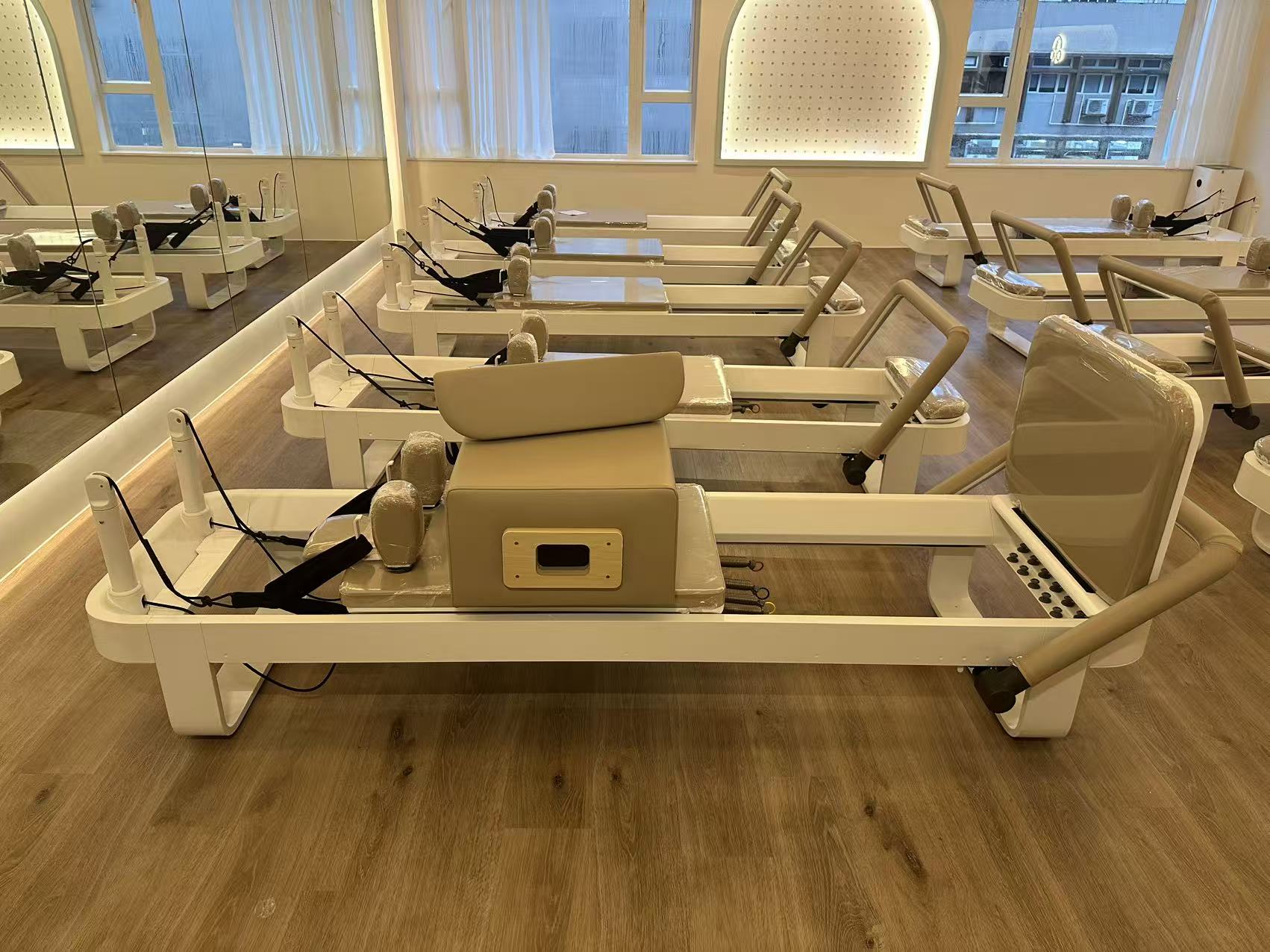
For unpacked finished machines, place them on flat and level ground. Ensure all support feet are evenly stressed, and keep the carriage in the middle locked position to prevent long-term unilateral tension deformation of springs and sliding wheels. Separate each machine with spacing to avoid friction and collision during warehouse handling.
4. Separate Storage of Loose Accessories and Spare Parts
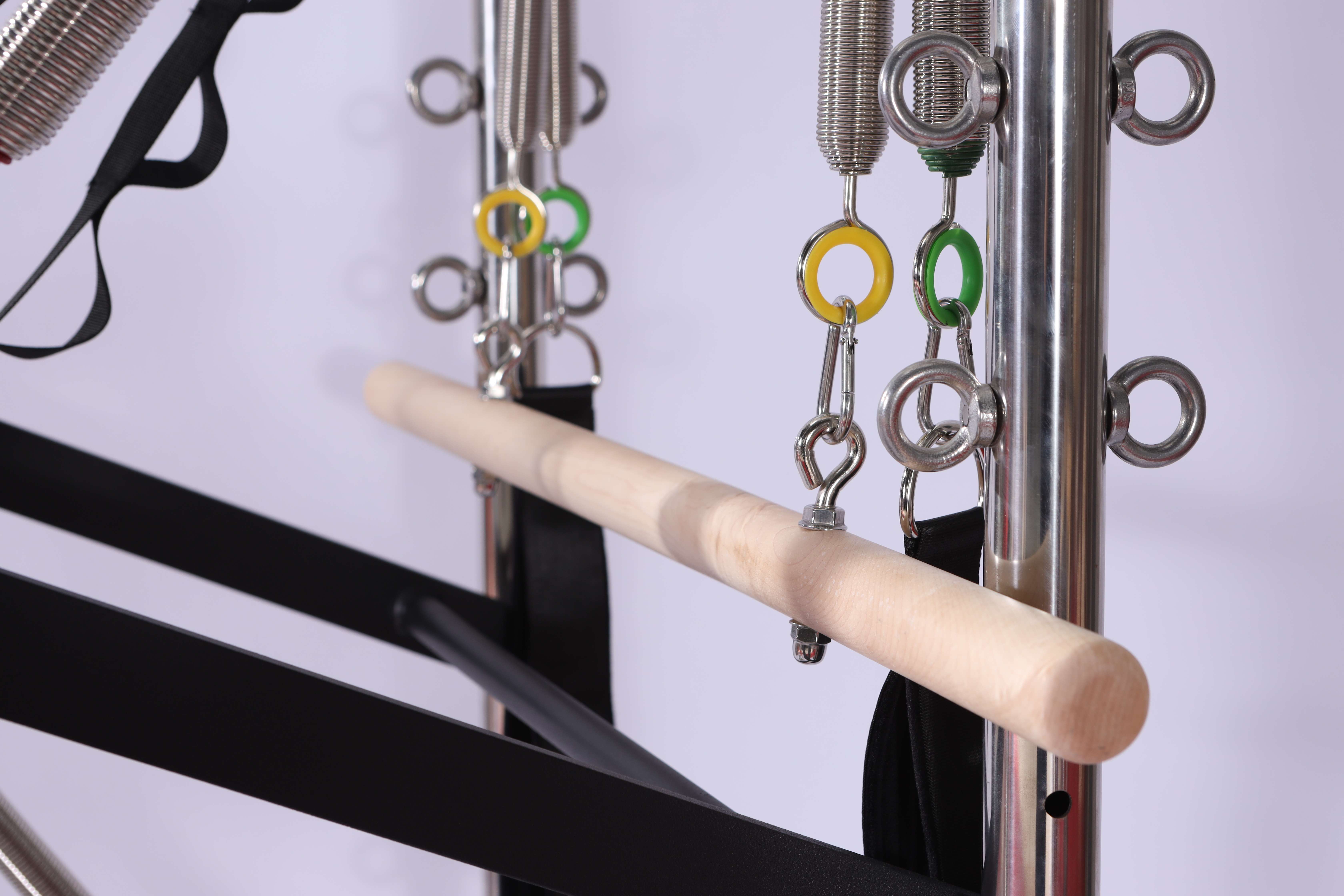
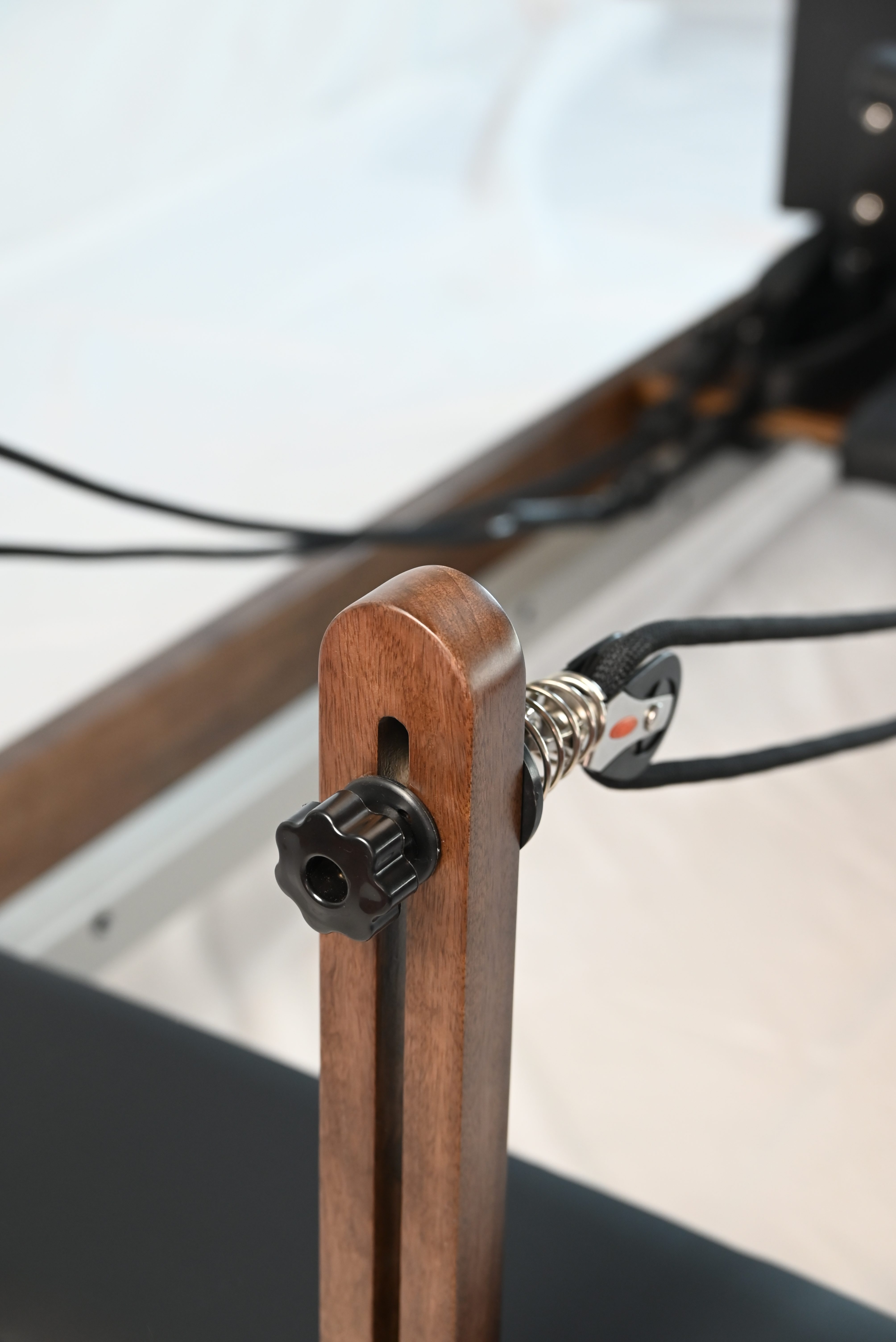
Pilates reformers contain many small and vulnerable accessories: star knobs, guide wheels, tension springs, foot bars, headrest sponges, and adjustment screws. These small parts are easy to lose, rust, or damage during long-term warehouse storage if mixed randomly.
The best practice is to classify all accessories and place them in sealed independent packaging bags and cartons. Label each accessory box clearly with the corresponding reformer model and quantity, establishing a complete inventory record. Store hardware accessories in dry isolation areas with moisture-proof desiccants to prevent metal oxidation. Centralized and classified storage ensures zero missing parts during studio installation and avoids tedious after-sales supplementary delivery.
5. Avoid Long-Term Static Tension on Spring Systems
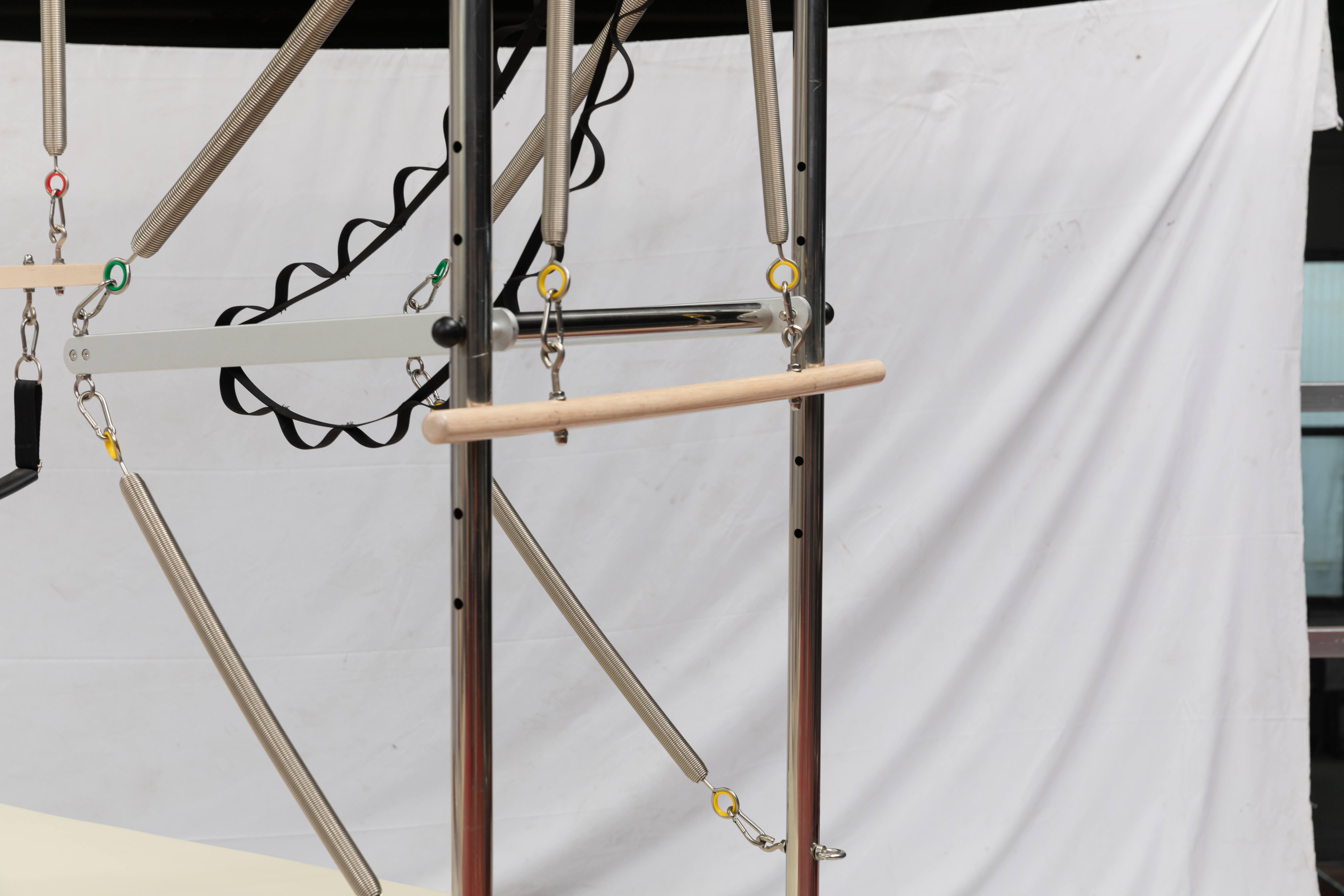
The spring tension system is the core functional component of Pilates reformers and also the most fatigue-sensitive part. Long-term fixed stretching or static compression during storage will cause irreversible elastic attenuation, affecting training resistance accuracy and service life.
During warehouse storage, always reset the reformer carriage to the neutral position and release all spring tension. Do not keep the springs stretched for weeks or months. For machines with height-adjustable bases and adjustable limit stoppers, restore all adjustable parts to the original factory default state. This zero-tension storage method protects spring elasticity, ensures consistent training performance after installation, and extends the service life of commercial equipment.
6. Regular Warehouse Inspection and Maintenance Checks
Even with standardized storage, regular routine inspections are necessary for long-term stocked Pilates equipment. Weekly visual checks can detect hidden risks early and avoid batch quality problems.
Warehouse staff should regularly check for package damage, water seepage, dust accumulation, and wooden box deformation. For equipment stored for more than 2 months, randomly unpack individual units to inspect upholstery condition, metal anti-rust status, and sliding flexibility. timely clean dust and replace damp desiccants to keep equipment in optimal condition. For seasonal climate changes, strengthen dehumidification and ventilation management to adapt to environmental changes.
7. Reasonable Inventory Sorting and FIFO Management
For distributors with continuous bulk orders, scientific inventory management prevents long-term backlog of individual batches of equipment. Adopt the FIFO (First In, First Out) principle for Pilates equipment delivery. Ship the earliest produced and warehoused machines first for studio installation, avoiding ultra-long storage that leads to aging and performance degradation.
Classify and store different models such as standard wooden reformers, aluminum alloy reformers, and height-adjustable customized reformers in separate zones. Clear zoning improves warehouse picking efficiency, reduces handling damage, and matches studio installation orders more accurately.
8. Pre-Installation Preparation Before Delivery to Studio
Professional warehouse storage management includes pre-installation inspection before equipment delivery to the studio. Before packaging and transportation, complete a secondary quality check: confirm frame flatness, sliding smoothness, spring flexibility, accessory completeness, and appearance integrity.
This final check ensures that all equipment delivered to the studio is in 100% commercial-grade new condition, eliminating storage-induced defective products. It greatly improves studio installation efficiency and enhances end-customer experience and brand reputation.
Conclusion
Professional warehouse storage is a critical intermediate link to guarantee Pilates reformer quality from factory shipment to studio operation. Key best practices include stable environmental control, original packaging protection, scientific stacking rules, classified accessory storage, spring tension reset, regular inspection, and standardized inventory management. For fitness importers and studio operators, standardized warehousing can effectively reduce equipment damage rate, cut after-sales maintenance costs, and ensure stable and reliable performance of commercial Pilates equipment after official installation.