High‑End Pilates Studio Equipment | Factory Direct Supply
Pilates studio equipment procurement is undergoing a channel transformation — from "brand agents with layered markups" to "factory direct supply." For studio owners seeking the balance between quality and cost, bypassing intermediaries and working directly with source factories means better pricing at equivalent quality, and deeper customization at equivalent pricing.
This article analyzes the complete logic of high-end Pilates equipment factory direct supply from four dimensions: the value of factory direct supply, manufacturing standards for high-end equipment, collaboration models, and procurement evaluation criteria.
I. Core Value of Factory Direct Supply
De-intermediated pricing advantage. Traditional procurement chains typically include brand owners, general agents, regional agents, and dealers — each layer adding markup. Factory direct supply eliminates these intermediaries, reducing procurement costs by 30% to 50% for equivalent products. For a commercial-grade Reformer retailing at $3,000-$5,500, factory direct pricing can be controlled at 50% to 70% of retail.
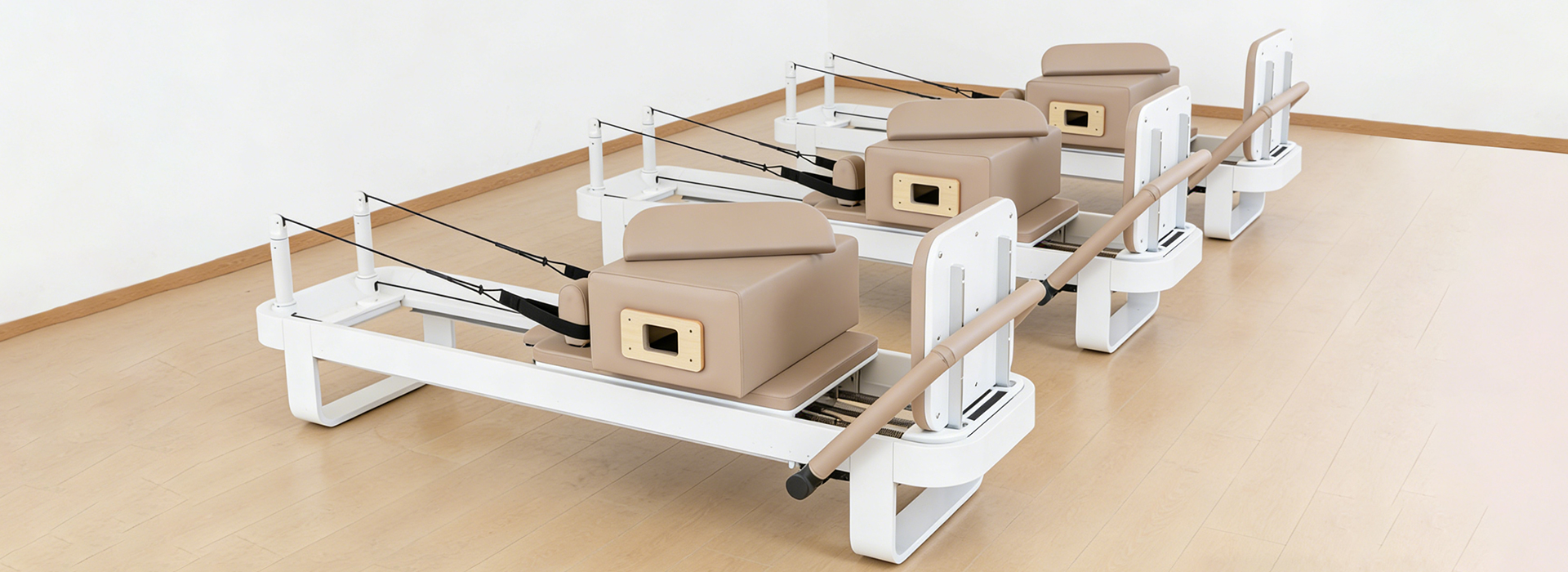
Significantly deeper customization. Unlike brand agents offering limited standard options, factory direct supply allows clients to participate in full customization — from material selection to functional configuration. Upholstery colors, frame materials, spring force configurations, branding methods, packaging design — every detail can be adjusted to match studio positioning and brand needs.
More direct supply chain response. Factory direct supply means shorter communication chains. Whether for sample confirmation, production tracking, or after-sales issue resolution, clients can interface directly with the factory, avoiding information distortion or delays through multiple layers. This is especially important for studios needing rapid response to market changes.
Greater quality transparency. Under factory direct supply, clients can conduct on-site factory inspections or video audits — directly viewing raw materials, production lines, and quality control processes. This transparency is difficult to achieve through traditional agent channels — what you see isn't "the product after brand packaging," but "the product as actually manufactured."
II. Manufacturing Standards for High-End Equipment
The value of truly high-end Pilates equipment is reflected in these manufacturing dimensions:
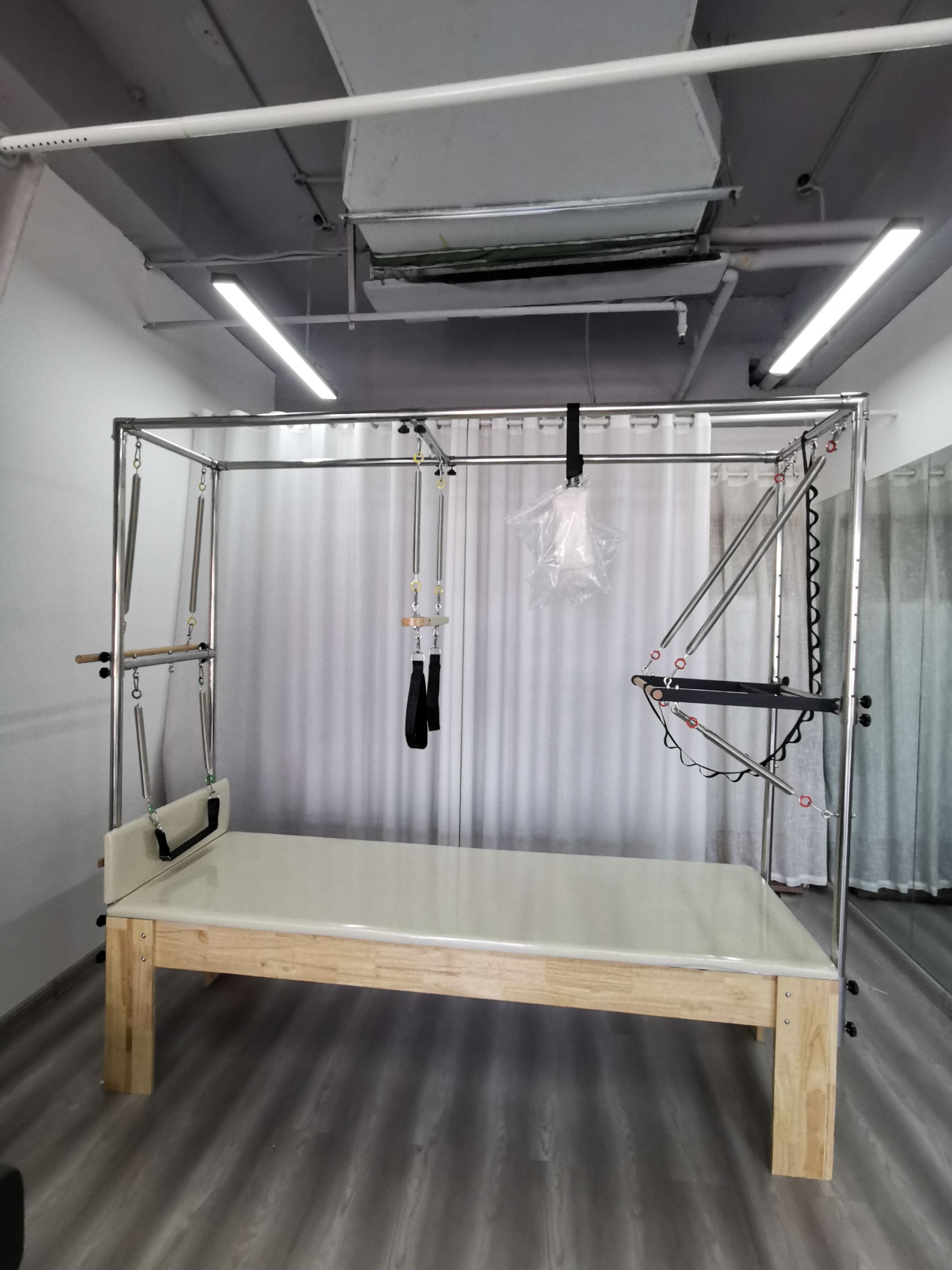
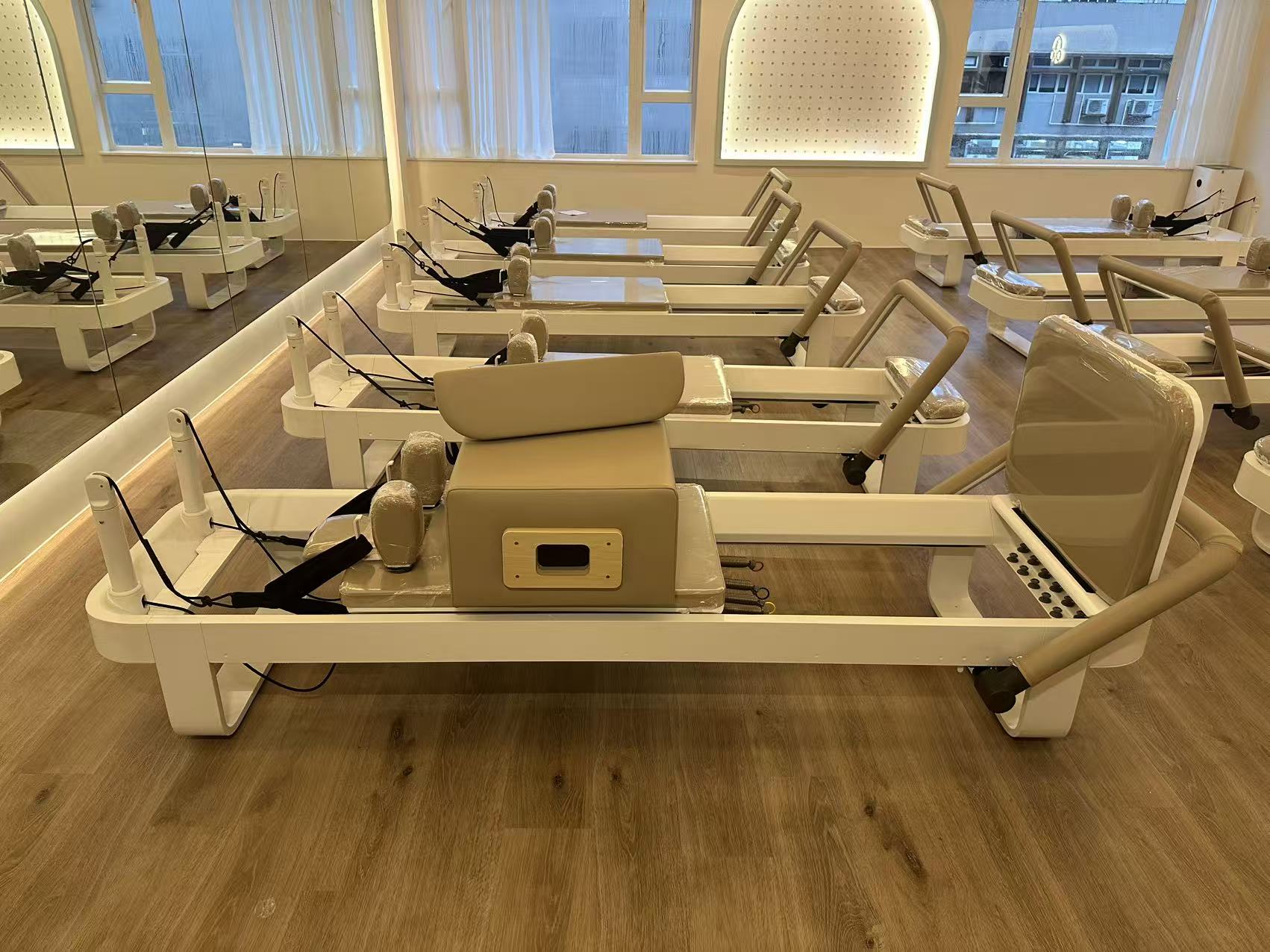
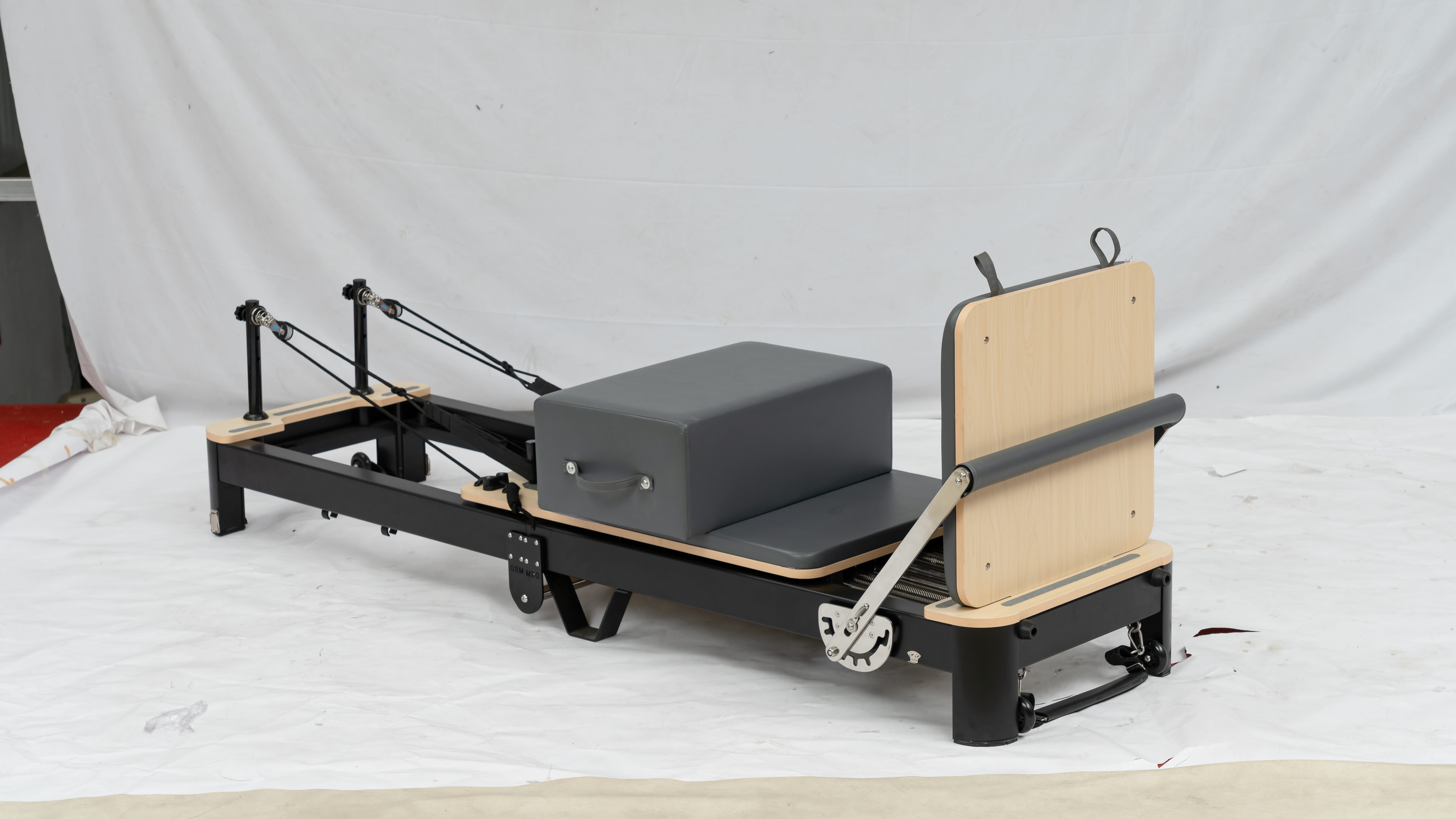
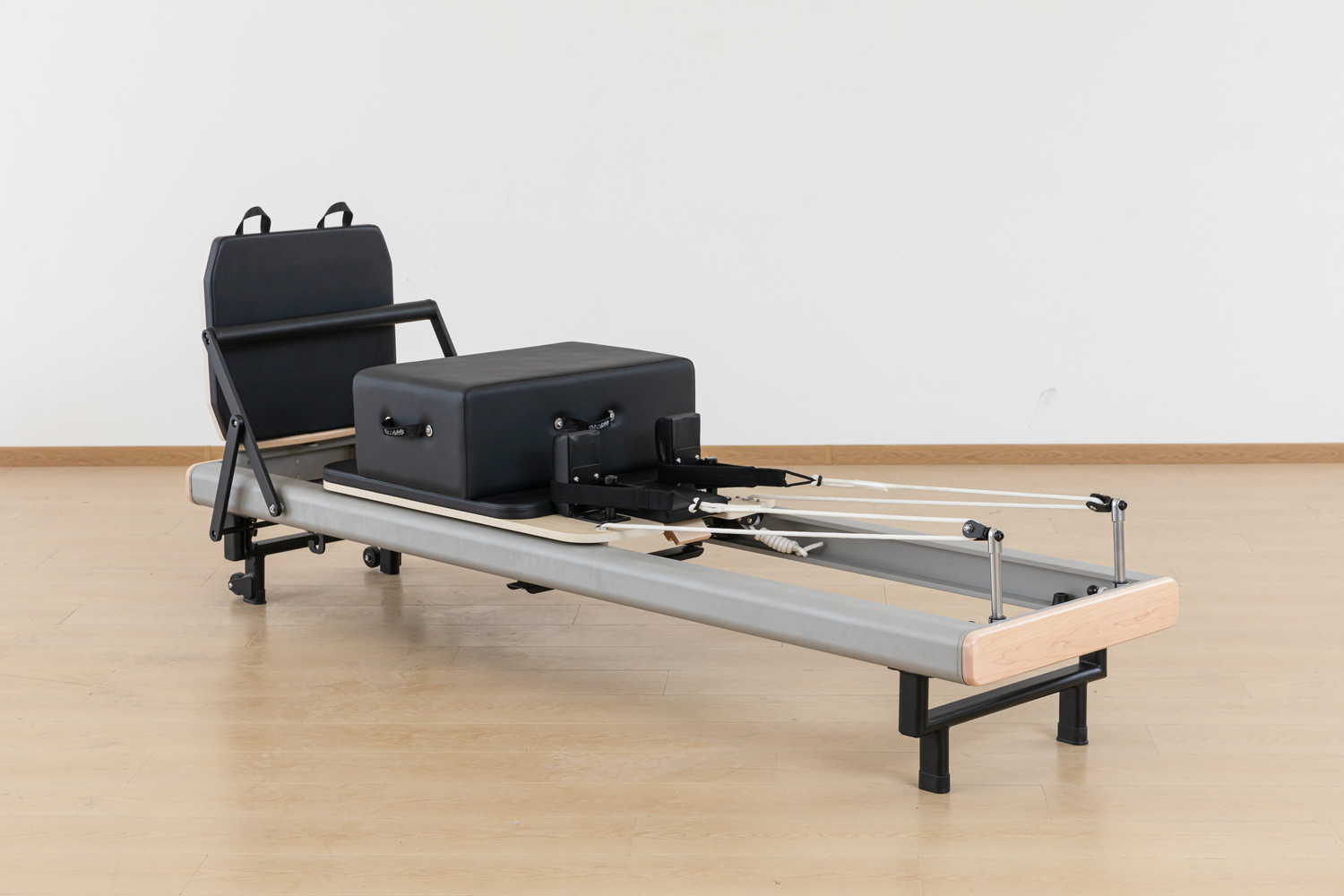
Frame craftsmanship. High-end equipment uses thickened steel (2mm+) or aviation-grade aluminum frames with phosphate, electrophoretic, and three-layer coating treatments for corrosion resistance and structural stability. Solid wood frames use North American imported maple, oak, or beech, kiln-dried to below 8% moisture content. Welding uses robotic automation with full inspection — uniform, strong welds without cold shuts or cracks.
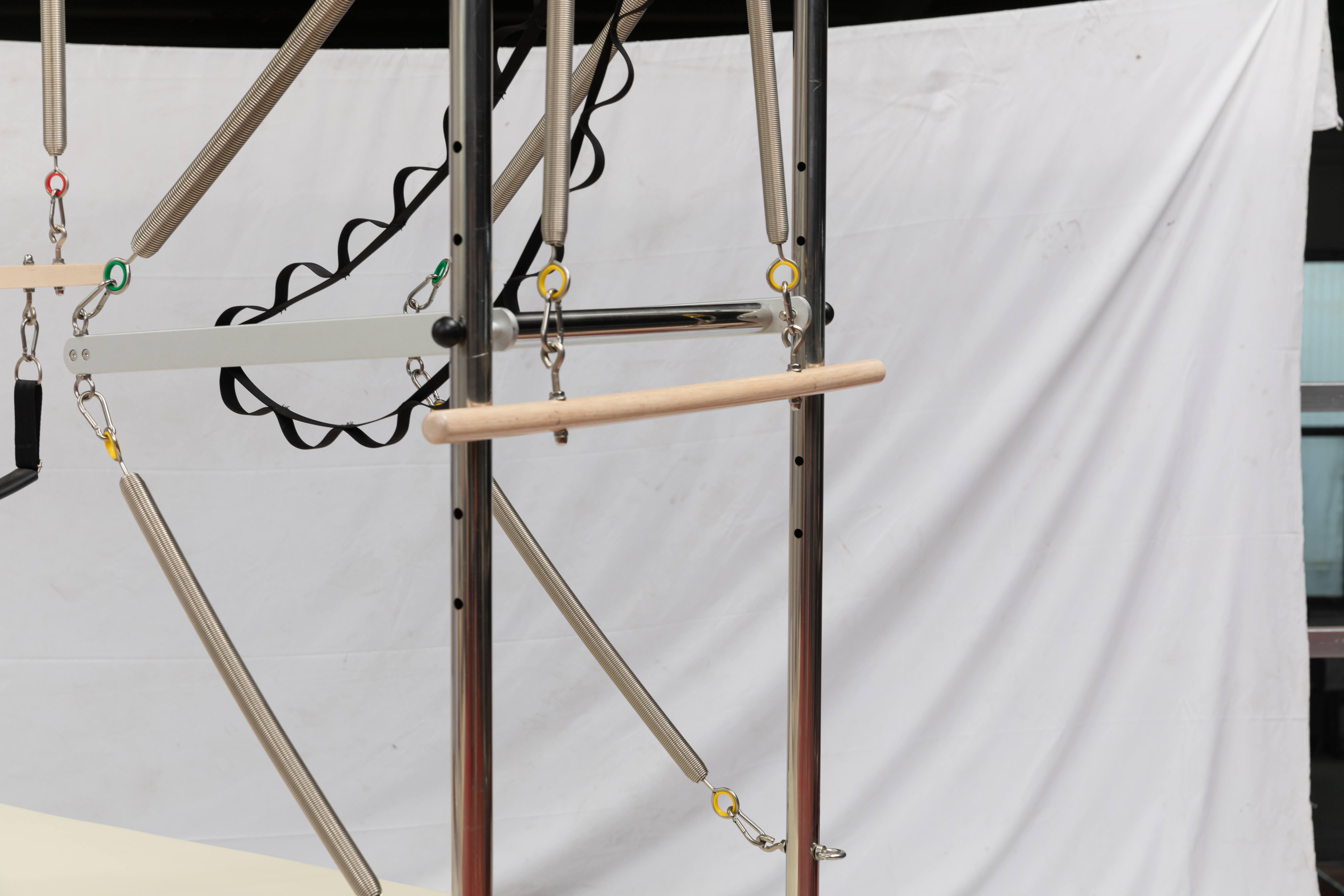
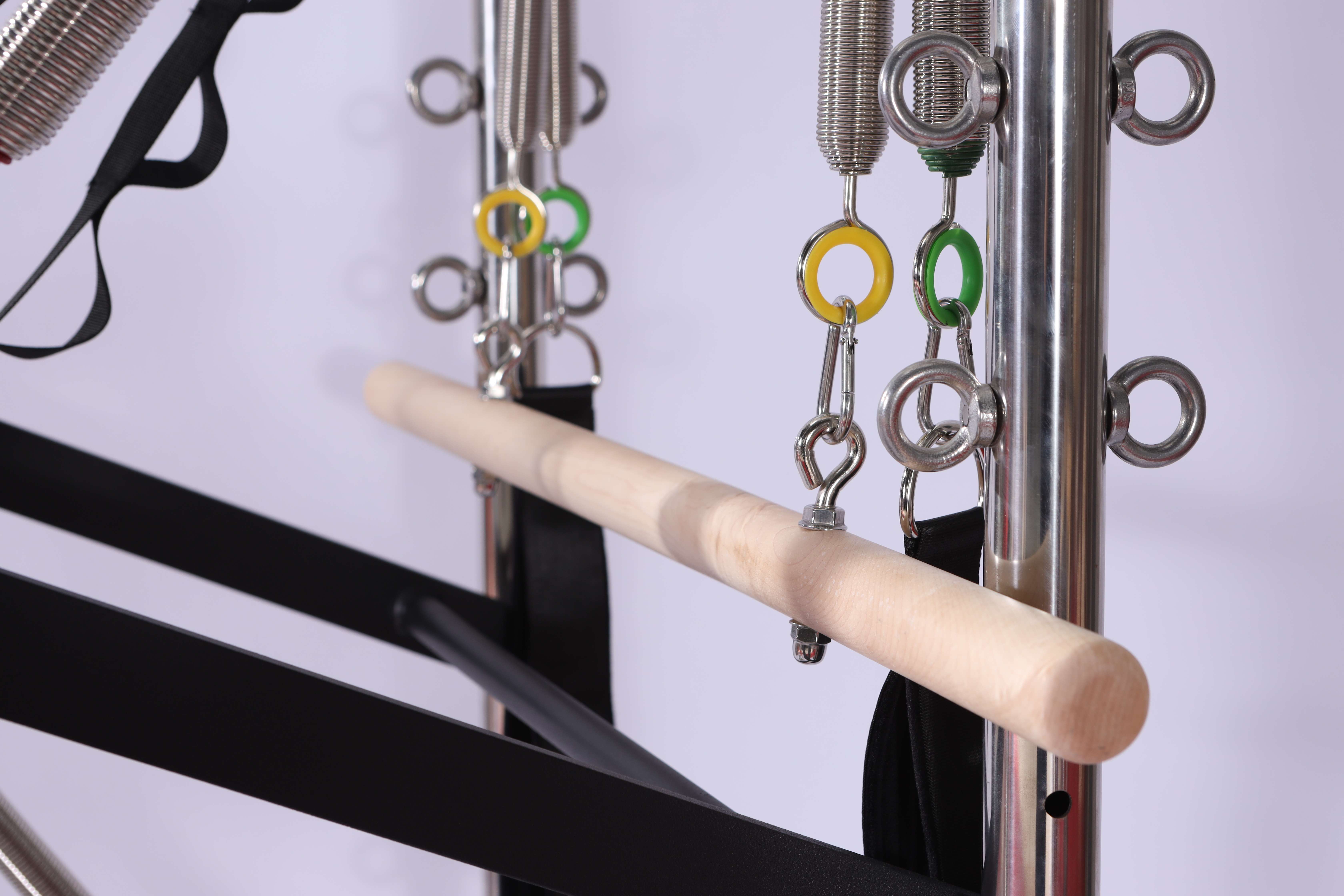
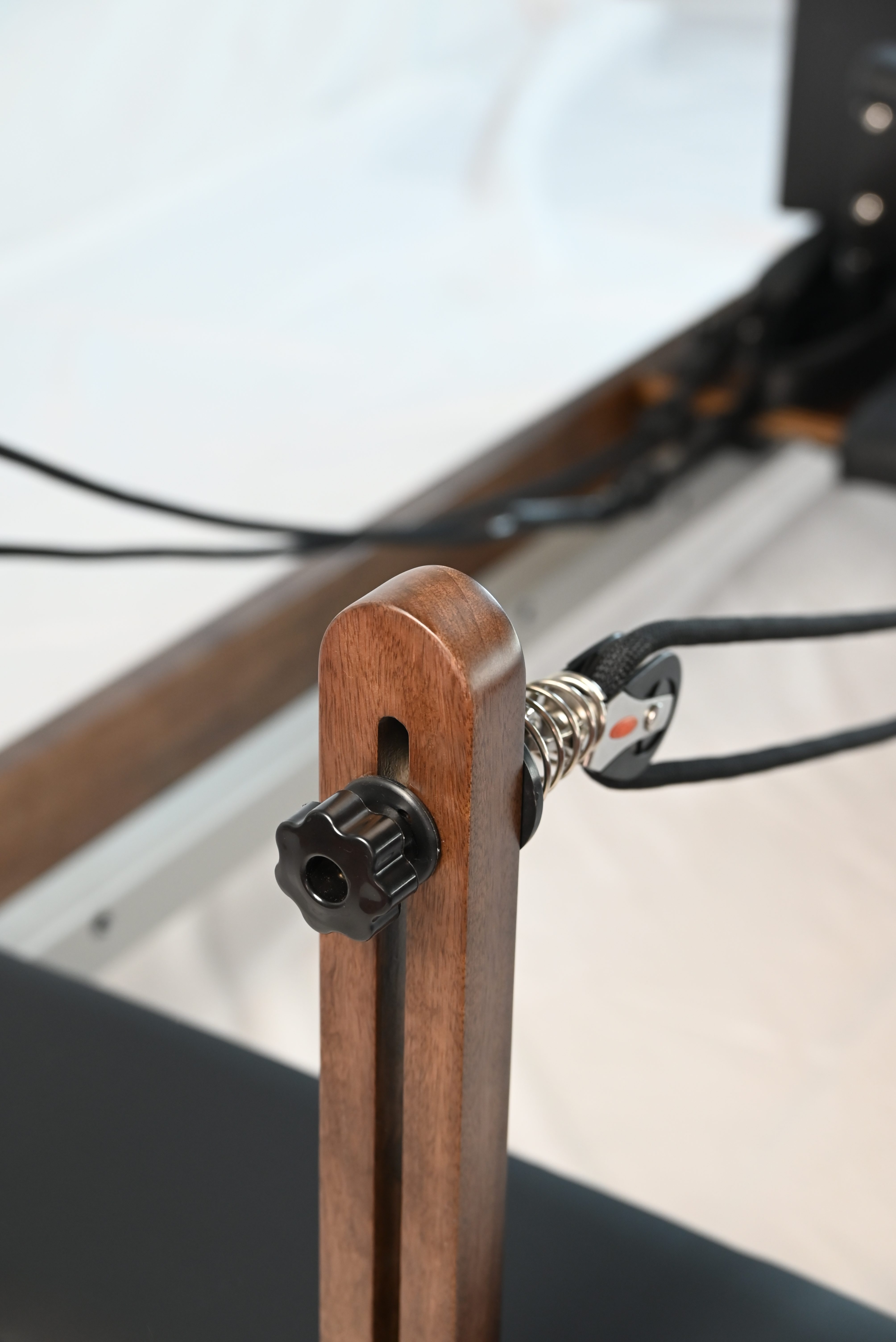
Spring systems. High-end equipment uses German or Japanese imported piano wire springs with stress-relief heat treatment, high force consistency, and 800,000 to 1,000,000 cycle life. Spring hooks are reinforced to prevent stress concentration fractures.
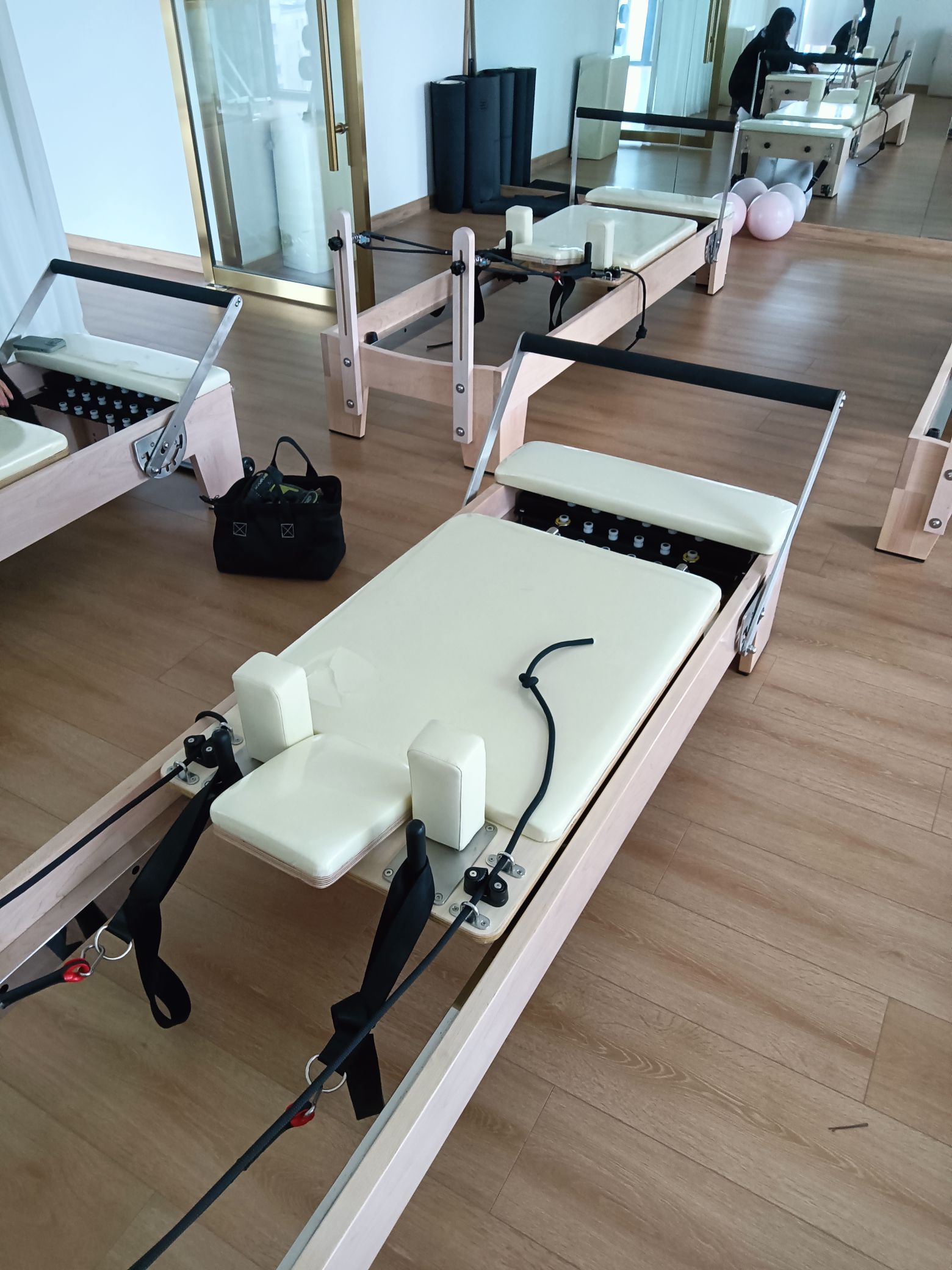
Carriage systems. Precision-machined aluminum rails with sealed-bearing silent wheels ensure smooth gliding, consistent resistance throughout, and noise below 50 decibels. Carriage travel of at least 100cm accommodates various heights and training needs.
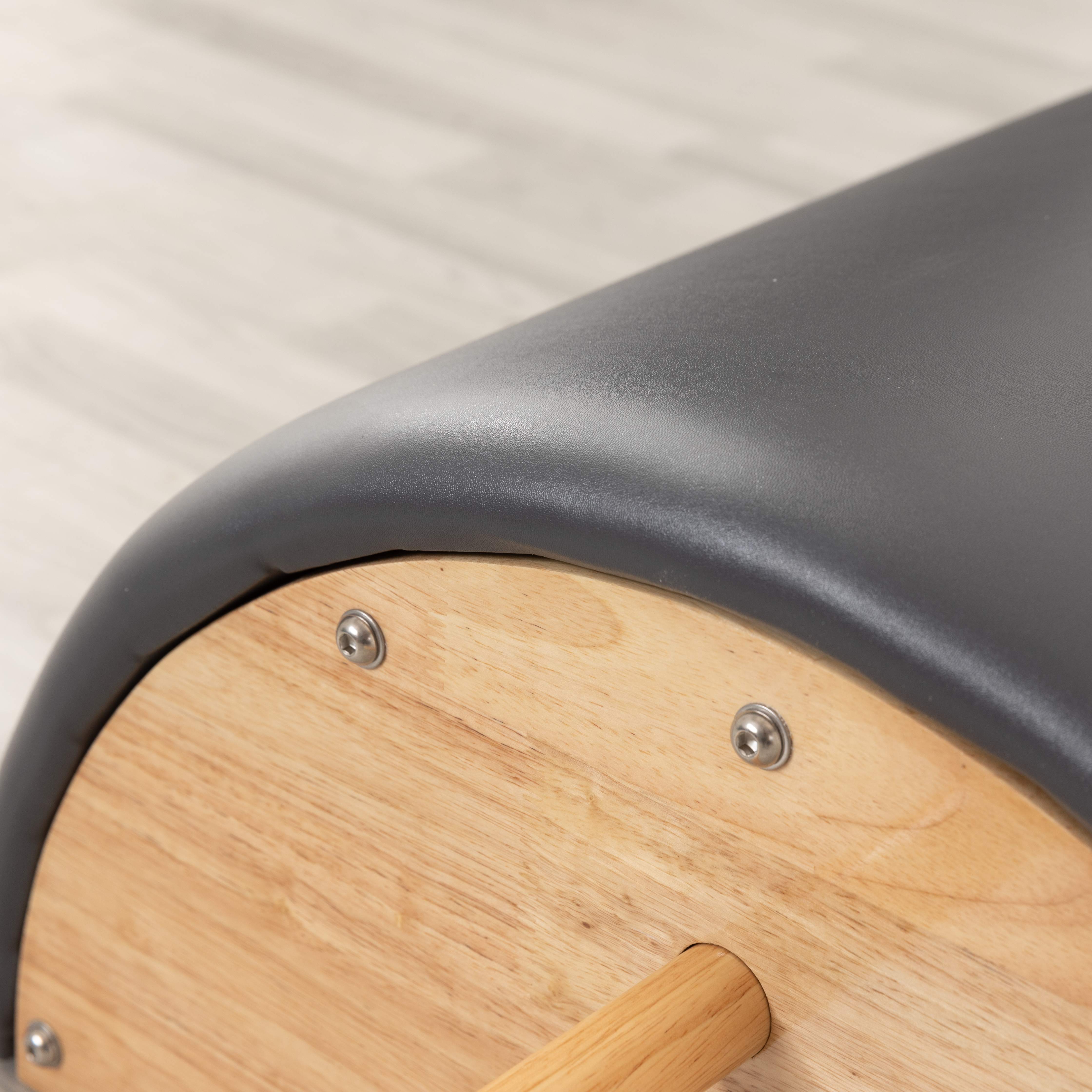
Upholstery materials. High-wear PU leather (Martindale >50,000 cycles) with high-density foam (≥45kg/m³) ensures comfort, durability, and easy cleaning. Double-stitching at stress points prevents tearing.
Complete unit testing. Every unit undergoes function testing, glide noise testing, spring force spot checks, and visual inspection before shipment, with records retained. Durability testing (e.g., 100,000-cycle dynamic load testing) is performed on a batch sampling basis.
III. Three Factory Direct Collaboration Models
OEM (Original Equipment Manufacturing) : Client provides designs or samples; factory produces accordingly. Suitable for brands with mature product designs needing only manufacturing capability.
ODM (Original Design Manufacturing) : Factory provides full-service from design development to mass production based on client's market positioning and functional requirements. Suitable for clients wanting to launch private labels quickly but lacking R&D capability.
Deep Customization: Comprehensive customization of appearance, function, materials, and packaging based on factory's existing products. Suitable for studios wanting brand differentiation on standard products.
Regardless of model, the collaboration process typically includes: requirements communication → feasibility assessment → sample production → sample approval → contract signing → mass production → outgoing inspection → logistics delivery.
IV. Procurement Evaluation Criteria for High-End Equipment
Verify factory manufacturing credentials. Evaluate operating history, factory scale, export experience, and certifications (ISO 9001, CE, etc.). On-site or video inspections of production lines, raw material warehouses, and QC stations are recommended.
Test sample quality. Before bulk ordering, always test physical samples — focusing on glide smoothness, spring feel, frame stability, and noise performance. Samples are the only reliable basis for judging a factory's true capability.
Clarify warranty terms. High-end equipment typically offers 5-10 year frame warranties and 2-year coverage on moving parts. Contracts should specify warranty periods by component, after-sales response mechanisms, and parts supply guarantees.
Assess customization flexibility. Confirm minimum order quantities, customization scope, and sample lead times. Factories accepting 50-100 unit MOQs generally demonstrate higher commitment to client needs.
Calculate total lifecycle cost. High-end equipment has higher upfront costs, but over a ten-year usage cycle, annual costs are often lower than budget equipment — which may need replacement within 2-3 years with hard-to-source repair parts.
Summary: Factory direct supply of high-end Pilates studio equipment is essentially a search for a better solution between "quality" and "cost." It allows studios to obtain commercial-grade equipment quality while avoiding brand premiums and intermediary markups, converting saved budget into deeper customization and more complete configurations. The core of choosing factory direct supply isn't simply pursuing low prices — it's finding a source partner whose manufacturing standards, quality control, and collaboration flexibility all match the studio's long-term development needs.