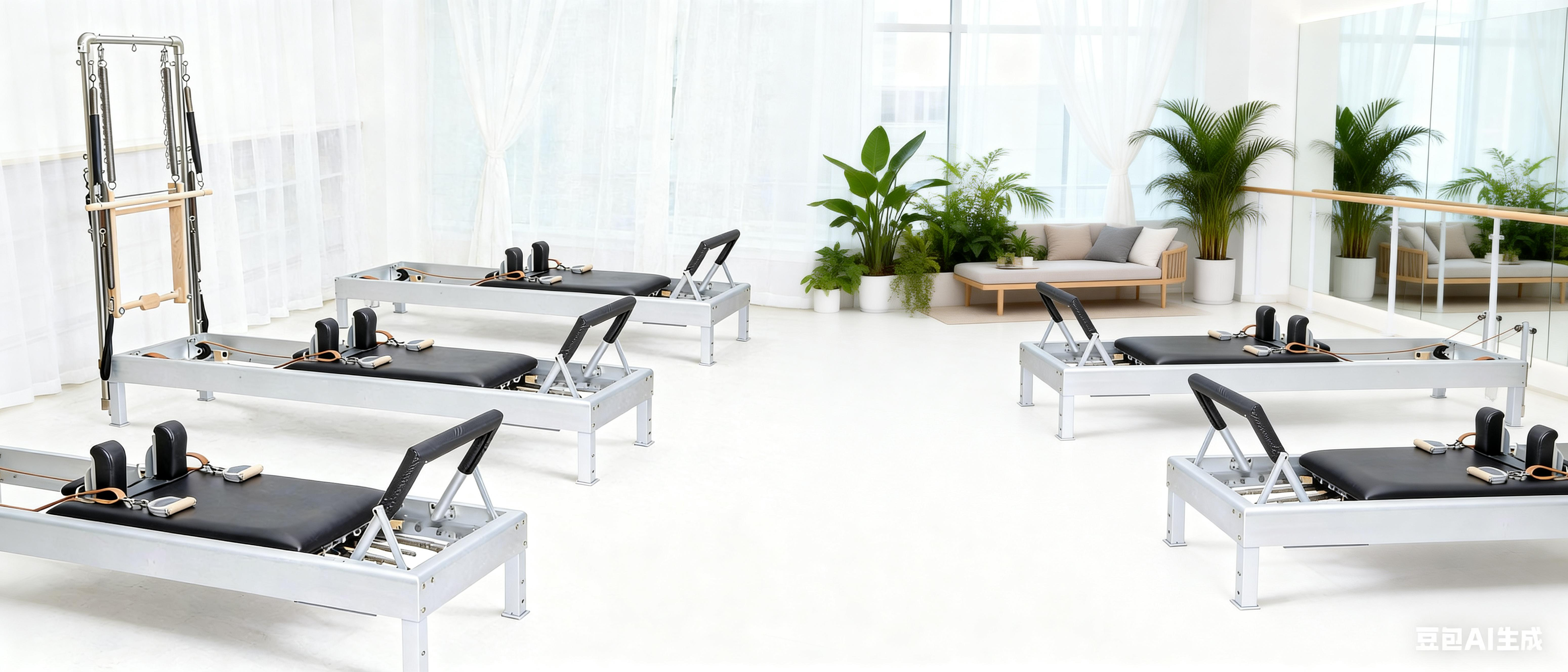
How to Choose the Right Foam Density for High-Traffic Commercial Pilates Studios
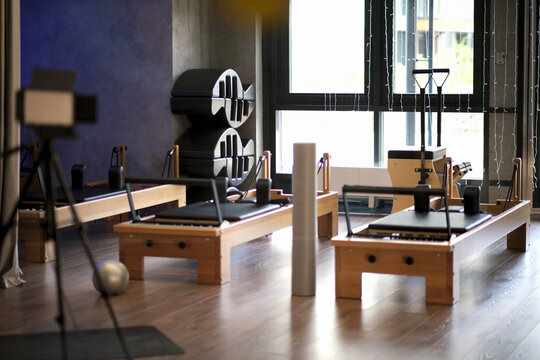
Pilates studio owners and fitness equipment distributors often overlook foam density when sourcing commercial reformers, chairs, and barrel machines. Yet the padding foam is one of the most heavily stressed components in high-traffic studios, where multiple clients use the equipment every single day. Low-quality foam will quickly compress, lose shape, become lumpy, and compromise client comfort and safety. Selecting foam with the correct density directly impacts equipment lifespan, hygiene maintenance, client experience, and long-term return on investment for your Pilates business. This guide breaks down everything you need to know about foam selection for busy commercial Pilates spaces.
What Is Foam Density, and Why It Matters for Pilates Equipment
Foam density refers to the weight of foam per cubic foot, measured in pounds per cubic foot (PCF). It is not the same as foam firmness. Density indicates the durability and resilience of the foam, while firmness describes how soft or hard the foam feels when pressed.
For commercial Pilates equipment, the padding needs to balance two core requirements. First, it must offer enough support to stabilize the body during stretching, resistance training, and spinal rehabilitation work. Too soft foam lets the body sink in, ruining alignment and increasing injury risk. Second, the foam must retain its original shape after hundreds of daily uses. In a high-traffic studio, cheap low-density foam will develop permanent indentations rapidly, making the equipment look worn and unprofessional within months.
Standard Foam Density Grades for Pilates Machines
1. Low-density foam (under 1.8 PCF)
Low-density foam is commonly used in low-cost home Pilates devices. It feels soft at first but compresses very quickly under repeated body weight. This foam is not suitable for commercial studios. After frequent daily use, it develops dents, uneven surfaces, and cannot provide consistent body support. It also absorbs sweat more easily, accelerating mold and bacteria growth. We only recommend this foam for private home-use products with minimal usage.
2. Medium-density foam (1.8 PCF – 2.5 PCF)
Medium-density foam strikes a balance between softness and durability. It works well for accessory padding, such as headrest cushions, shoulder supports, and small roller pads. It delivers a comfortable feel for short-duration contact points. However, it is not ideal for the main carriage padding of reformers or Wunda chairs in busy studios. Constant full-body pressure will gradually flatten medium-density main padding over 1–2 years.
3. High-density foam (2.5 PCF – 3.2 PCF)
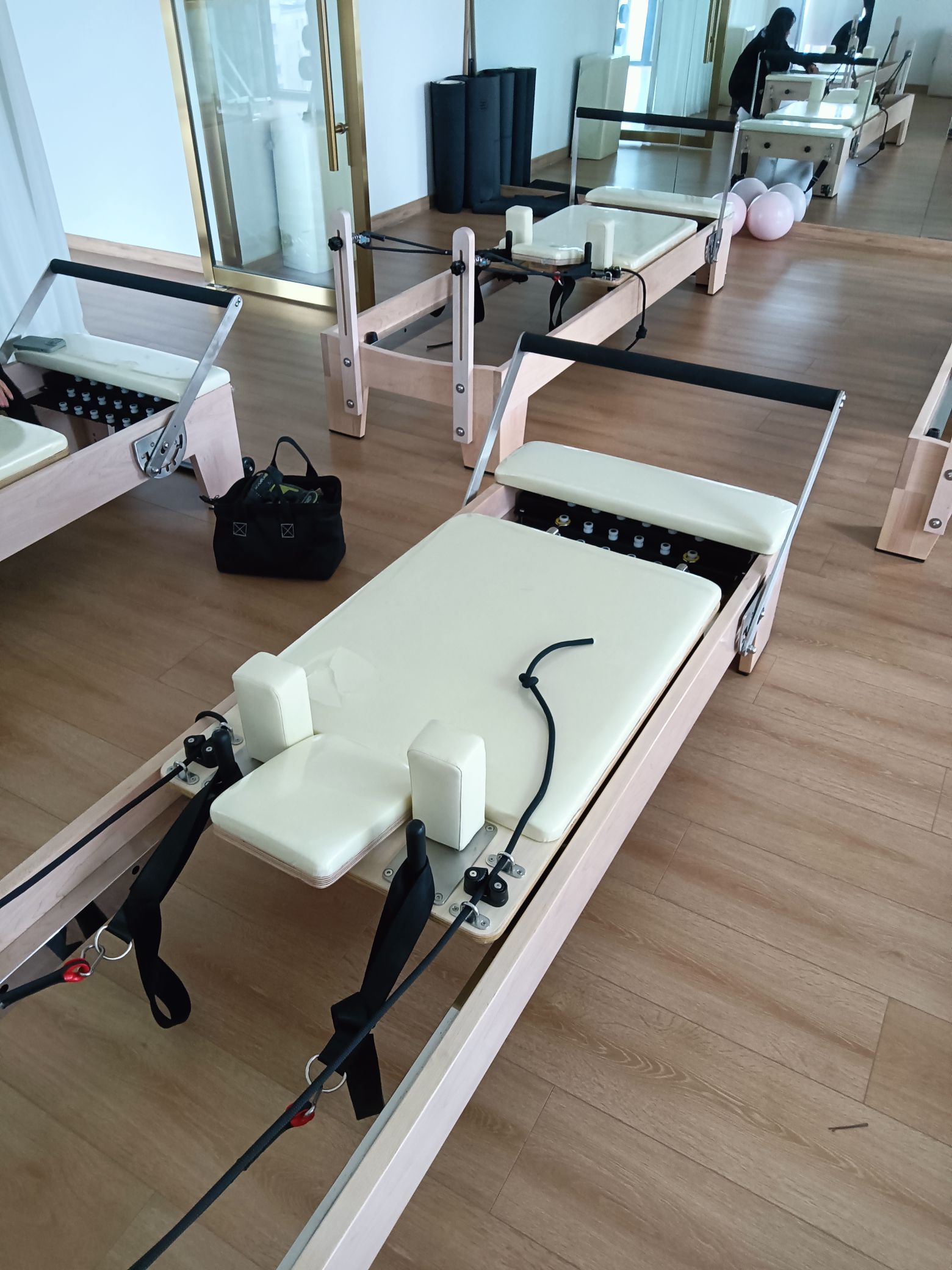
High-density polyurethane foam is the industry standard for main upholstery padding on commercial-grade Pilates reformers, Cadillac tables, and ladder barrels. This foam maintains its shape even under heavy, repeated daily use. It offers stable support to keep clients’ spine and joints properly aligned during exercises. It bounces back quickly after each session and resists permanent compression.
For most high-traffic boutique Pilates studios, 2.8 PCF high-density foam is the sweet spot. It feels comfortable for clients of different body types, while maintaining structural integrity for years of back-to-back classes.
4. Extra high-density foam (above 3.2 PCF)
Extra high-density foam is extremely firm and long-lasting. It is a great choice for rehabilitation clinics and clinical Pilates studios, where therapists require rigid, unyielding padding to control patient movement. The downside is that it feels very firm for general fitness clients. It may reduce comfort for long mat and reformer sessions, so it is less popular for standard group Pilates studios.
Key Factors Beyond Density for Commercial Studio Foam
While density is the primary metric, studio buyers must evaluate additional foam properties before placing bulk orders.
Resilience
Resilience describes how fast foam springs back after compression. High-resilience (HR) foam is the premium option for Pilates equipment. It recovers its shape instantly after clients finish their workouts. HR foam has superior fatigue resistance, which is critical in studios running 8+ classes per day.
Moisture & Antimicrobial Properties
Sweat contact is unavoidable in Pilates classes. Foam with open-cell structure absorbs moisture and harbors bacteria, odors, and mildew. Top commercial Pilates foam uses closed-cell or treated antimicrobial formulations. Combined with microfiber upholstery, treated foam prevents odor buildup and simplifies daily cleaning routines for studio staff.
Flame Retardant Compliance
Many regions, including EU countries and North America, require upholstery foam for commercial fitness facilities to meet fire safety standards. Importers must confirm the foam meets local flame retardant regulations. Non-compliant foam will cause customs hold-ups and safety liabilities for studio operators.
Common Mistakes Studio Buyers Make When Selecting Foam
The most frequent mistake is confusing foam firmness with density. Some buyers select overly soft foam believing it delivers better client comfort. Soft foam can still be low-density, and it will wear out quickly. Another common error is choosing the cheapest foam to cut upfront costs. While this reduces initial investment, replacement padding costs and negative client reviews end up being far more expensive over time.
Some buyers also overlook the difference between foam for main carriage surfaces versus small accessory cushions. Using high-density foam everywhere increases unnecessary costs, while using low-density foam on high-contact main padding leads to premature equipment failure. A smart purchasing strategy mixes foam densities: high-density foam for primary contact surfaces, paired with medium-density foam for headrests and small supports.
Final Recommendations for High-Traffic Pilates Studios
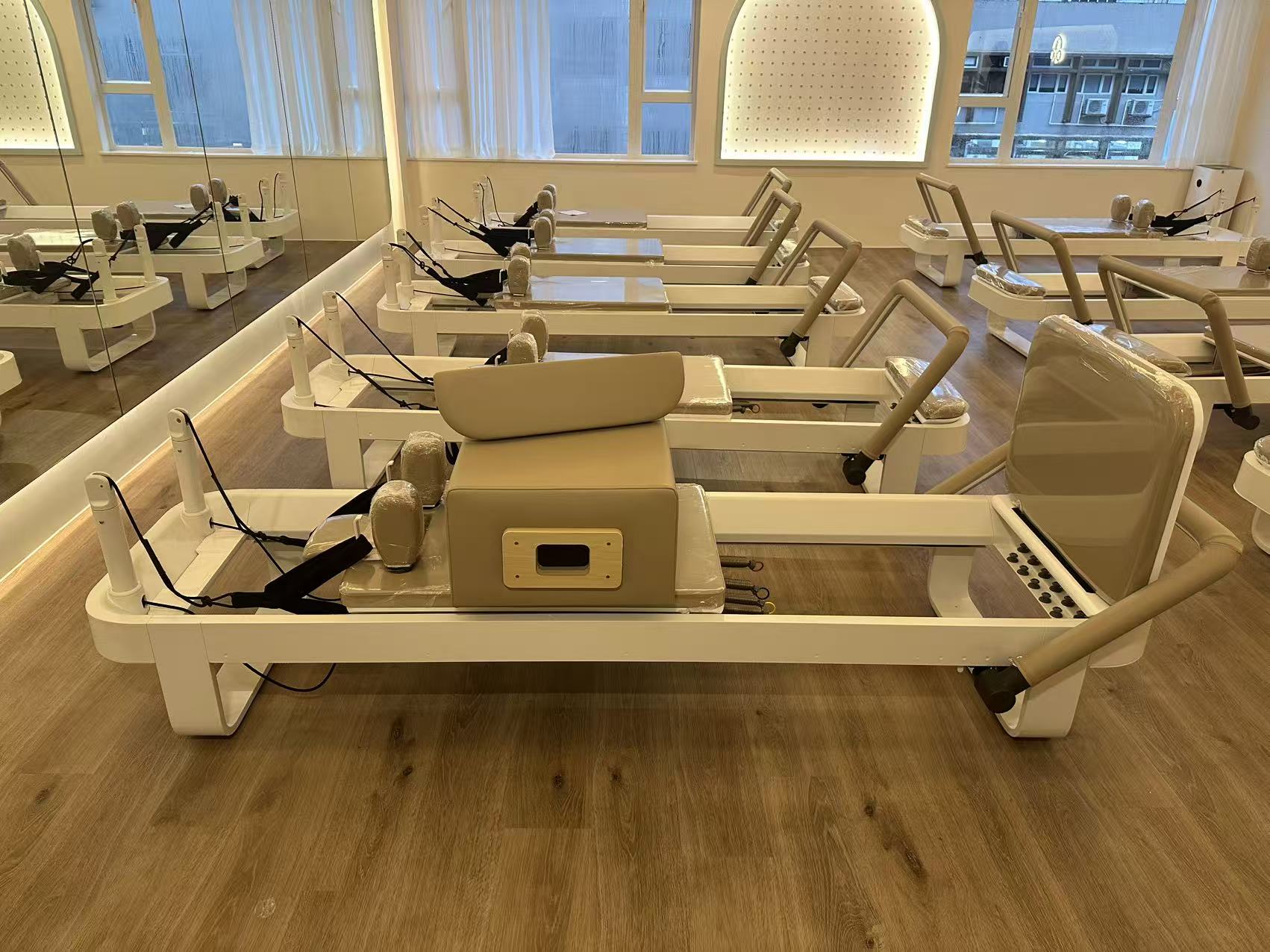
For general boutique Pilates studios with back-to-back group and private sessions: select 2.6–3.0 PCF high-resilience foam for reformer carriage padding, Wunda chair seats, and Cadillac table tops. Pair it with medium-density foam for headrests and shoulder pads.
For clinical Pilates and physical therapy studios: opt for 3.0–3.4 PCF extra high-density foam to maintain rigid, stable support during rehabilitation work.
For importers placing OEM bulk orders: confirm foam test reports from your supplier, verify antimicrobial treatment and fire safety certification, and request physical foam samples before mass production.
Investing in properly specified foam protects your equipment investment, improves client satisfaction, and keeps your studio looking polished and professional for years of heavy daily use.