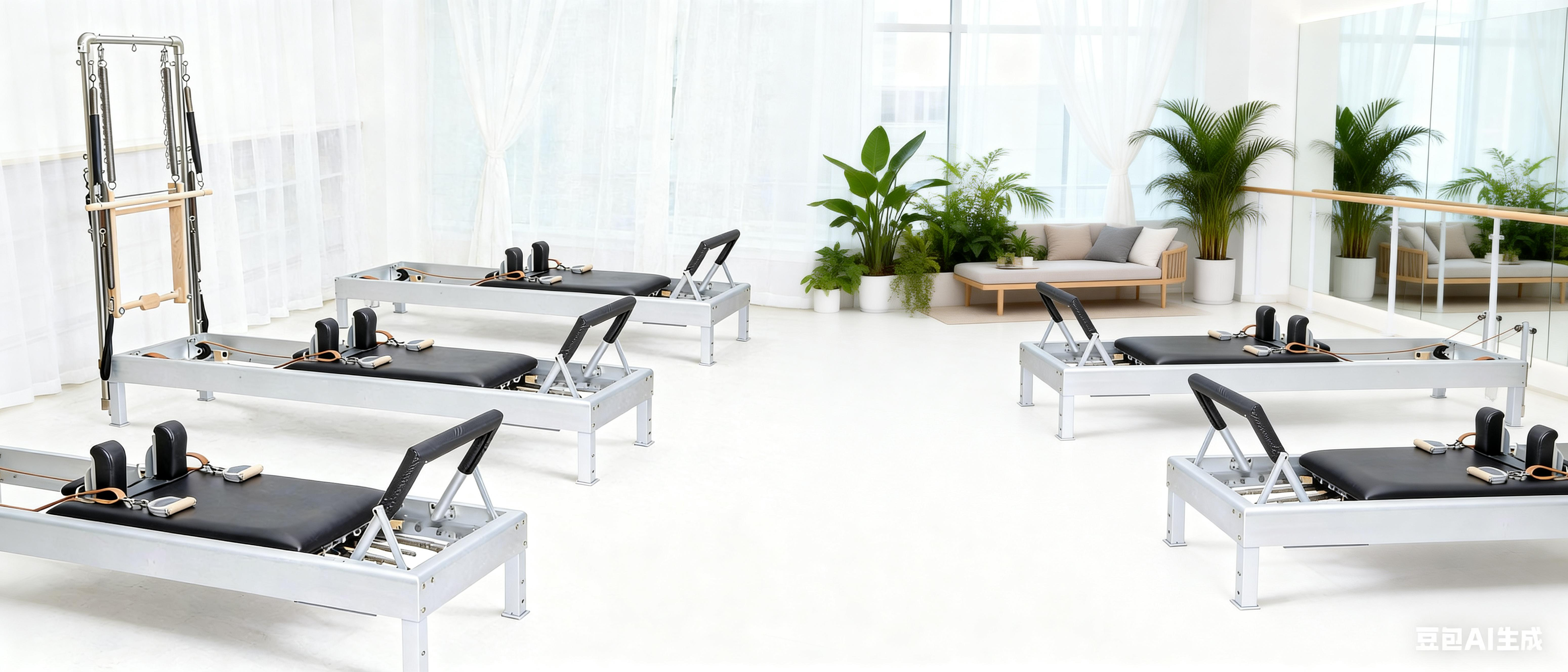
Behind the Scenes: Manufacturing High‑Quality Pilates Reformers

A high-quality Pilates Reformer goes through dozens of production steps, hundreds of inspections, and the collaboration of dozens of craftspeople from raw material to finished product. For buyers, understanding these behind-the-scenes processes helps not only assess a supplier's true manufacturing capability but also understand "why some machines last a decade while others fall apart in three years."
This article takes you inside the factory — from design and materials to manufacturing and testing — presenting the complete production landscape of a high-quality Reformer.
I. Design & Engineering: Where It All Begins
Production starts with drawings. Before materials are committed, the R&D team must complete structural design, material selection, and force calculations.
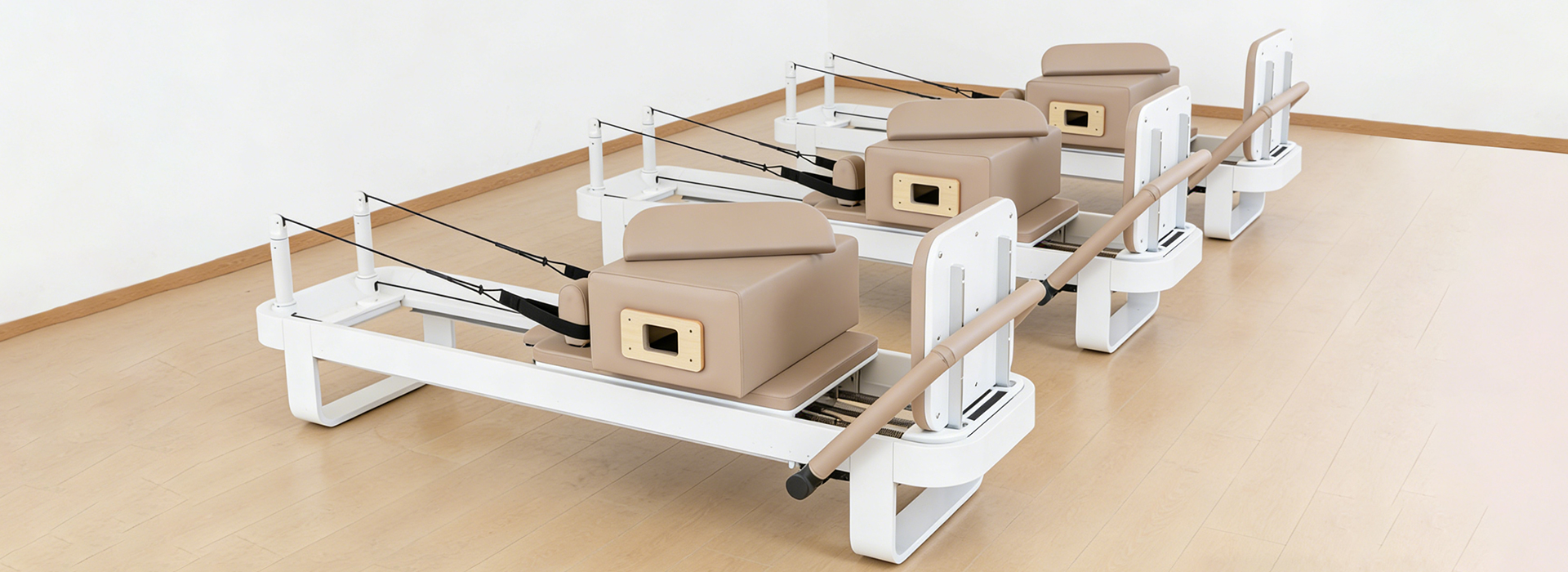
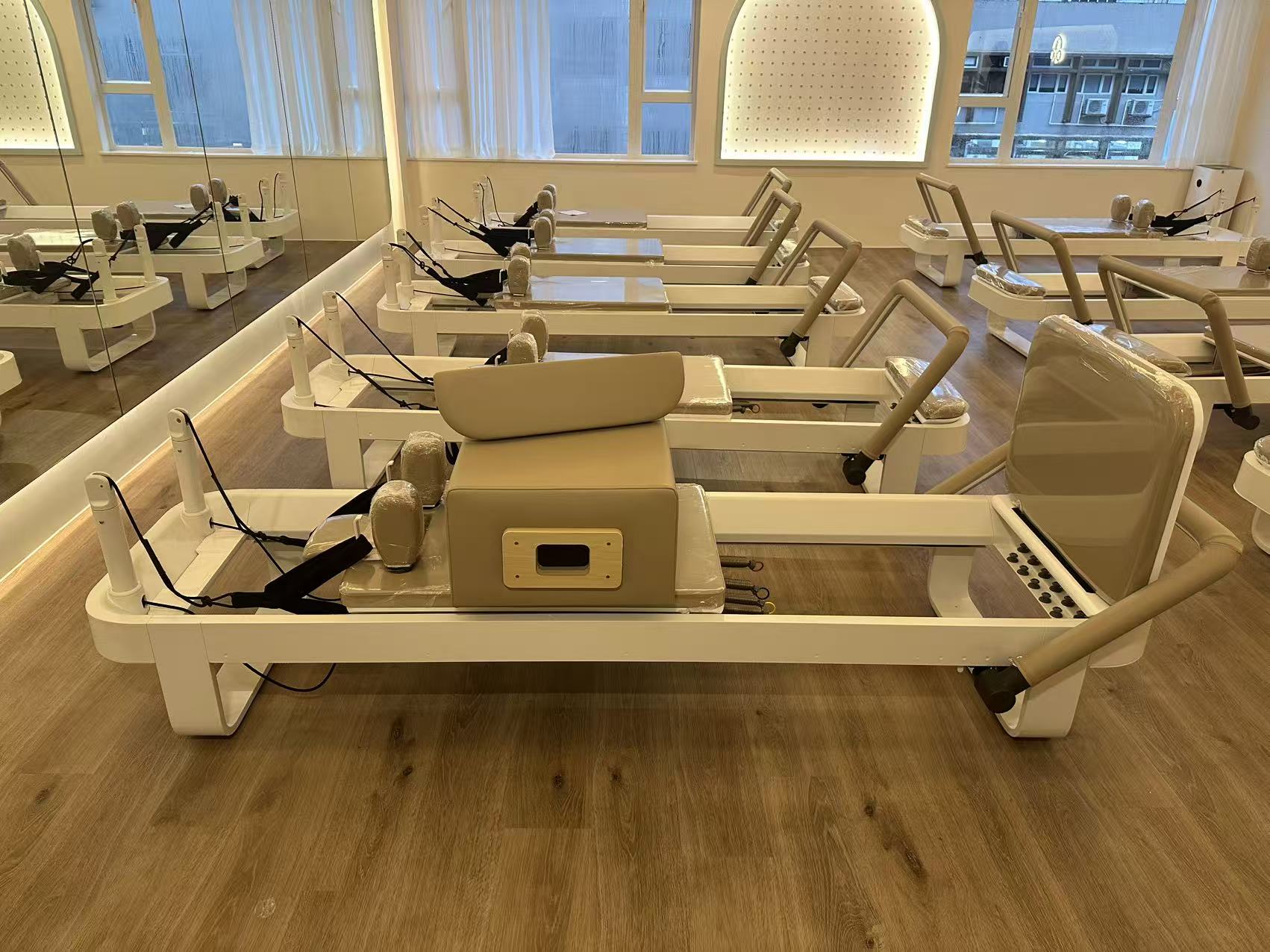
Structural design determines frame material, carriage travel, rail precision, and spring layout. Typical commercial Reformer specifications: external length 220-240cm, external width 55-65cm, carriage travel 90-100cm. Key parameters considered at the design stage include static and dynamic load capacity, carriage system friction coefficients, and spring force curves.
Material selection determines the equipment's lifespan ceiling. Premium equipment doesn't compromise: frames use thickened carbon steel (2mm+), aviation-grade aluminum (6061-T6), or FSC-certified hardwood (maple, oak, beech); springs use German or Japanese imported piano wire; leather uses high-wear PU with Martindale abrasion exceeding 50,000 cycles; foam density is no less than 45kg/m³.
Spring parameter calculation is a core engineering step. Wire diameter, coil diameter, active coil count, and free length together determine the spring constant. Commercial-grade springs undergo rigorous heat treatment to eliminate residual stress, with reinforced hooks to address stress concentration fracture risks.
II. Frame Manufacturing: The Equipment's "Skeleton"
The frame is the backbone — all other component performance depends on its rigidity and precision.
Metal frame manufacturing begins with laser cutting or stamping. Formed parts enter the welding stage — the process most affecting structural strength. Premium factories use robotic welding or experienced hand welders, producing uniform, smooth welds free from porosity, cracks, or cold shuts. Critical load-bearing welds undergo non-destructive testing (magnetic particle or ultrasonic inspection).
After welding comes surface treatment: phosphating, electrophoretic coating, powder coating, or anodizing. Quality coatings undergo cross-cut adhesion testing and salt spray testing for corrosion resistance. Coating thickness is typically controlled at 60-80 microns.
Solid wood frame manufacturing relies more on combining traditional craftsmanship with precision control. Lumber undergoes strict kiln drying to below 8% moisture content. After cutting and forming, mortise-and-tenon joinery or precision assembly ensures frame corner stability — quality joinery holds tight without a single screw and won't develop squeaks over time. Then comes 3-4 stages of sanding from coarse to fine grit, finishing with 4+ coats of water-based varnish or catalyzed lacquer.
III. Carriage and Rail System: The Equipment's "Joints"
The carriage is the most active component — it moves along the rails while supporting the practitioner.
Rail machining precision directly determines glide smoothness. Aluminum rails undergo extrusion, cutting, drilling, and surface treatment, with anodizing for wear resistance. Rail straightness and parallelism tolerances are controlled within extremely tight ranges — excessive clearance causes carriage wobble, insufficient clearance increases resistance or produces noise.
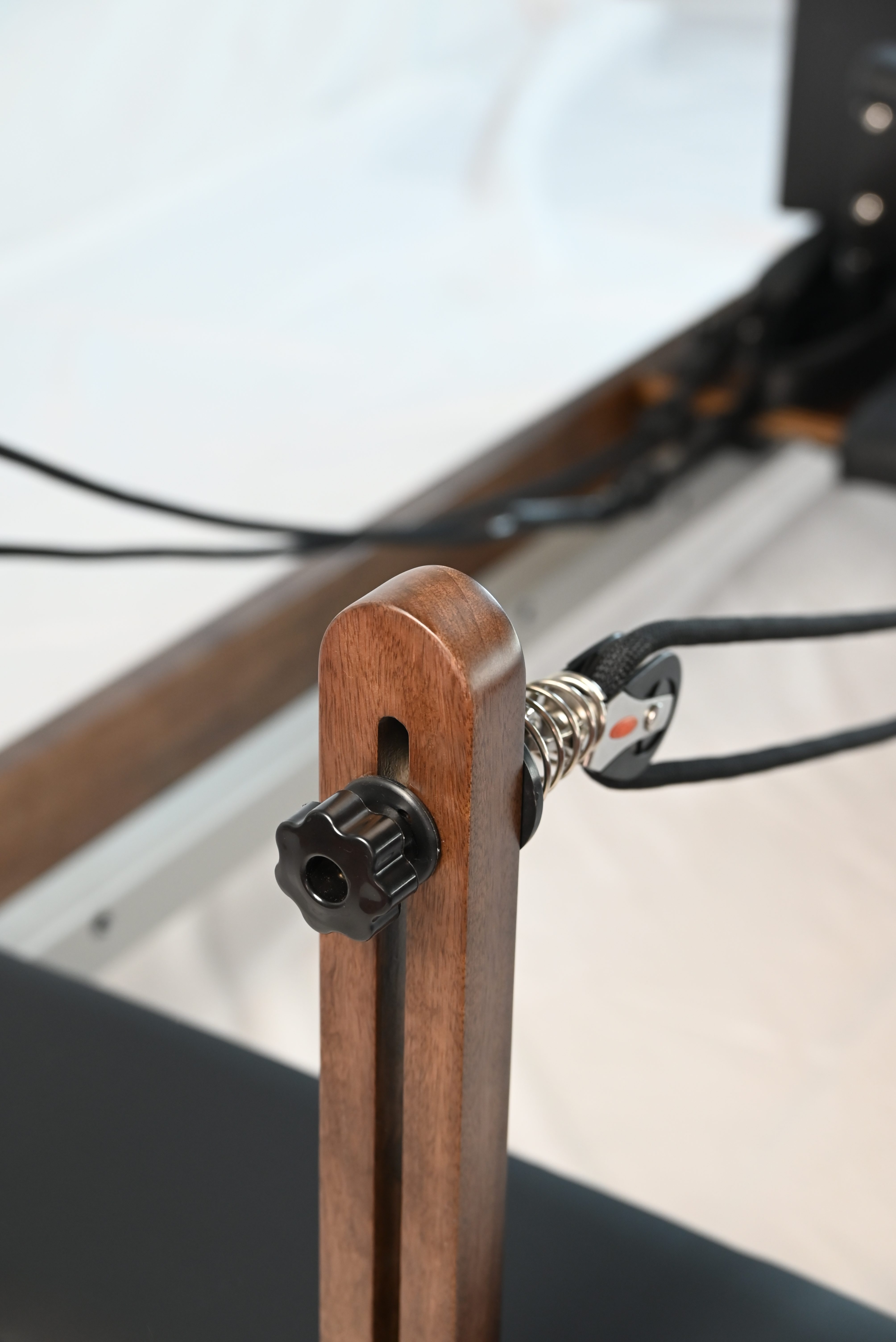
Carriage assembly includes base board, wheels, axles, and upholstery installation. Wheels should be POM (engineering plastic) or sealed-bearing silent types. Four wheel mounting holes require precision drilling to ensure parallel alignment and straight tracking. Premium brands perform "glide tests" after assembly, ensuring silent, smooth operation under full load (approximately 120kg).
IV. Spring Manufacturing: The Equipment's "Power Heart"
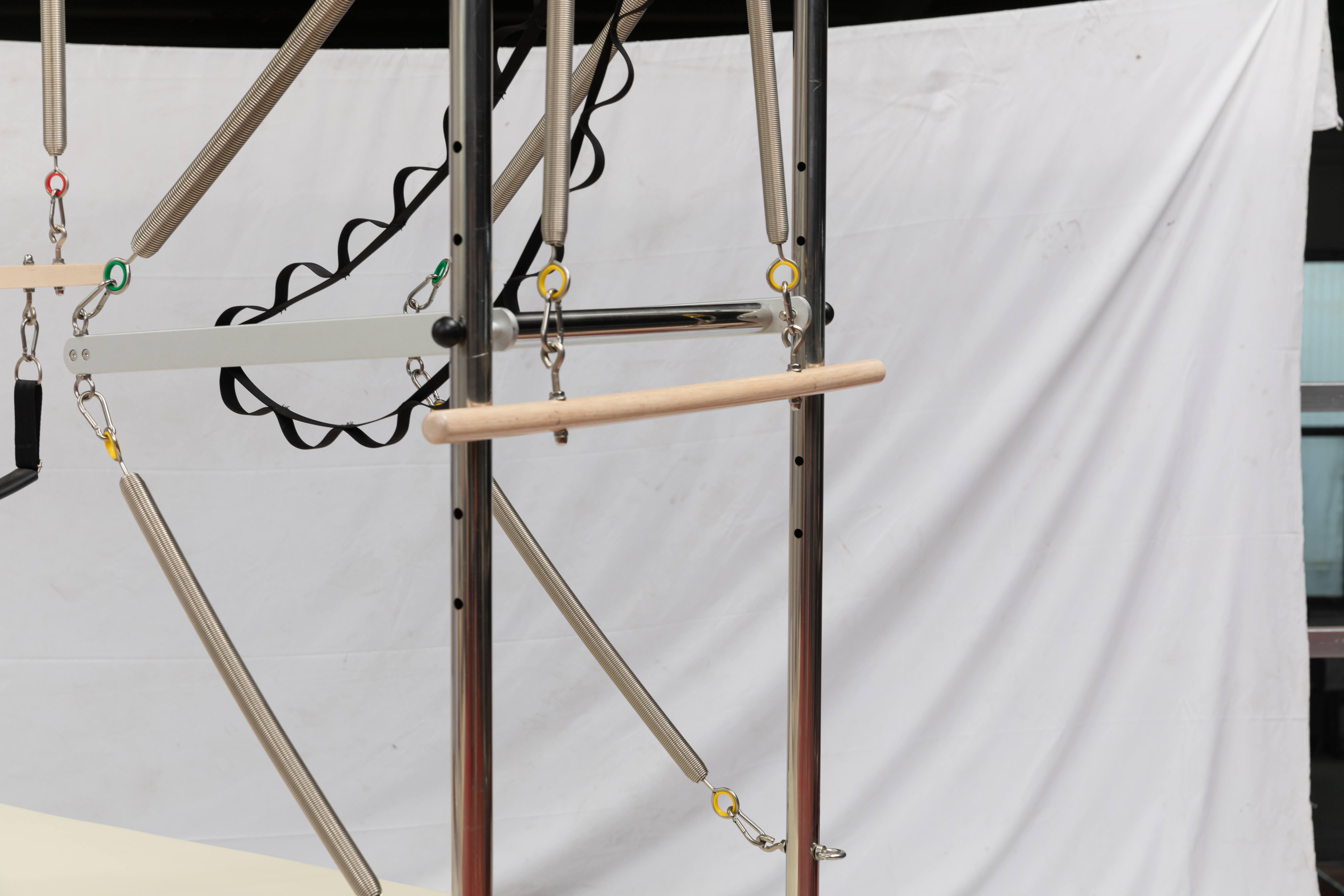
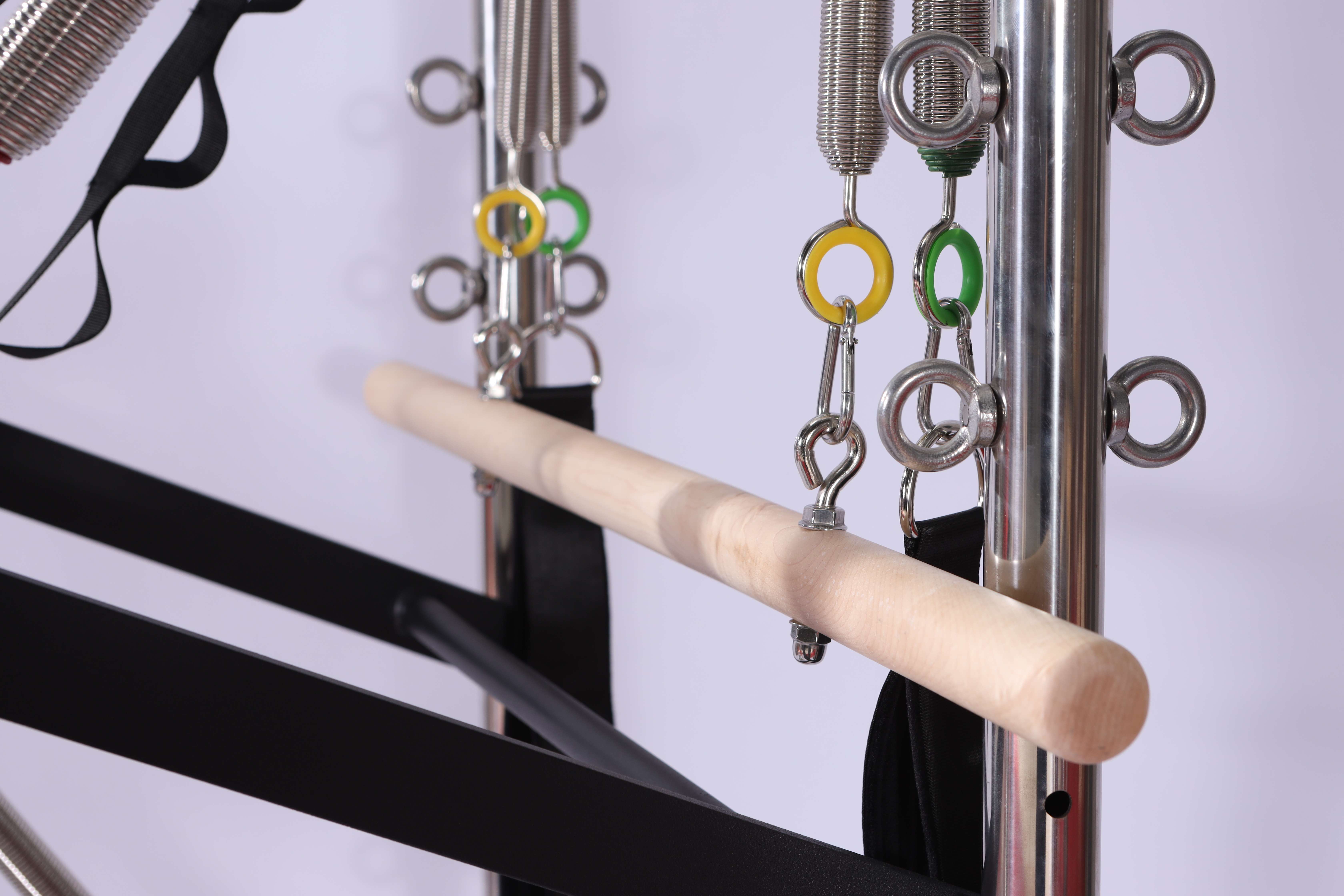
Springs are the core component determining feel — and the area where quality differences are most easily perceived.
Raw materials: Quality springs use German or Japanese imported piano wire (high-carbon steel, 0.7-1.0% carbon content) for high tensile strength and consistent elastic modulus.
Manufacturing process includes: automatic coiling machines forming wire into specified coil counts and diameters; heat treatment to eliminate internal stress and improve fatigue resistance; additional reinforcement at hook areas; force testing of every spring at standard extension length, with commercial standards requiring force tolerance within ±5% to ±8%; and finally nylon or PVC coating for rust prevention and improved feel.
A commercial Reformer typically includes 4-5 springs with varying resistance levels (heavy, medium, light), combinable into multiple resistance profiles. Premium models even offer 6-spring systems for finer resistance adjustment.
V. Upholstery: The Client-Facing "Façade"
Upholstery affects comfort, aesthetics, and durability — it's what clients directly contact every day.
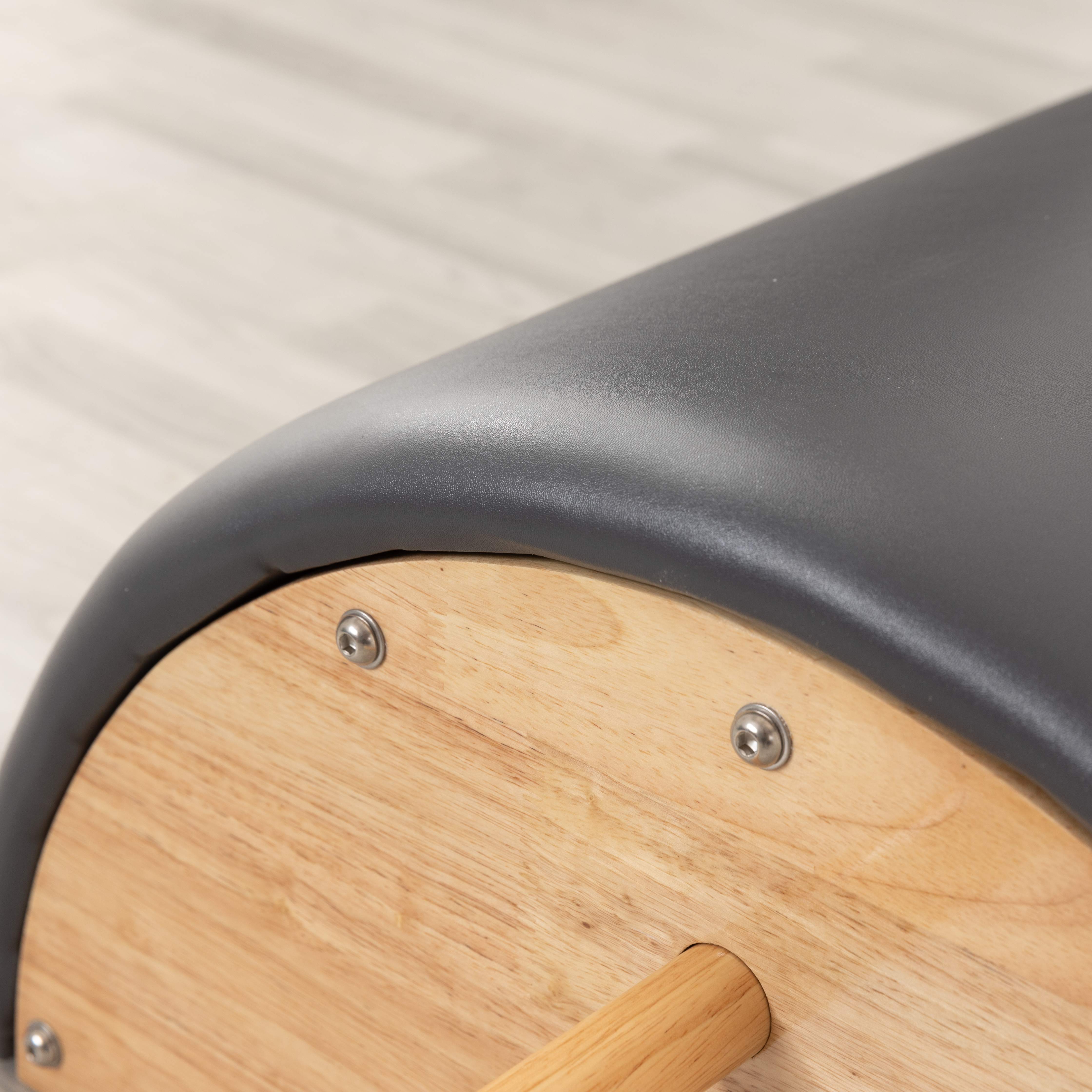
Process steps include: cutting high-density foam to shape for carriage, headrest, and shoulder rests; bonding foam to base boards or molds; covering high-wear PU leather over foam; pressing leather tight over foam using molds, then manually or mechanically securing edges for a wrinkle-free finish; and double-stitching at critical stress areas to prevent tearing.
Quality inspection includes: leather surface free from bubbles, wrinkles, or color variation; uniform stitching with double-stitching at critical areas; foam rebounds quickly after pressing with no visible indentations; leather tightly bonded to foam with no looseness or hollow spots.
VI. Final Assembly and Factory Inspection: The Last Line of Defense
All components converge on the assembly line for final integration and tuning.
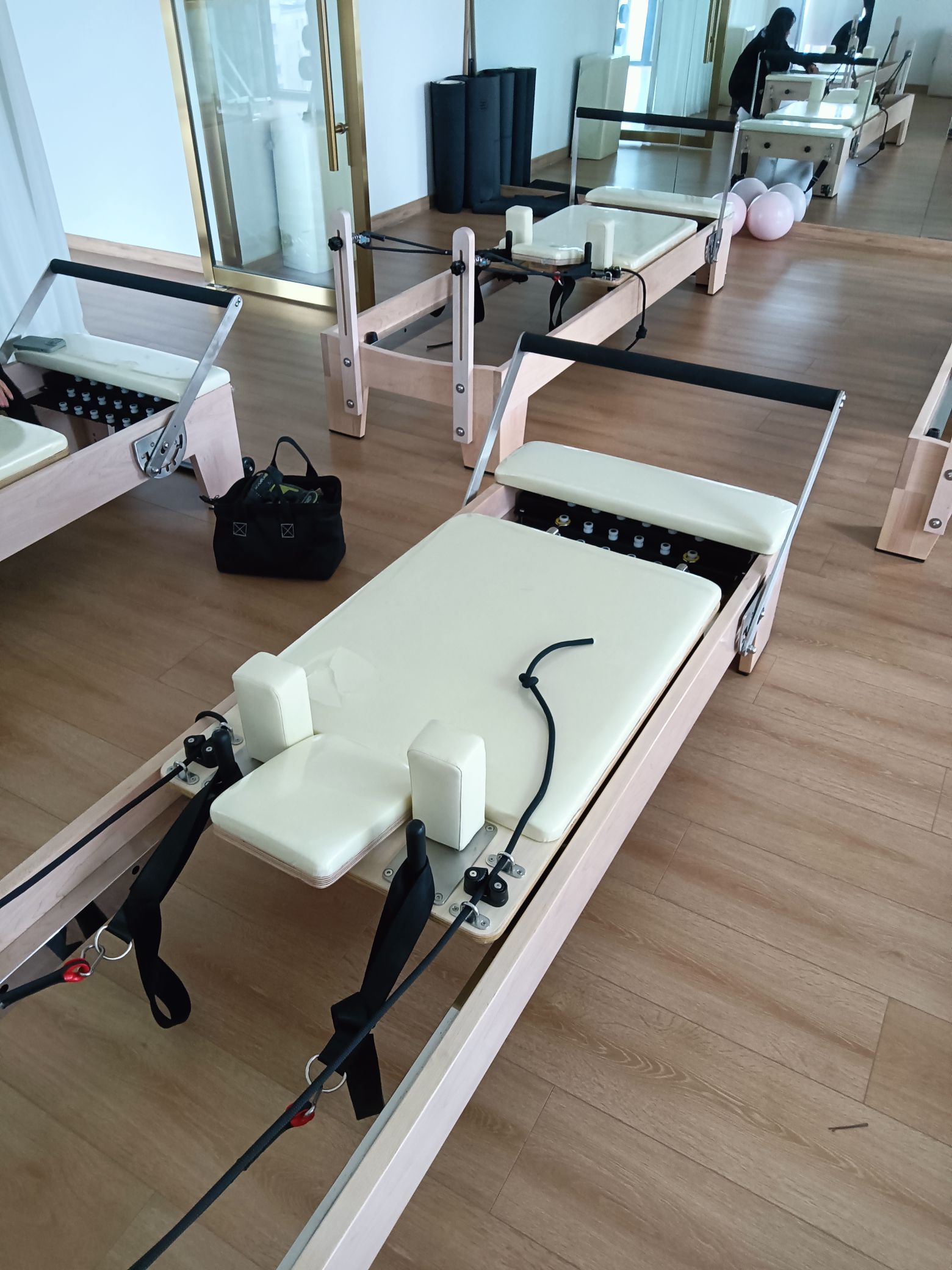
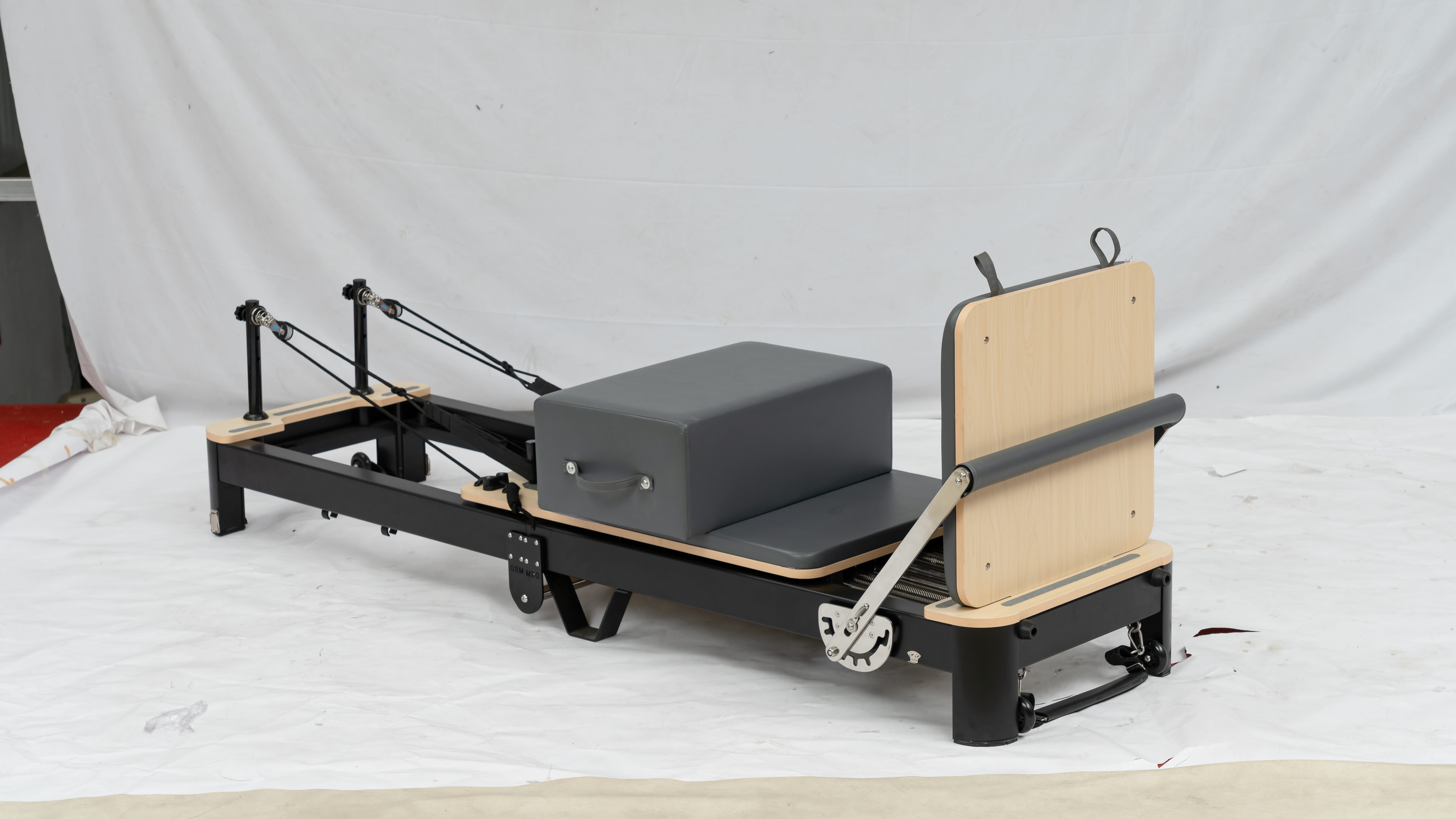
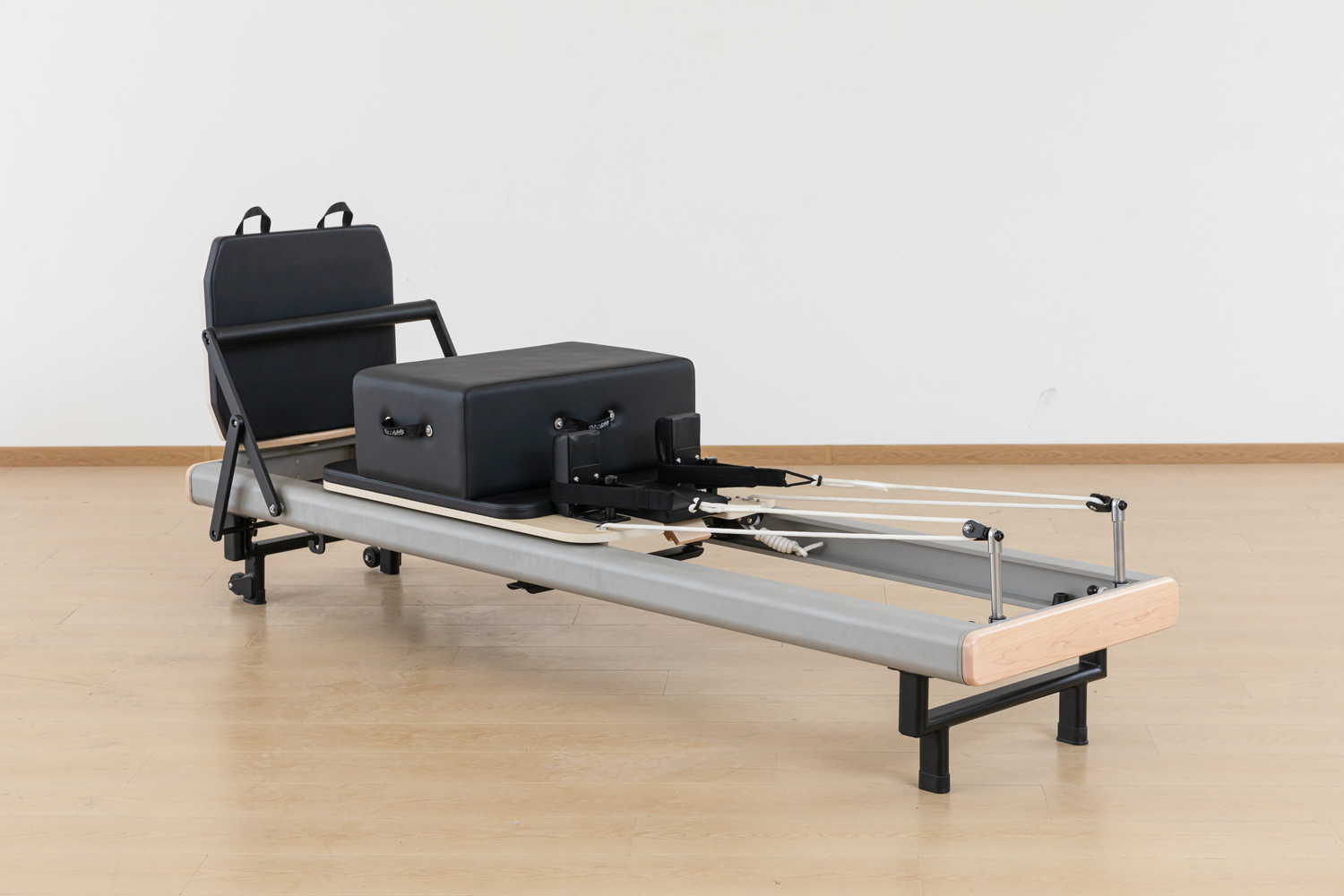
Assembly sequence: Mount carriage into frame rails and install wheels; install spring bar and spring set; install footbar with multi-position adjustment mechanism; install ropes, pulleys, and shoulder rests; install headrest and all upholstered components.
Outgoing Quality Control (OQC) is the most comprehensive inspection, including: visual inspection (no coating scratches, no leather wrinkles, clear and complete labeling); dimensional and fit inspection (carriage-to-rail clearance, footbar height at each position); functional testing (all adjustments lock smoothly, rope systems run smoothly); glide noise testing (below 50 dB under full load); stability testing (no wobble under lateral force); load testing (1.5× maximum rated load for 5 minutes); and spring force spot checks.
Every unit must undergo complete inspection before shipment, with records retained to ensure traceability.
VII. Packaging and Delivery: Final Protection
Reformers are bulky heavy goods (a commercial Reformer weighs approximately 100-130kg), requiring robust packaging.
Packaging methods: Triple-wall corrugated cartons or fully enclosed wooden crates (essential for ocean freight, must meet ISPM-15 fumigation standards); internal cushioning with foam and bubble wrap; accessories individually packed and secured in safe positions; outer boxes labeled with shipping marks, weight, dimensions, and destination port information.
Pre-shipment verification of order details, destination port, and document completeness. Factories coordinate with shipping companies or freight forwarders for sea/air freight, providing complete export documentation.
Summary: The birth of a high-quality Pilates Reformer is a systematic integration of materials science, precision machining, spring engineering, and rigorous quality control. From design drawings to factory inspection, every step determines the final product's performance, lifespan, and user experience. When evaluating suppliers, buyers should look beyond sample appearance and feel — understanding manufacturing processes, quality control systems, and inspection standards is equally important. True quality is hidden in every detail of the production process.