A Complete Guide to Buying a Commercial Pilates Reformer
Purchasing commercial-grade Pilates reformers is one of the most important decisions a studio owner will make. Unlike home equipment, commercial reformers must withstand 8 to 12 hours of daily use, accommodate clients of all body types, and maintain consistent performance for years without frequent repairs. Choose wrong, and future repair costs and client churn will far exceed the initial savings; choose right, and it becomes one of your studio's most reliable assets.
This guide provides a complete procurement framework covering five dimensions: the essential differences between commercial and home reformers, key selection criteria, price references, accessory planning, and supplier evaluation.
I. The Essential Differences Between Commercial and Home Reformers
The difference between commercial and home reformers goes far beyond price. It shows in every layer of engineering.
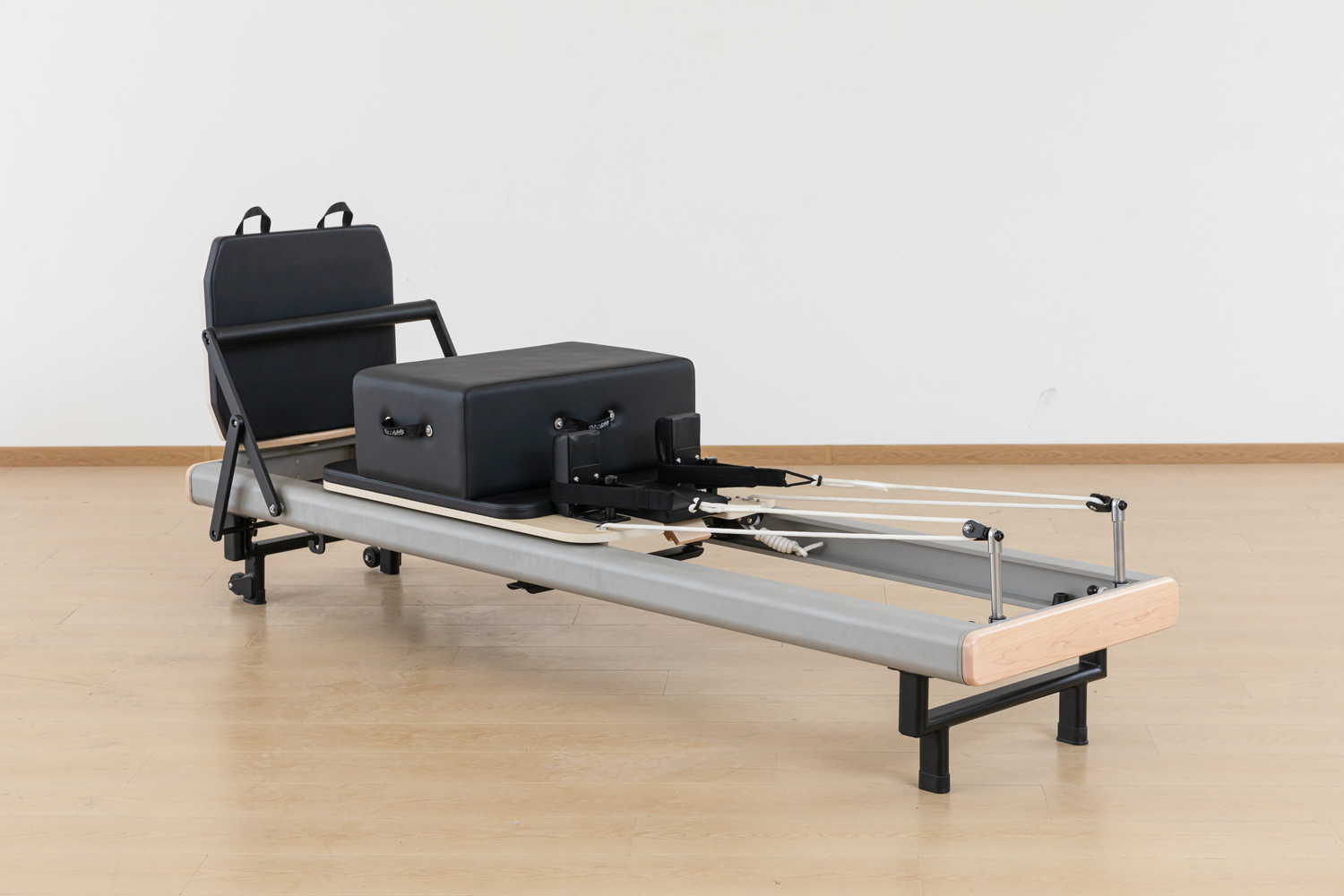
Frame construction and load capacity is the primary distinction. Commercial equipment uses heavy-gauge steel or thickened aluminum frames with weight capacities typically exceeding 150 kg, with some premium models reaching 200 kg. Home models often use lighter aluminum or standard steel that flexes under heavy use. Weight capacity isn't just about "whether it holds you" — it directly reflects overall structural quality. A reformer rated at 180 kg is notably more stable, quieter, and longer-lasting for a 70 kg user than a machine rated at 110 kg.
Spring system durability is equally critical. Commercial springs are rated for 50,000+ cycles, while springs on home reformers may need replacement after 5,000 to 10,000 uses. Commercial springs are individually calibrated for consistent tension and support asymmetric resistance training.
Carriage smoothness directly affects training experience. Commercial equipment uses precision-machined aluminum tracks and large-diameter polyurethane rollers, ensuring quiet, smooth operation even under full load. Home equipment often uses nylon or plastic rollers that develop noise and wobble within 12-24 months of regular use.
Upholstery grade matters for durability. Commercial-grade vinyl is antimicrobial, sweat-resistant, and designed for easy cleaning between classes. Home upholstery wears through much faster under the same usage intensity.
II. Key Selection Criteria
When evaluating commercial reformers, focus on these six dimensions:
Weight capacity: Commercial standard is at least 150 kg, with some brands reaching 200 kg+. Higher rated capacity means greater engineering headroom — for a 70 kg user, a reformer rated at 180 kg is noticeably more stable, quieter, and longer-lasting.
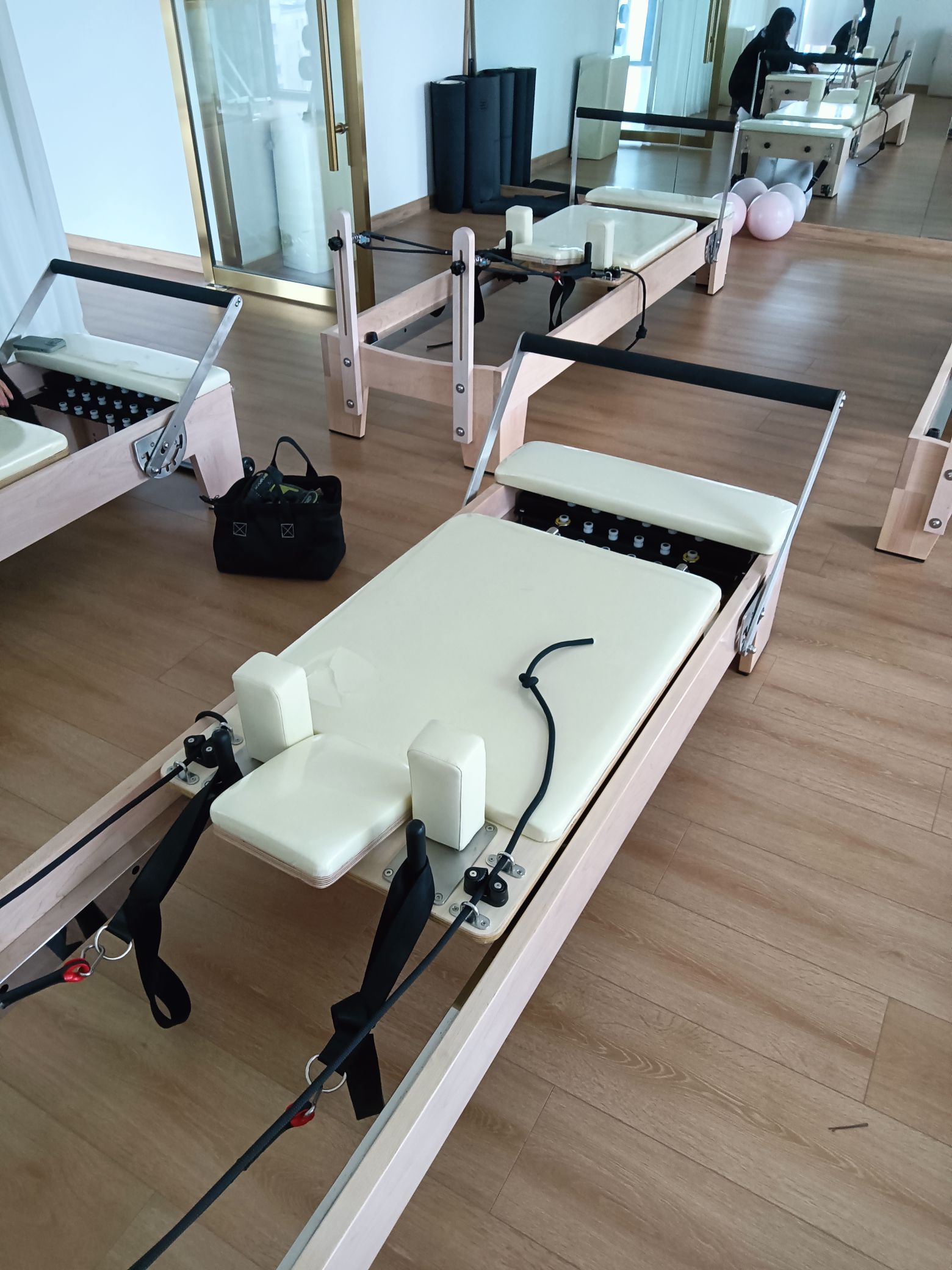
Carriage travel and bed dimensions: Full-length travel should be at least 90 cm. The Balanced Body Allegro 2 frame measures 239cm × 64cm, with carriage dimensions of 99cm × 60cm. Sufficient travel ensures tall clients aren't restricted during full-body extensions.
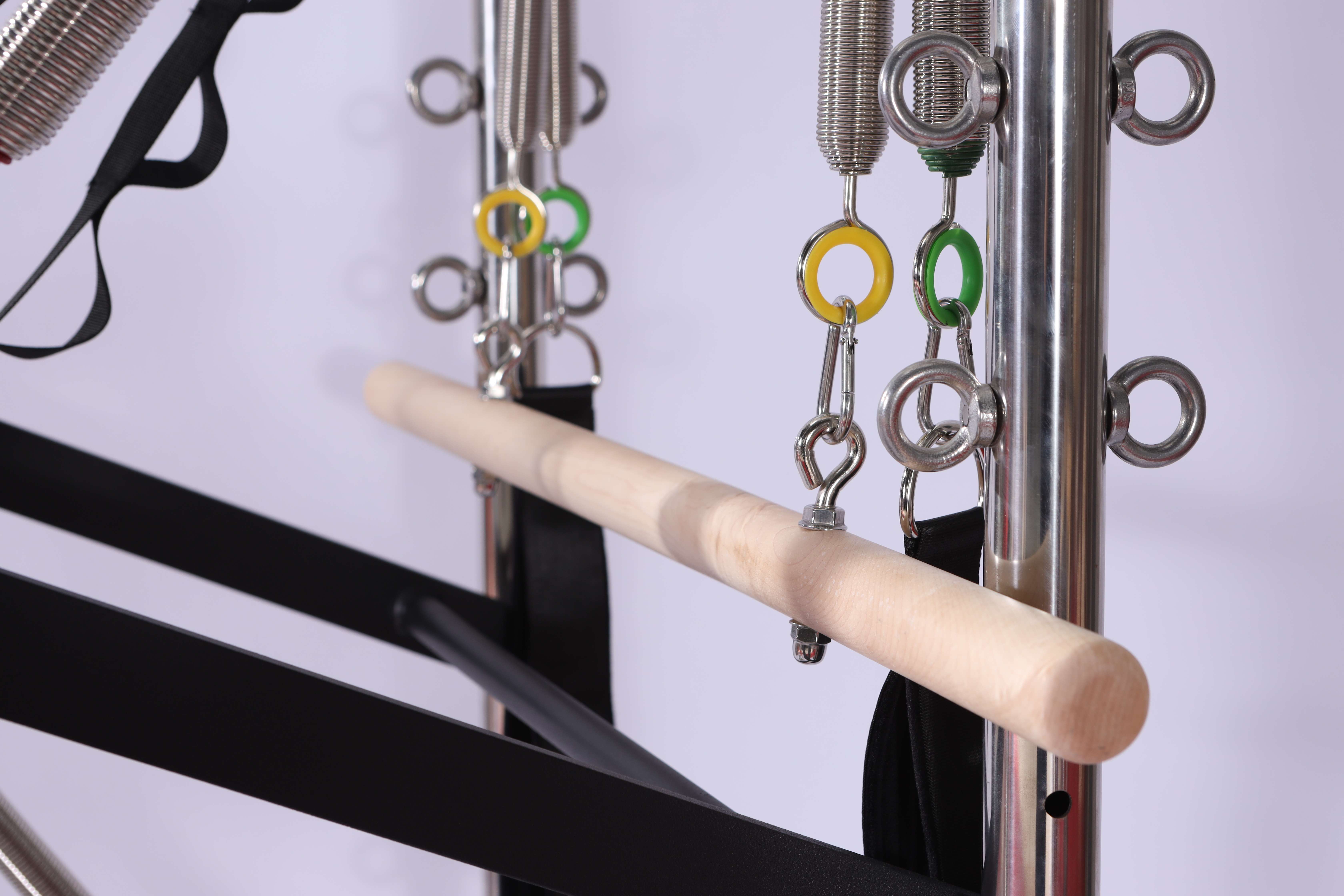
Spring resistance range: At least 4 to 5 spring configurations. Balanced Body offers a 5-signature spring system (3 red, 1 blue, 1 yellow) combinable into up to 46 resistance levels. Commercial springs should specify cycle life (50,000+) and force tolerance ranges.
Adjustability convenience: The footbar should support multiple quick-adjust positions, headrest should have 3+ angle settings, and shoulder rests should be removable or lockable. In group class settings with clients of varying sizes, quick adjustments significantly improve efficiency. Balanced Body's Infinity Footbar supports 4 vertical positions and 9 horizontal positions, operable with your foot without bending down.
Noise performance: Glide noise is easily overlooked but critically important. A room with 8 to 12 reformers running simultaneously amplifies every rattle and squeak. Physical testing is strongly recommended before purchase.
Storage and stackability: If your studio also hosts yoga, barre, or other programming, stackable reformers save critical floor space. The Merrithew SPX Max weighs only 100 lbs (approximately 45 kg), stacks for storage, and has detachable shoulder rests that slide into brackets on the frame.
III. Price References (2026 Market)
Based on 2026 market data, commercial-grade reformers fall into these general price tiers:
Entry-Level Commercial ($3,000–$4,000): Suitable for startup studios with lower class volumes. Quality in this range has improved significantly. Peak Pilates MVe is approximately $3,495.
Mid-Range Commercial ($4,500–$5,500): The sweet spot for most established studios. Balanced Body Allegro 2 is approximately $4,895, Merrithew SPX Max approximately $4,595, and SPX Max Plus (with vertical frame) approximately $6,399. Products from established manufacturers with proven durability, good ergonomics, and best value.
**Premium Commercial ($6,000+)**: Balanced Body Studio Reformer at approximately $5,995, and flagship products from legacy brands with top-tier build quality, smoothest carriages, and strongest resale value.
For a studio with 8 reformers, equipment investment alone requires approximately $24,000 to $44,000. Volume discounts are common — always inquire. In the Chinese market, commercial aluminum reformers from Hebei factories range from approximately $950 to $1,450.
IV. Accessory Planning: Start with Reformers, Expand Gradually
Reformers are the absolute core, but a complete program offering requires complementary apparatus.
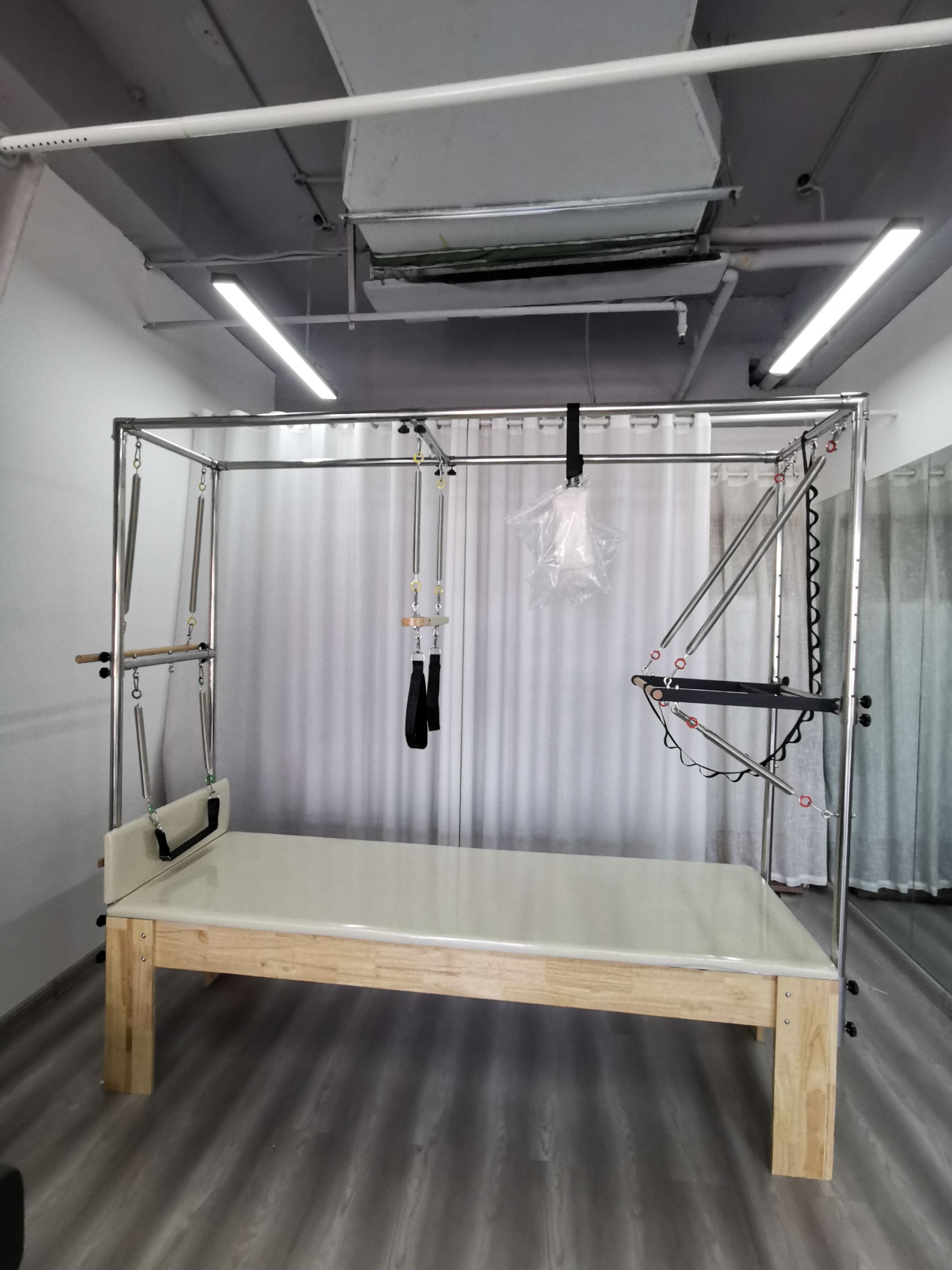
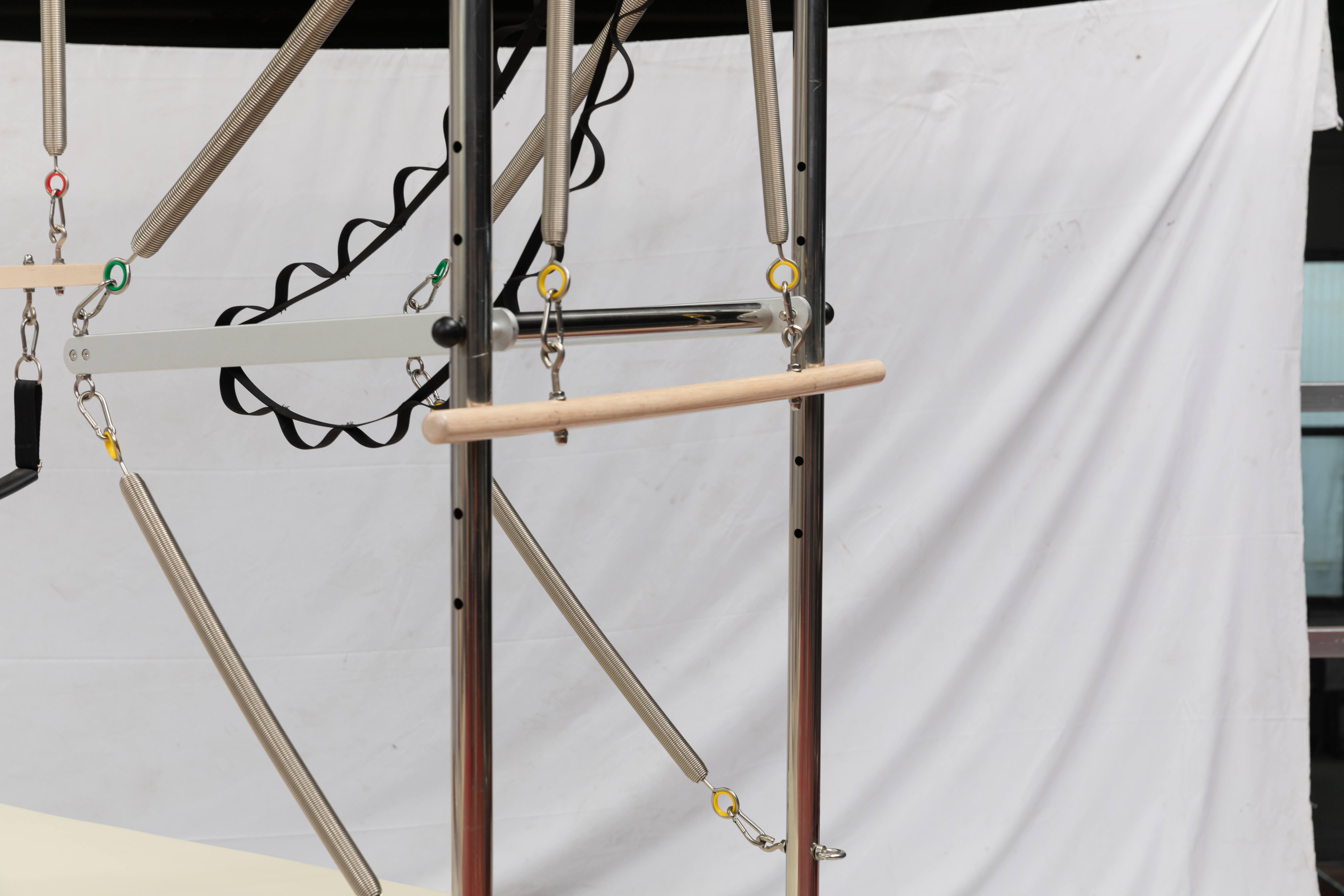
Cadillac (Trapeze Table) is the most versatile piece, ideal for private sessions and rehabilitation. Budget $3,500–$6,500. Most studios start with 1–2 units for private sessions.
Wunda Chair is compact and powerful for strength and balance work, taking up less floor space than reformers — ideal for circuit-style and group classes. At $1,200–$2,500 per unit, it's also the most affordable major equipment piece.
Barrels (Ladder Barrel and Spine Corrector) are used for flexibility and spinal mobility training. Ladder Barrel: $1,500–$3,000; Spine Corrector: $259–$400. Not essential for opening day, but they round out a mature studio's equipment lineup.
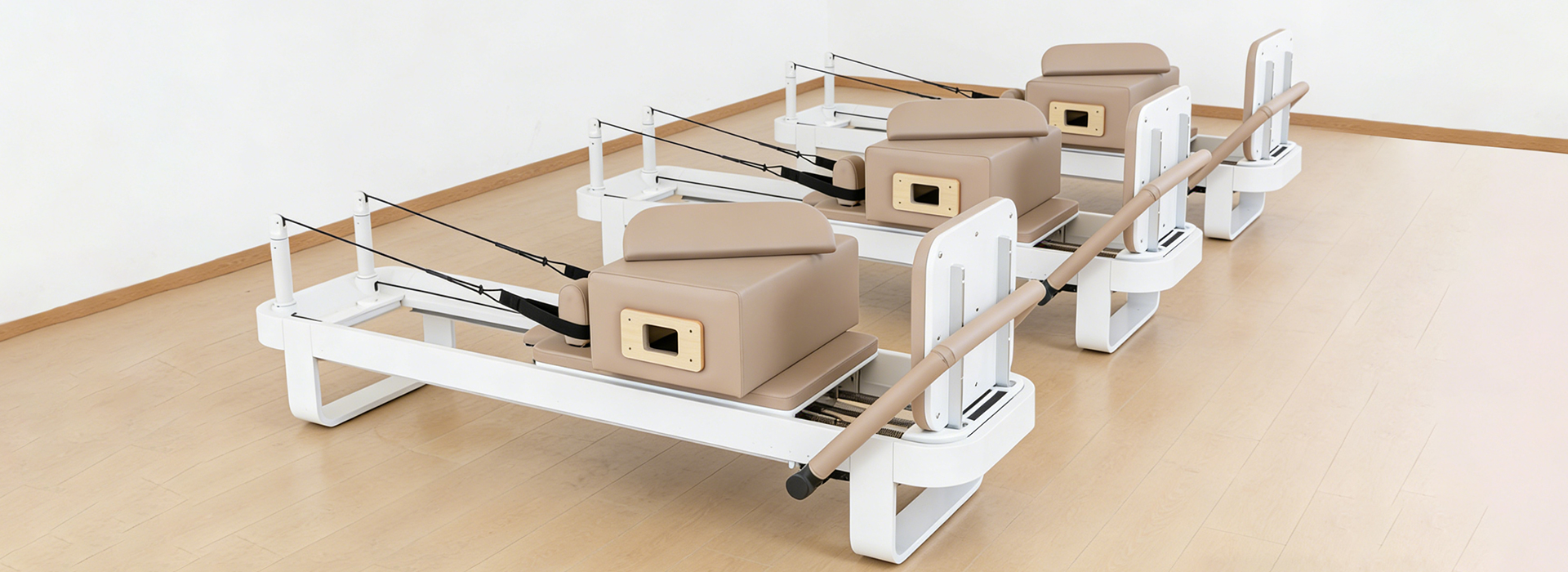
Reformer accessories include the Jumpboard (low-impact cardio), Box (prone and seated training), and Tower (pulley-based exercises). The Balanced Body Allegro 2 supports adding a Tower later without requiring additional floor space.
V. Five Core Dimensions for Supplier Evaluation
Manufacturing capacity: Evaluate factory floor space, production line count, and annual capacity. Shandong Chief Fitness Equipment has a 15,000-square-meter facility with 10 professional production lines and annual export revenue of $3 million. Hebei Junyirun is SGS-certified and offers VR factory tours.
Quality control transparency: A trustworthy factory should clearly demonstrate its inspection processes. Some suppliers offer a "Visual OQC Protocol," providing photos and videos of the full inspection process before shipment for 100% transparency and zero-defect delivery.
Customization capability: Factories accepting low MOQs (e.g., 1-unit minimum) generally demonstrate higher commitment to client needs. Factories with ODM capabilities can collaborate from the product design stage.
Delivery track record: 97%+ on-time delivery is an industry benchmark. Request past delivery records or check industry reputation.
After-sales and warranty commitments: Balanced Body offers a 10-year limited warranty on the frame. Warranty periods, parts availability, and response mechanisms should be clearly specified in contracts — not left to verbal promises.
VI. Common Pitfalls
Comparing only price, not total lifecycle cost. Budget reformers at $1,500–$2,500 create problems within 12–18 months. Cheap equipment may need replacement within 2-3 years, while quality equipment can last over a decade.
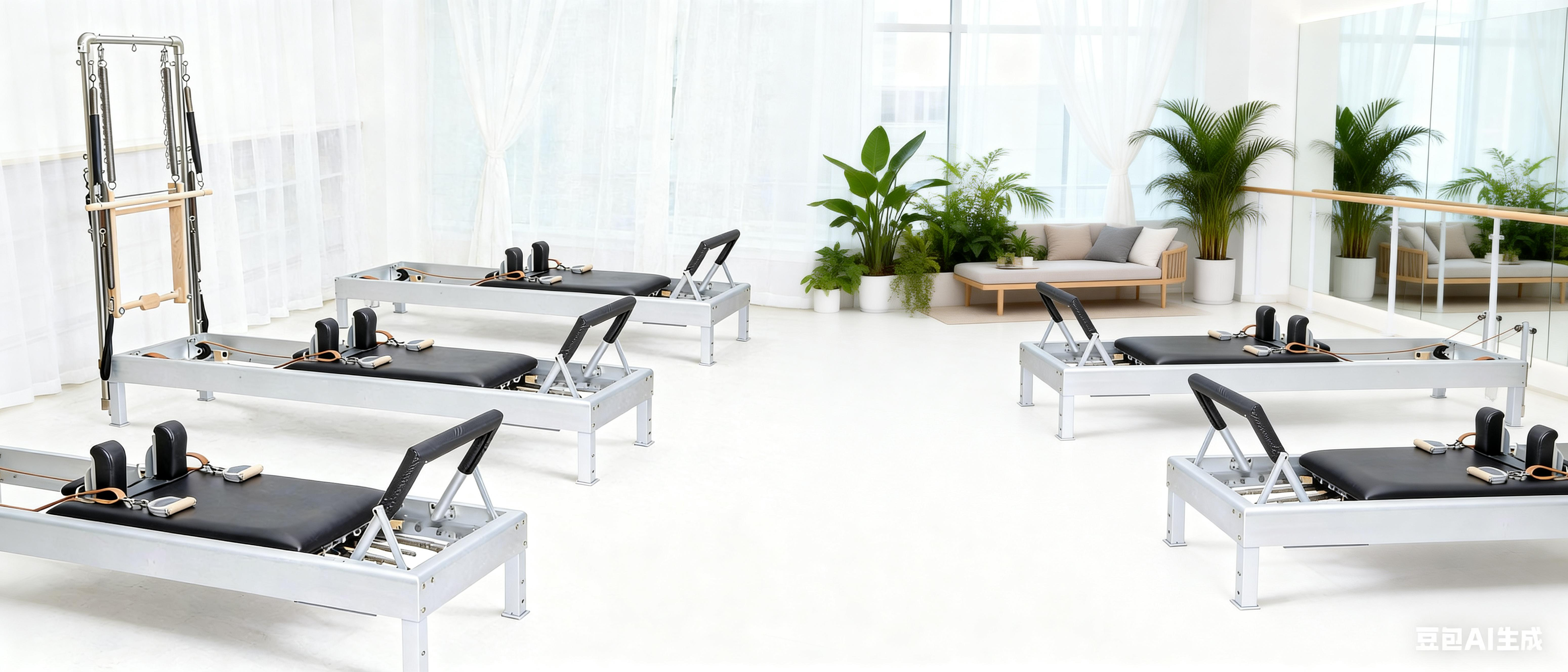
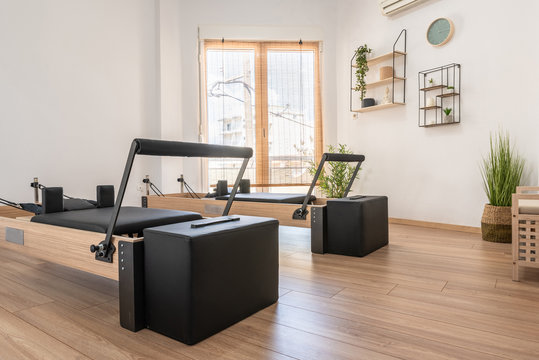
Neglecting space planning. Each reformer requires approximately 40-50 square feet (3.7-4.6 square meters) of operating space including instructor pathways. A studio with 8 reformers requires approximately 320-400 square feet (30-37 square meters) just for the reformer room. Complete space measurement and flow planning before purchasing.
Ignoring after-sales response speed. Equipment downtime losses far exceed the equipment price itself. Choosing suppliers with fast after-sales response and adequate parts inventory is critical.
Summary: Purchasing commercial-grade Pilates reformers is fundamentally an investment in long-term reliability. Prioritize four core metrics: load capacity (150kg+), spring life (50,000+ cycles), carriage travel (90cm+), and warranty terms (5-10 years on frame) . Before placing a formal order, validate supplier quality and responsiveness through sample production, then sign the bulk contract based on sample approval. Choose the right equipment, and your studio's success has a solid hardware foundation.