How to Select Reliable Pilates Equipment for Home & Studio Use

Whether you're a home user or a studio owner, the common challenge when buying Pilates equipment is the same: the market is flooded with options, prices vary wildly, and quality is inconsistent. How do you find the one that's truly "reliable"?
"Reliable" means three things — consistent quality, safe durability, and dependable after-sales support. This article provides a selection framework applicable to both home and studio use, covering four dimensions: use scenarios, core components, supplier evaluation, and common pitfalls.
I. Start with the Scenario: Home vs. Studio Needs
Home users' core priorities are space fit, storage convenience, and long-term durability. A home reformer may need to last five to ten years, making quality more important than price. With limited space, foldable or compact models are often more practical. Home usage frequency is relatively low (2-4 times weekly), but precisely because of this, when equipment fails, repairs are more troublesome — you have no backup machine to substitute.
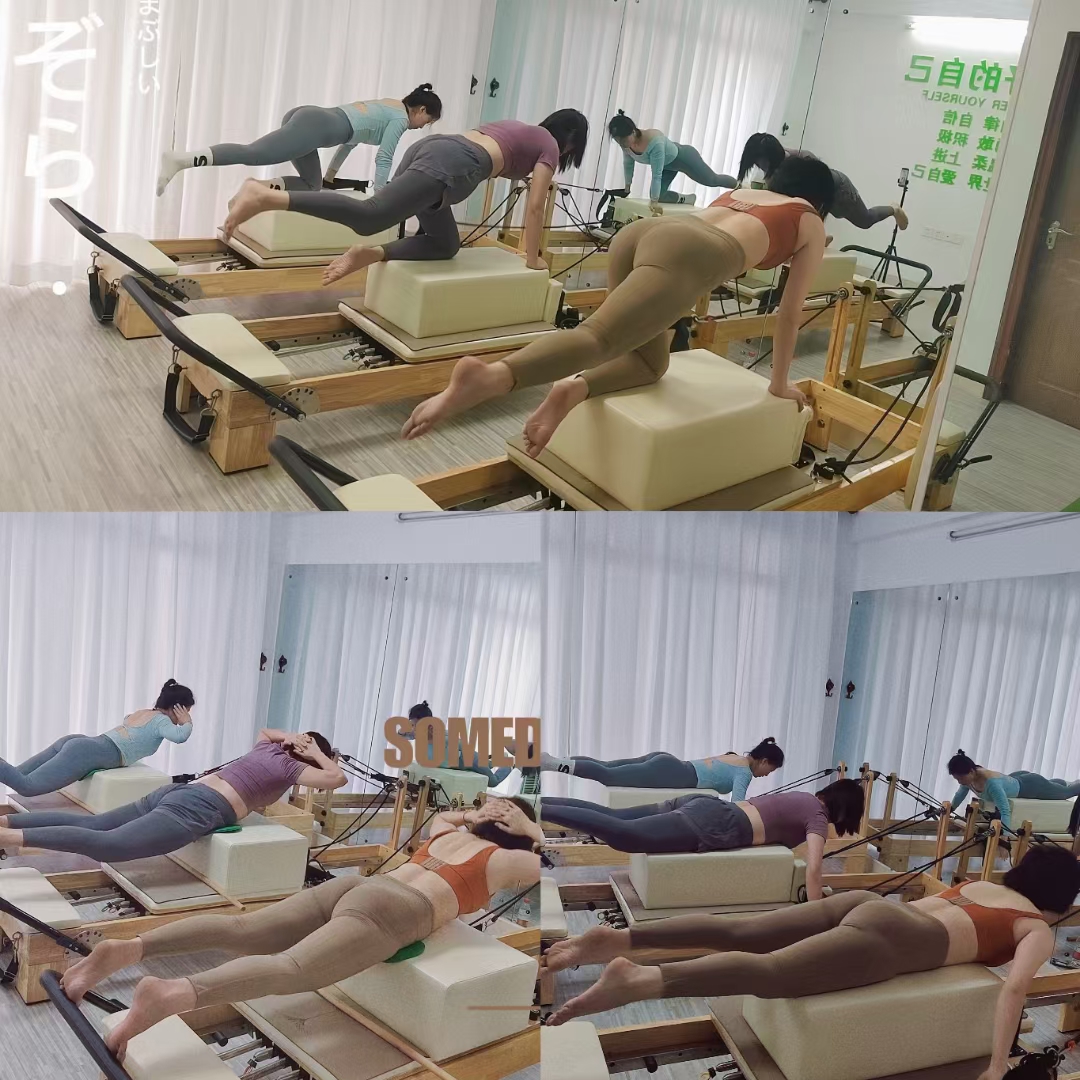
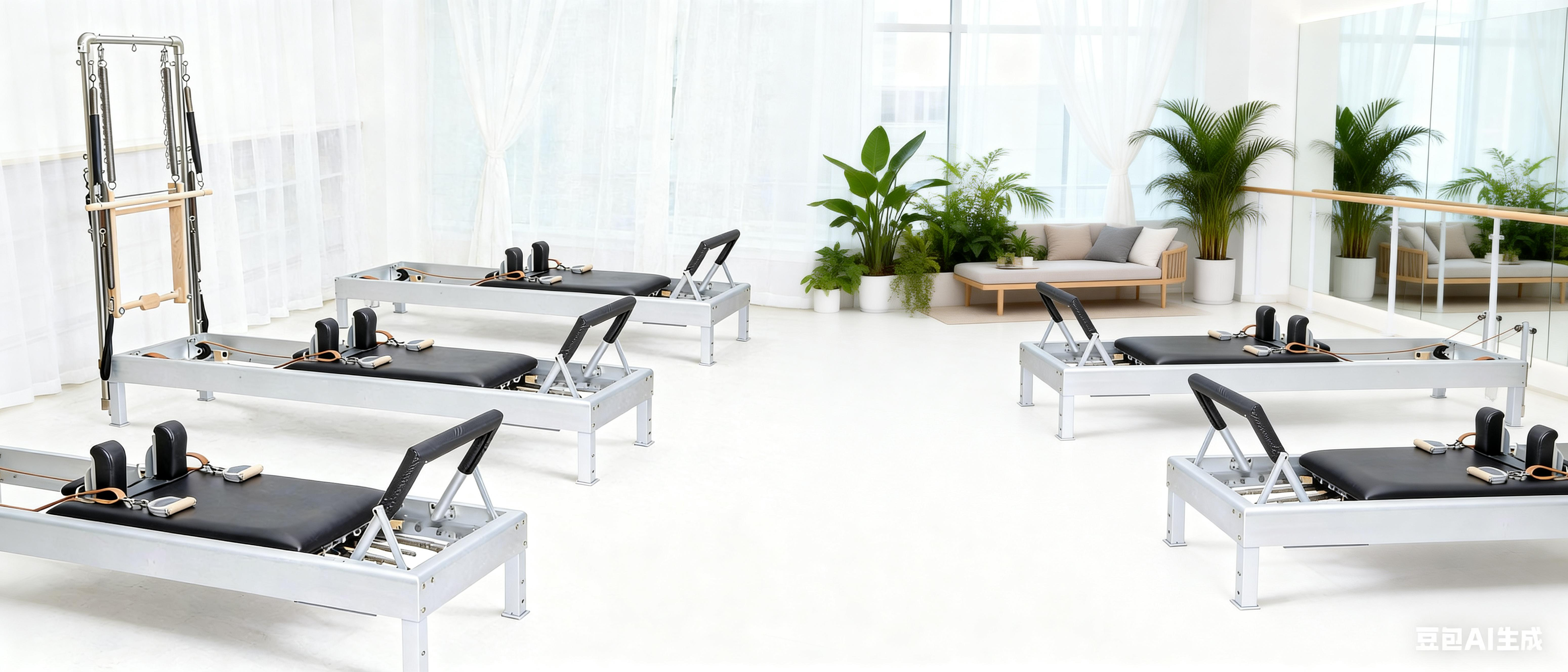
Studio users' core priorities are high-frequency durability, quality consistency, and after-sales response speed. A commercial environment may serve 8-12 clients daily, with equipment enduring continuous load changes and repeated adjustments. One machine down for a day costs approximately $100-$200 at typical rates of $35-$60 per session with three classes daily. Studio selection should prioritize commercial-grade frames, replaceable component designs, and responsive after-sales systems.
II. Judging Core Components
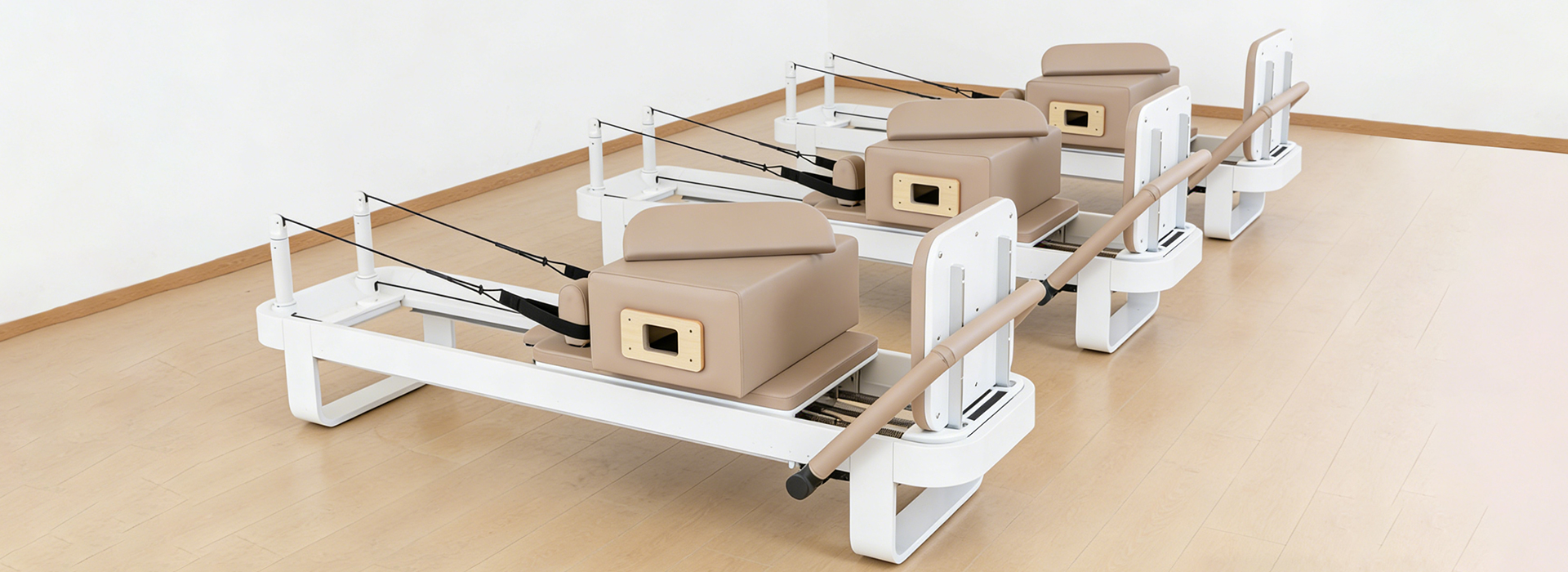
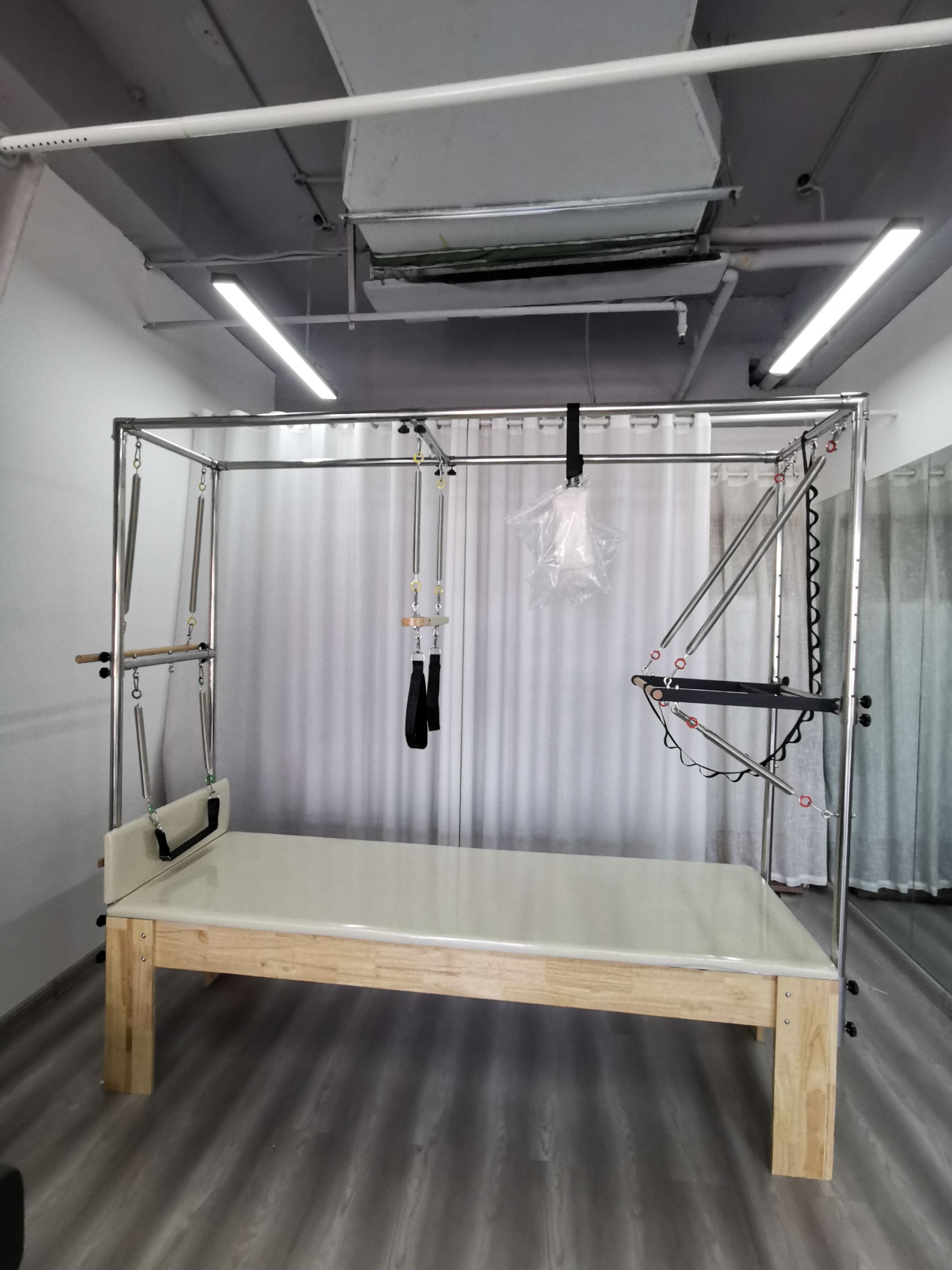
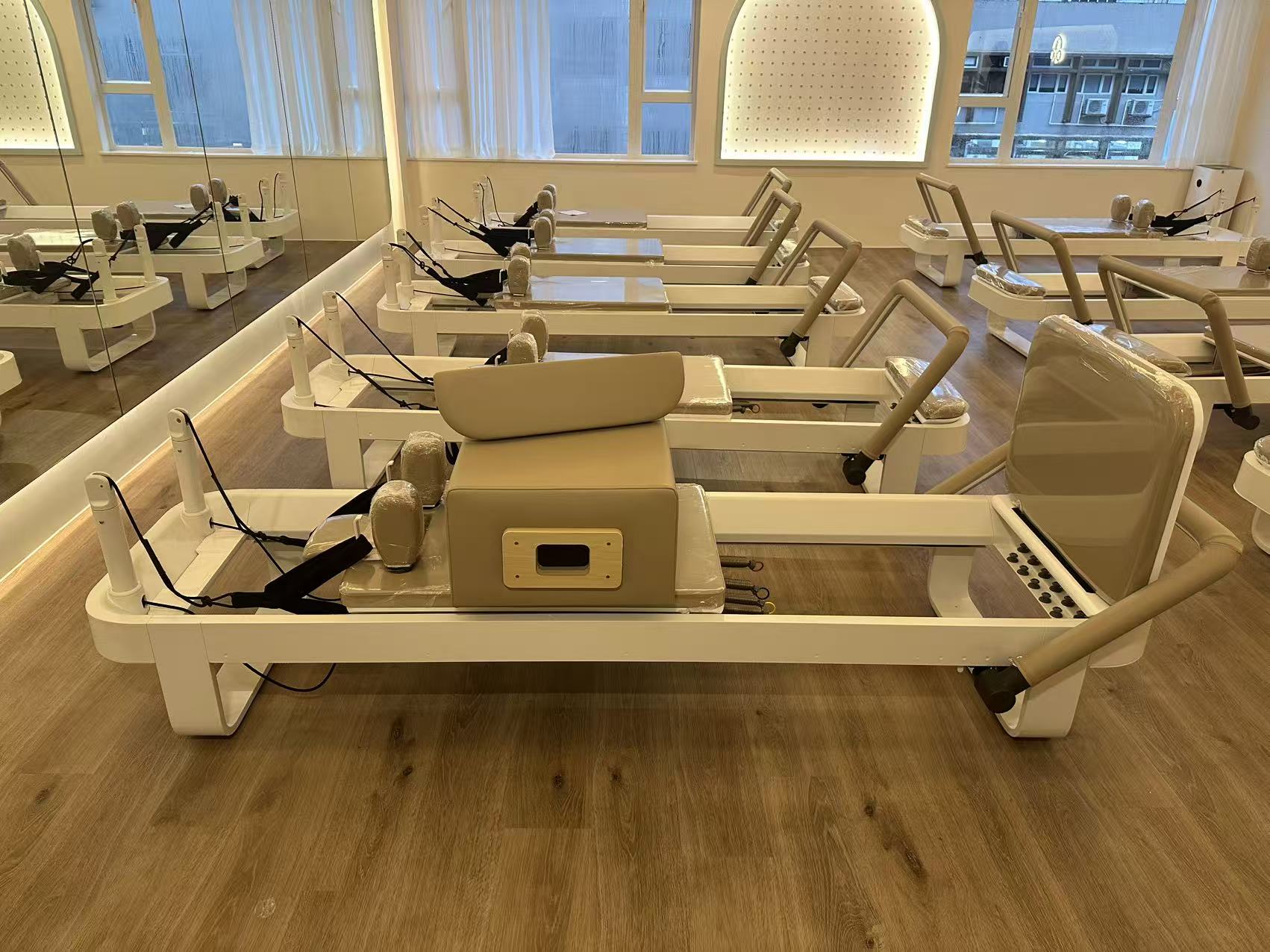
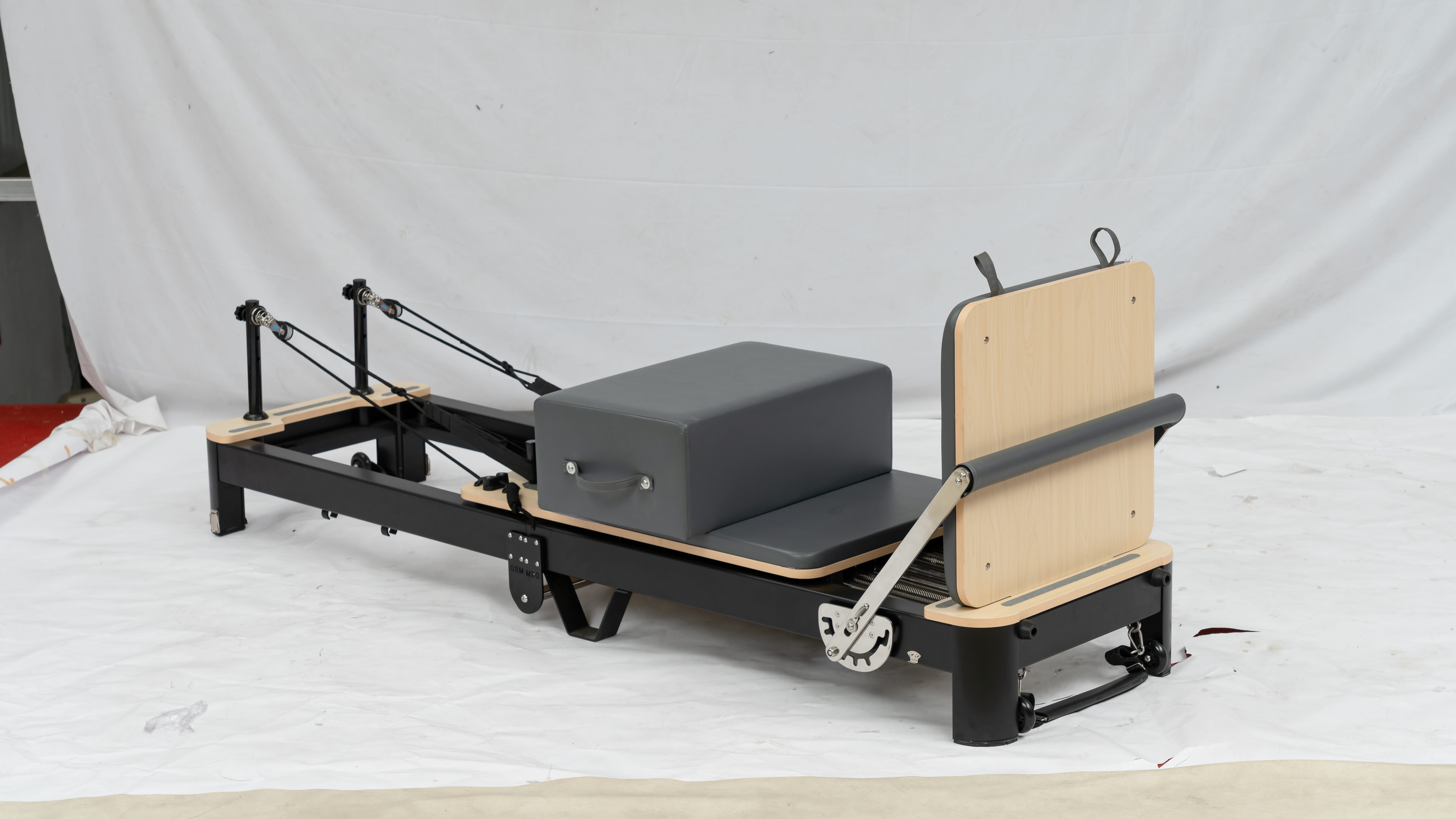
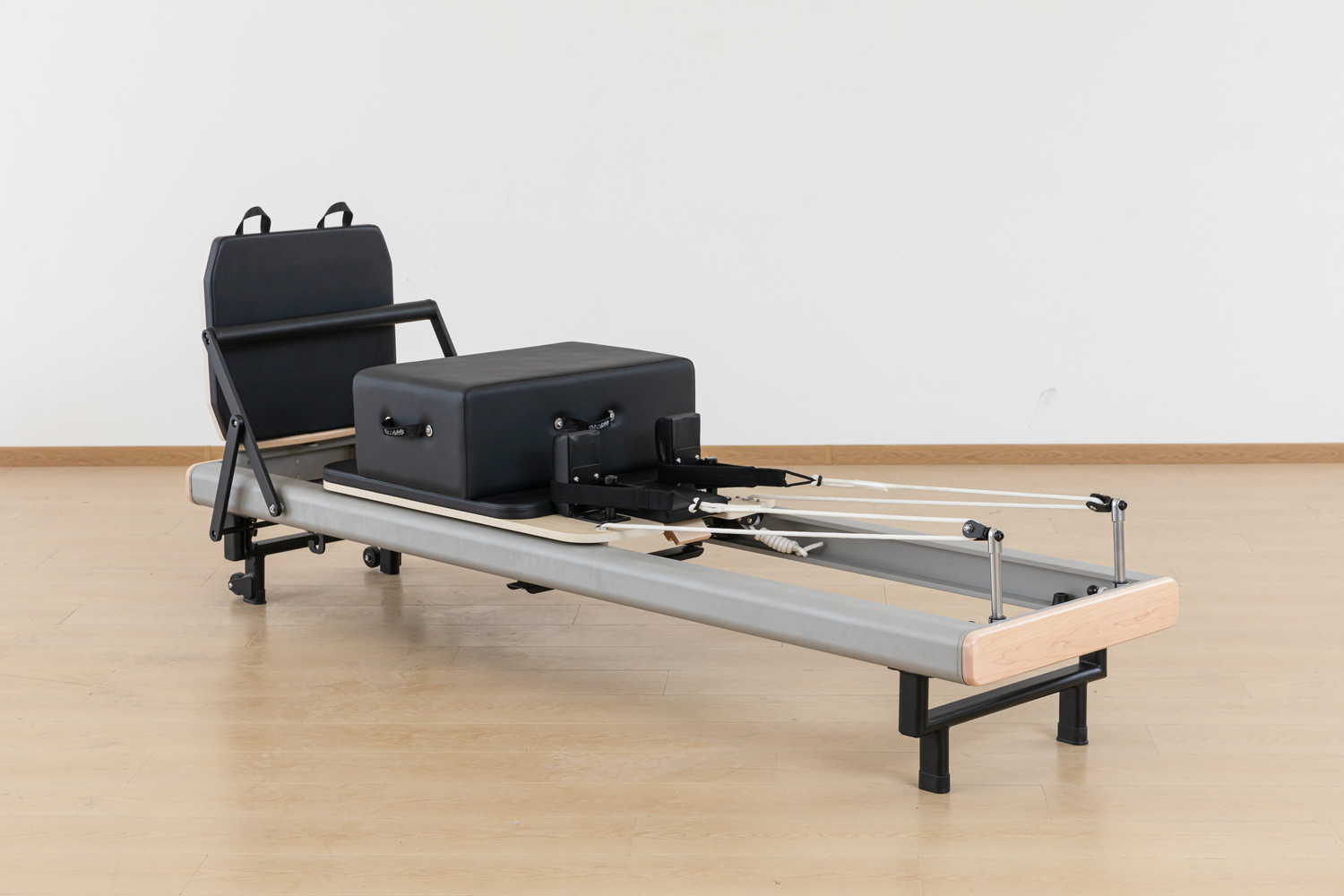
The frame is the equipment's "skeleton." Commercial-grade carbon steel frames should be at least 2mm thick; aluminum frames should clearly specify alloy grade (e.g., 6061-T6 aviation-grade); solid wood frames (maple, oak, beech) require strict kiln drying to below 8% moisture content. Press on various frame sections to feel for elastic deformation. Quality equipment shows almost no deformation under load; copies may wobble noticeably.
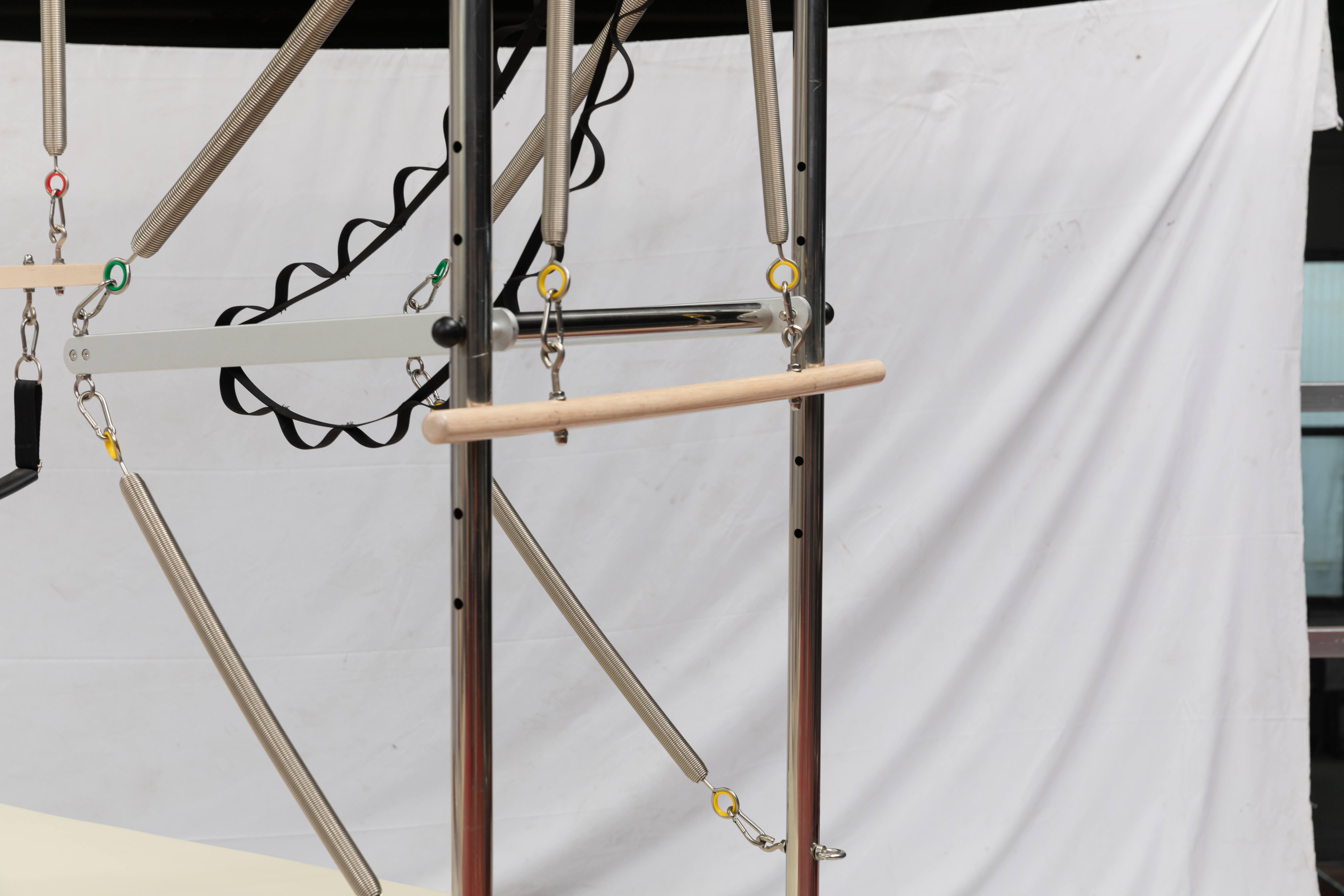
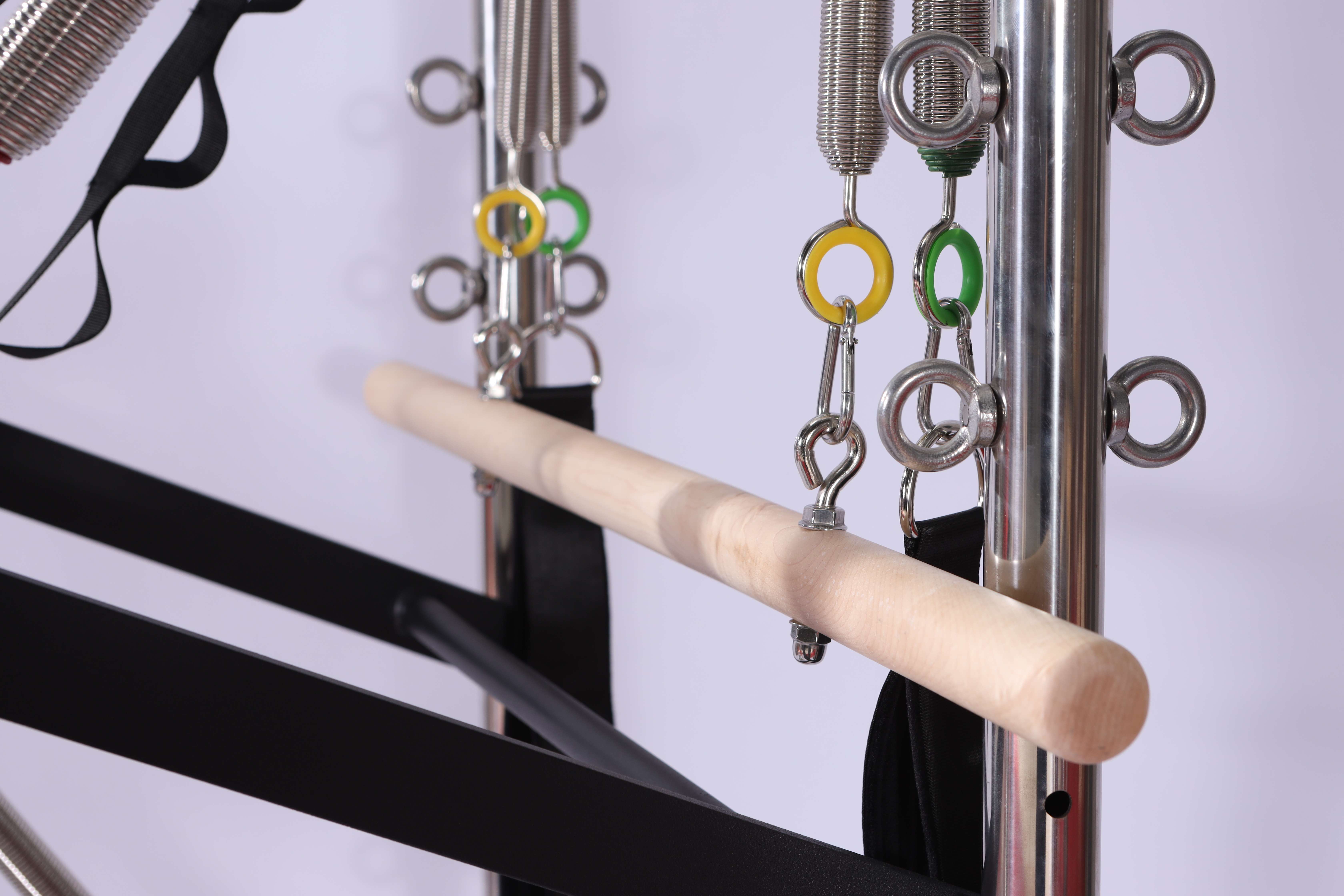
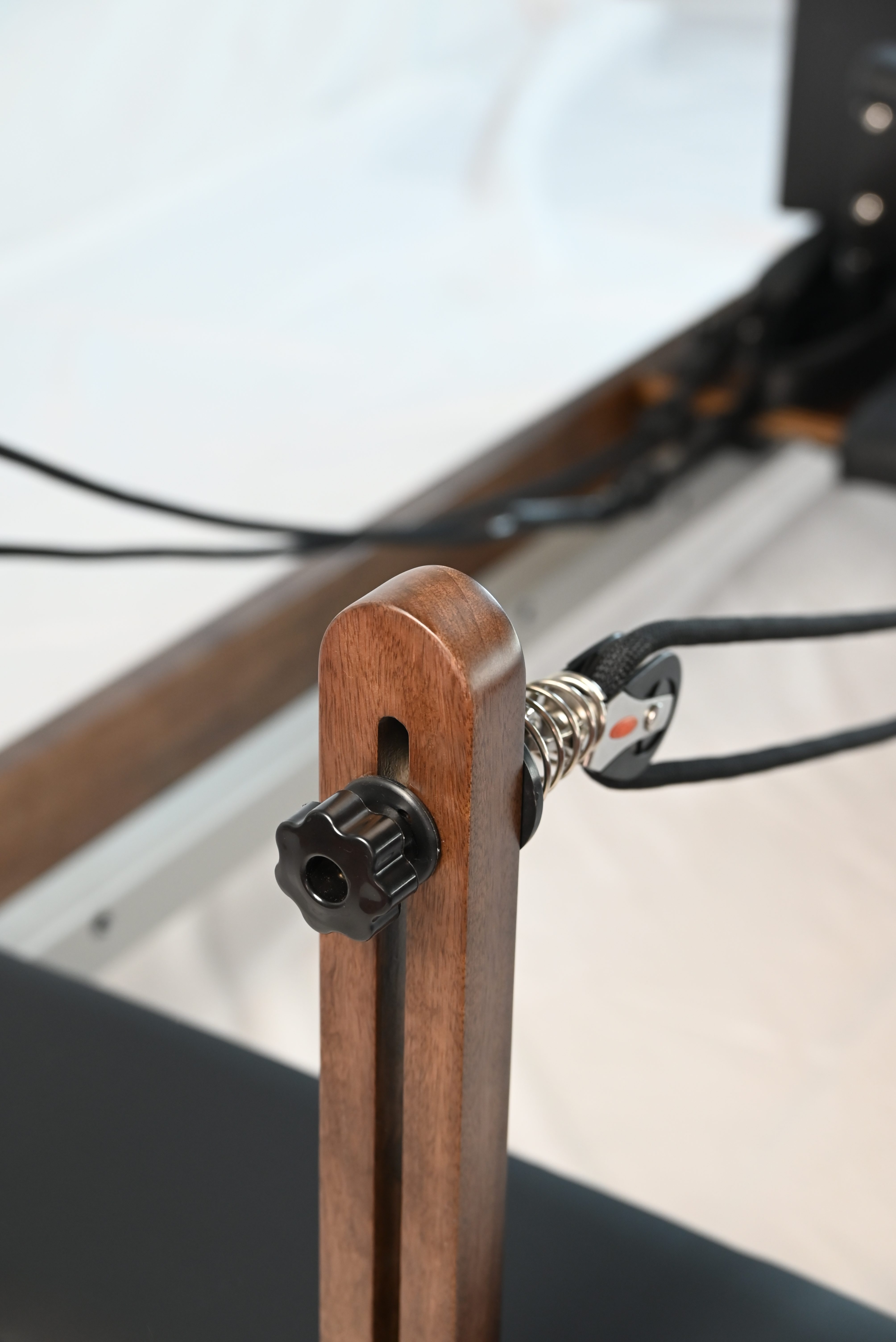
Springs are the equipment's "power heart." Genuine metal springs should be made from high-carbon steel or music wire, heat-treated to eliminate residual stress, with force tolerances within ±5% to ±8%. A simple way to verify: ask directly "what material are the springs?" If the seller is vague or only mentions "resistance system," it's likely latex elastic cords — which have non-linear resistance and can't provide the consistent tension Pilates training requires.
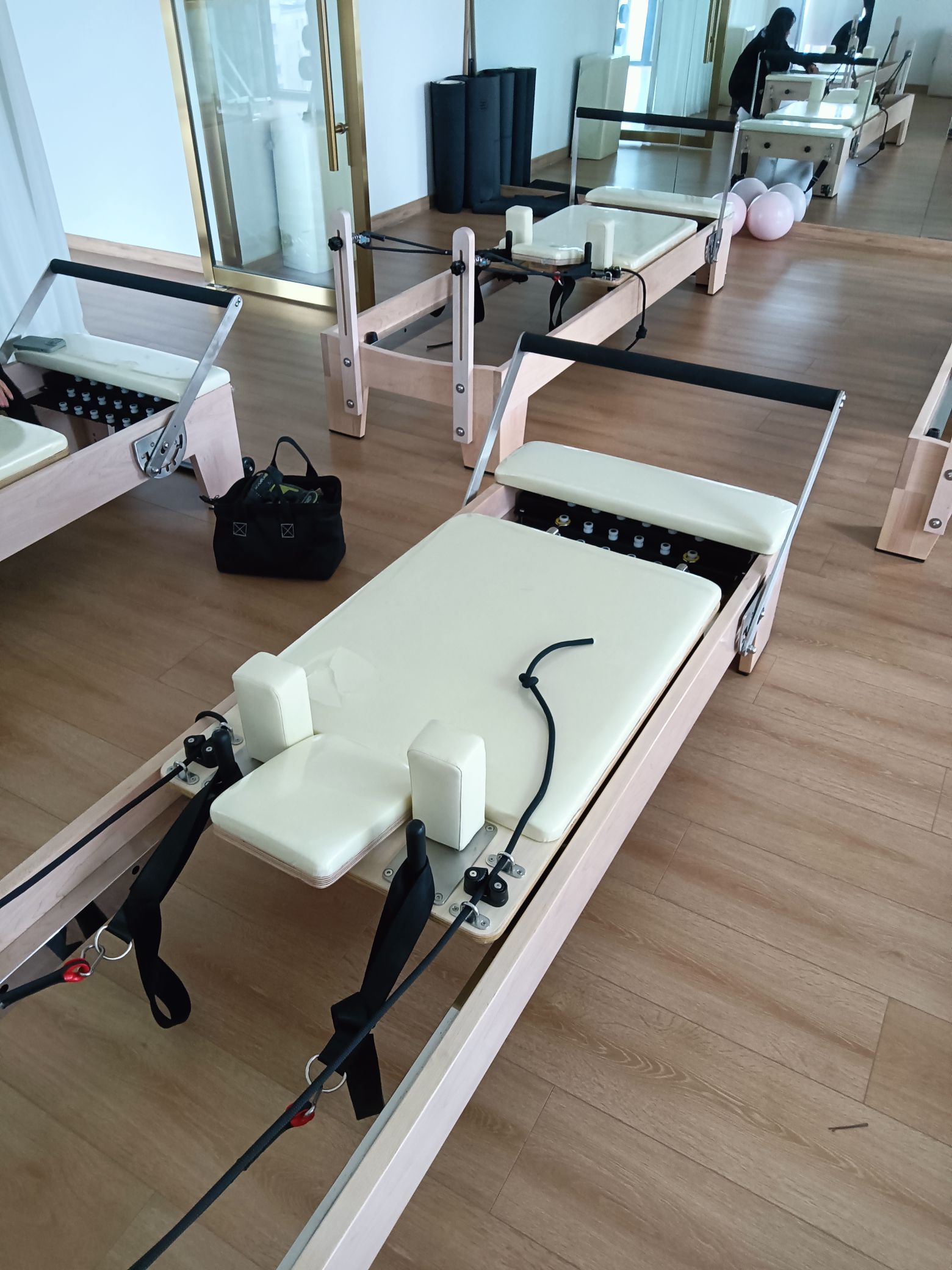
Rails and wheels determine glide feel. Gliding should be smooth and silent, with consistent resistance throughout — no sticking or step-like transitions. Wheels should be POM (engineering plastic) or sealed-bearing silent types. Rail surfaces should be anodized or chrome-plated for wear and rust resistance.
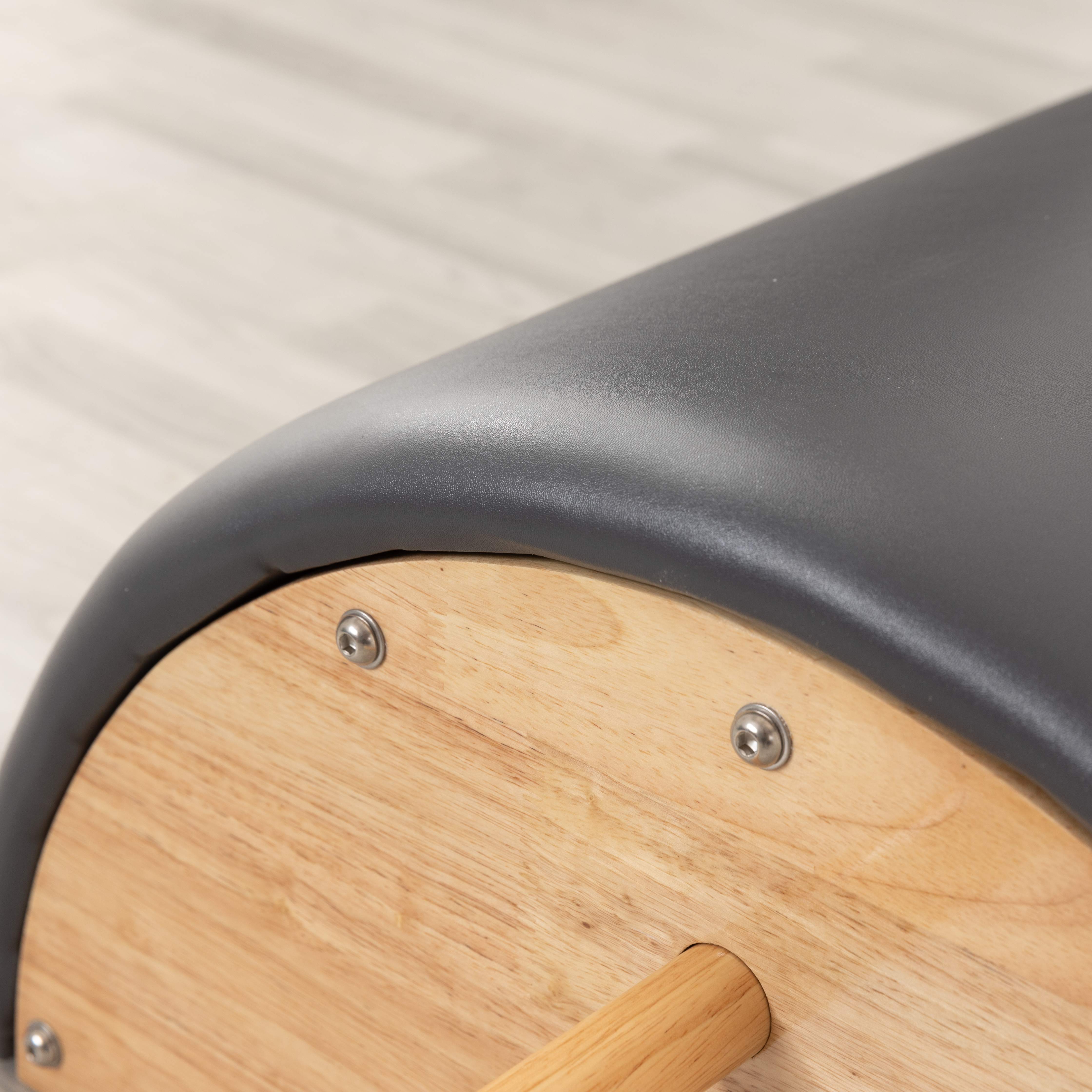
Leather and foam affect comfort and durability. Leather's Martindale abrasion rating should be at least 50,000 cycles (commercial standard); foam density should be at least 45kg/m³, rebounding quickly after pressing with no visible indentations. Critical stress seams should be double-stitched.
III. Five Dimensions for Supplier Evaluation
Manufacturing capability: Evaluate years in operation, factory scale, production line count, and annual capacity. Suppliers with 5+ years of industry experience and 2,000㎡+ factory scale are generally more reliable.
Quality control transparency: A trustworthy factory should clearly demonstrate its IQC, IPQC, and OQC processes. Clearer inspection standards and more traceable records ensure better product consistency.
Certifications and compliance: ISO 9001 quality management certification, CE safety certification, and EN ISO 20957 compliance indicate products that have undergone more rigorous testing.
Delivery track record: Request past delivery records or check industry reputation for on-time delivery rates. 97%+ on-time delivery is an industry benchmark.
After-sales and warranty: Warranty periods (typically 5-10 years on frames, 2 years on moving parts), parts availability, and response mechanisms should be clearly specified in contracts. Short warranty periods and vague coverage often indicate lack of confidence in the product.
IV. Common Pitfalls to Avoid
Comparing only price, not total lifecycle cost. Cheap equipment may need replacement within 2-3 years, while quality equipment can last over a decade. Consider repair frequency, parts costs, and resale value in procurement decisions.
Being misled by "multi-function" claims. Some products advertise "one machine replaces ten," but integrated features may be ones you never use. Think carefully about what functions you actually need — don't pay extra for features that will gather dust.
Neglecting space measurement. Each reformer requires approximately 2.5m × 1.5m of operating space including pathways. Complete space measurement and flow planning before purchasing to avoid the "can't fit it" scenario.
Ignoring after-sales response speed. Equipment downtime losses far exceed the equipment price. Choosing suppliers with fast after-sales response and adequate parts inventory is critical.
Being fooled by appearance, ignoring feel. Welds, coatings, and stitching can be beautified, but glide feel can't be faked. If possible, always test-glide in person — feel the carriage smoothness, spring feel, and overall stability.
V. Differentiated Recommendations for Home vs. Studio
Home users: Prioritize foldable or compact models for storage convenience. Focus on folding mechanism stability and locking reliability. Budget recommendation: $400-$1,100 for a standard model with solid wood or aluminum frame.
Studio users: Prioritize commercial-grade equipment, with focus on frame load capacity (≥150kg), spring life (50,000+ cycles), carriage travel (≥100cm), and warranty terms (5-10 years on frame). Validate quality through samples before signing bulk contracts.
Hybrid users (home studios): Balance quality and storage. Consider foldable commercial models or integrated multi-function designs. Confirm unfolded stability and folded footprint.
Summary: Choosing reliable Pilates equipment comes down to four actions: look at details, ask for specifications, test the feel, and check the reputation. Whether for home or studio, start with the four core components — frame, springs, rails, and upholstery — then make a comprehensive judgment based on the supplier's manufacturing capability, quality control transparency, and after-sales support. A well-chosen machine will provide stable support for your practice or business for the next decade; a poorly chosen one, no matter how cheap, is ultimately a waste.