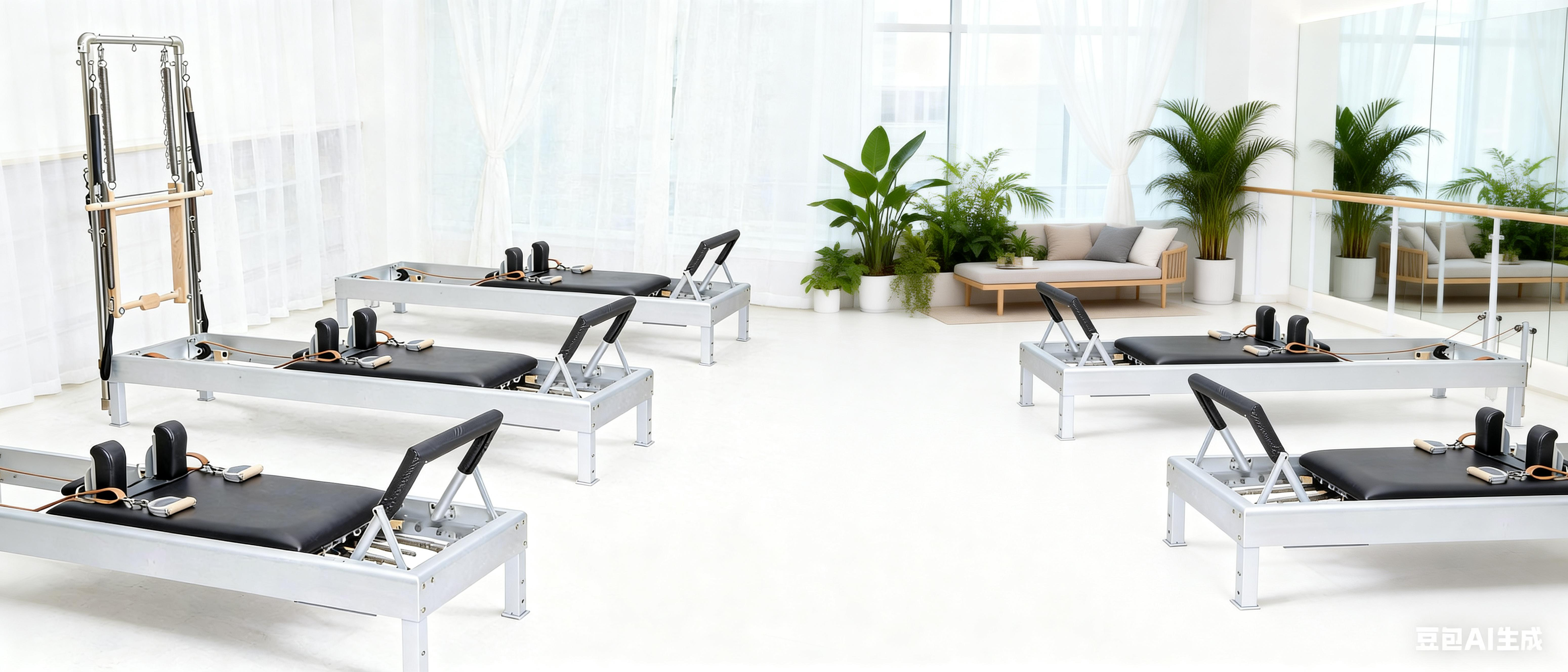
Why Studio Owners Prefer Our Solid‑Wood Pilates Reformers
When studio owners invest in Pilates reformers, they are not simply buying equipment. They are choosing the foundation of their daily classes, the centerpiece of their studio floor, and a long-term asset that must withstand years of intensive use. That is why a growing number of professional studios are turning to our solid-wood Pilates reformers instead of the metal-framed alternatives that dominate the mass market.
This article explains the practical reasons behind that preference, from structural durability and tactile feedback to aesthetics, maintenance costs, and long-term return on investment.
I. Structural Durability That Survives Daily Studio Use
A home user may train three times a week. A commercial studio runs reformers through ten or more sessions a day, six days a week. That difference in load cycles exposes weaknesses in equipment very quickly.
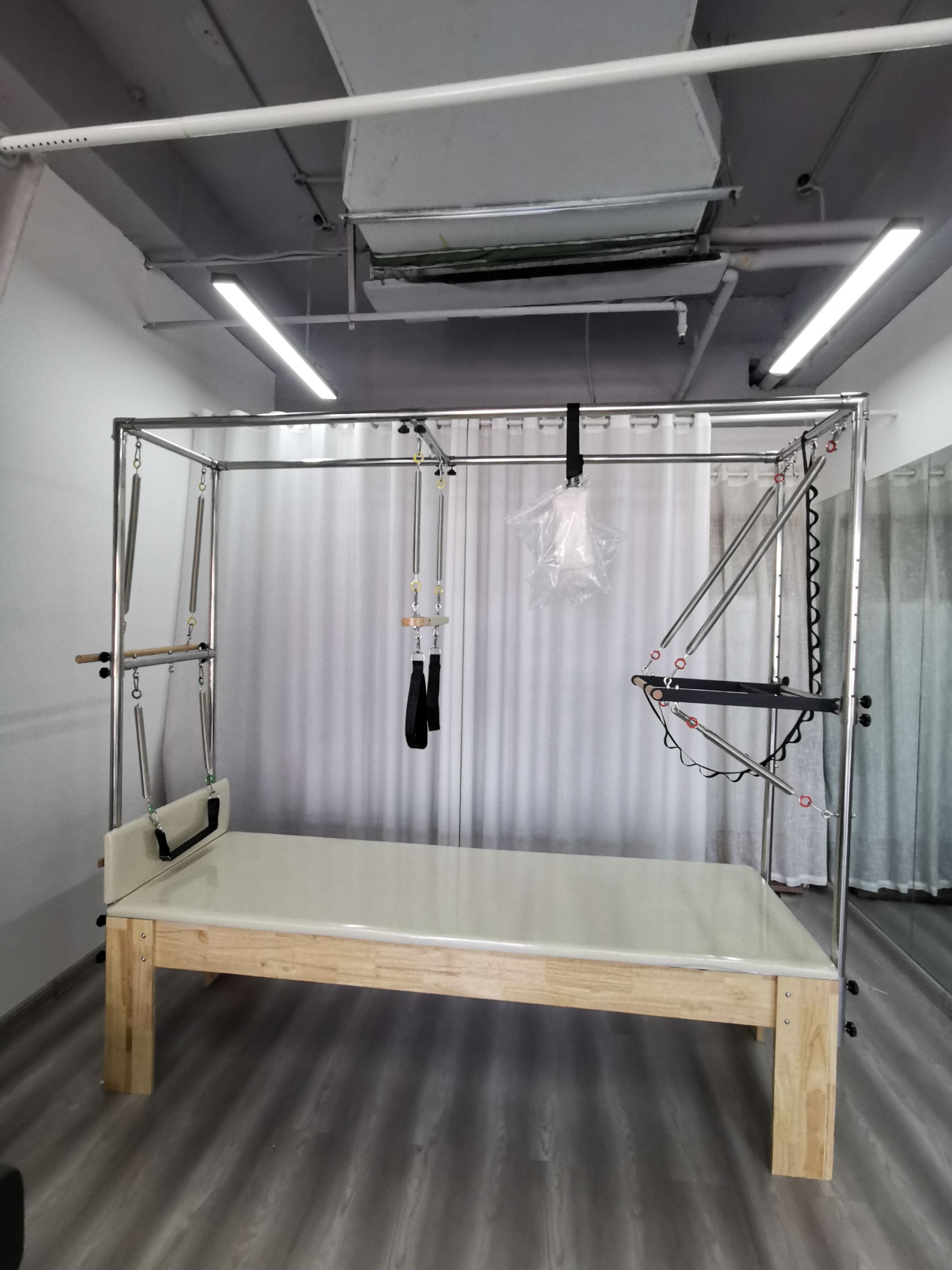
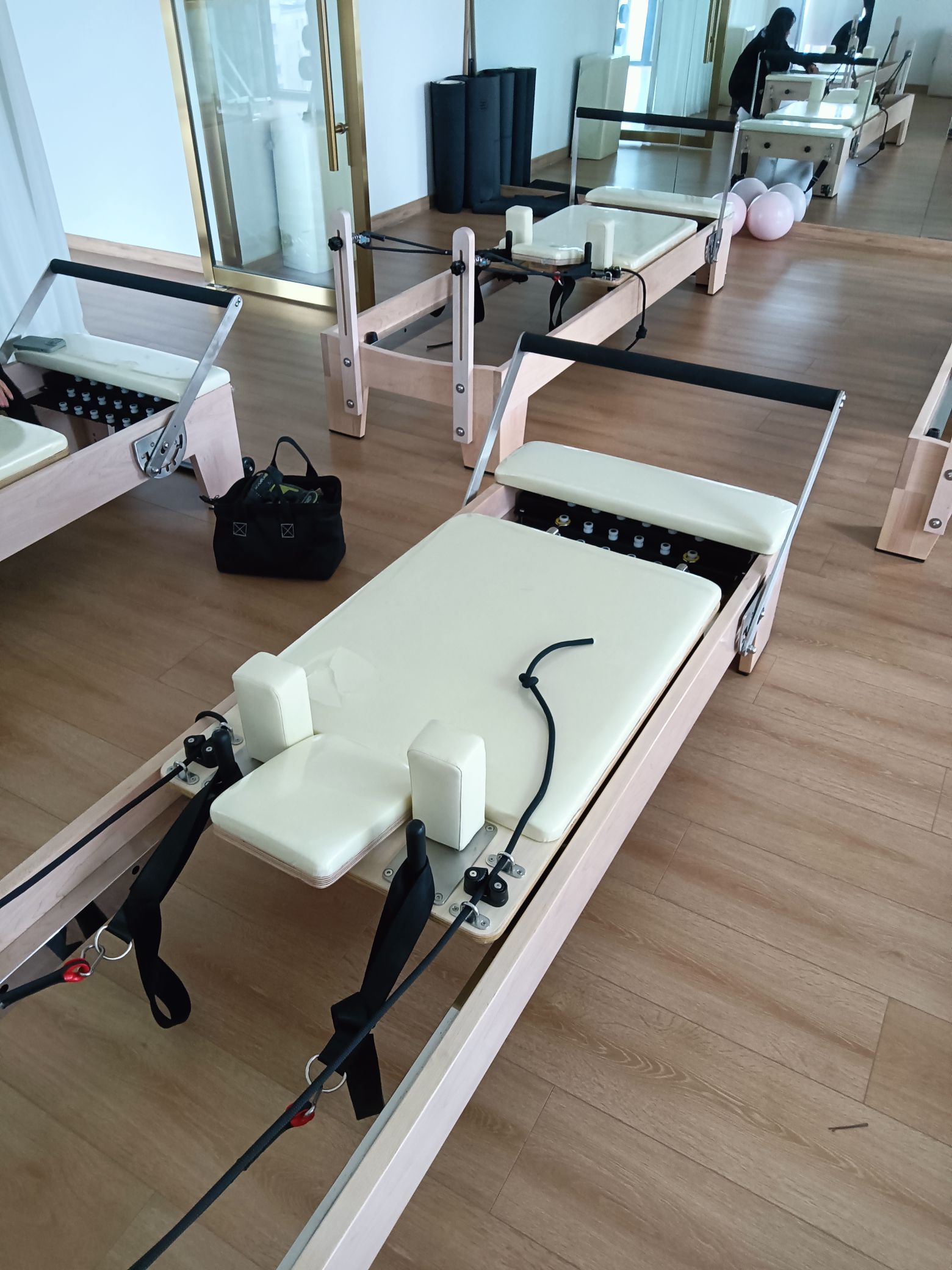
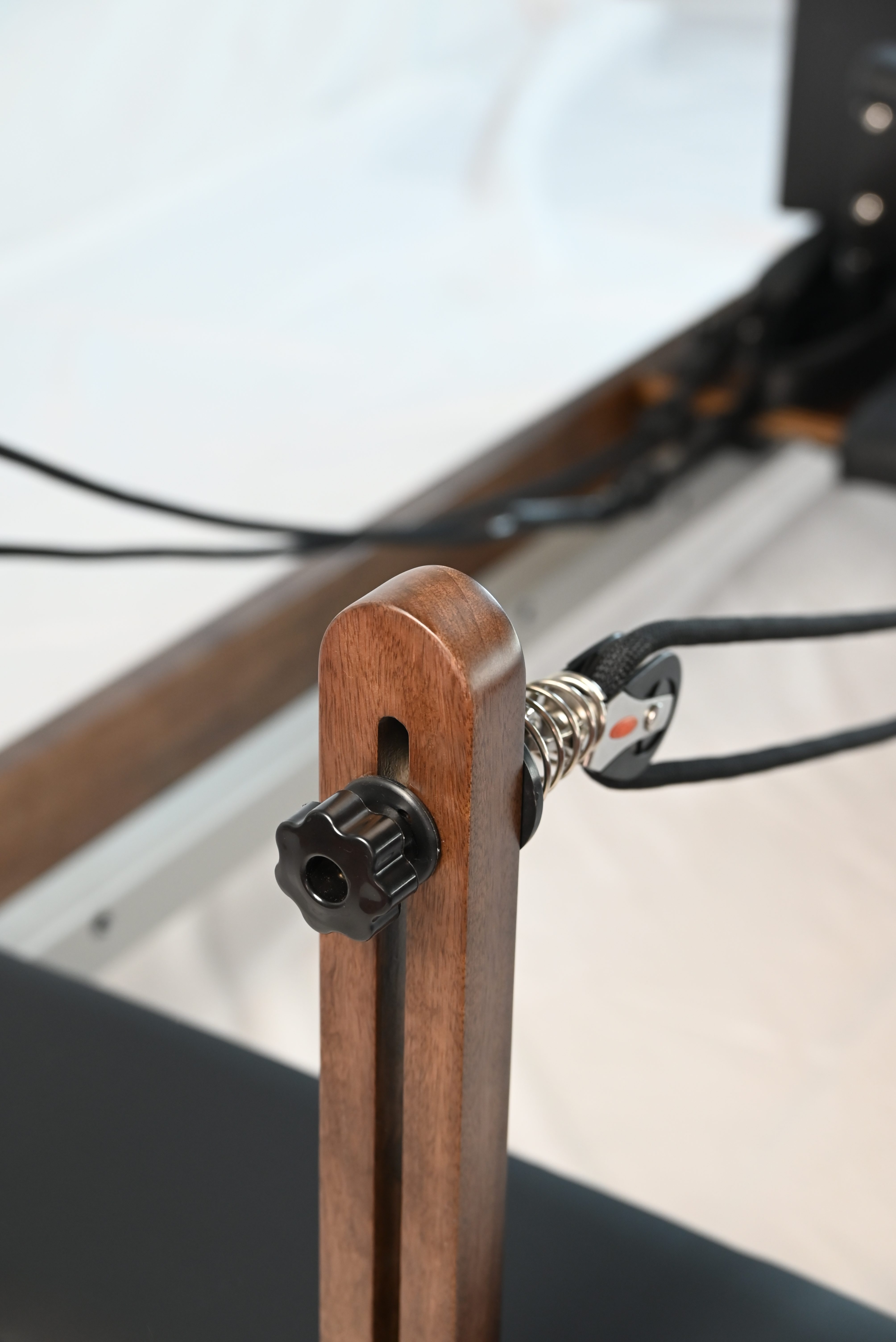
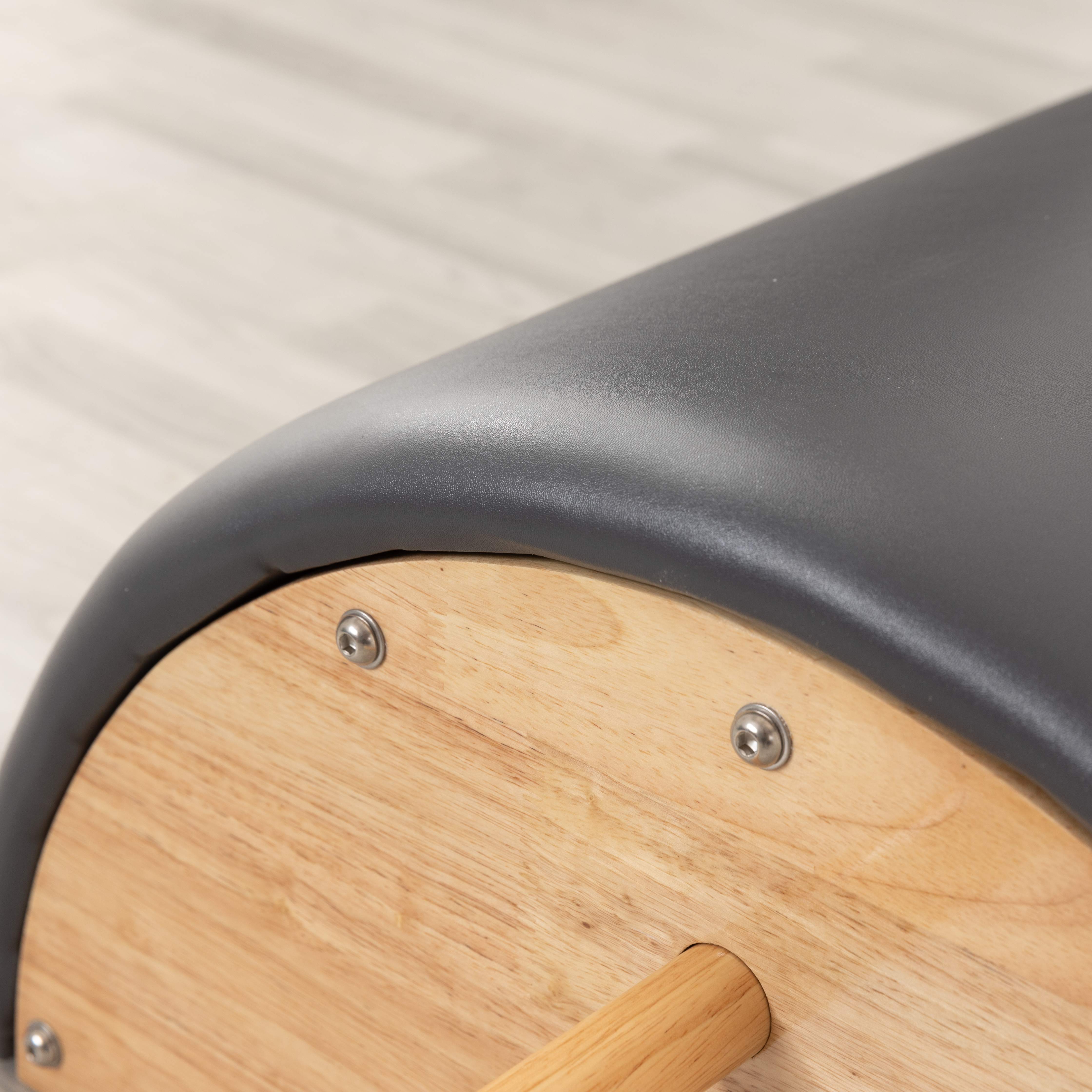
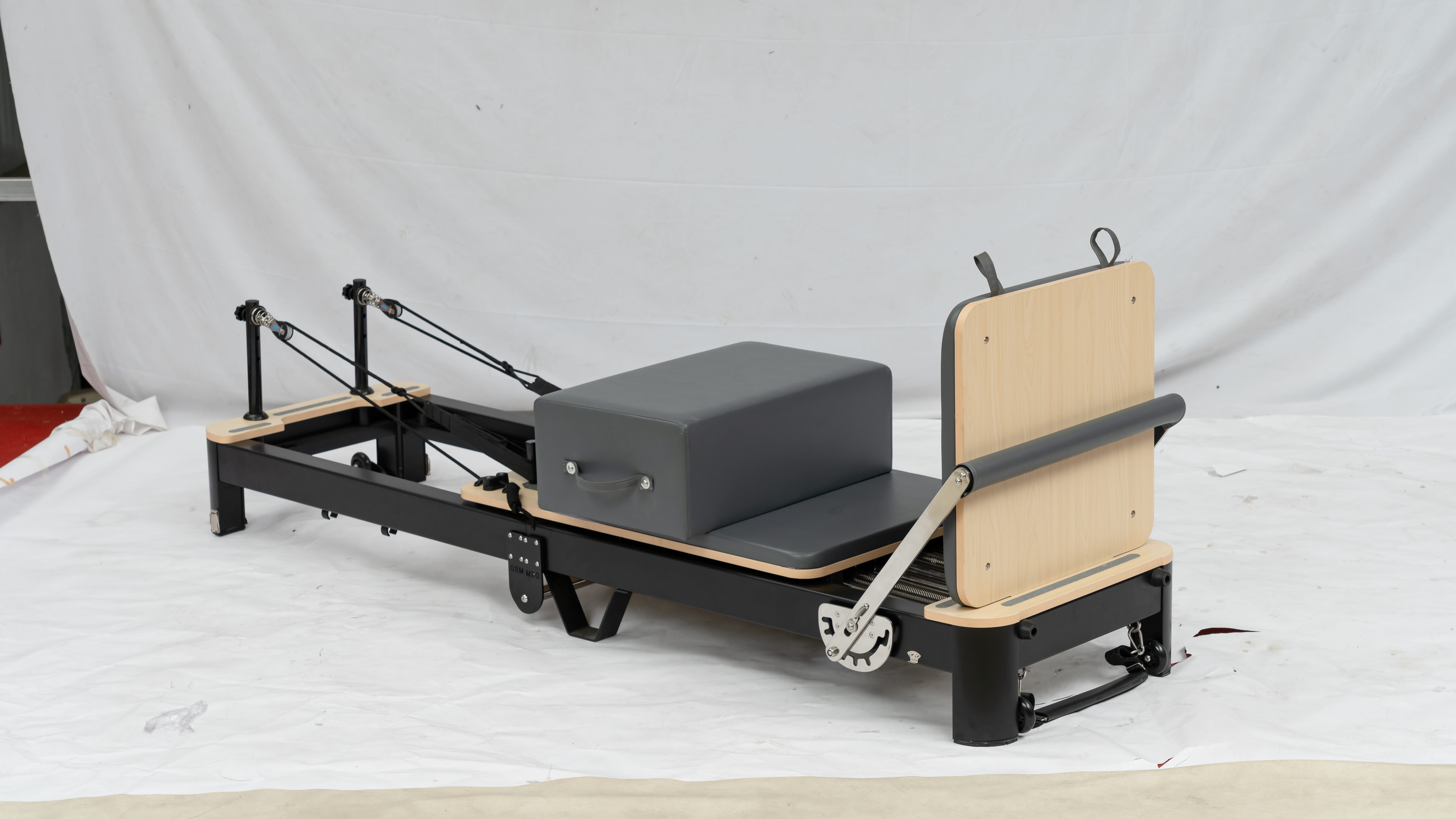
Our solid-wood reformers are built from kiln-dried hardwoods such as maple, oak, and beech, selected for density and dimensional stability. Unlike hollow metal tubing, solid hardwood does not develop internal corrosion, does not dent from impact, and does not transmit vibration the way thin-walled steel does. The frame absorbs shock and distributes stress across the joints rather than concentrating it at weld points.
For studio owners, this translates into fewer breakdowns, less downtime, and a machine that still feels tight after five years of daily classes.
II. Superior Tactile Feedback for Clients and Instructors
Pilates is a sensory discipline. Clients learn control by feeling resistance, and instructors cue movement by reading how the carriage responds.
Wood has a natural dampening quality that metal lacks. On a solid-wood reformer, the carriage glide feels smoother and quieter, and the frame does not ring or resonate when springs are engaged. Instructors consistently report that they can hear and feel subtle changes in a client's movement more clearly on wood, which improves teaching accuracy.
There is also the psychological dimension. Warm wood surfaces feel more inviting than cold metal, particularly for older clients, rehabilitation patients, and beginners who may feel intimidated by gym-style equipment.
III. Aesthetic Value That Sells Studio Time
Studio owners are running businesses. The look of the space directly affects pricing power and client retention.
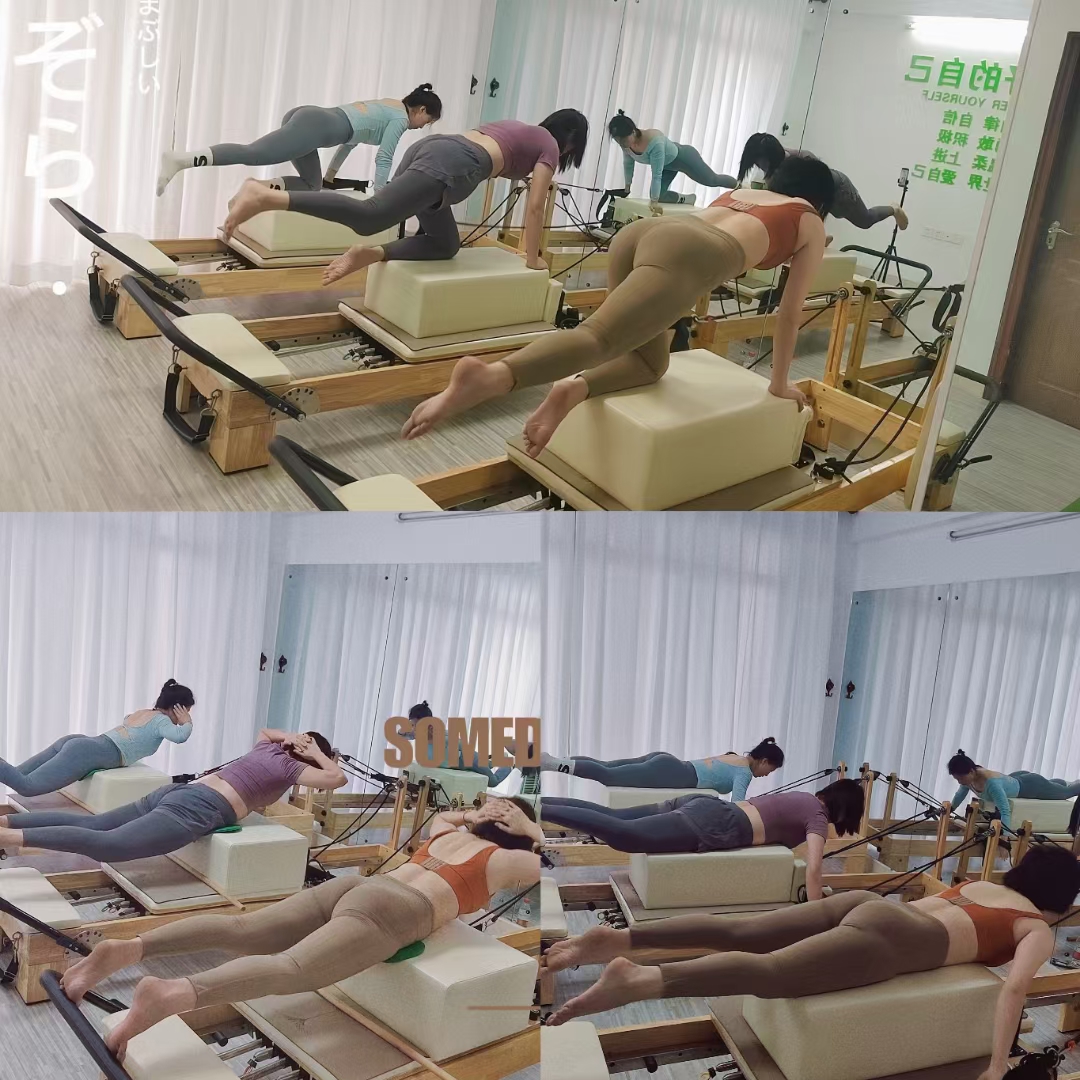
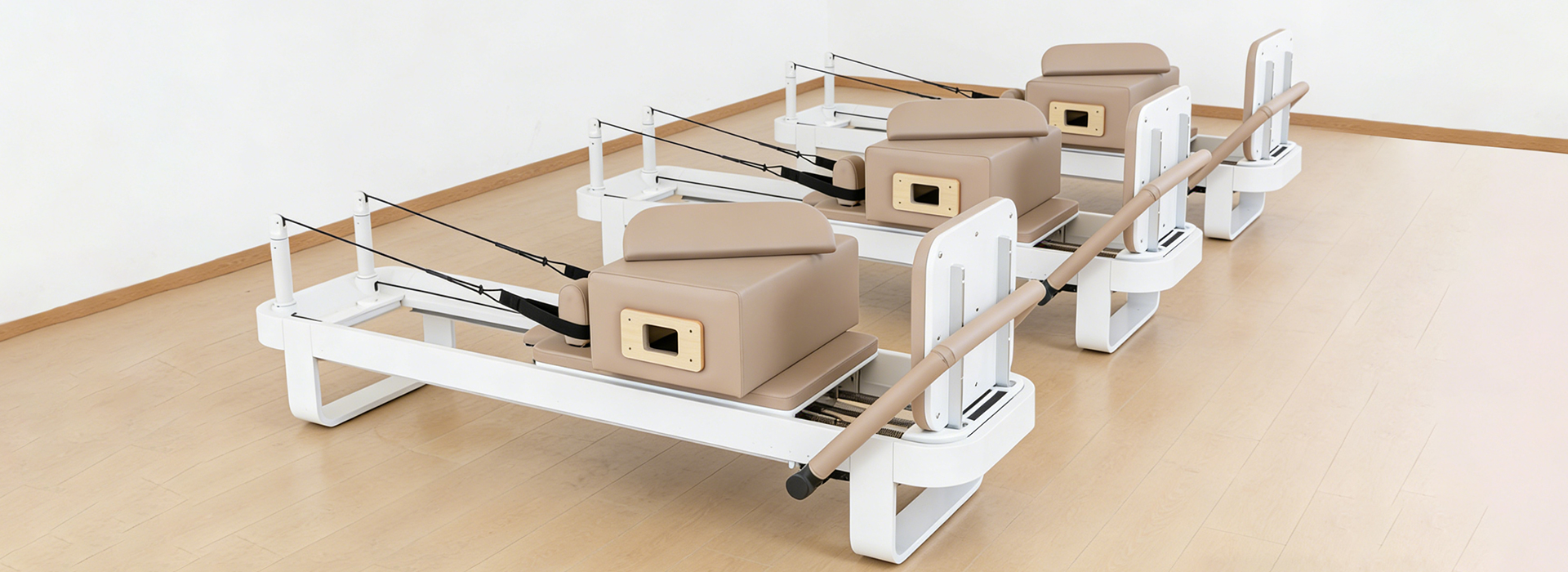
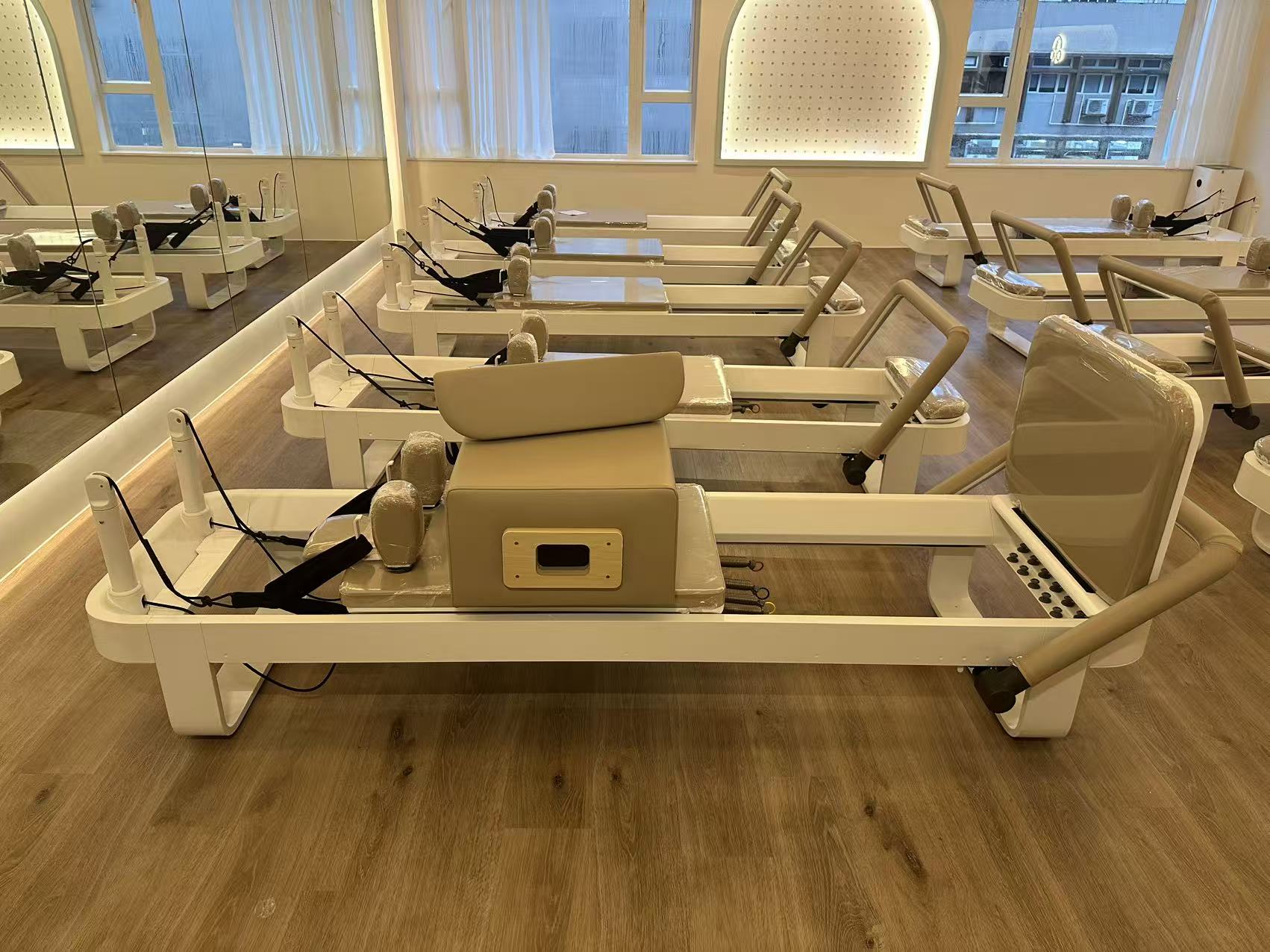
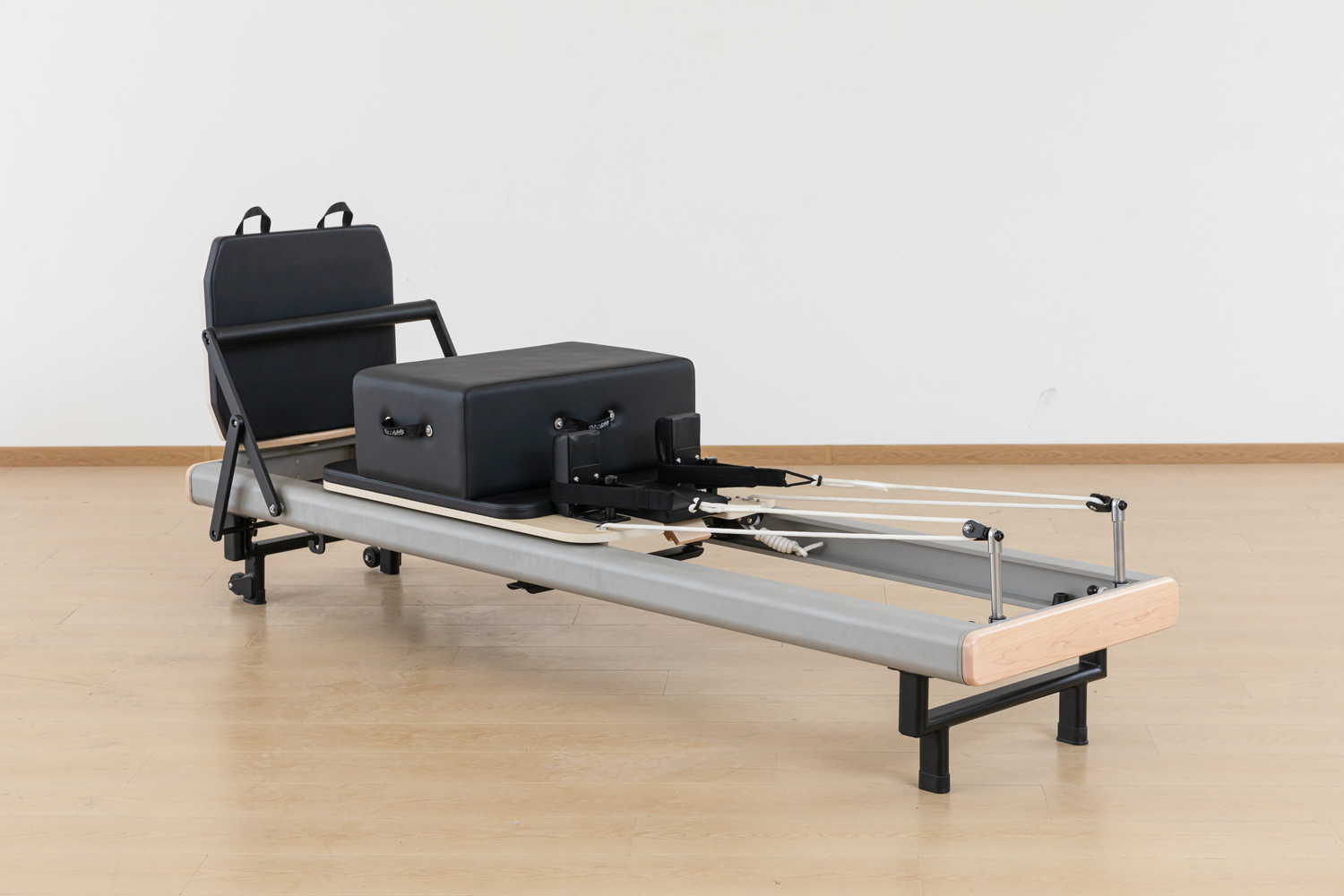
Solid-wood reformers read as premium, boutique, and intentional. They photograph well for social media, they fit naturally into wellness-oriented interiors, and they signal to prospective clients that the studio invests in quality. Metal-framed reformers, by contrast, often look clinical or generic.
Many studio owners report that clients specifically comment on the equipment, and that the wooden reformers have become part of their brand identity rather than a neutral backdrop.
IV. Lower Long-Term Maintenance and Repair Costs
The total cost of ownership for a reformer is not the purchase price. It is the purchase price plus every repair, replacement part, and hour of downtime over the equipment's life.
Solid-wood frames are repairable. A scratched or chipped surface can be sanded and refinished. A loosened joint can be re-tightened or reinforced. Metal frames with powder coating tend to chip, and once corrosion begins inside a tube, the damage is usually permanent.
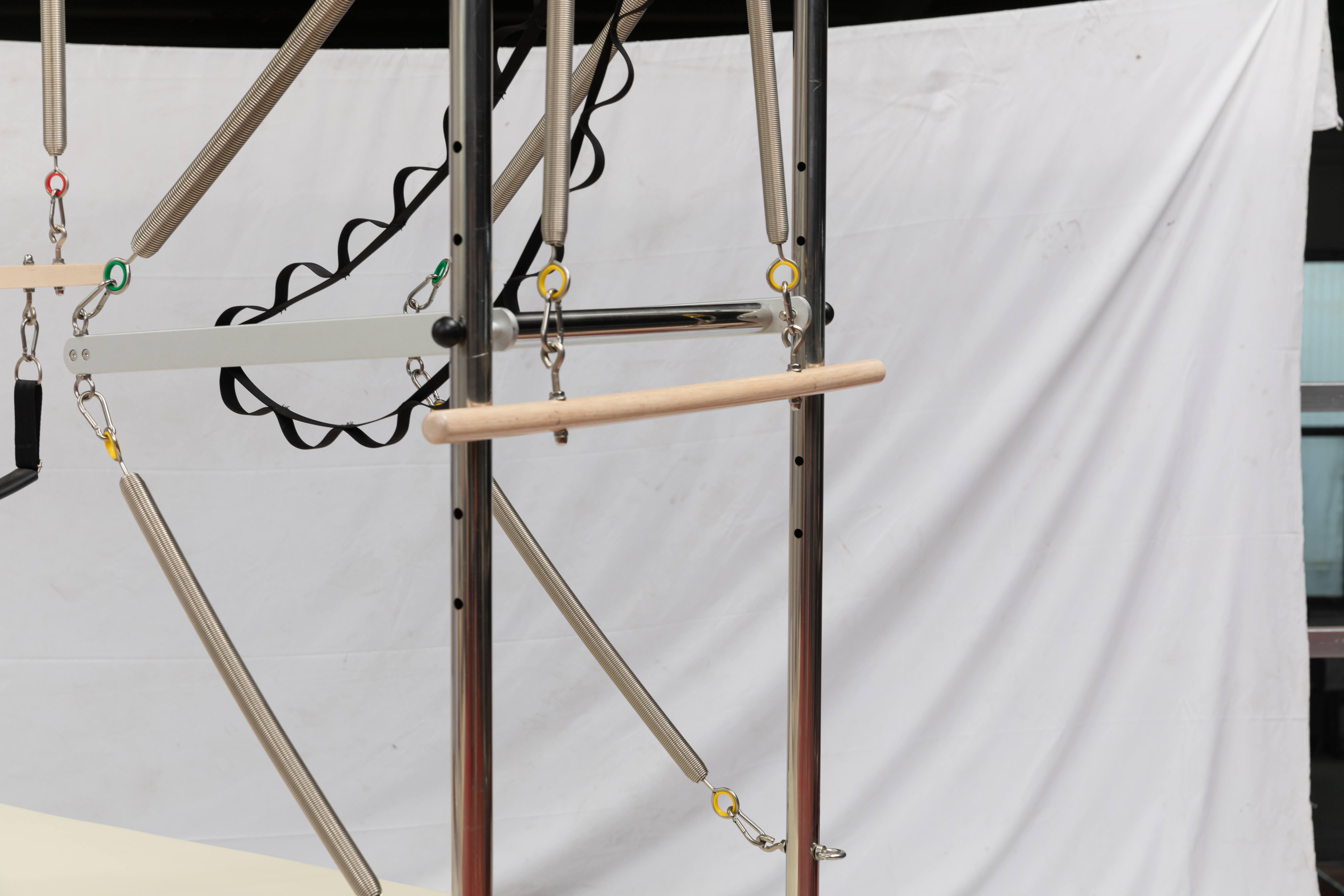
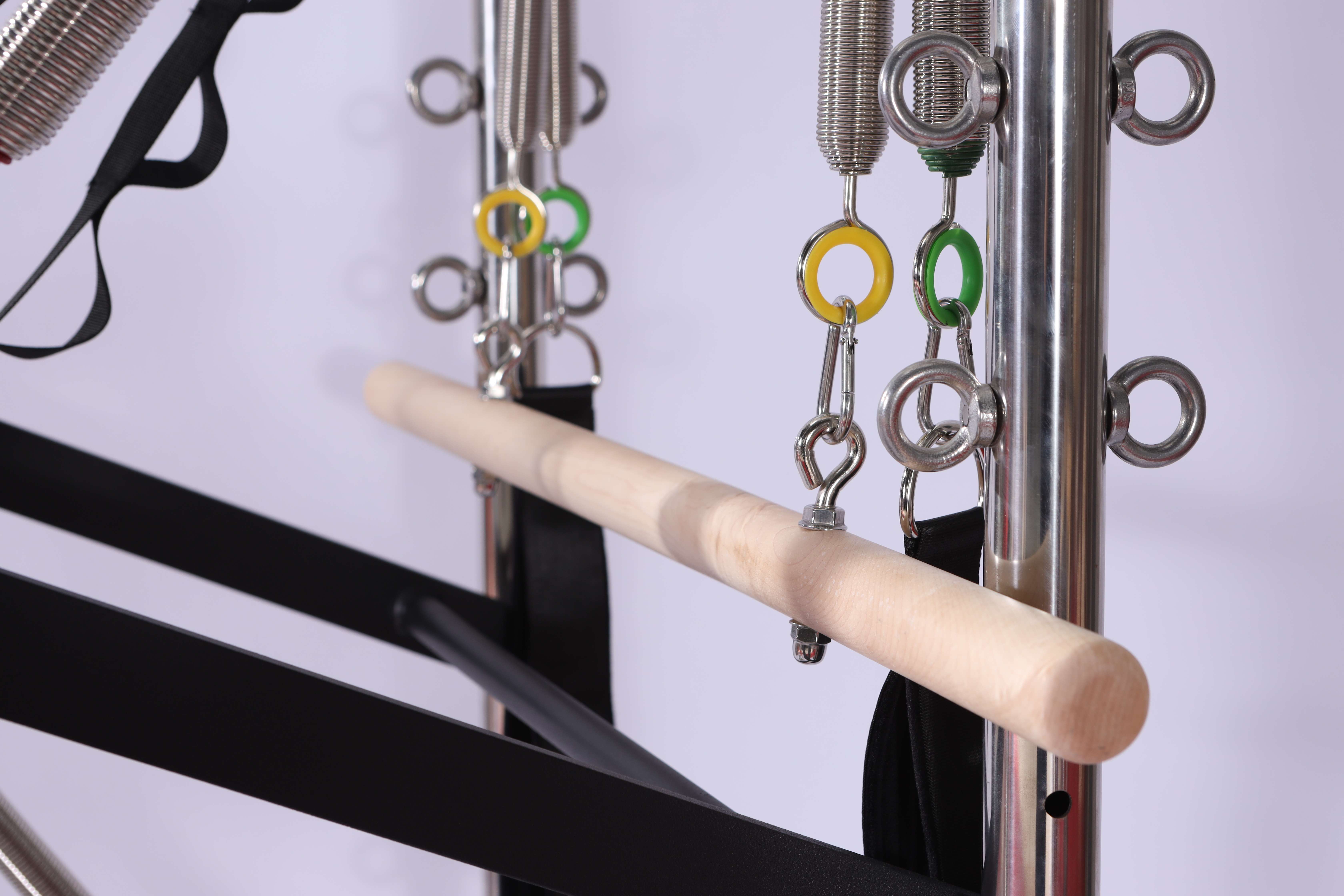
Springs, rollers, and upholstery wear out on any reformer, but on our wooden models those components are standardized and easy to replace without specialized tools. Studios can often handle basic maintenance in-house instead of waiting for a technician.
V. Quieter Operation in Shared Spaces
Many Pilates studios operate in multi-tenant buildings, above retail spaces, or in residential neighborhoods. Noise matters.
Metal reformers amplify sound. Springs vibrate against steel, carriages rattle, and the frame itself can act as a resonance chamber. Solid wood absorbs much of that energy. The result is a noticeably quieter class environment, which is better for clients, better for neighbors, and better for instructors who spend hours speaking over the equipment.
VI. Customization and Brand Alignment
Because solid-wood reformers are built by craftsmen rather than assembled from pre-manufactured metal components, they are easier to customize. Studios can specify wood species, stain color, upholstery fabric, and hardware finish to match their interior design.
For studio owners building a distinctive brand, this level of customization is not a luxury. It is a competitive advantage that metal-framed mass-produced equipment cannot offer.
VII. Sustainability and Client Values
A growing segment of Pilates clients cares about environmental impact. Solid wood from responsibly managed forests is a renewable material, and wooden reformers can be refinished and repaired rather than discarded.
Metal production is energy-intensive, and powder-coated steel frames are difficult to recycle cleanly. For studios whose clientele values sustainability, the material choice itself becomes part of the marketing story.
VIII. Resale Value and Asset Longevity
Well-maintained solid-wood reformers hold their value. The craftsmanship, the repairability, and the aesthetic appeal all support a stronger secondary market. Metal reformers, particularly lower-cost imports, tend to depreciate sharply because buyers cannot verify structural integrity and replacement parts may be unavailable.
For studio owners who plan to expand, relocate, or upgrade equipment over time, this resale strength effectively lowers the true cost of ownership.
Conclusion
Studio owners choose our solid-wood Pilates reformers for reasons that go well beyond appearance. Durability under commercial load, superior tactile feedback, quieter operation, lower maintenance costs, customization options, and stronger resale value all compound over the life of the equipment.
For a studio, a reformer is not a purchase. It is an investment in daily operations. Solid wood simply performs better in that role.