Transform Your Home Gym With Professional Pilates Apparatus
I. Why Professional Apparatus Changes Home Training
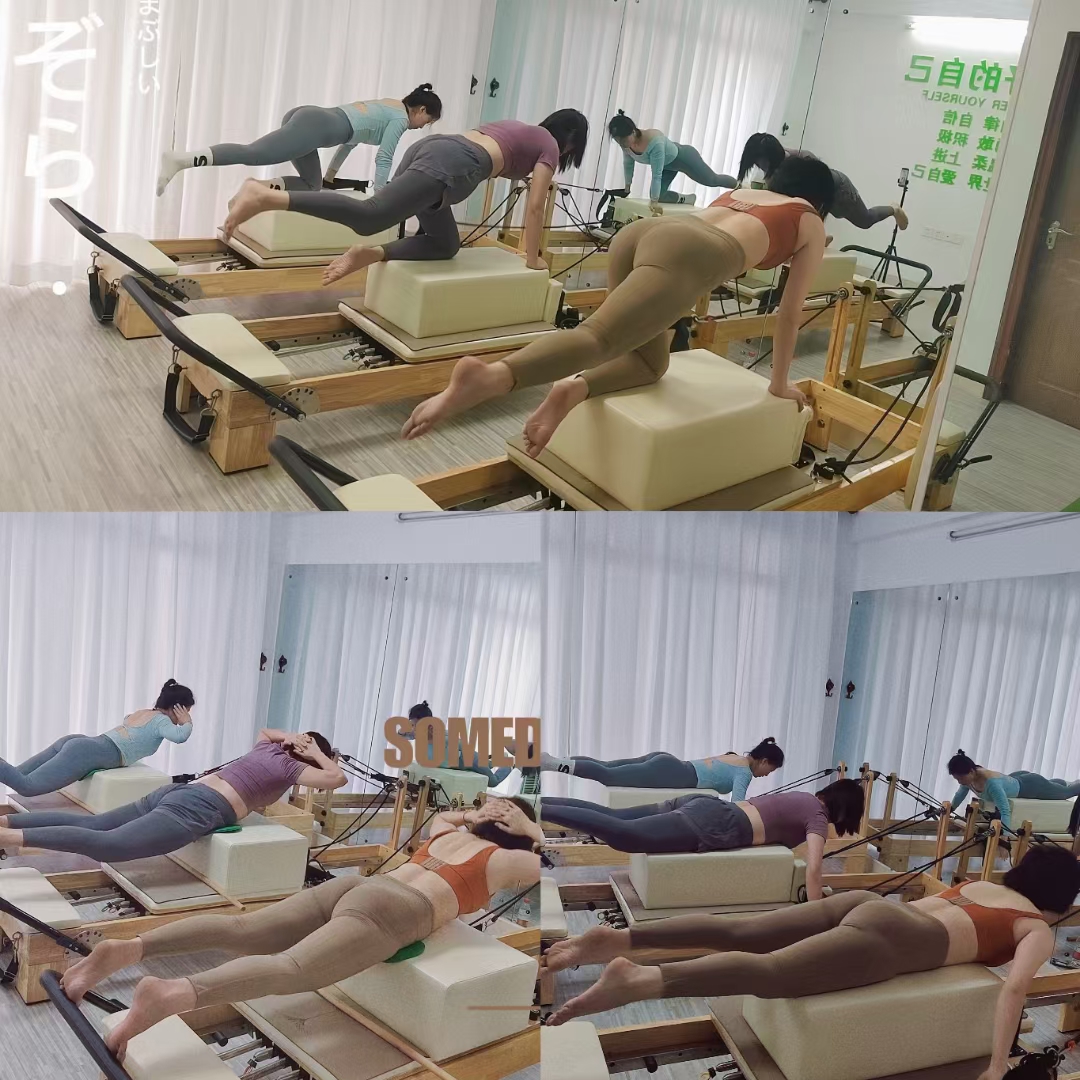
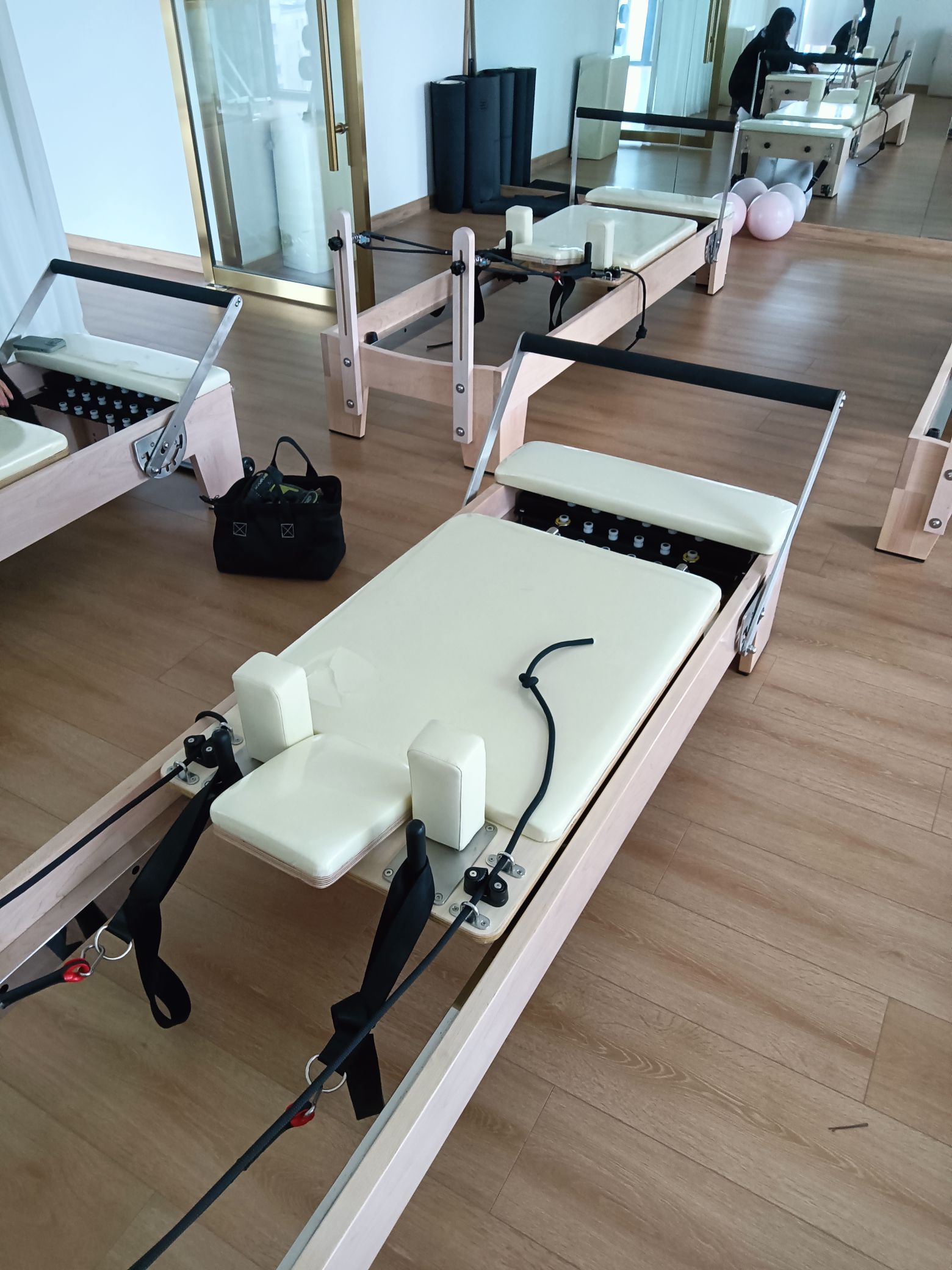
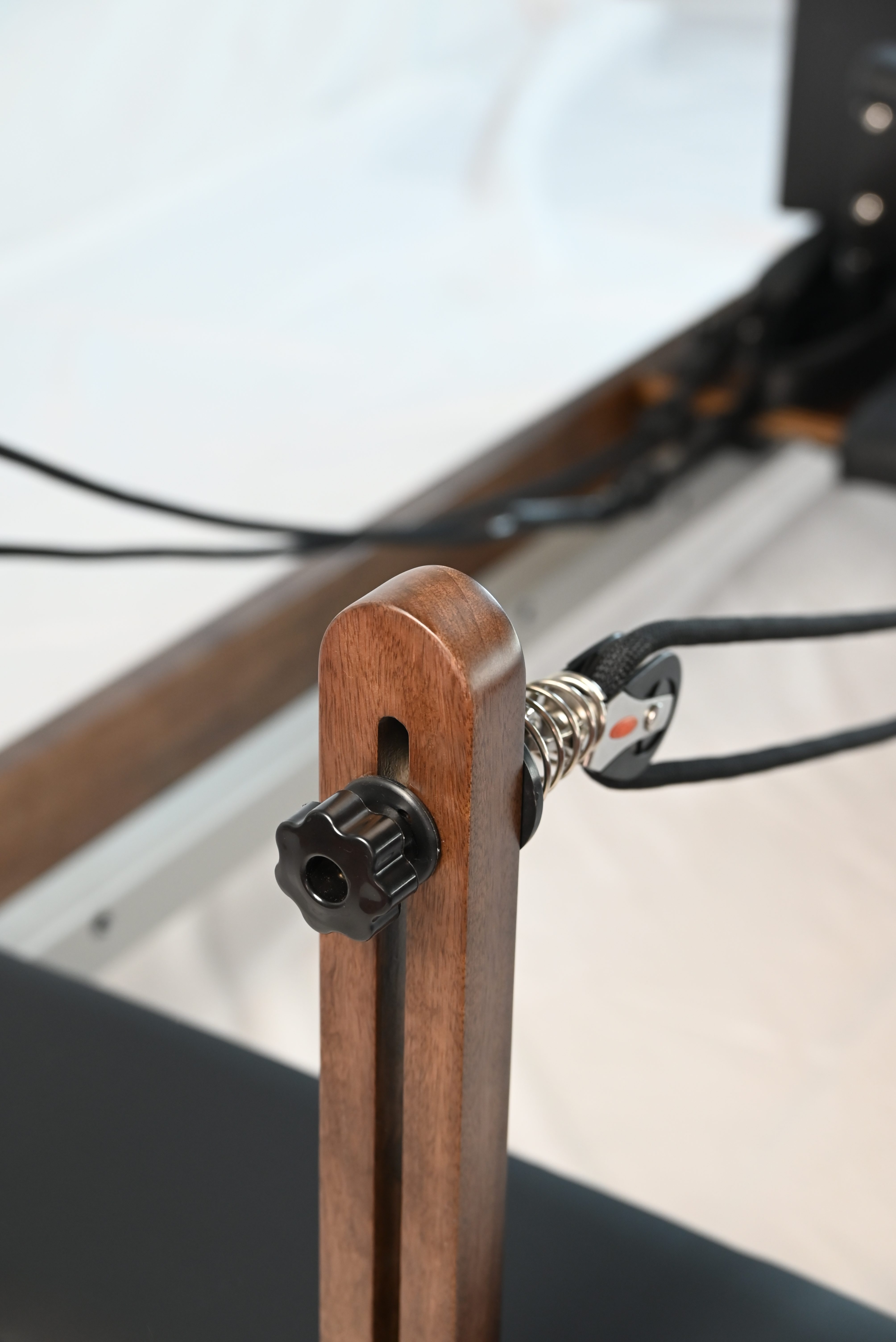
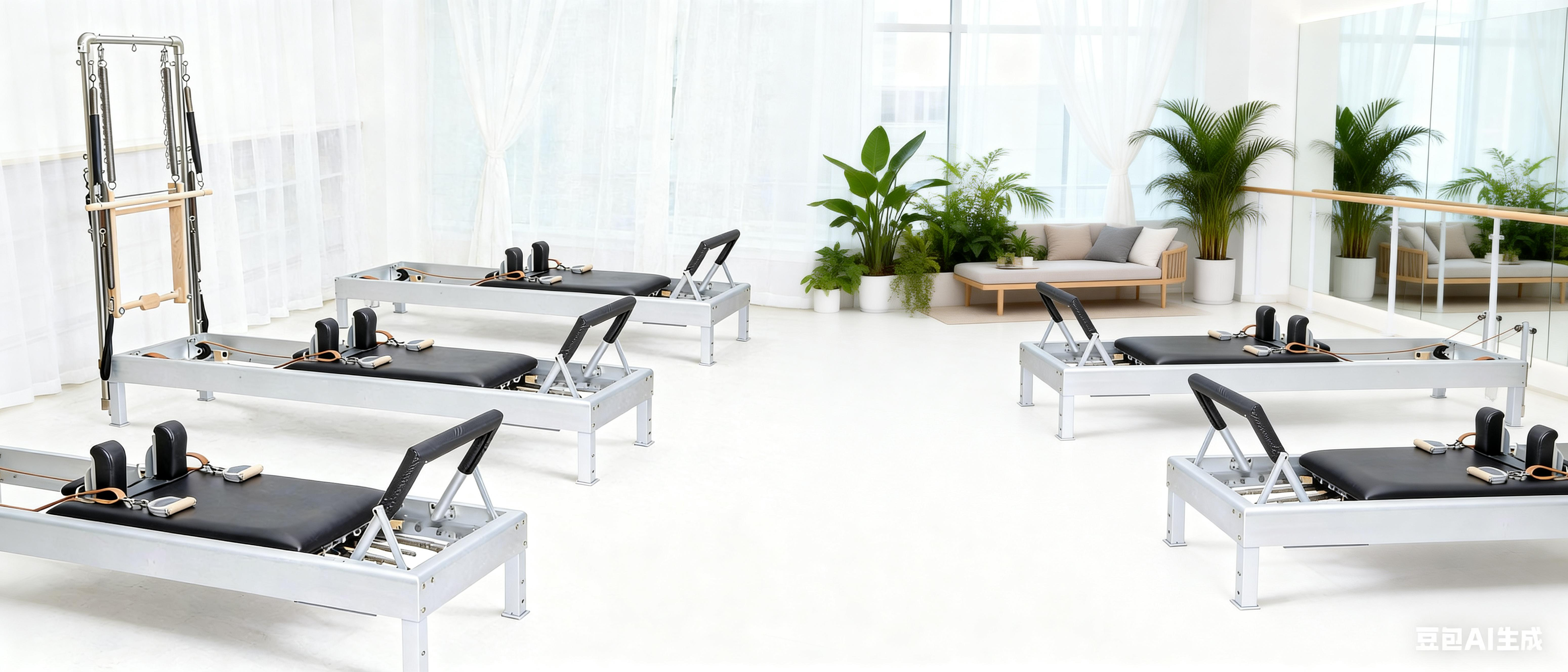
Most home workouts fail not because of lack of motivation, but because of lack of feedback. A mat and a resistance band cannot tell you whether your spine is neutral or your pelvis is stable. Professional Pilates apparatus solves this problem through structure: the reformer's carriage tracks movement, the springs provide measurable resistance, and the footbar and straps create fixed reference points for the body.
This is the core difference between exercising at home and training at home. Professional equipment imposes the same mechanical discipline found in a studio, which means each repetition teaches alignment rather than merely burning calories. For anyone serious about Pilates, the apparatus is not an accessory—it is the instructor that never leaves the room.
II. Choosing the Right Equipment for Your Space
Not every home can accommodate a full studio setup, and it does not need to. The goal is matching apparatus to available space and training goals, not replicating a commercial facility.
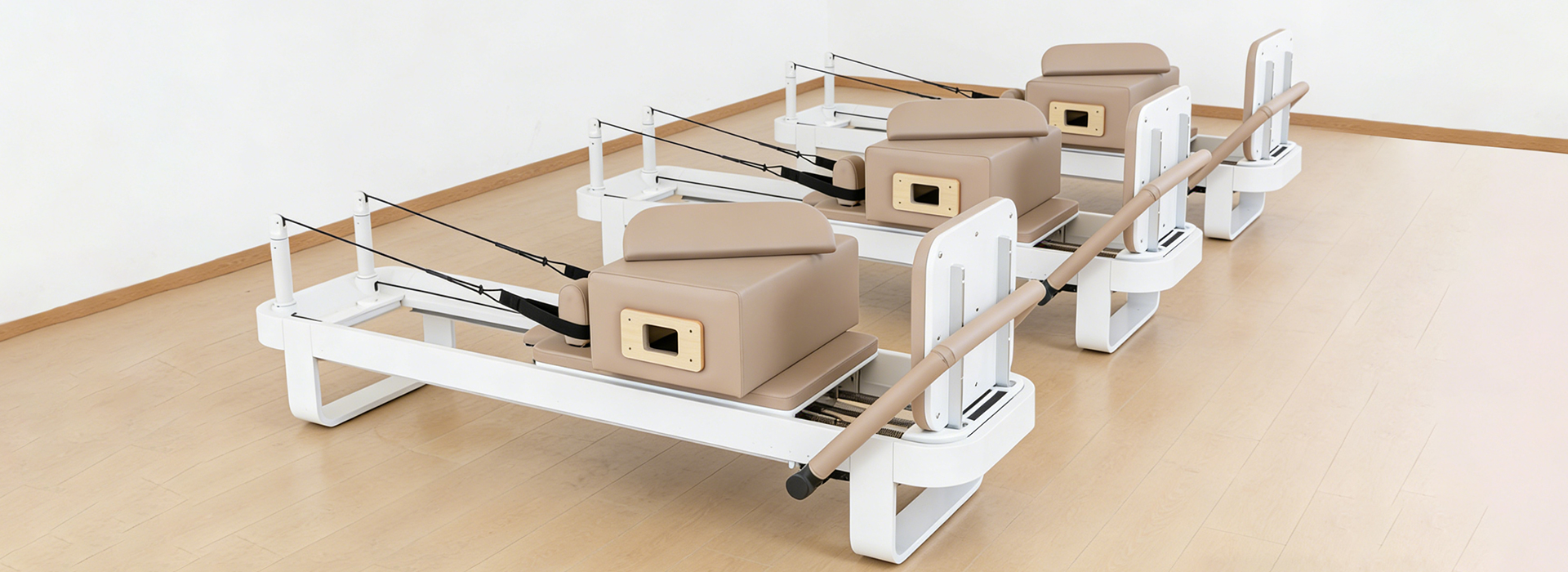
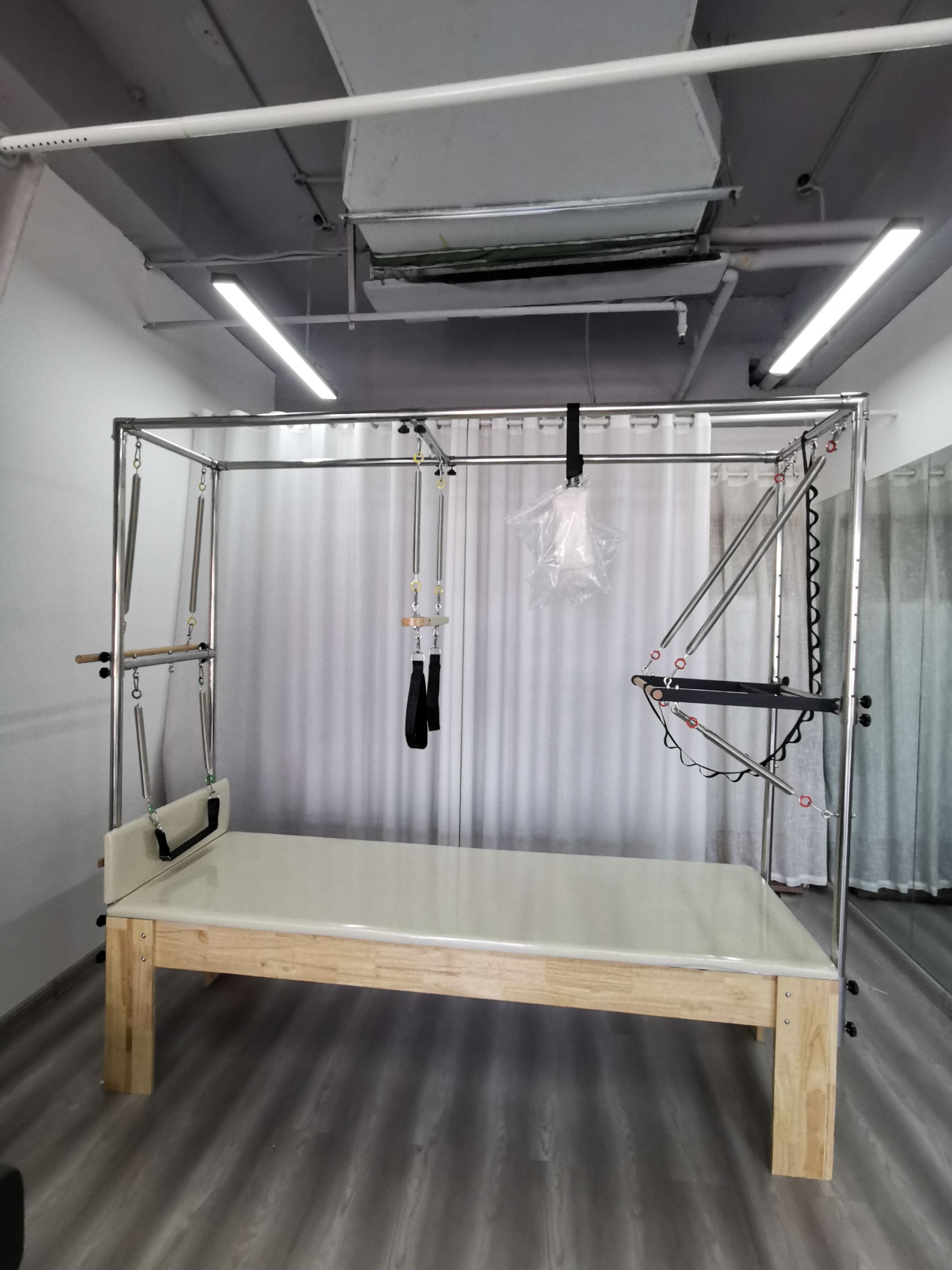
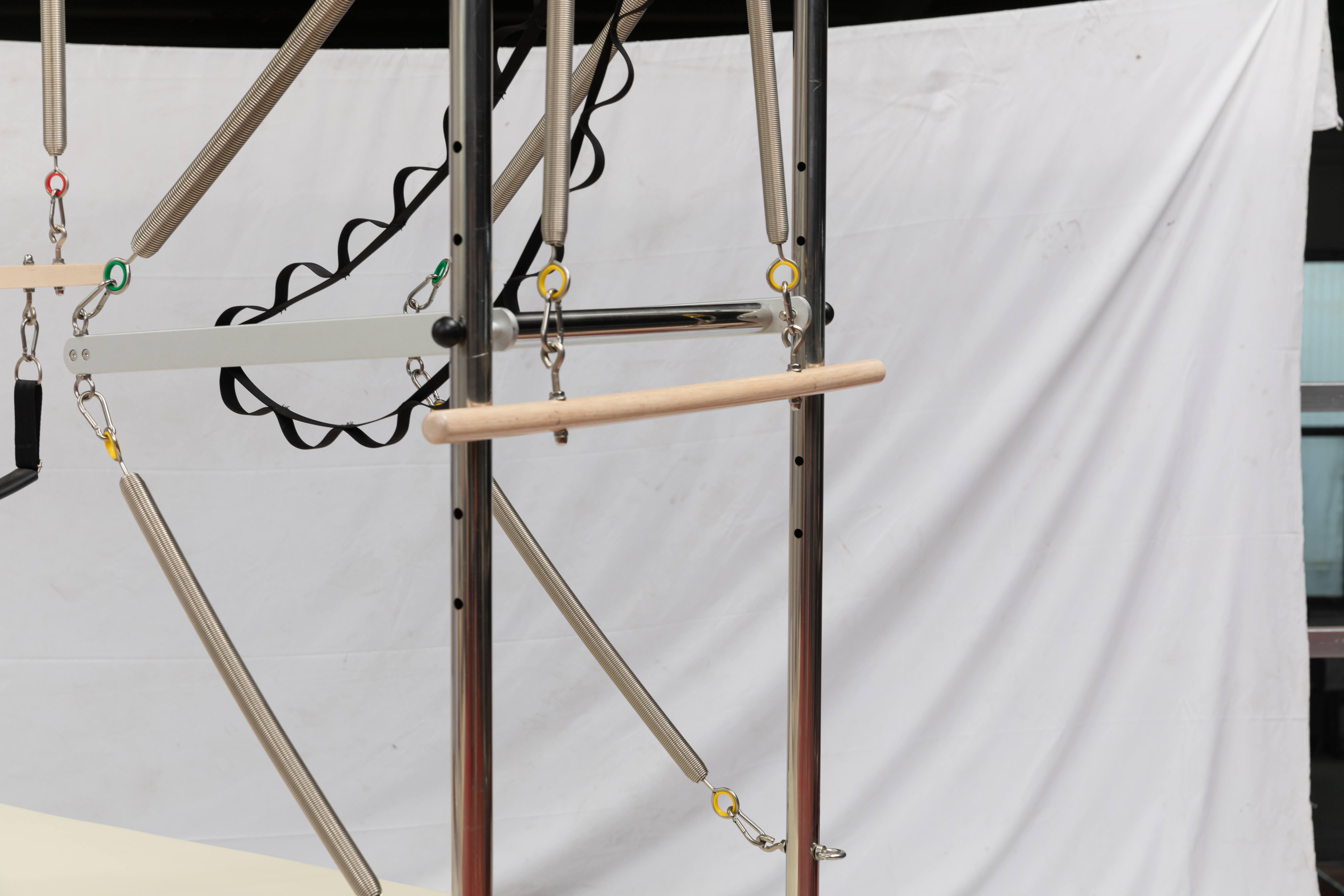
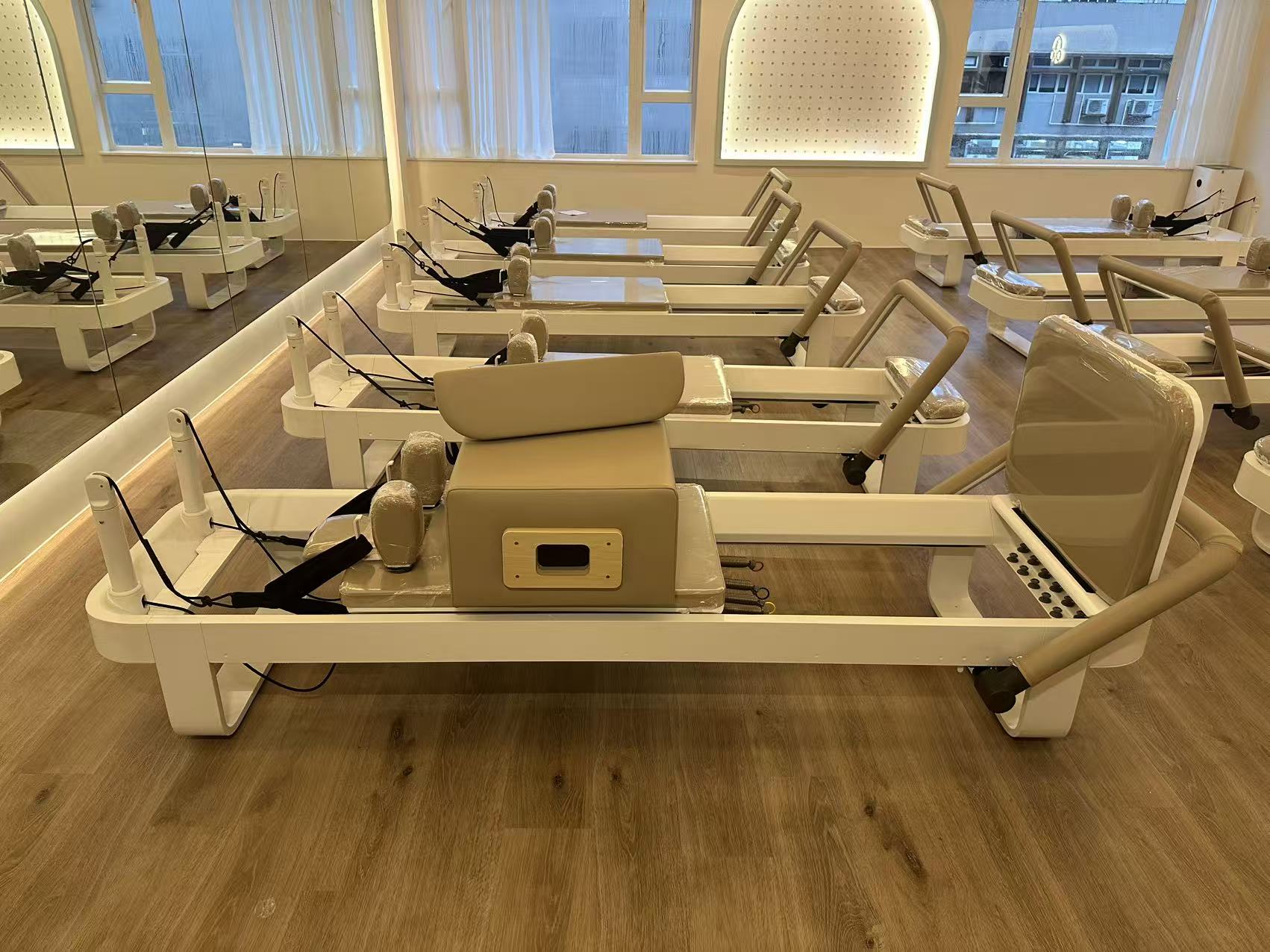
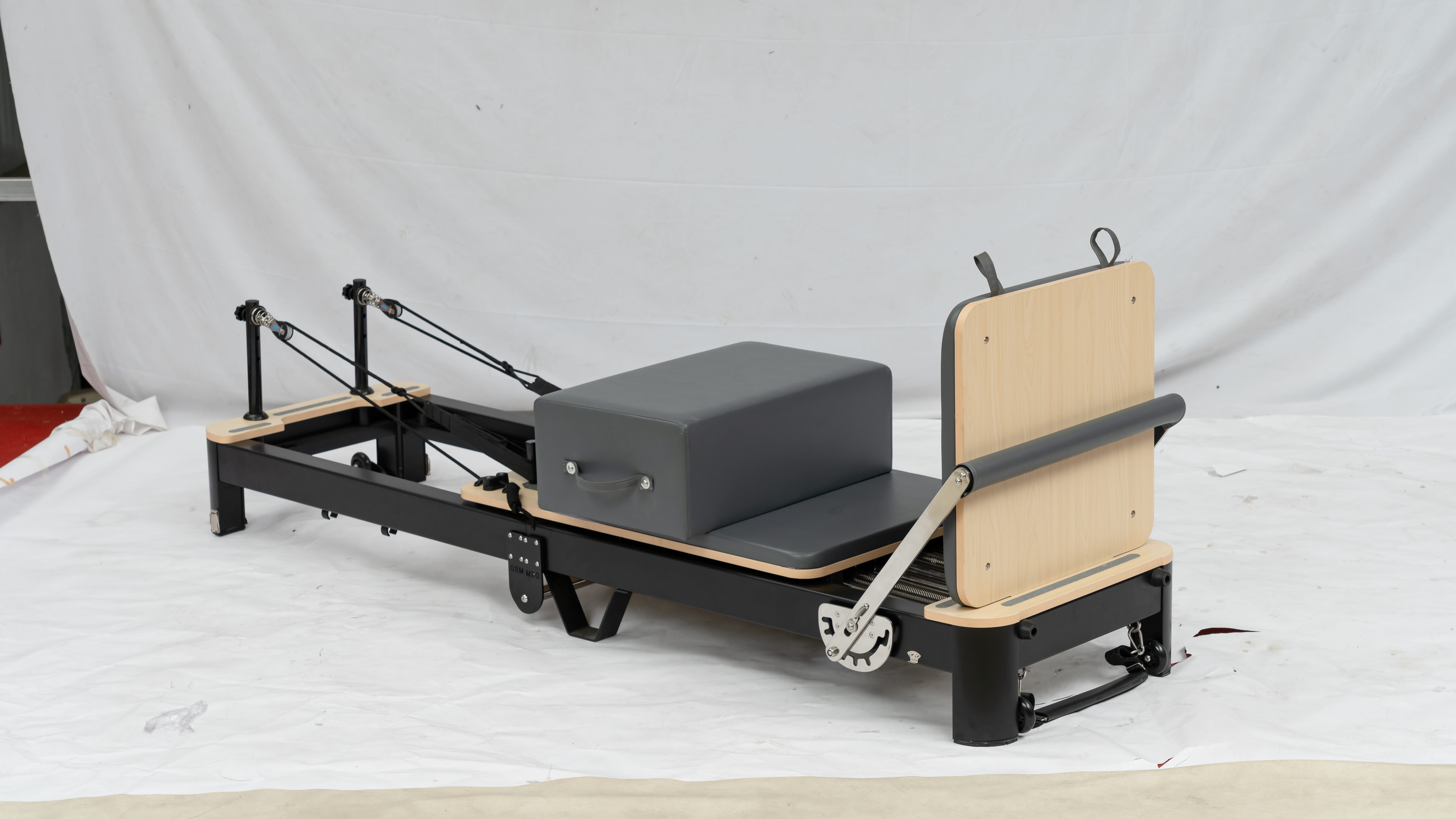
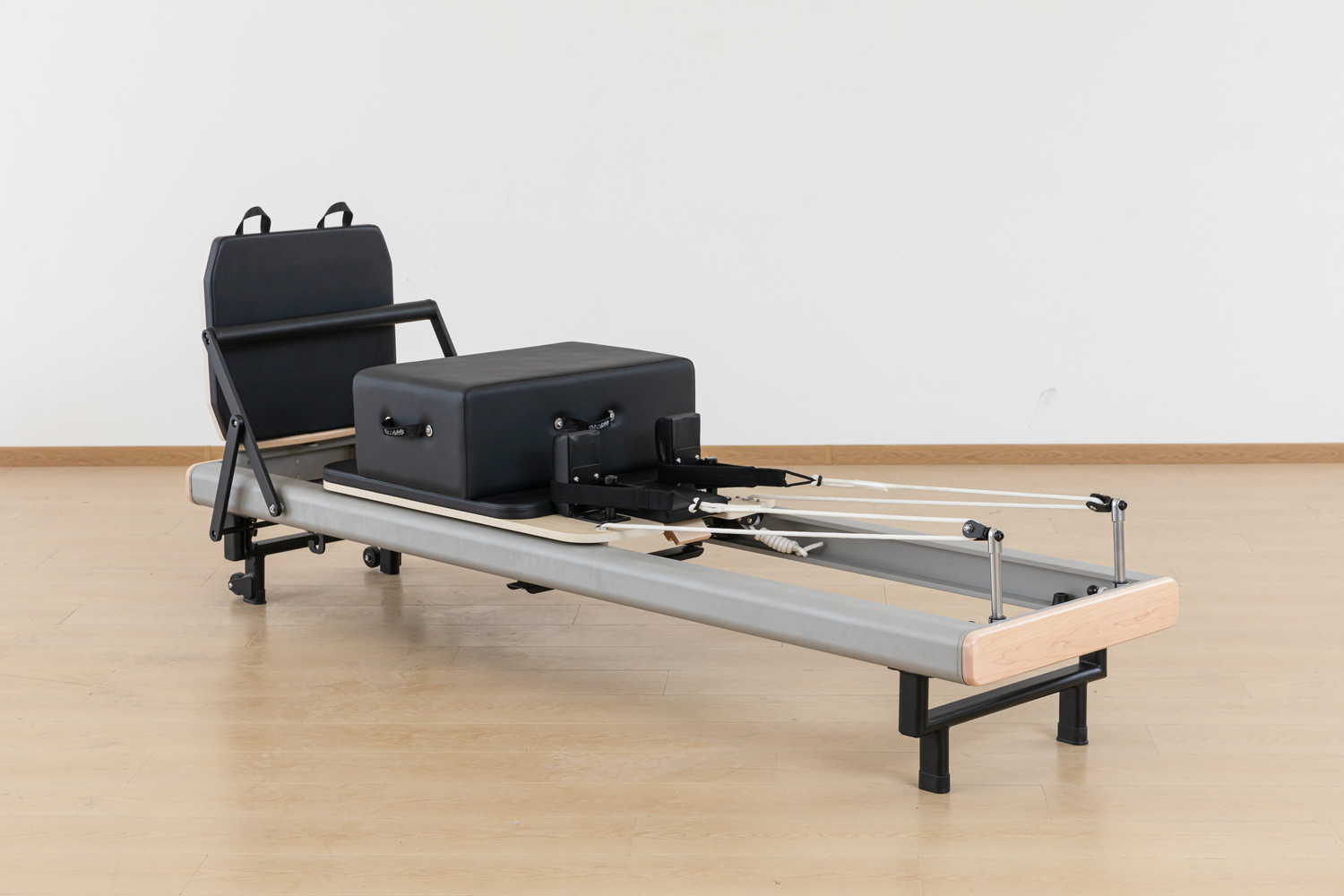
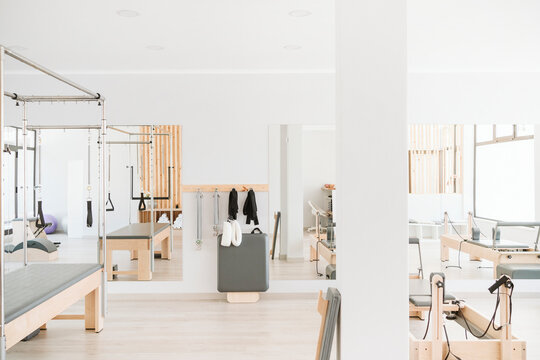
The reformer is the centerpiece for most home Pilates setups. Standard models require roughly 8 feet of length and 2 feet of width, plus clearance on all sides for mounting and dismounting. Folding or "sit-up" reformers reduce footprint significantly and suit apartments or multipurpose rooms, though they typically sacrifice some stability and spring range. A Pilates chair (Wunda Chair) occupies less than half the floor area of a reformer and delivers surprisingly versatile resistance training, making it an excellent choice for smaller spaces. The Cadillac (Trapeze Table) offers the widest exercise range but demands ceiling height and permanent floor space, so it is best reserved for dedicated home studios.
Ceiling height matters more than most buyers expect. Any apparatus with a vertical frame or tower requires at least 7.5 feet of clearance for safe standing and hanging exercises. Measure before purchasing, not after delivery.
III. Setting Up for Safety and Function
Placement determines whether professional equipment gets used or becomes an expensive obstacle. The reformer should sit on a level, non-slip surface—rubber mats or interlocking gym tiles work well—with enough room behind the footbar for the carriage to travel fully without contacting walls or furniture.
Ventilation and lighting are practical concerns, not luxuries. Pilates involves controlled breathing and precise spinal movement; a cramped, dim corner undermines both. Mirrors, if used, should be positioned to check alignment rather than to fill wall space. Keep equipment away from direct sunlight, which degrades upholstery and spring coatings over time.
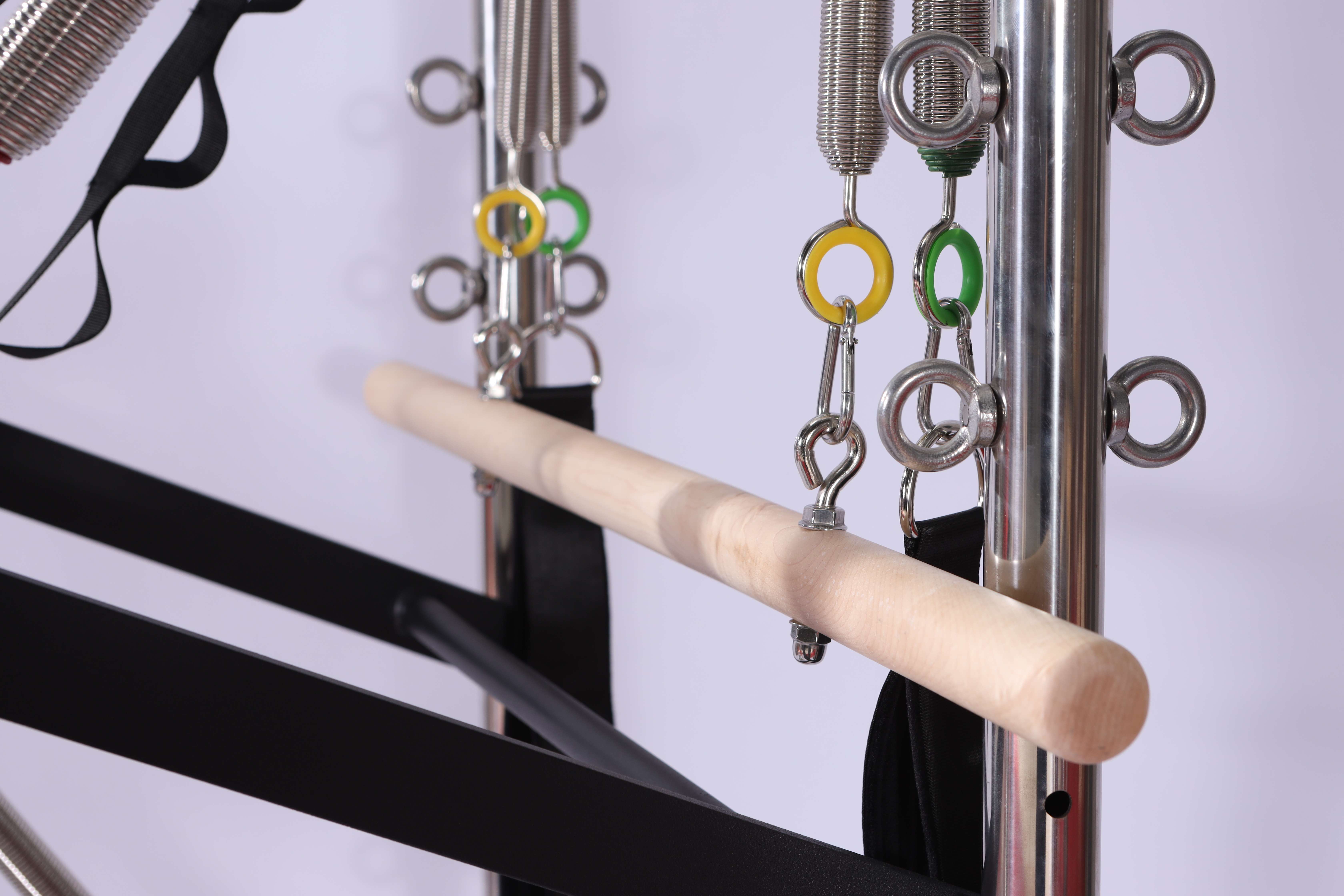
Finally, establish a maintenance routine from day one. Check spring tension monthly, inspect straps and loops for fraying, tighten frame bolts quarterly, and clean upholstery after each session. Professional apparatus lasts decades when maintained and fails prematurely when neglected.
IV. Building a Complete Home Practice
One reformer alone supports dozens of exercises, but a well-rounded home gym benefits from complementary apparatus. A Pilates chair adds seated and standing resistance work. A ladder barrel or spine corrector addresses extension and rotation that reformers handle less directly. Small props—magic circles, resistance bands, and balls—extend the repertoire without consuming floor space.
The deeper advantage of professional apparatus at home is continuity. Studio sessions become refinements rather than introductions. Progress stops depending on scheduling, and daily practice becomes genuinely possible. That shift—from occasional training to consistent practice—is where real results in Pilates are built.
V. Making the Investment Count
Professional Pilates apparatus represents a significant purchase, and it should be treated as a long-term investment rather than a one-time expense. Buy from manufacturers who publish material specifications, provide test data, and stock replacement parts. Confirm warranty terms cover frames and springs separately, since these components have different lifespans.
Consider total cost of ownership: springs need replacement every 12 to 24 months depending on use, and upholstery may need refurbishment after several years. A slightly higher purchase price from a manufacturer with genuine after-sales support almost always costs less over a decade than a cheaper unit abandoned after two years.
A home gym built on professional apparatus is not about模仿 a studio. It is about giving yourself the same tools, the same feedback, and the same standards—every day, on your own schedule. That is what transforms a room into a practice.