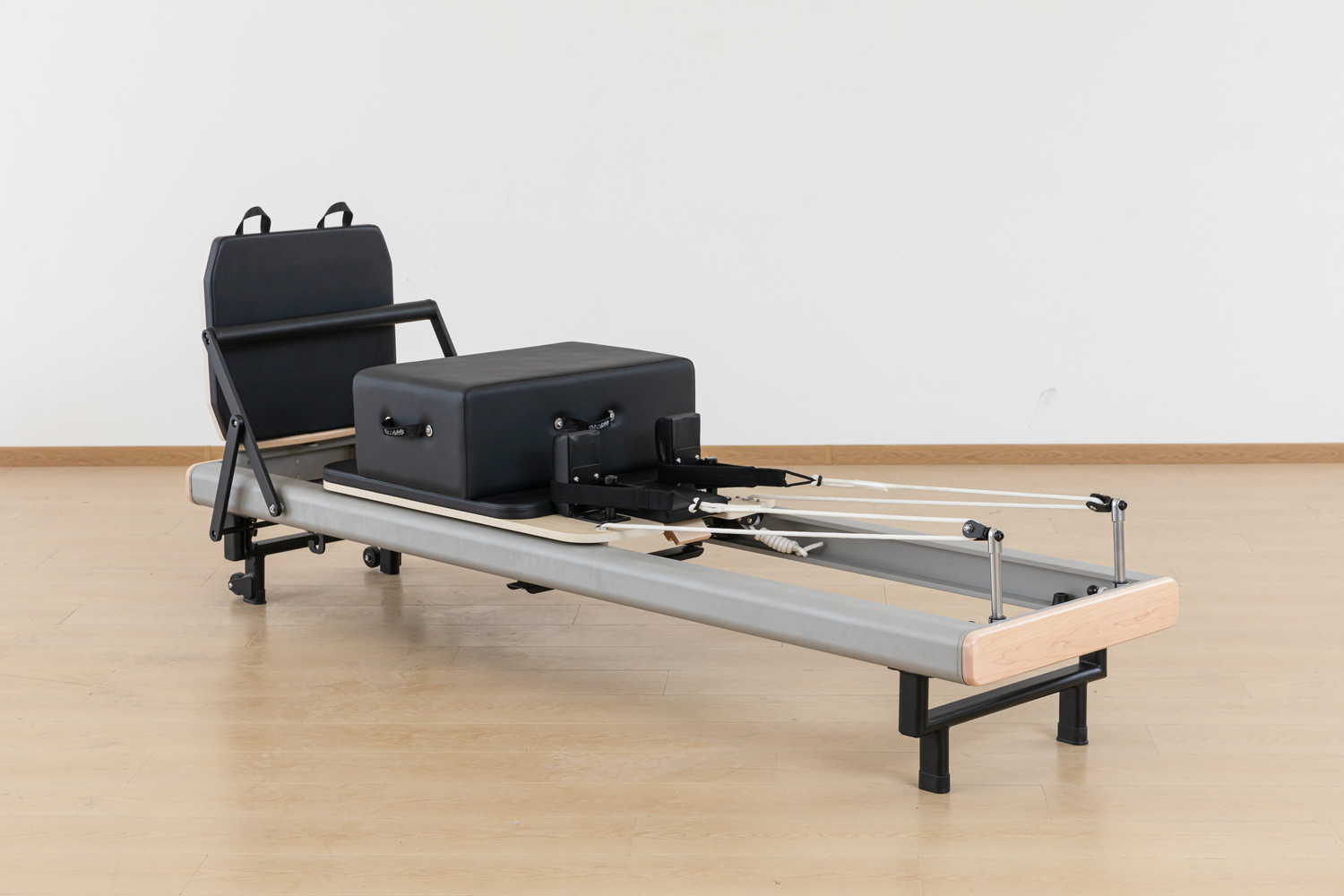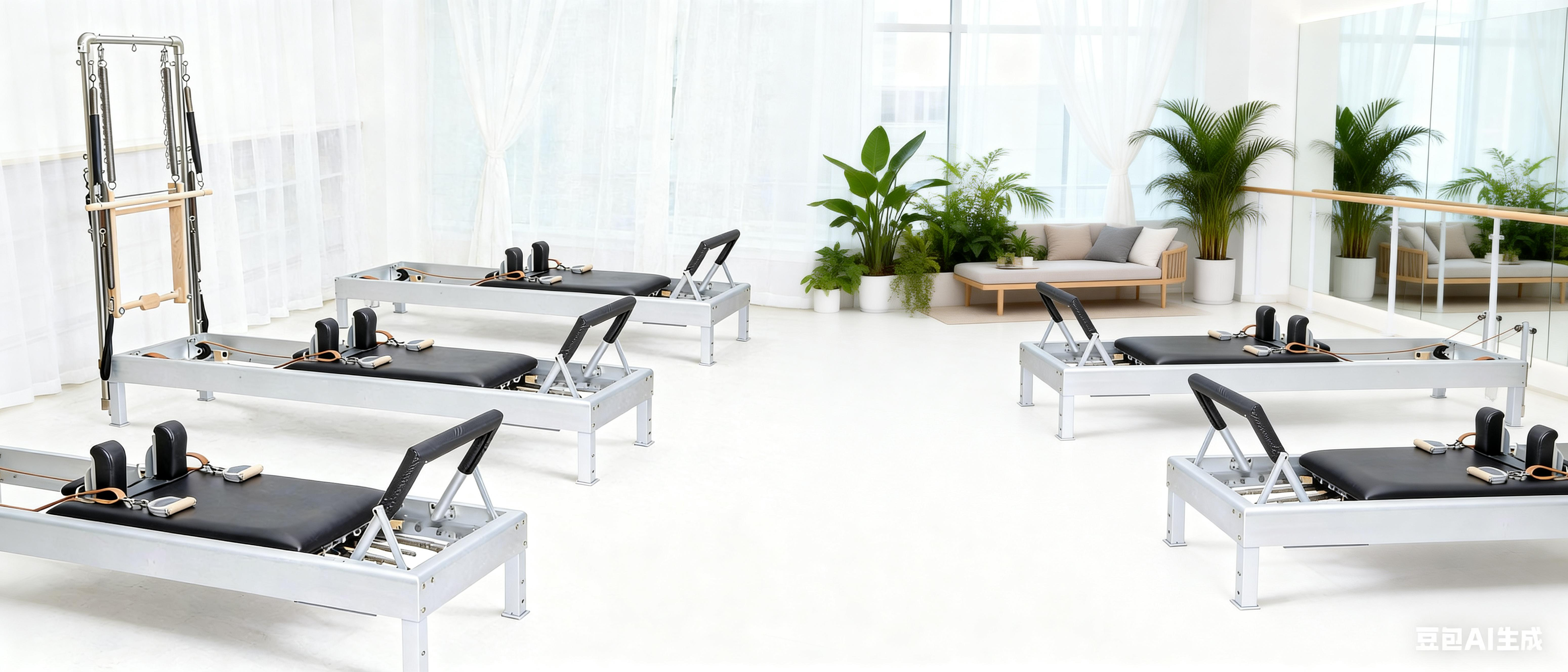
Durable Pilates Machines That Stand Up To Heavy Studio Usage

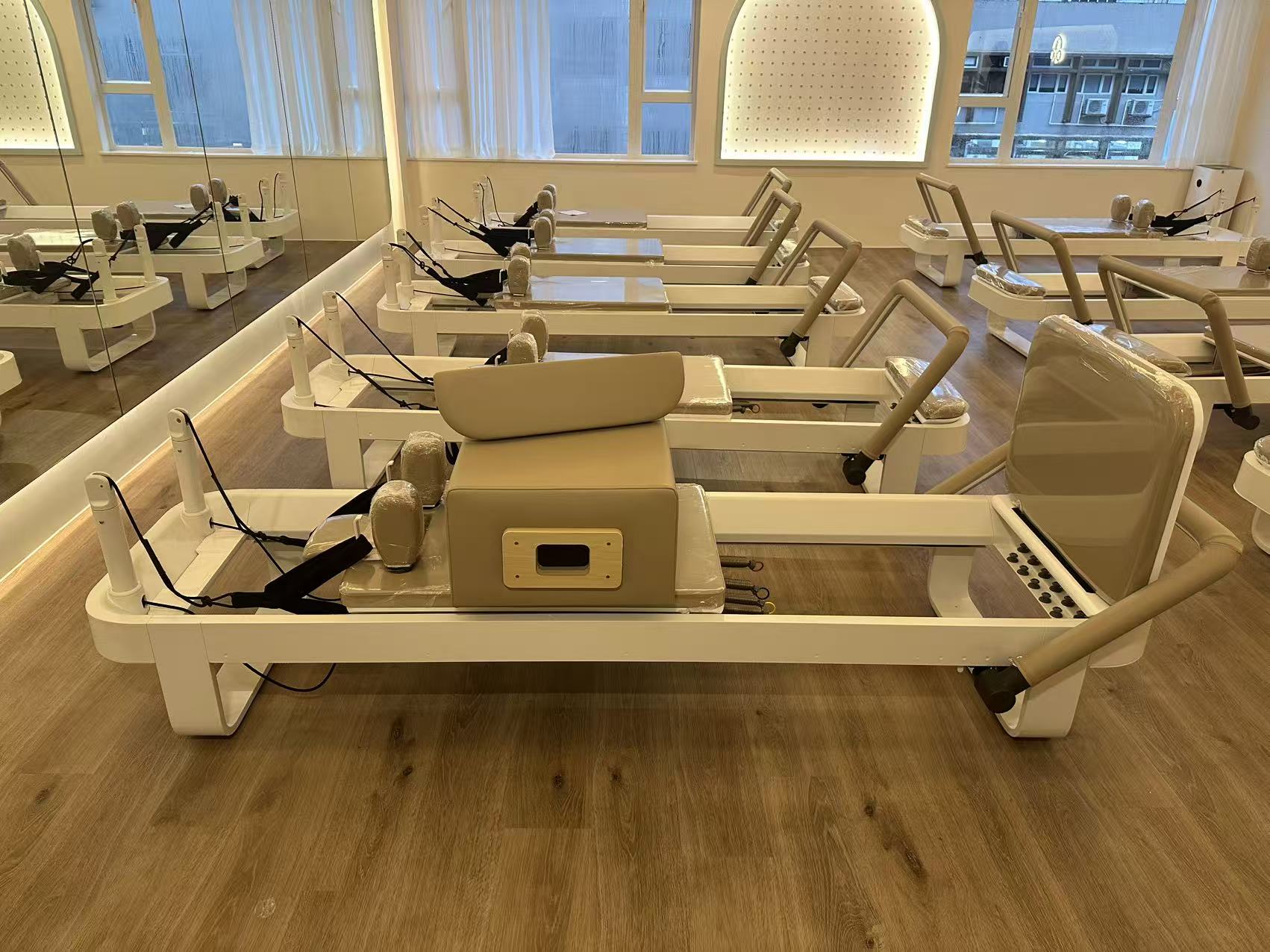
In commercial Pilates studios, equipment faces usage intensity far beyond home settings — 8 to 12 hours of continuous operation daily, repeated use by clients of all body types, and frequent spring changes and adjustments. In this environment, durability isn't a "bonus feature" — it's the baseline for survival.
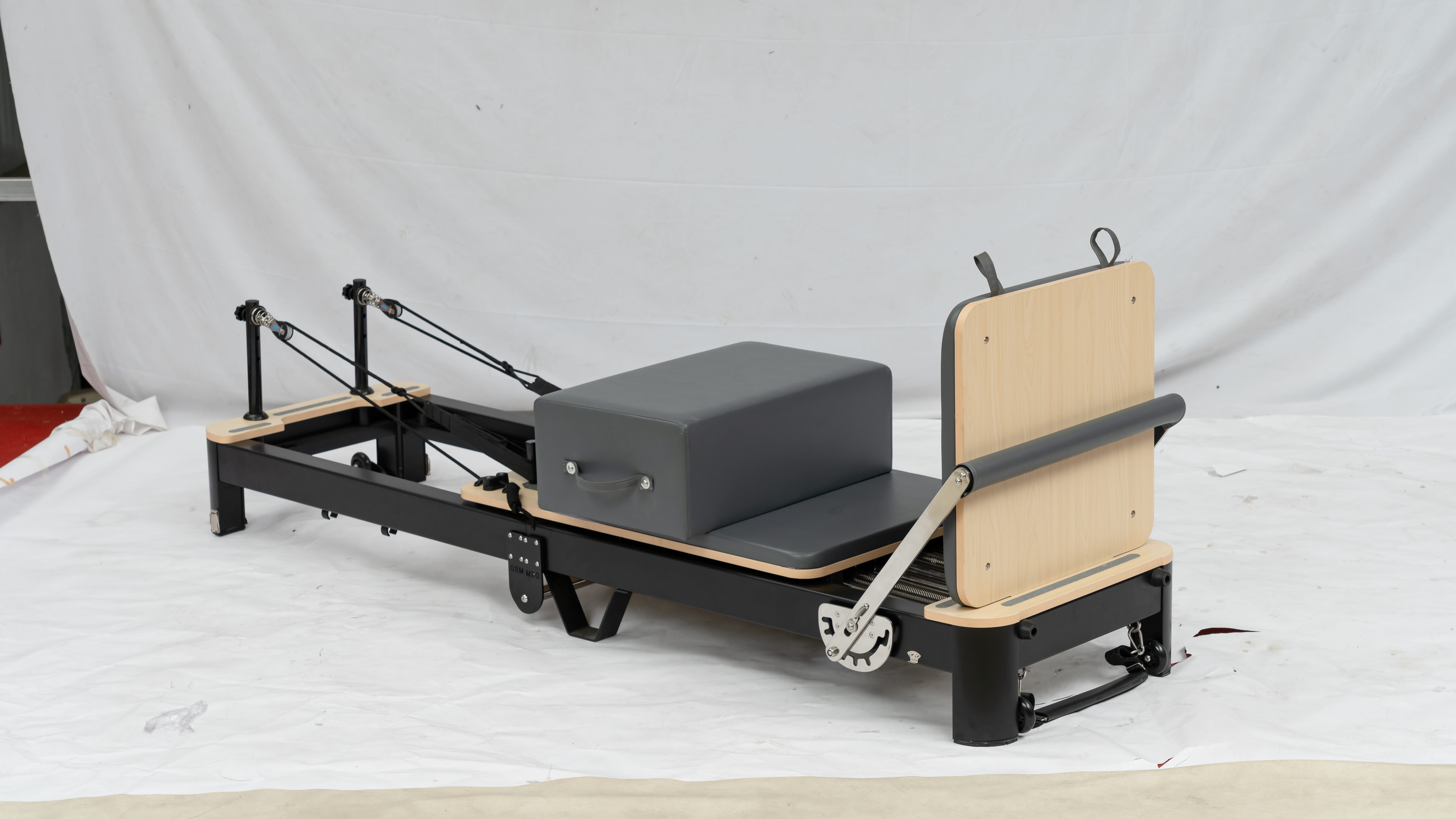
A Pilates machine that stands up to heavy usage must meet commercial-grade standards across four dimensions: frame structure, spring system, carriage components, and upholstery materials. This article examines the core characteristics and selection criteria for durable equipment.
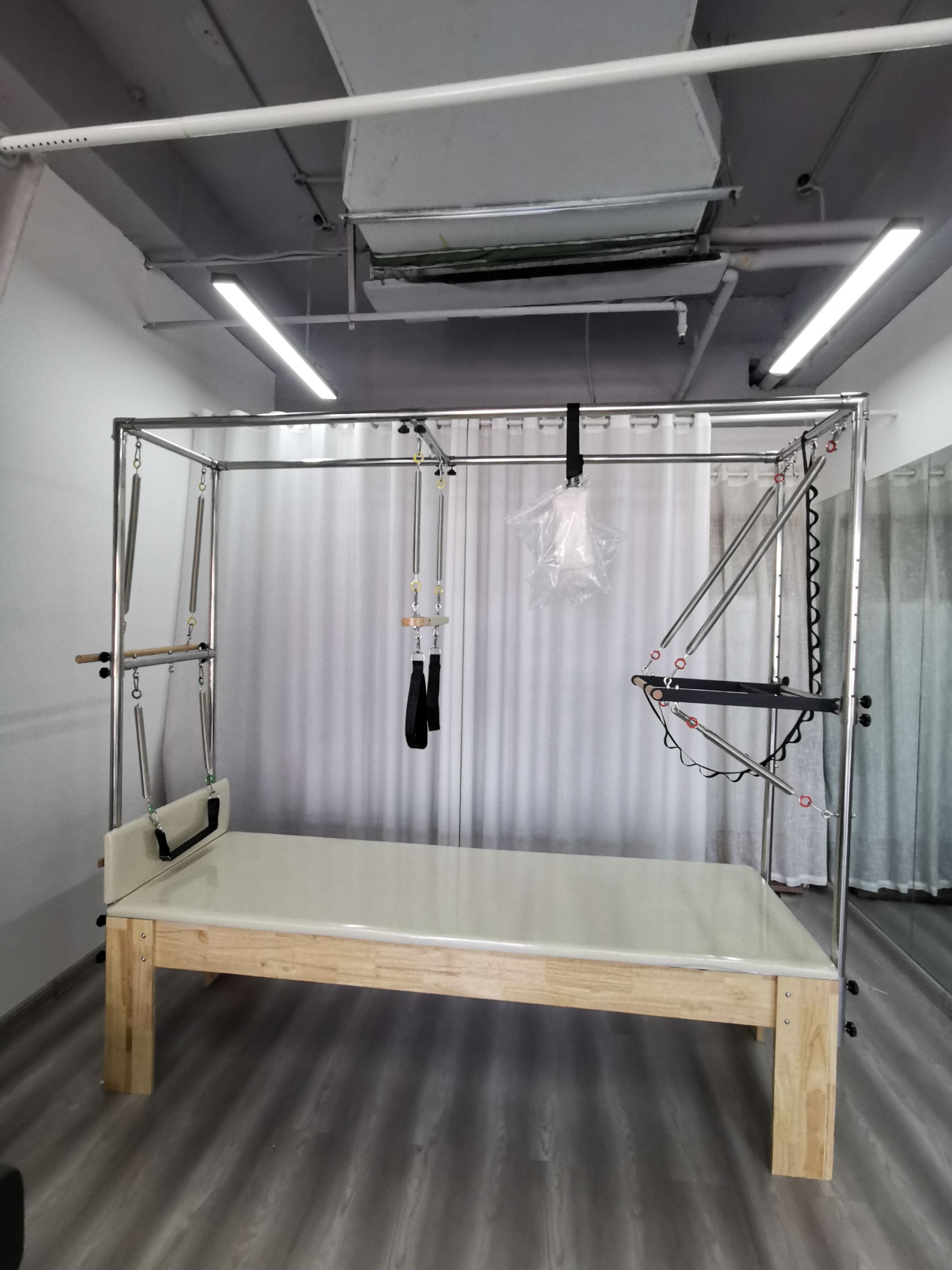
I. Frame: The "Skeleton" Withstanding Hundreds of Daily Impacts
The frame is the foundation of durability. In commercial settings, a reformer may endure dozens of clients, hundreds of gliding movements, and repeated lateral forces daily. An insufficiently robust frame develops elastic deformation, weld cracking, or overall wobbling within months.
Core characteristics of durable frames:
Material thickness and strength. Commercial-grade reformer steel thickness is typically no less than 2mm, with aluminum frames using 6061-T6 aviation-grade material. Load capacity should reach 150kg (330 lbs) or more, with some premium models exceeding 200kg.
Weld quality. Welds should be uniform and smooth with continuous fish-scale patterns — no porosity, cracks, or cold shuts. Critical load-bearing welds undergo non-destructive testing (magnetic particle or ultrasonic inspection). Premium factories use robotic welding or experienced hand welders for consistency.
Surface treatment. Commercial frames undergo phosphating, electrophoretic coating, and powder coating — three-layer treatment with coating thickness typically controlled at 60-80 microns, verified through cross-cut adhesion testing and salt spray testing for corrosion resistance. This is particularly important in high-humidity studio environments.
Solid wood frames use mortise-and-tenon joinery or precision assembly, with moisture content strictly controlled below 8%, protected by multi-layer coating, maintaining dimensional stability through temperature and humidity changes.
II. Springs: The High-Frequency "Consumable"
Springs are the most frequently replaced component in Pilates equipment — and where durability differences are most pronounced.
Core characteristics of durable springs:
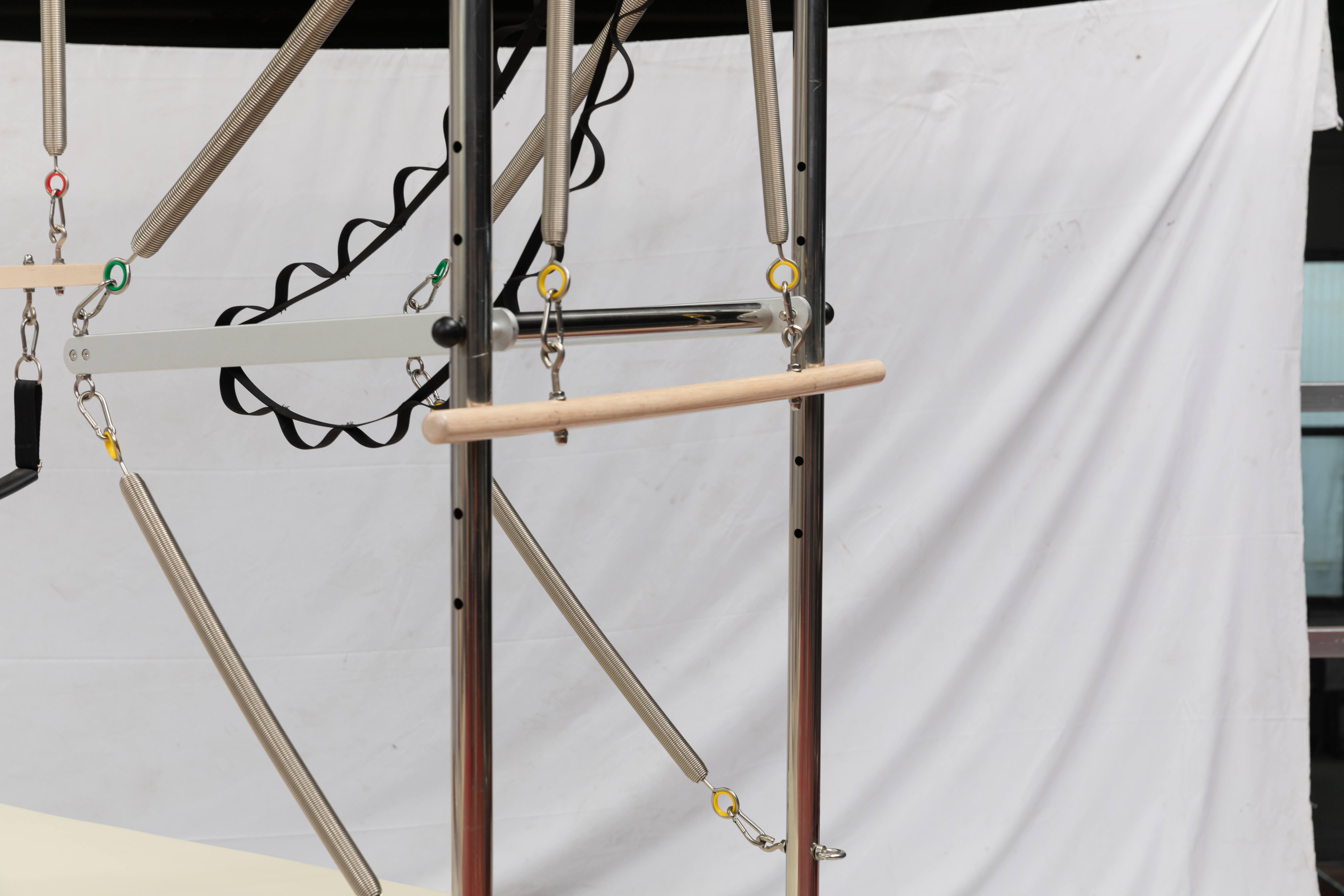
Material grade. Quality springs use German or Japanese imported piano wire (high-carbon steel, 0.7-1.0% carbon content) for high tensile strength and consistent elastic modulus. Standard carbon steel springs may last only one-third as long under the same usage intensity.
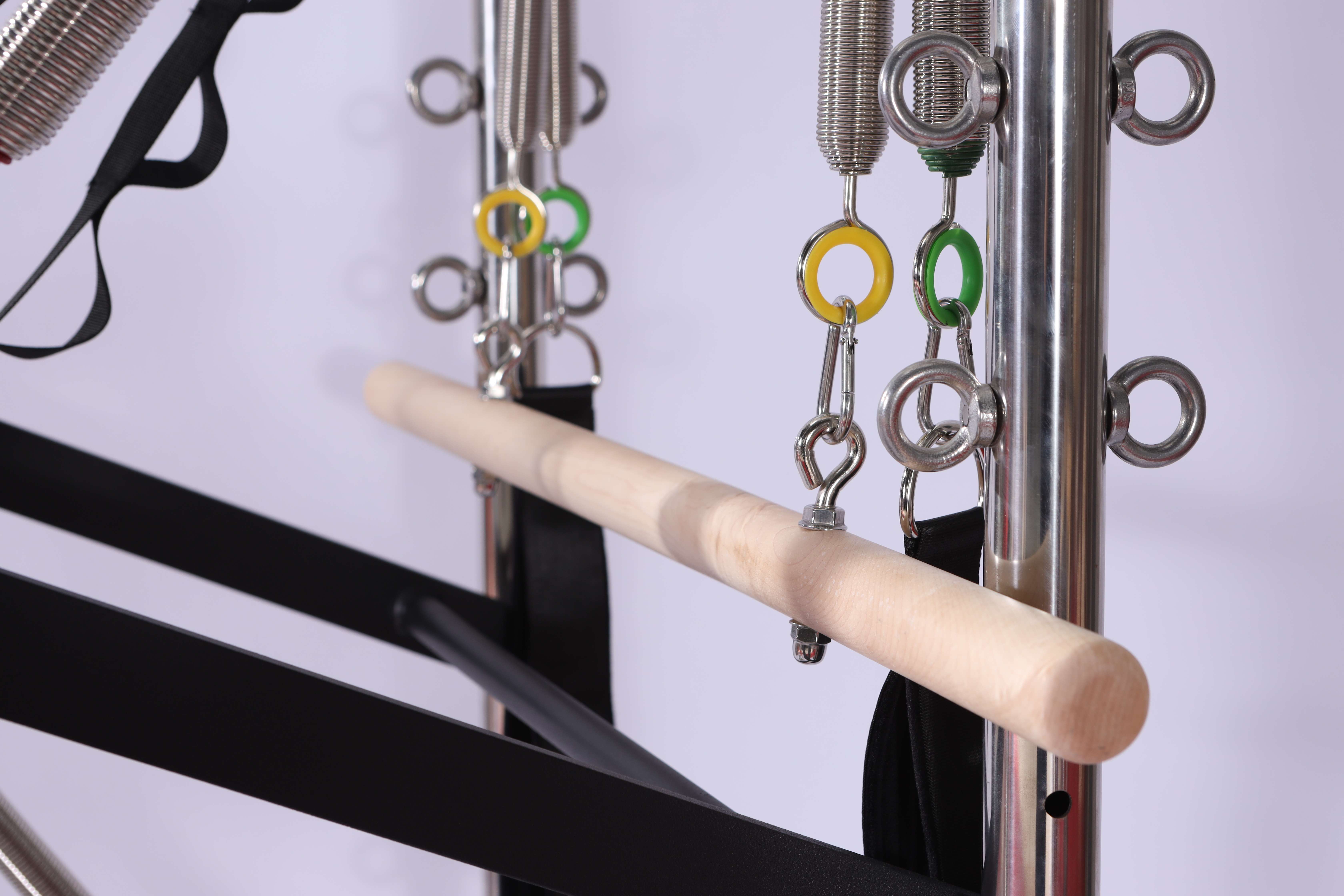
Heat treatment. Springs undergo rigorous heat treatment to eliminate residual stress, with reinforced hooks to address stress concentration. Inadequately heat-treated springs show tension loss or breakage under high-frequency use.
Force consistency. Commercial-grade spring force tolerance is controlled within ±5% to ±8%, with minimal feel variation between same-spec springs on the same machine. This ensures consistent training experience across different clients and classes.
Replacement cycle. In commercial environments, springs should be replaced every two years; high-frequency equipment may need more frequent replacement. Premium brands offer full spring set replacement services for force consistency.
III. Carriage System: The "Joints" Completing Hundreds of Daily Glides
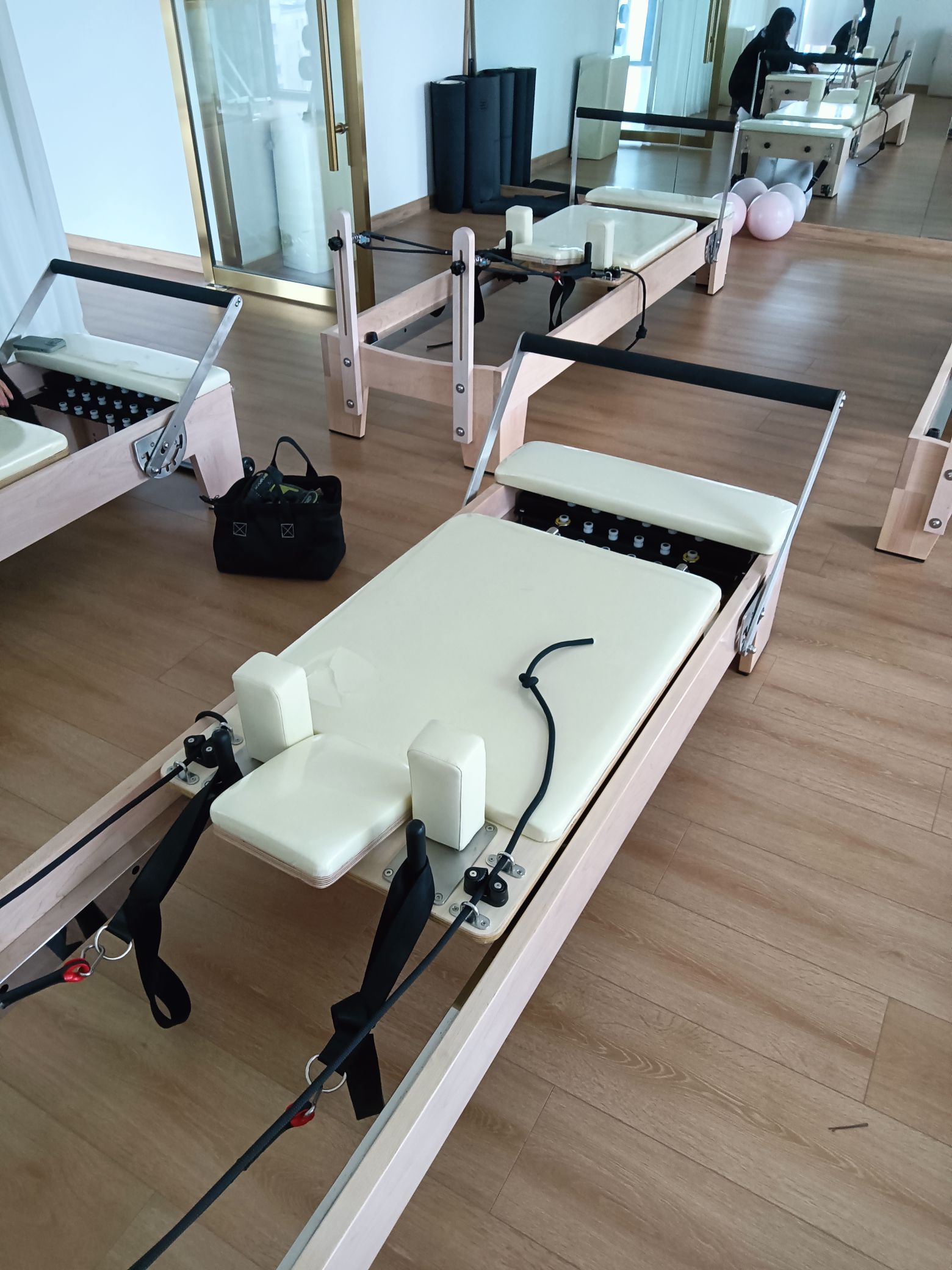
The carriage system is the most active component. In commercial settings, the carriage may complete hundreds of round trips daily, with wheel wear far outpacing home use.
Core characteristics of durable carriage systems:
Wheel material. Durable equipment uses POM (engineering plastic) or sealed-bearing silent wheels. POM is self-lubricating, wear-resistant, and quiet. Sealed bearings prevent dust ingress and extend lifespan.
Rail precision. Aluminum rails undergo extrusion, cutting, drilling, and anodizing. Rail straightness and parallelism tolerances are controlled within extremely tight ranges — excessive clearance causes wobble, insufficient clearance increases resistance or noise.
Carriage structure. 8-wheel carriage systems (4 per side) are more stable than 4-wheel systems, distributing load and reducing individual wheel wear. Four wheel mounting holes require precision drilling for parallel alignment and straight tracking.
Noise control. Commercial-grade reformers should operate below 50 dB under full load. This is especially important in high-frequency studio environments — any abnormal noise is amplified in a room with 8 to 12 reformers running simultaneously.
IV. Upholstery: The "Façade" Wiped and Disinfected Daily
In commercial settings, upholstery requires multiple wipe-downs and disinfection daily, enduring sweat, cleaners, and frequent friction. Durable upholstery material standards far exceed home products.
Core characteristics of durable upholstery:
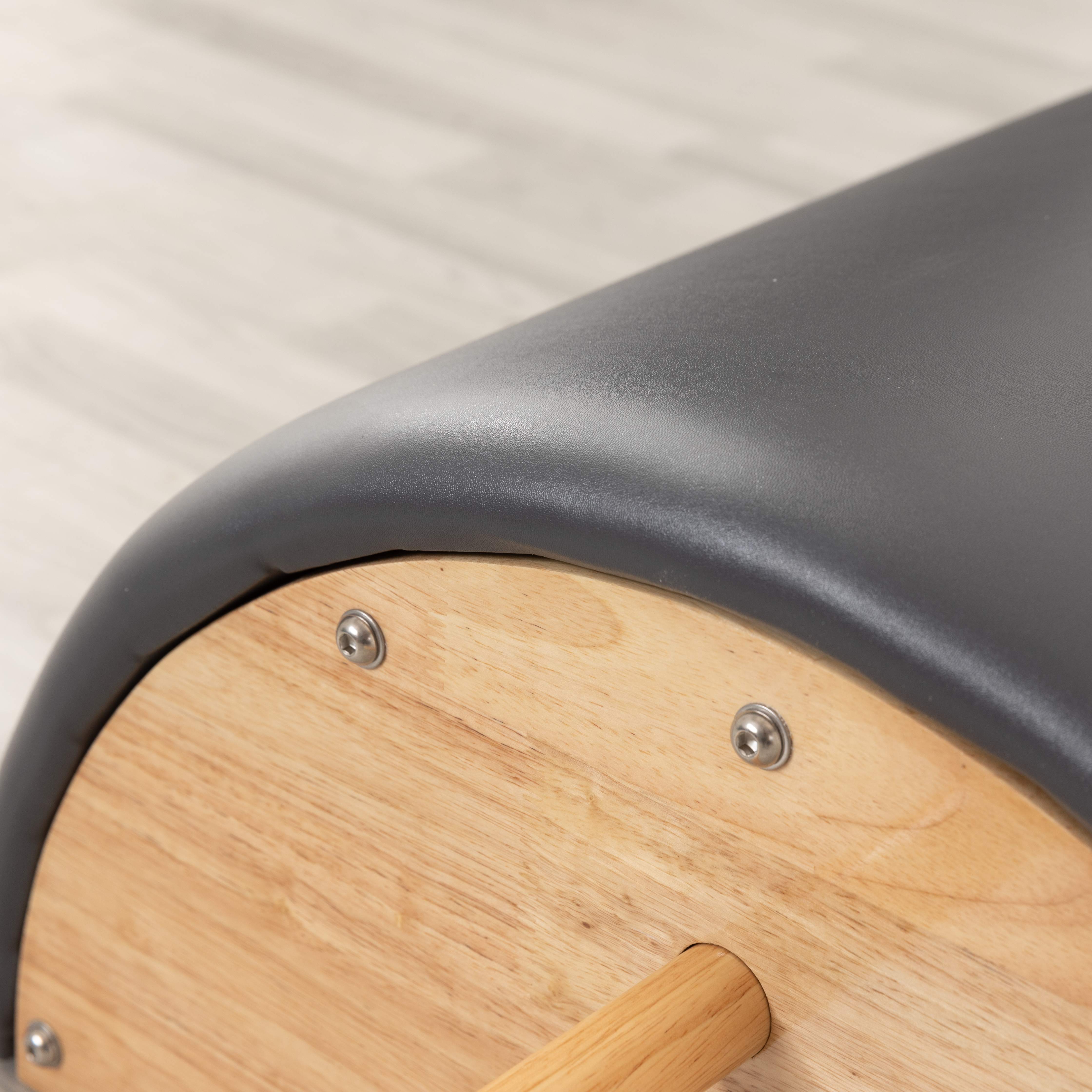
Leather abrasion grade. Commercial-grade leather must pass Martindale abrasion testing, requiring over 50,000 cycles (some premium brands exceed 100,000). PU leather offers sweat resistance, easy cleaning, and anti-aging properties.
Foam density. Commercial-grade foam density is no less than 45kg/m³. High-density foam maintains good rebound after years of use without collapsing. Low-density foam develops permanent compression within months.
Stitching craftsmanship. Critical stress seams require double-stitching with uniform, even stitch lines. Single stitching tears easily under high-frequency use.
Antimicrobial treatment. Some commercial-grade leathers undergo antimicrobial treatment to inhibit bacterial growth — ideal for high-frequency multi-user environments.
V. Other Considerations for Heavy-Use Environments
Maintainability. Durable equipment should support quick replacement of wear parts — springs, ropes, wheels, feet pads. Modular design enables easier maintenance and reduces downtime.
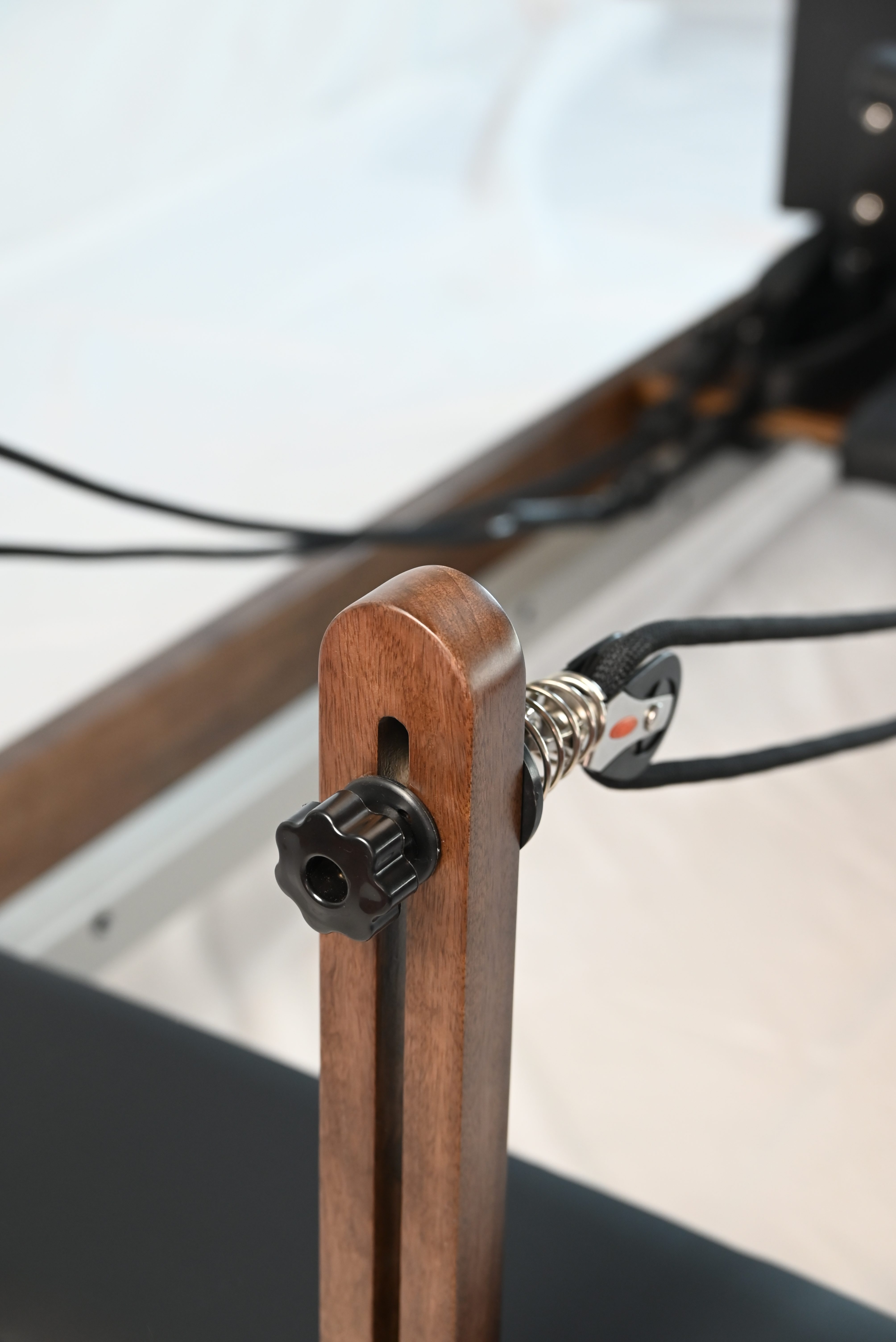
Adjustment mechanism durability. Footbar, headrest, and shoulder rest adjustment mechanisms must maintain smooth locking under high-frequency use. Quality equipment uses metal locking mechanisms rather than plastic parts, ensuring reliability after tens of thousands of adjustments.
Parts availability. Choose brands with adequate parts supply and fast response times to avoid extended downtime waiting for components.
Warranty terms. Commercial equipment frame warranties typically range from 5 to 10 years, with moving parts covered for approximately 2 years. Warranty scope should clearly specify coverage periods for frame, springs, wheels, and upholstery separately.
VI. Selection Recommendations
For commercial studios with 8+ hours of daily use, prioritize the following configuration:
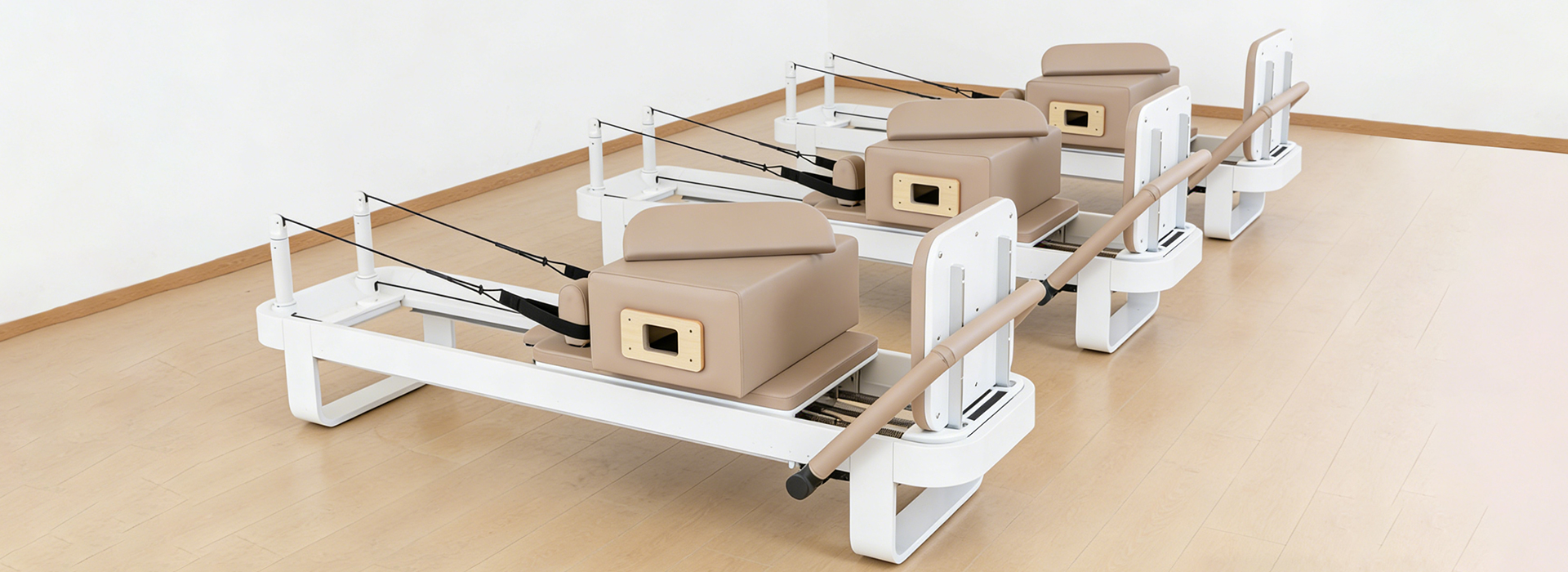
Reformers: 8 to 12 commercial-grade reformers with 150kg+ load capacity, spring force tolerance within ±5%, and 100cm+ carriage travel. Prioritize models with replaceable springs and refurbishable upholstery.
Brand references: International brands like Balanced Body and Merrithew are known for durability and extended warranties; some emerging brands also offer competitive commercial-grade products. Physical testing is recommended — focus on glide smoothness, noise levels, and adjustment convenience.
Maintenance plan: Establish a maintenance schedule of weekly checks, monthly lubrication, quarterly deep care, and annual wear part replacement to minimize downtime risk.
Summary: Pilates machines that stand up to heavy usage share four core qualities: frames solid enough, springs durable enough, carriages precise enough, and upholstery wear-resistant enough. When purchasing, don't focus solely on price — evaluate total lifecycle cost. A machine lasting over a decade has a far lower annual cost than a cheap product needing replacement every three years. For commercial studios, equipment durability directly determines class experience consistency, client retention, and operational efficiency. Choosing the right equipment lays the hardware foundation for your studio's long-term success.