Durability Matters: Key Factors To Judge Pilates Machine Quality
When shopping for Pilates equipment, appearance and initial feel often draw attention first. But what truly determines whether a machine will stand the test of time is durability. Whether for home use or a commercial studio, a high-quality Reformer should remain smooth, quiet, and structurally stable after thousands of sessions. The following core dimensions explain how to assess the durable quality of Pilates equipment.
Frame Material and Structural Integrity
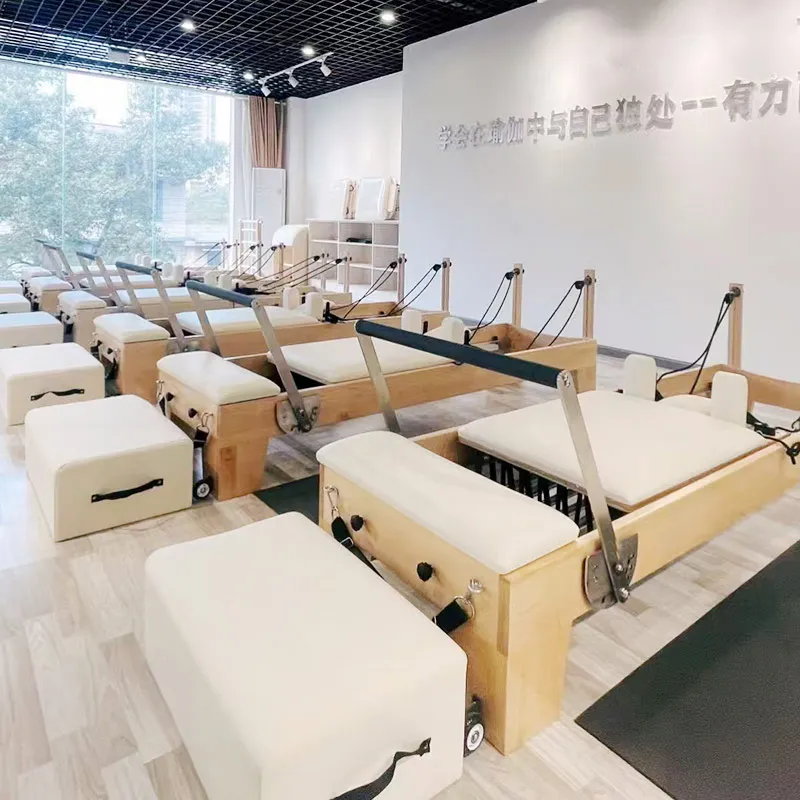
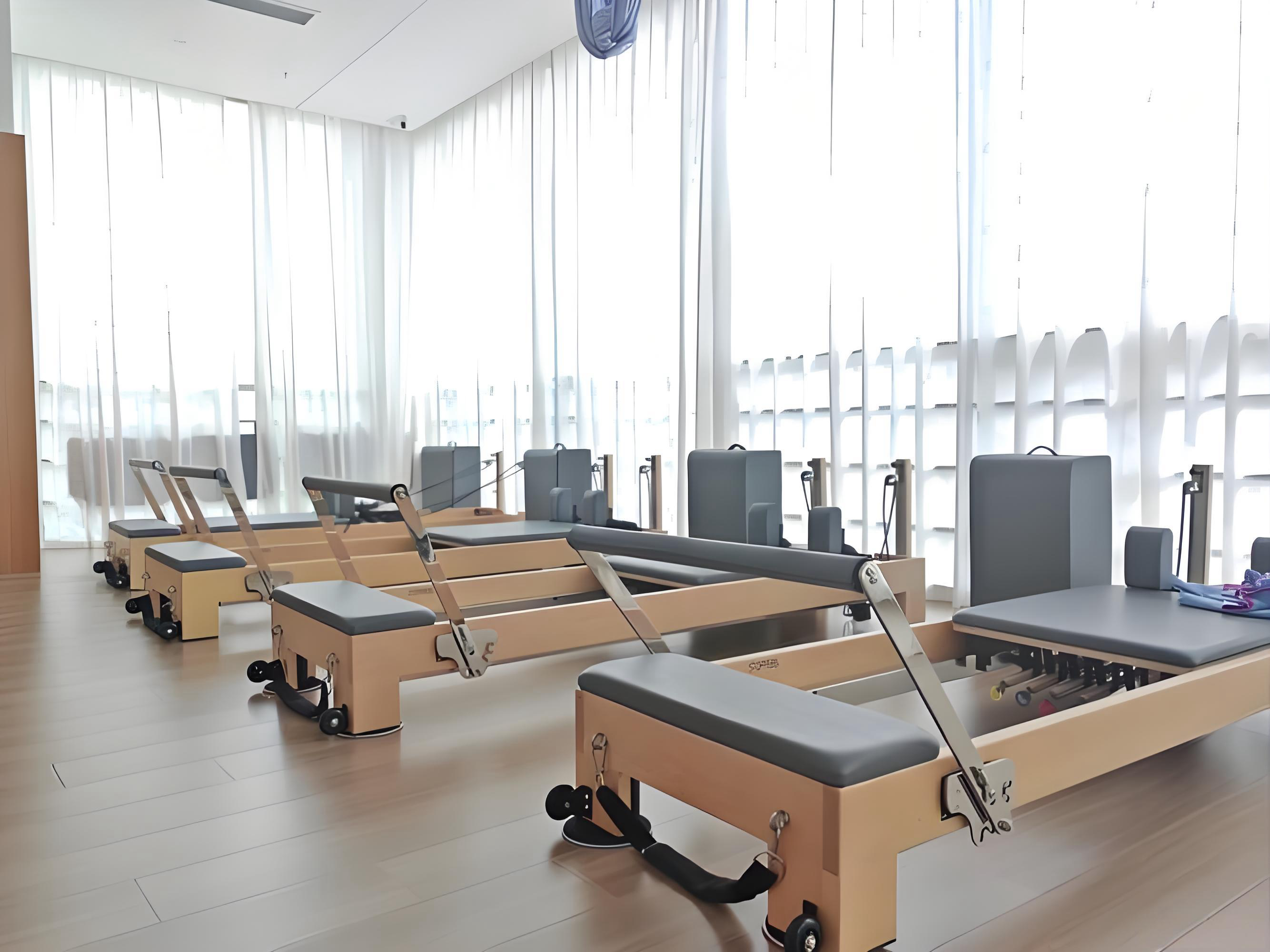
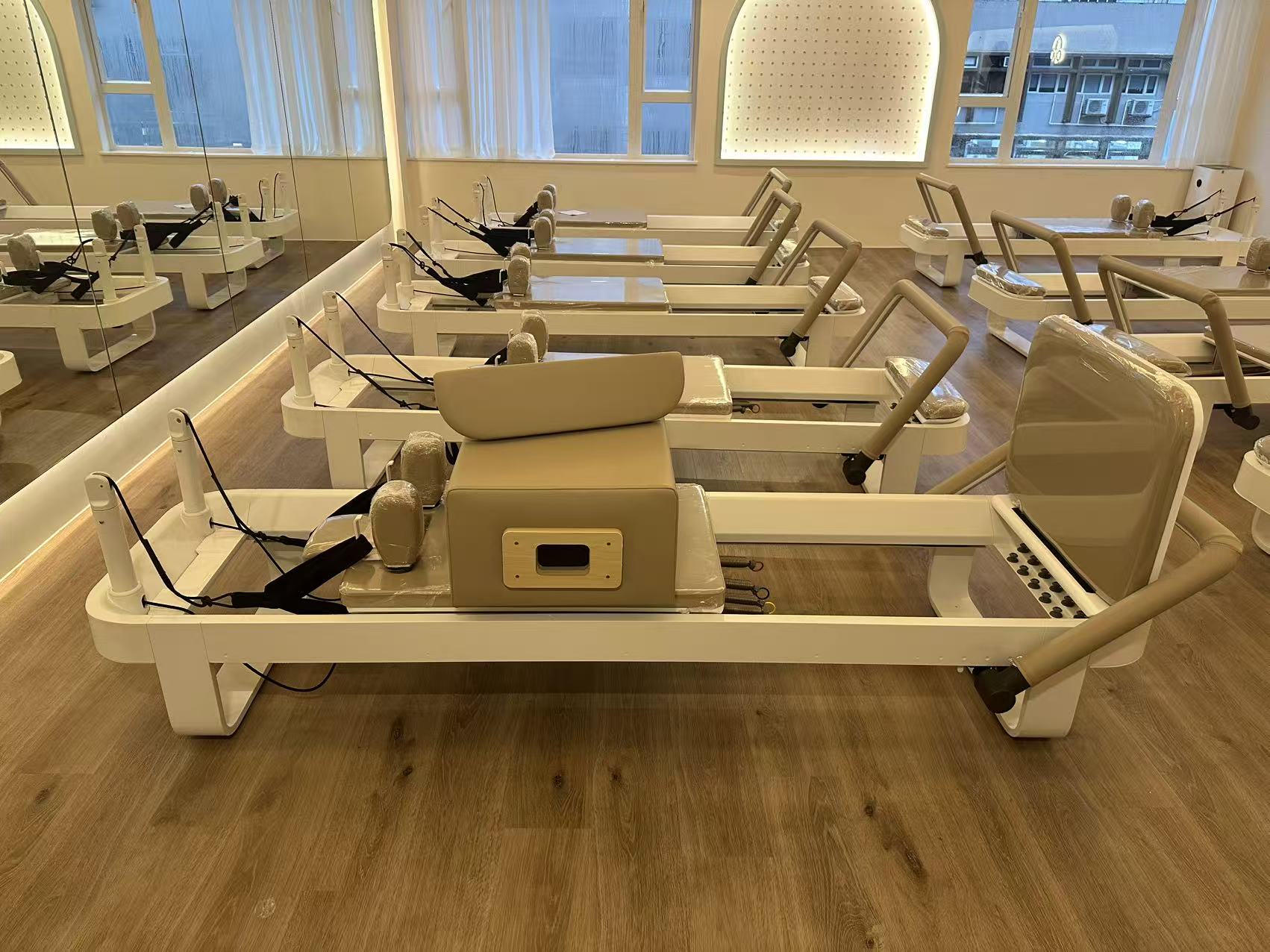
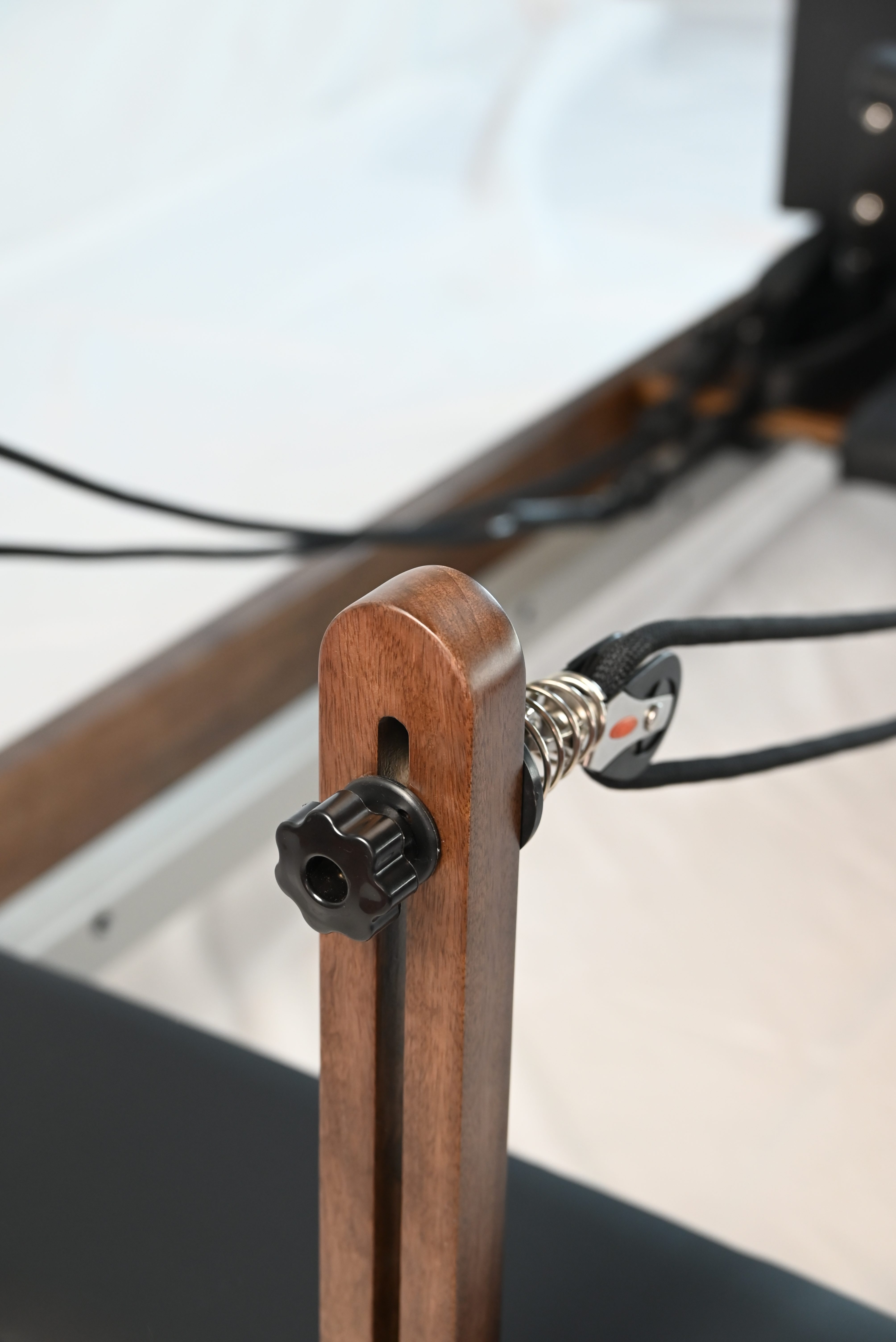
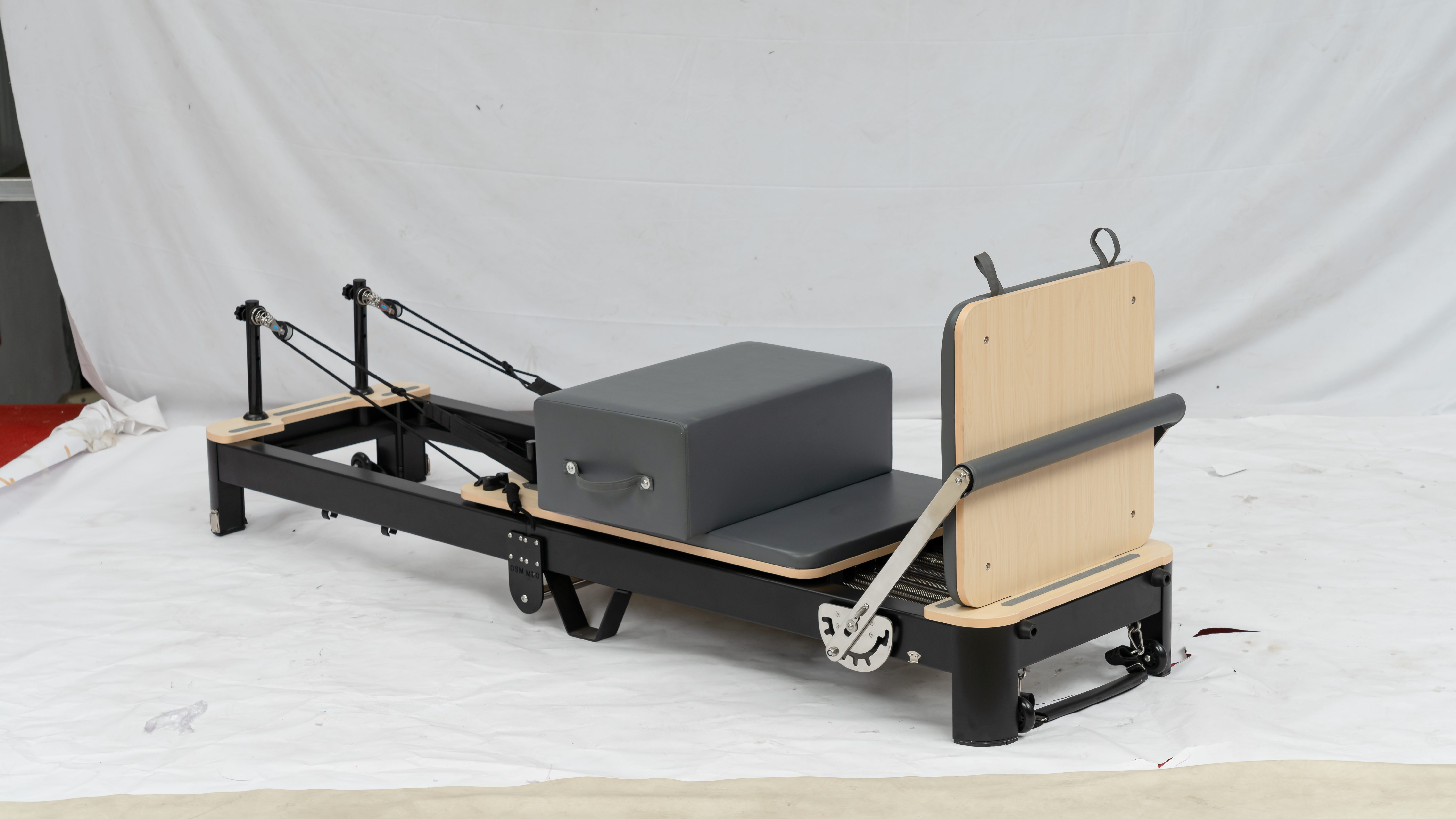
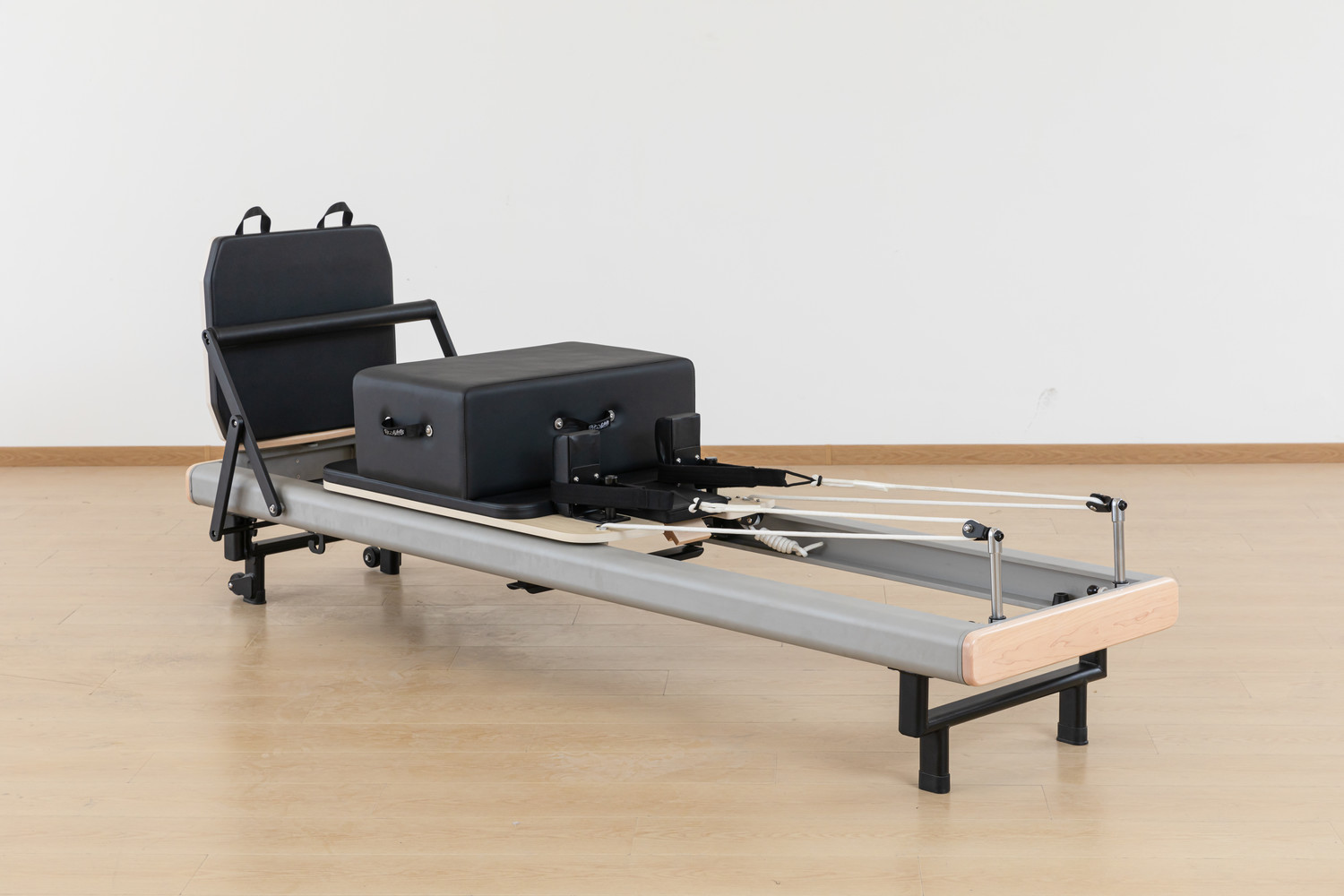
The frame is the skeleton of the machine and directly determines its lifespan. High-end commercial equipment is typically built from hardwoods such as maple or from extruded aluminum. Maple offers high density and strong resistance to deformation, while aluminum frames combine light weight with high strength and will not crack due to humidity changes. Be wary of cheap products that pass rubberwood off as oak; such wood lacks sufficient hardness and is prone to warping or developing noises under sustained load. Welding and connection methods are equally critical. One-piece or precision-welded side rails eliminate crevices that trap dirt and provide a more precise ride.
Precision of Tracks and Glide System
The smoothness and quietness of the carriage are intuitive indicators of durability. Commercial-grade machines typically use stainless steel or aluminum tracks paired with sealed bearing systems. Budget products often use thin-walled tracks or plastic wheels; they may feel acceptable at first, but under frequent use, track seams can crack and wheels develop noise and uneven resistance due to wear. When inspecting, pay attention to track wall thickness—steel tubing below 1.5 mm carries a risk of cracking under sustained lateral load. Another easily overlooked detail is wheel material: high-elasticity polyurethane-coated wheels absorb vibration better than standard plastic wheels and last longer.
Spring Quality and Consistency
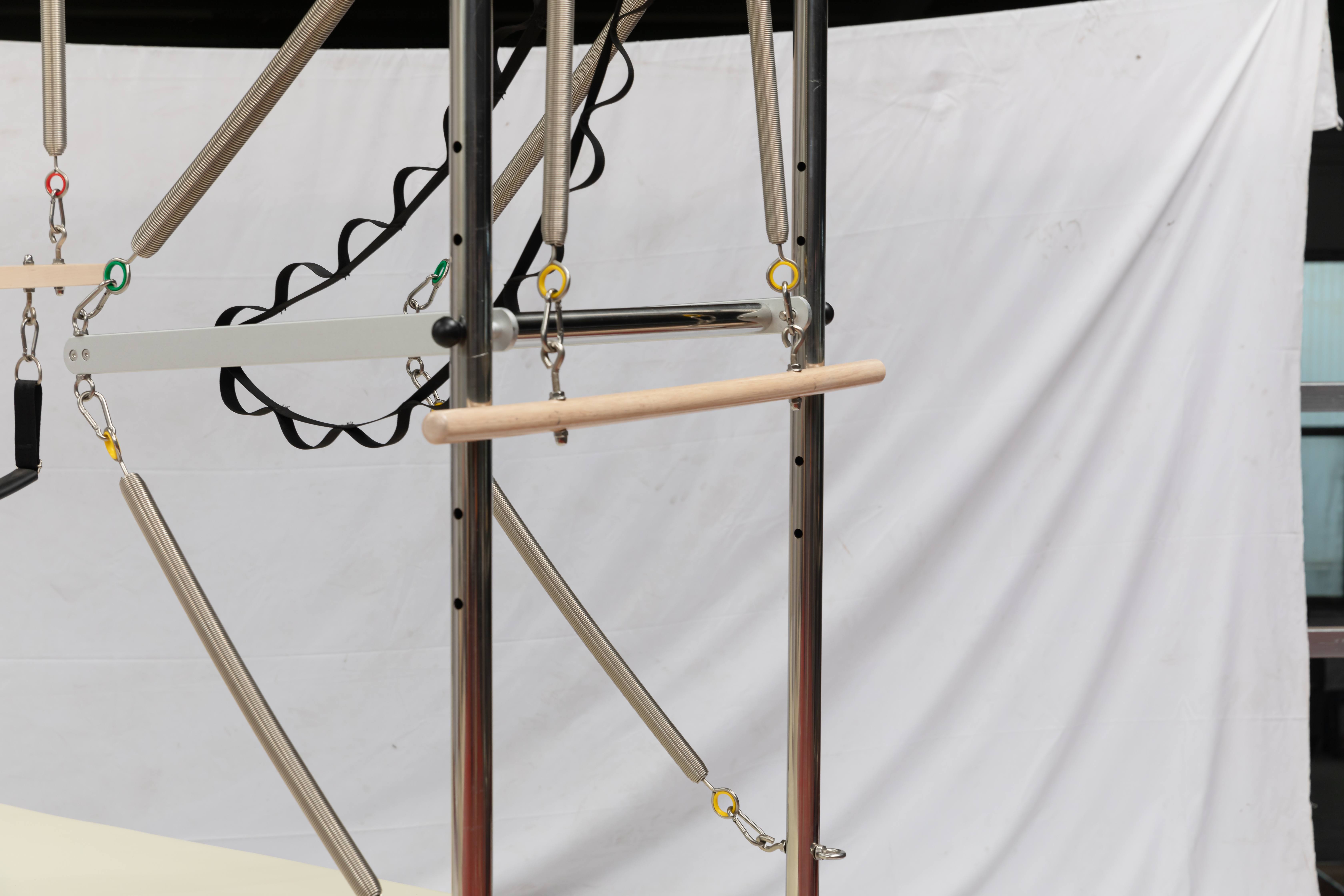
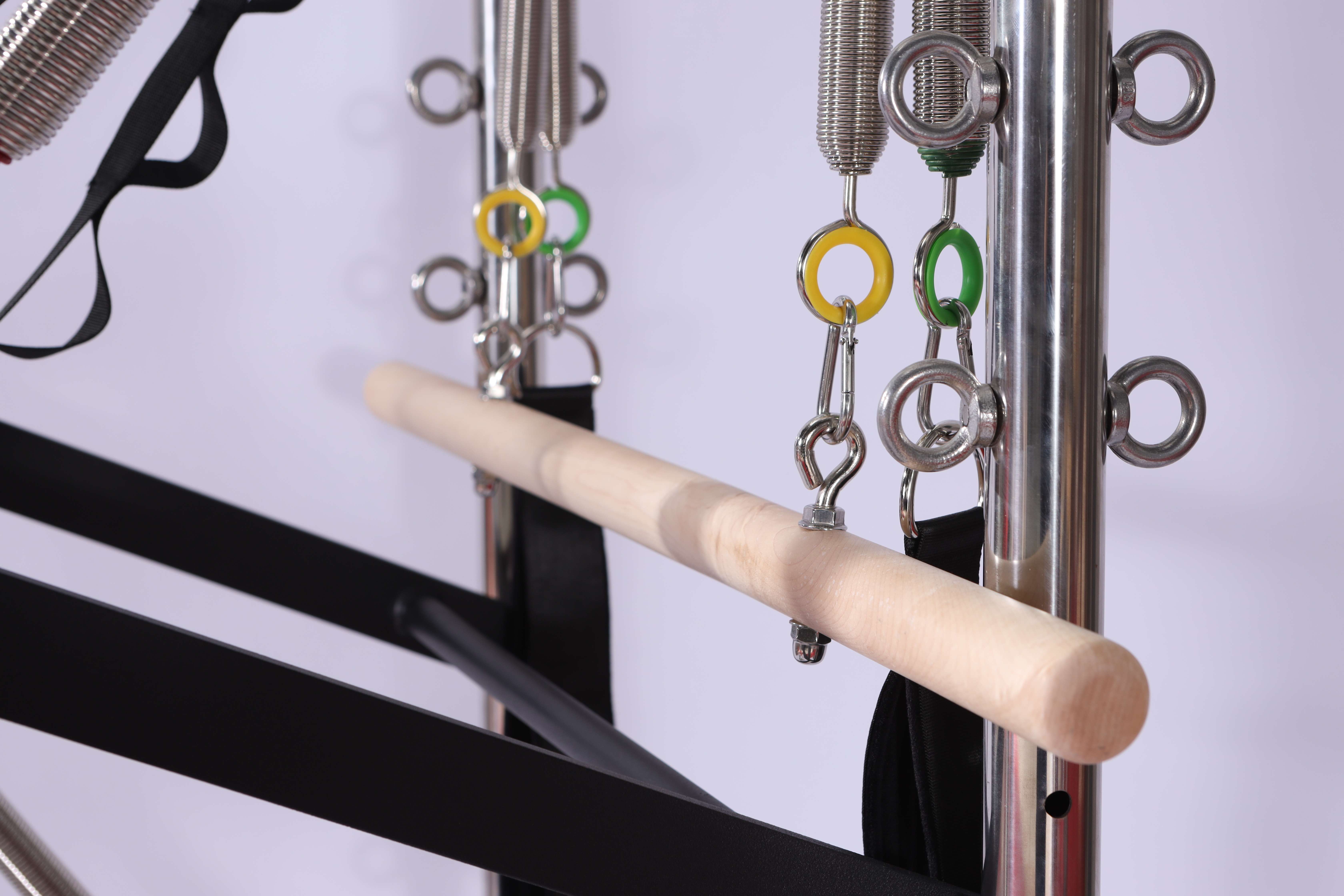
Springs are the core source of resistance and a wear item. High-quality springs are pre-stretched, providing smooth recoil and a stable resistance curve without developing the “dead spring” effect—noticeable softening of resistance—after extended use. For studios, resistance consistency across multiple units is especially important: if every machine offers different resistance at the same spring setting, instructors cannot cue the room with a single instruction. Additionally, enclosed spring designs (such as spring covers or enclosed spring housing) are not only a safety matter but also reduce dust and sweat corrosion, extending spring life.
Upholstery and Leather Wear Resistance
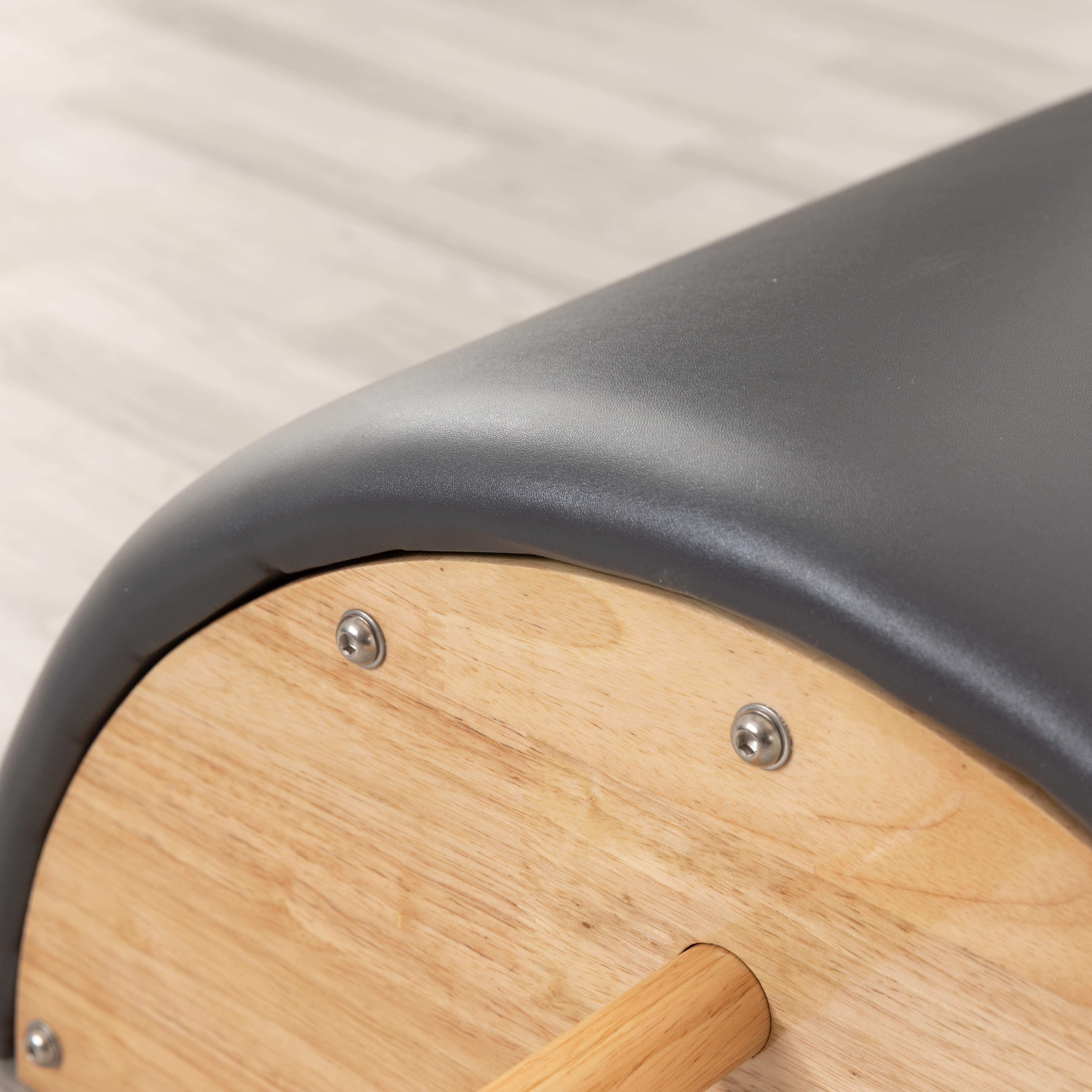
The carriage upholstery and shoulder supports are in direct contact with users, and their wear resistance directly affects experience and replacement costs. Two common materials are PU leather and microfiber leather. PU leather looks close to genuine leather but has moderate abrasion resistance; sharp objects can leave marks or cause tearing. Microfiber leather performs noticeably better in abrasion and scratch resistance, resisting cracking and peeling over extended use. Foam density inside the padding matters equally. High-density foam rebounds better after repeated compression and will not collapse or deform within months. Some brands use proprietary high-density resilient foam specifically to maintain support through frequent use.
What Warranty Terms Reveal About Quality Confidence
Warranty policy is a manufacturer’s public commitment to durability, and its coverage and duration deserve careful reading. Professional-grade equipment often carries a limited lifetime warranty on the frame, while wear items (ropes, pulleys, springs, upholstery) have separate warranty periods. Pay particular attention to whether the warranty covers commercial use: some brands’ home models become void if used in a studio or gym. For studio purchases, confirming in writing that the warranty explicitly covers commercial operation is essential; otherwise, “durability” lacks institutional backing.
Taken together, judging the durability of Pilates equipment is not about any single specification but a systematic consideration spanning frame, tracks, springs, and upholstery. A genuinely durable machine will, after years of frequent use, leave users unable to detect signs of “aging”—the glide remains quiet, the springs remain precise, and the structure remains solid. That long-term reliability deserves far more priority than initial price or appearance.