How to Validate Pilates Equipment Factory Sample Build Quality Before Signing Long-Term Distribution Contracts
For Pilates distributors, signing a multi-year supply contract locks in your brand reputation, aftersales workload, and profit margin for years. A beautiful quotation, fast email replies, and polished factory photos are not enough. The factory sample is your most important quality benchmark before you commit to long-term cooperation. Many new distributors have learned this lesson the hard way: the approved sample arrives perfect, but mass-produced units suffer uneven welds, squeaky carriage rails, inconsistent spring tension, or low-grade upholstery that fails quickly in busy studios.
This guide walks regional Pilates equipment distributors through a structured, repeatable validation workflow to test sample build quality, lock clear standards, and reduce costly surprises after your distribution agreement is signed.
Start with a Frozen Technical Specification Pack
Before your sample leaves the factory, confirm and freeze a full tech pack. This document becomes the legal reference for every future batch. Without it, the factory can quietly swap raw materials, downgrade component grades, or adjust tolerances without notification.
Your tech pack should include:
- Exact frame material: aluminum alloy grade or hardwood species, wall thickness, welding standard and surface coating requirement
- Upholstery specification: PU or vinyl grade, abrasion resistance rating, foam density, Pantone color code and stitching standard
- Component datasheets: spring tension curve, spring wire diameter, pulley bearing type, rope breaking load, wheel material and noise rating
- Dimensional drawings, weight tolerance, assembly sequence, and packaging requirements
- Compliance files relevant to your target market: EN 957 safety standard, CE Declaration of Conformity, test reports, warning labels and user manual templates
Share this document with the factory and ask them to sign it alongside the sample. Mark this unit as your golden sample. State clearly that bulk goods must match the golden sample in every measurable detail.
Step 1: Visual and Structural Inspection
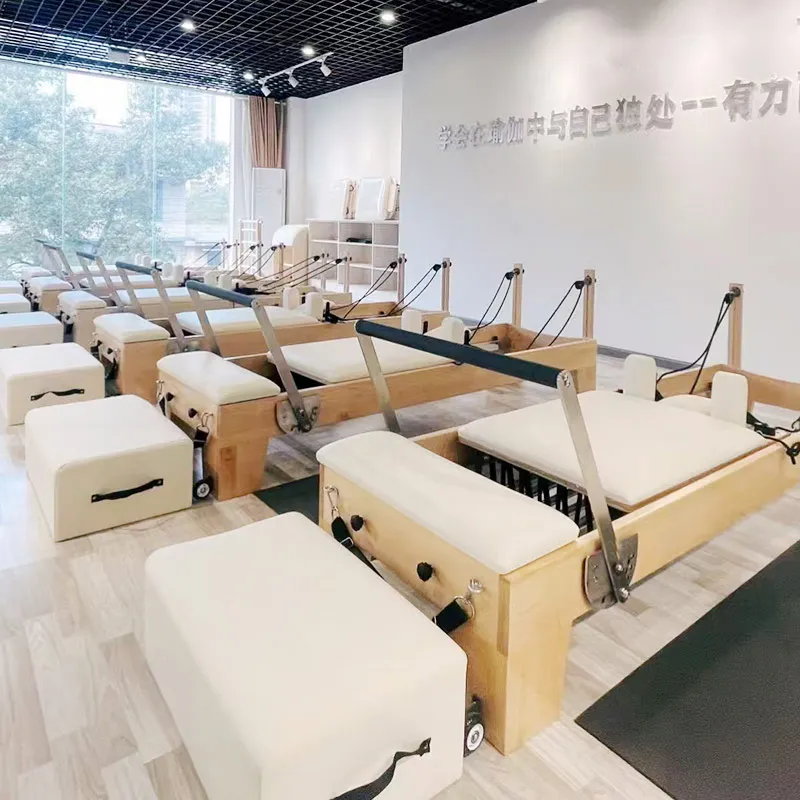
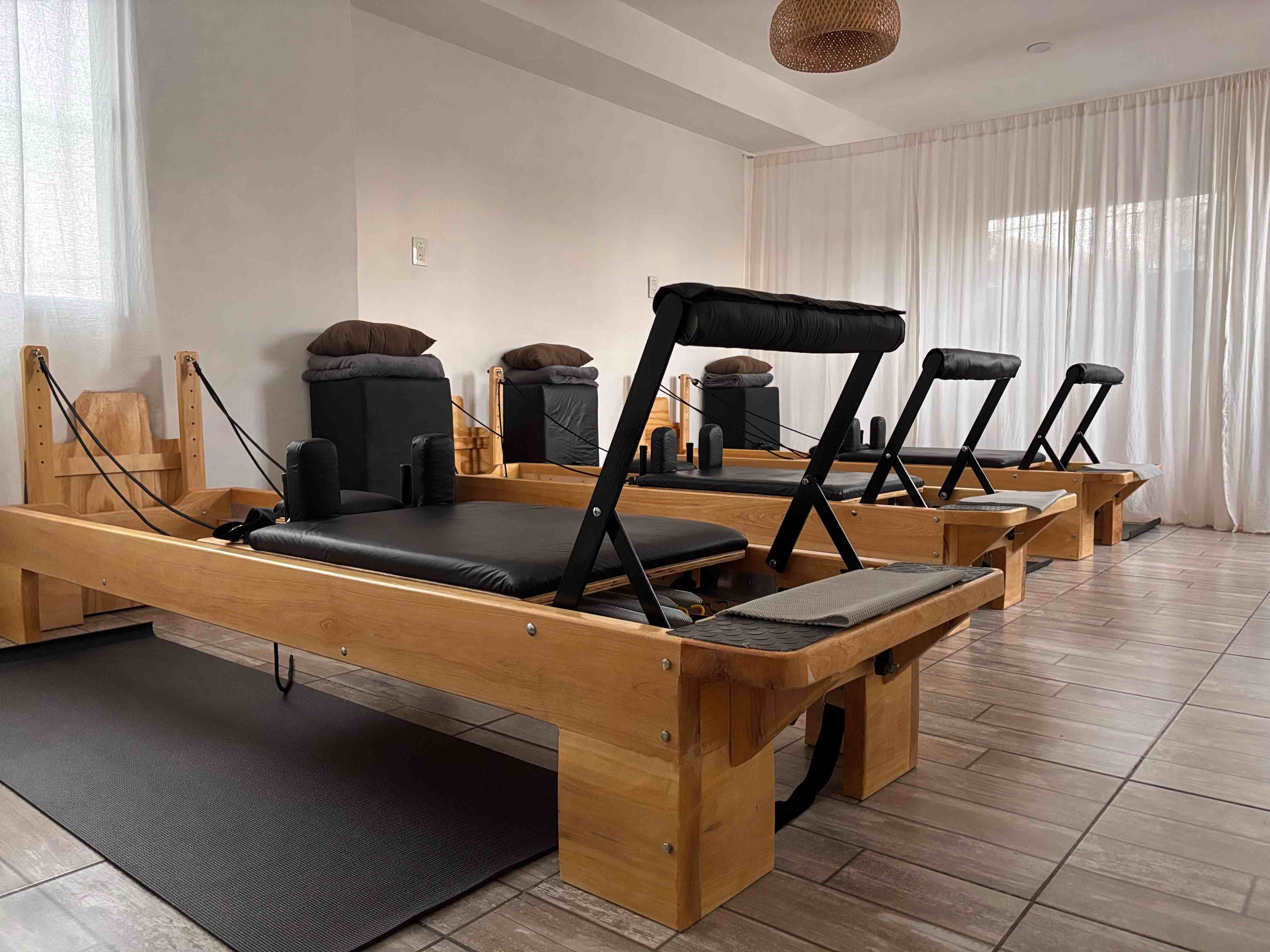
Begin with a full visual inspection in good lighting, checking every joint and finished surface. For reformers, Cadillacs, barrels and Pilates chairs, look for hidden defects that impact durability:
- Frame joints: clean, continuous welds with no pinholes, cracks or sharp burrs. Wooden frames must have consistent finishing, no exposed grain, glue overflow or loose connections.
- Coating quality: no orange peel, uneven paint, scratches or peeling. Run a gentle scratch test on non-critical areas to assess chip resistance.
- Upholstery: straight, uniform stitching, no loose threads, consistent padding density, no hard spots or wrinkles. Seams at corners are common failure points for high-use studio equipment.
- Fasteners: all bolts, locking knobs and adjustment handles fit tightly, no stripped threads, no missing washers.
Place the sample on a flat floor and rock it lightly. It should not wobble. Any instability in the sample will become a warranty headache once delivered to studio clients.
Step 2: Functional and Wear Simulation Testing
Visual checks only show cosmetic quality. Functional testing reveals how the machine performs under real studio use. Pilates equipment relies on precise moving systems, so test every motion repeatedly.
For reformer carriages:
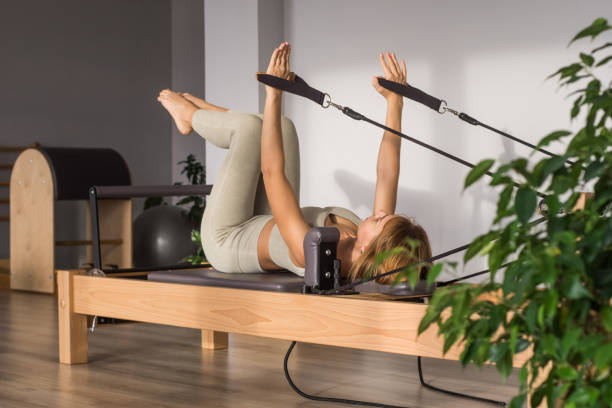
Run the carriage through its full travel range slowly and at normal speed. Feel for catching, friction spikes, lateral wobble or scraping noise. Test with light spring tension and maximum tension. A sample that runs silently with no load may squeak or bind under user weight. Record noise levels if you serve urban studios sensitive to class noise.
For springs, ropes and pulley systems:
Test each spring group for matched tension. Swap springs between positions to confirm consistent resistance. Inspect ropes for fraying, check pulleys spin freely without side play. Lock every adjustment position multiple times to confirm latches hold securely and do not slip under load.
Simulate high-frequency use:
Do not stop after 10 or 20 cycles. Run repeated movement cycles for at least 100–200 repetitions. Watch for fast-wearing parts: wheel bearings, spring clips, upholstery seams and footbar pivots. This accelerated test exposes weak points that only appear after weeks of studio classes.
Add a static load test matching or exceeding the advertised user weight capacity. Hold the load for several minutes and check for frame deflection, permanent bending or shifting alignment. Safety failures create huge liability risk for distributors.
Step 3: Material and Component Traceability Check
One of the most common supplier risks is material substitution after sampling. The factory may fit premium-grade components on the sample, then switch to cheaper alternatives for bulk production.
Ask the manufacturer to provide material certificates for critical parts:
- Metal frame material certificates
- Upholstery abrasion and flame-retardant test reports
- Spring material fatigue test data
- Plastic and rubber component specifications
If you have doubts, arrange third-party lab testing on the sample before contract signing. Keep small cuttings of upholstery, foam and fabric swatches stored with your golden sample. These physical references let you audit incoming batches later.
Step 4: Verify Compliance, Documentation and Aftersample Support
Sample validation is not only about the hardware. As a distributor, you are responsible for selling compliant equipment to local studios. Confirm the factory can supply complete, market-ready documentation for every shipment:
- Valid test reports aligned with fitness equipment safety standards
- Correct, multilingual user manuals and safety labels
- Traceability records for batch production and spare parts availability
This is also the time to test the factory’s aftersales mindset. Ask these questions while evaluating the sample:
- What spare parts are included in the standard aftersales package?
- What is the lead time for replacement springs, wheels, ropes and upholstery covers?
- How will the factory handle hidden quality defects discovered after unpacking?
- Can they accept third-party inspection for each bulk shipment?
A factory that delays answers or refuses to lock aftersales terms is a risky long-term partner, even if the sample looks perfect.
Step 5: Lock Sample Approval Terms Into Your Distribution Contract
Many distributors separate sample approval from contract drafting, which creates ambiguity. Add clear clauses directly into your long-term distribution agreement:
- All bulk production must match the signed golden sample and approved tech pack.
- Any material, component or process change requires written advance approval from you. Unilateral changes entitle you to reject goods or claim compensation.
- Define your acceptable defect rate, inspection standard and rework responsibility.
- Clarify warranty start date, warranty coverage for parts vs labor, and who bears the cost of shipping replacement components.
- Reserve your right to conduct pre-shipment third-party inspection on every order.
Do not treat sample approval as a simple “this looks good” confirmation. Write a formal sample acceptance report, attach photos, test notes and measurement records, and get factory sign-off. This document becomes your protection if quality drifts later.
Common Red Flags During Sample Validation
Watch for these warning signs while testing:
- The factory discourages stress testing or third-party verification
- They cannot provide material certificates or valid safety documentation
- They say “samples are hand-built, bulk production will be slightly different” without defining acceptable tolerances
- Springs feel inconsistent, carriage movement sticks at certain points, or noise increases after repeated cycles
- Upholstery color, texture or foam density does not match the submitted swatch
- They refuse to fix sample defects and ask you to accept minor issues for faster bulk production
Any of these signals means you should pause contract negotiations until issues are resolved.
Final Thought
A Pilates equipment sample is a preview of every studio machine you will sell over your distribution term. When you validate build quality systematically, you are not just checking one unit. You are setting the baseline for your whole product line, your warranty cost forecast, and your relationship with studio owners.
Distributors who skip deep sample testing often end up trapped: locked into a long contract, flooded with warranty claims, and losing local studio trust. Take the time to test hard, document everything, and lock standards in writing. A rigorous sample validation process is the lowest-cost investment you can make to build a stable, profitable Pilates distribution business.