How to Measure Your Space Before Buying a Pilates Reformer
A Pilates reformer is a substantial piece of equipment, and one of the most common regrets among new buyers is discovering—after delivery—that the machine does not quite fit the room as expected. Measuring your space properly before purchase takes less than an hour and prevents costly returns, awkward rearrangements, and compromised training. This guide walks you through the measurements that matter, the clearances often overlooked, and the practical details that determine whether a reformer will truly work in your room.
Start With the Reformer's Footprint, Not Just Its Length
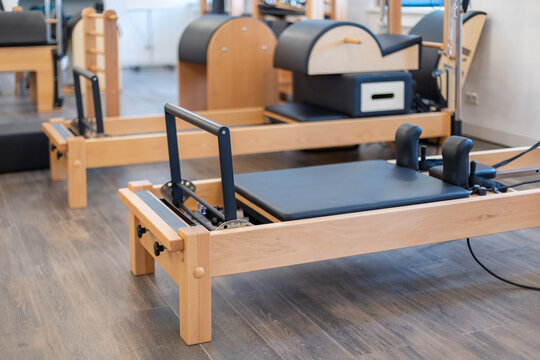
Manufacturers list dimensions, but buyers often focus only on length. A reformer's footprint includes its width and height as well. Length matters for the carriage travel and for lying fully extended, but width determines whether you can move around the machine, and height affects storage and visual space. Note the dimensions in both the folded and unfolded positions if the model folds. Also confirm the height of the carriage surface from the floor, since this affects how easily you can get on and off, especially for clients with limited mobility. Write these numbers down before you measure the room, so you are comparing like with like.
Measure the Room, Then Subtract the Clearances
The reformer's own dimensions are only the starting point. You need clearance on every side. Allow at least two feet at the head end for the ropes and pulleys to operate freely and for a trainer or user to stand. Allow two to three feet along at least one long side so you can mount, dismount, and adjust springs without squeezing. At the foot end, leave room for the carriage to travel and for foot strap access. If the reformer sits against a wall, confirm that the wall does not interfere with the ropes or the carriage return. Ceiling height matters too if you plan to use a tower or perform standing or elevated exercises. Measure the actual usable floor area, not the room's nominal dimensions, and subtract door swings, radiators, and built-in furniture.
Account for Movement and Access
A reformer that fits in place is not the same as a reformer you can use comfortably. Think about how you will move around it during a session—walking from one side to the other to adjust springs, reaching for props, or demonstrating an exercise. If you teach, you need space to observe the client from multiple angles. Also measure the path from the door to the intended location. Doorways, hallways, stairwells, and turns can block delivery even when the room itself is large enough. Measure the narrowest point of the delivery route and compare it with the reformer's packed dimensions, including the crate or box. For upper-floor installations, confirm stair width and landing space.
Consider Storage and Multi-Use Rooms
If the reformer will share space with other furniture or needs to be stored between sessions, measure the folded or standing footprint and the clearance needed to fold and unfold it. Folding models still require space to maneuver during the process. If the room doubles as a living area, think about sightlines and whether the machine will be visible from seating areas. A reformer that must be moved every session adds friction to your routine; measure whether a permanent or semi-permanent setup is realistic. For home users with limited space, a vertical storage option may be the deciding factor, but confirm the ceiling height required to stand it upright.
Check the Floor and Structural Considerations
Beyond horizontal space, consider what the floor can bear. A solid wood reformer can weigh well over a hundred pounds, and the dynamic forces during use add to that load. Most residential floors handle this without issue, but upper floors, older buildings, and lightweight structures deserve a second look. Check that the floor is level, since an uneven surface affects carriage tracking and spring response. If the reformer sits on a rug, confirm the rug does not slide or bunch under the frame. Also consider noise transmission to rooms below, particularly with aluminum frames, and whether a mat or platform is needed.
Measure for the Client, Not Just the Machine
If you train others, the room must accommodate the client's body as well as the equipment. Tall clients need more length for full extension. Clients with limited mobility need more space at the side for transfers and assistance. If you work with prenatal clients or older adults, ensure there is room for supportive props and safe mounting. The effective space requirement is the reformer plus the largest person who will use it plus your own working room as a trainer. Measure with the actual users in mind, not an average.
Make a Simple Floor Plan
Once you have the numbers, sketch a simple floor plan to scale. Mark the reformer's footprint, the clearances, doors, windows, and fixed furniture. This visual check often reveals conflicts that raw measurements miss—a door that opens into the training area, a window that prevents wall mounting, or a walkway that becomes too narrow. If possible, mark the footprint on the floor with tape and spend a few minutes moving around it as you would during a session. This low-tech test is surprisingly effective at exposing problems before delivery.
Conclusion
Measuring your space before buying a Pilates reformer is a small investment of time that protects a significant purchase. Measure the machine's full footprint, subtract generous clearances on every side, account for movement and delivery access, consider storage and floor conditions, and plan for the actual people who will use it. A reformer that fits the room and the routine will be used consistently; one that crowds the space or requires constant rearrangement will quietly discourage training. Measure twice, and the machine you choose will earn its place in your practice.