Palletizing Best Practices to Reduce Scratches and Frame Bending on Ocean-Shipped Pilates Cadillacs
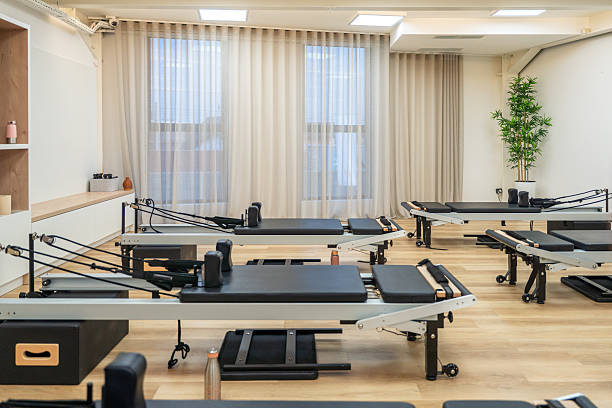
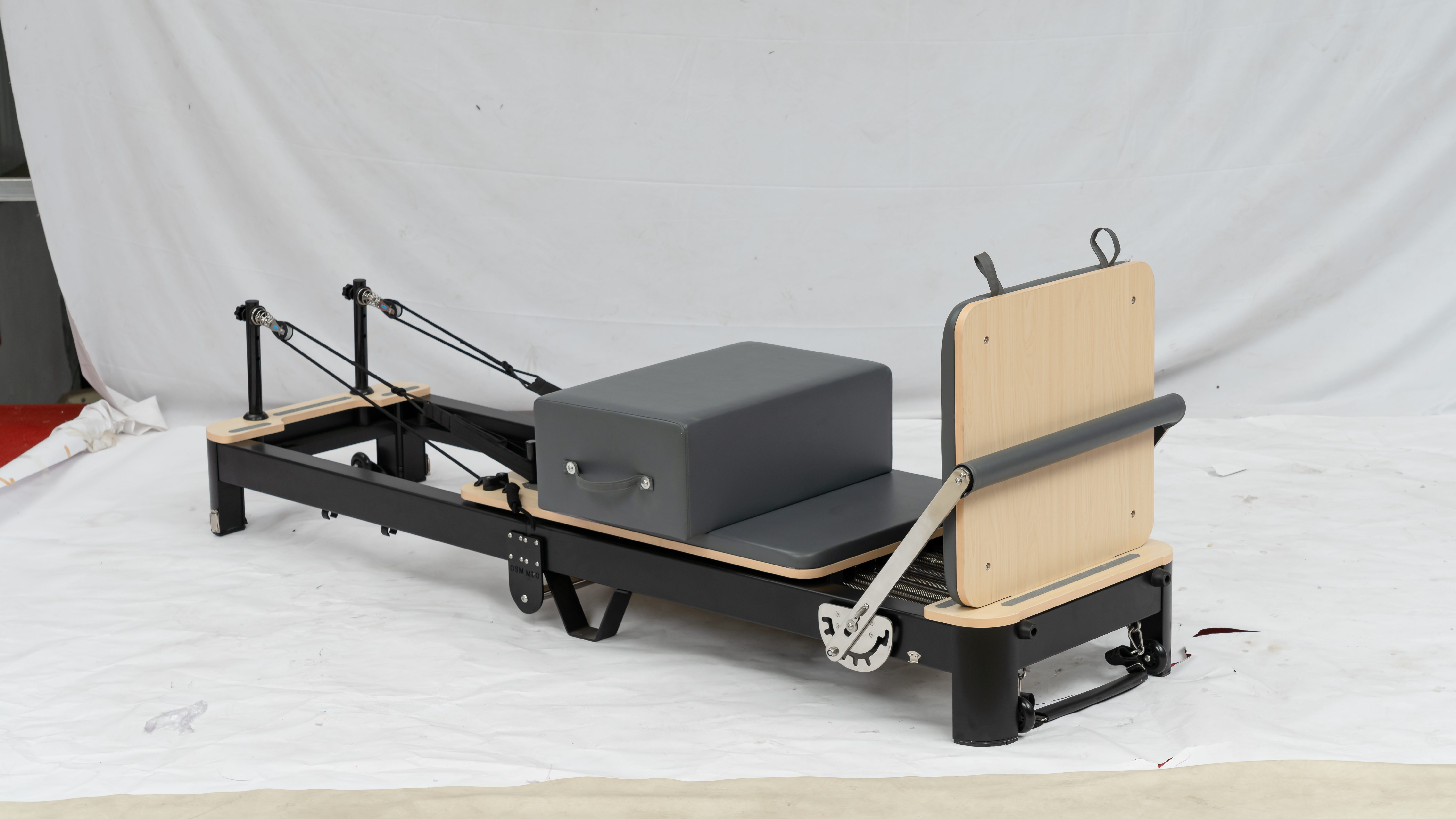
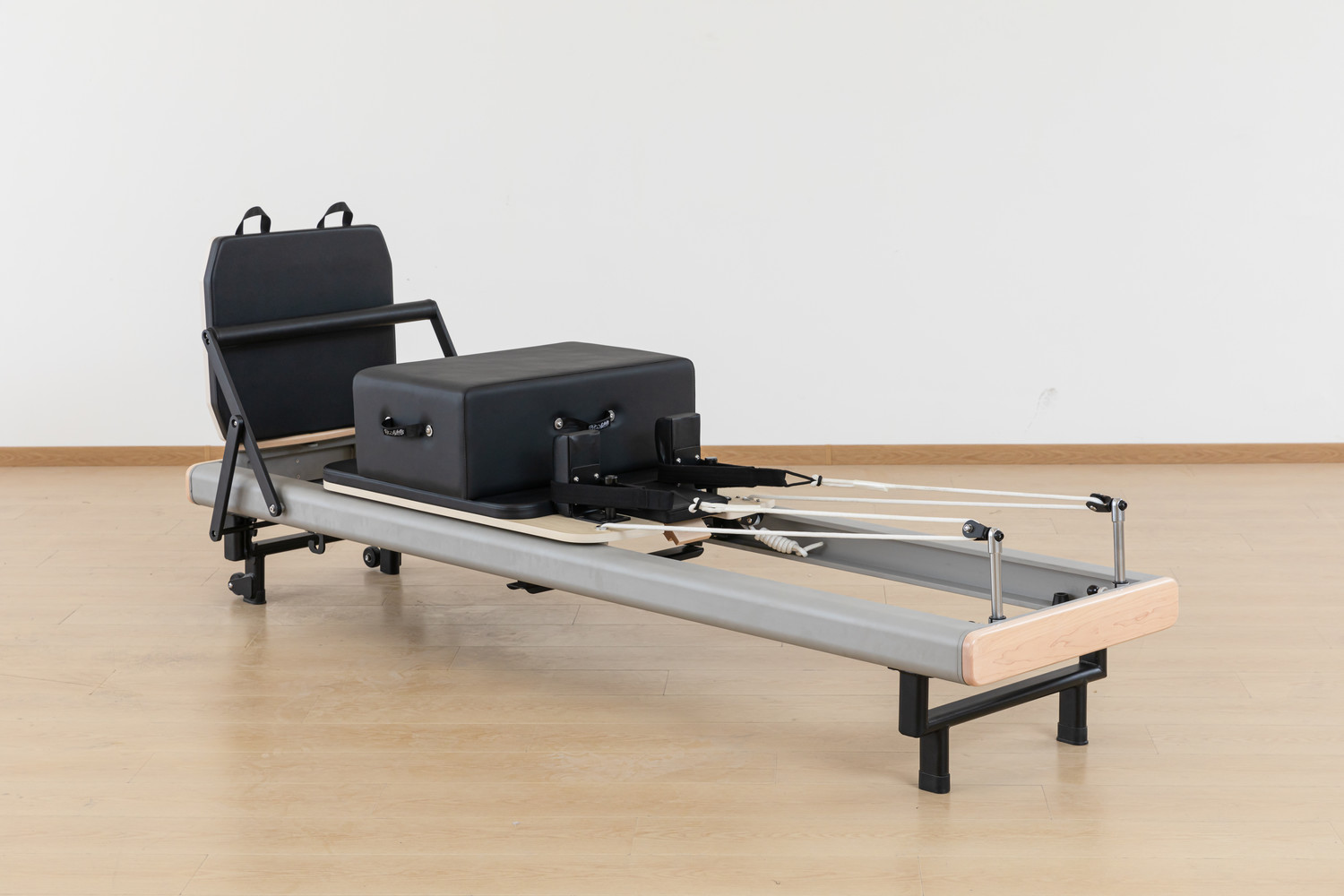
Pilates Cadillacs stand among the most challenging fitness apparatus to ship by ocean. Their long, open-frame construction, delicate wooden surfaces, protruding bars, adjustable uprights and spring attachment points create dozens of vulnerable contact zones. When poorly palletized, these units easily suffer cosmetic scratches, dented tubing, twisted crossbeams and permanent frame bending — damage that often only becomes visible after the container arrives at the destination port. For manufacturers and distributors serving European, North American and Southeast Asian studio clients, mastering palletizing for Cadillacs is not just a packing step; it directly cuts rejection rates, warranty claims, costly local repairs and brand reputation loss. This guide breaks down pallet design, component separation, load securing and container stacking rules built specifically for ocean transit.
Why Pilates Cadillacs Are Prone to Transit Damage
Unlike compact reformers or barrel equipment, the Cadillac’s skeletal layout creates unique risk factors during weeks of sea vibration, forklift handling and container shifting.
- Long, unsupported frame spans: The horizontal top and base rails can flex under uneven stacking pressure, leading to subtle but permanent bending. Once bent, pulley alignment, spring tension and locking pin fit are compromised.
- Exposed high-finish surfaces: Natural walnut, maple and stained hardwood frames scratch extremely easily against strapping, pallet edges, metal hardware or adjacent cargo.
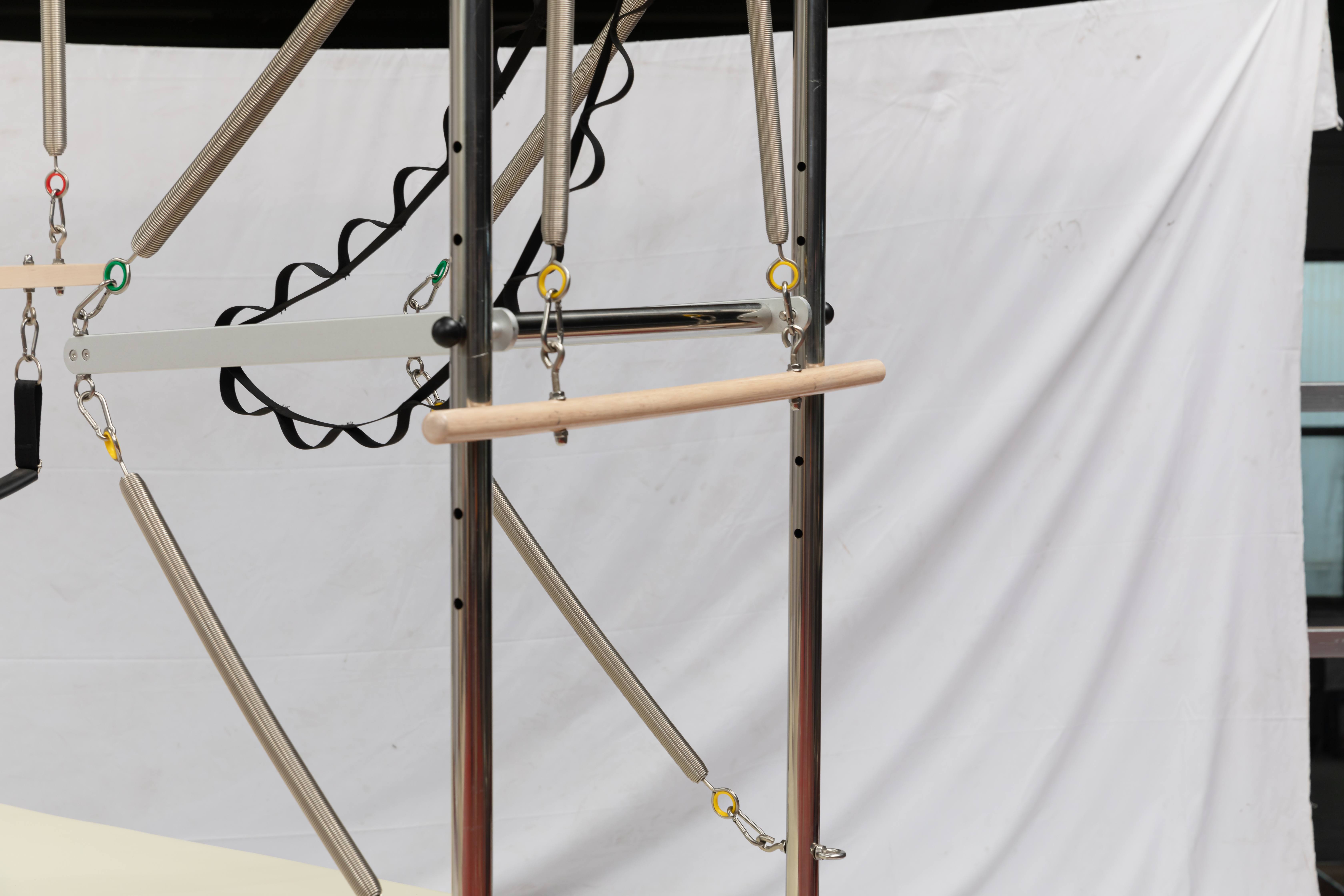
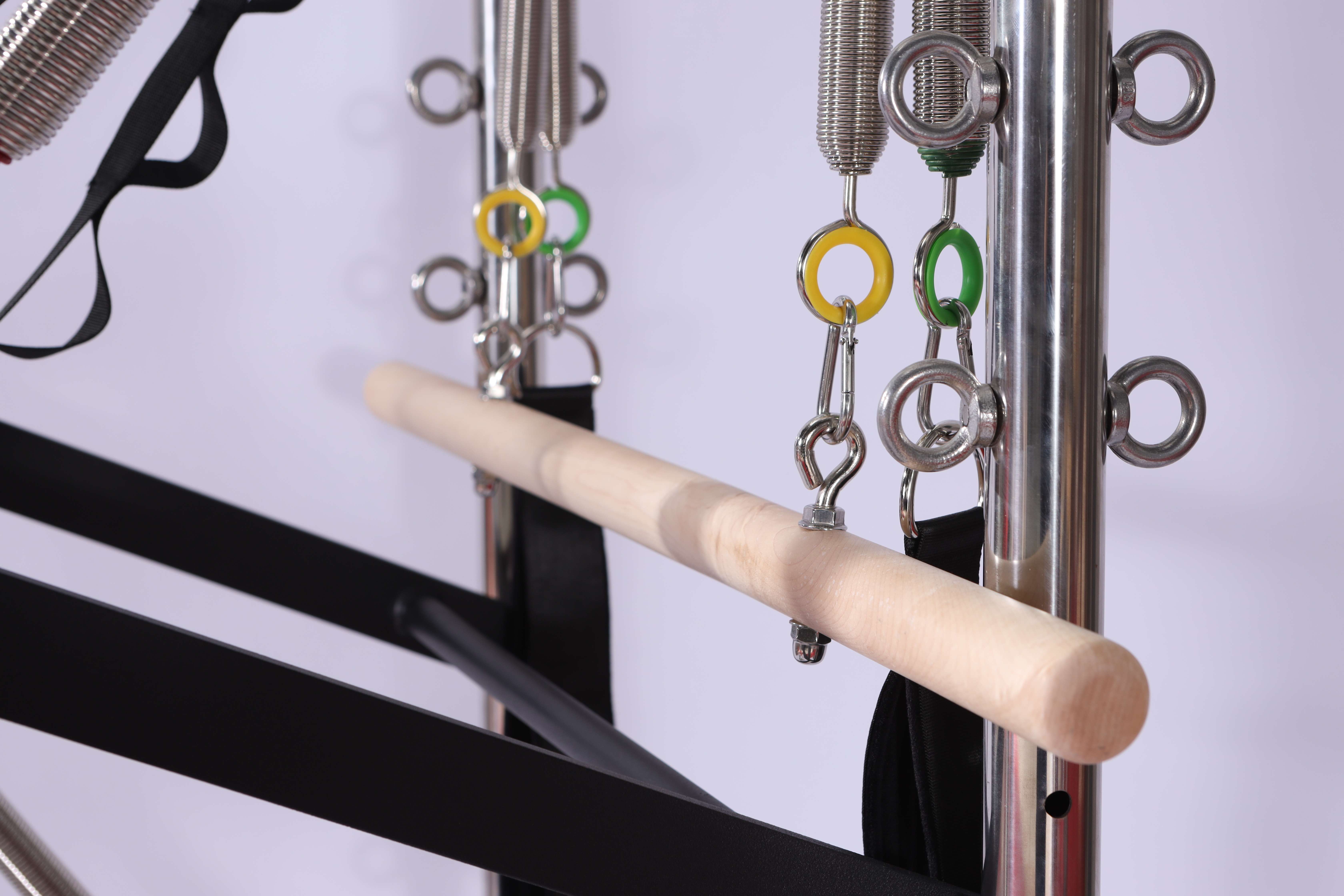
- Detachable protruding parts: Trapeze bars, push-through bars, roll-down straps, pulleys and spring hooks catch on other units during loading and transit.
- Uneven weight distribution: Heavy metal hardware clustered at one end creates tipping risks if the pallet is not balanced.
- Dynamic ocean vibration: Constant low-frequency movement at sea works loose inadequate fasteners and allows padded components to shift and rub against hard frame sections for thousands of kilometres.
Many factories make the mistake of treating a Cadillac like standard gym equipment: wrapping it in thin stretch film and bolting it loosely to a generic wooden pallet. This method works for rigid boxed goods, but it fails for open Pilates frame systems.
Pre-Pallet Preparation: Disassembly and Component Segregation
The first line of defence is controlled disassembly before pallet building. Do not ship a fully assembled Cadillac unless you have a custom shock-rated crating system.
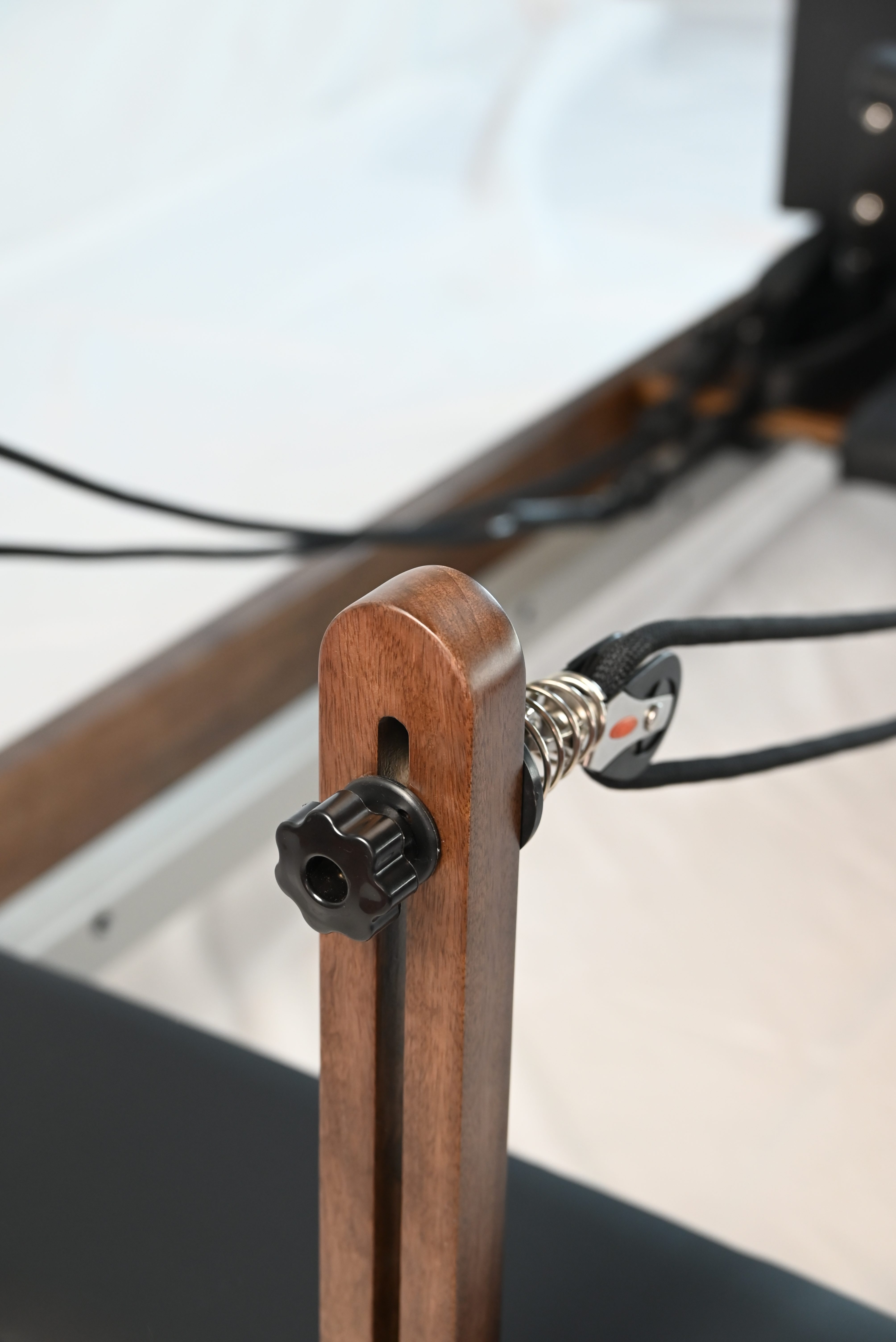
- Remove all modular accessories first: Take off trapeze bars, arm springs, leg springs, foot straps, hand grips, pulleys and safety chains. Place these smaller hardware sets into labelled, rigid corrugated bins lined with foam. Each bin should be assigned to its matching frame unit, with a packing list tucked inside. Separating these eliminates the single biggest cause of surface gouging.
- Detach removable uprights and crossbars where the design allows: If the Cadillac splits into base frame, vertical posts and top rails, separate these sub-assemblies. Label every connection point with matching tags so your client’s installation team can reassemble without guesswork.
- Cap every exposed threaded stud, bolt and pin: Use closed-cell foam caps or thick rubber protectors. Bare metal threads will abrade wood and PU padding during even minor movement.
- Surface protection for finished frames: Wrap all wooden frame members individually with closed-cell foam tubing, not just bubble wrap. Bubble wrap compresses quickly under sustained load and leaves circular indentations on varnished timber. For high-gloss clear-coat frames, add a layer of acid-free kraft paper between foam and wood to prevent chemical transfer and sticky residue after long heat exposure inside sealed shipping containers.
Custom Pallet Construction for Pilates Cadillac Frames
A standard one-way export pallet is rarely suitable. Build dedicated pallet bases engineered around the Cadillac footprint.
- Pallet base sizing: The pallet deck must extend fully under every frame support leg. Overhanging frame feet are the top cause of bending when forklift tines catch the unit or when another pallet is stacked partially on top.
- Solid blocking, not just skids: Fit hardwood support blocks directly beneath each load-bearing joint of the Cadillac base frame. Blocks transfer weight straight down to the pallet deck and eliminate unsupported frame spans. Avoid narrow stringers that create point pressure on thin frame tubing.
- Fumigation compliance: If shipping to EU, UK, Australia or North America, use heat-treated timber marked to ISPM 15. Untreated wooden pallets will be seized and destroyed at customs, and the cargo may be delayed or rejected.
- Pallet weight rating: Confirm the pallet can safely carry 150% of the gross weight of the packed Cadillac. Ocean stacking and forklift impact create transient load spikes far above static weight.
- Edge protection: Fit heavy cardboard or composite edge guards around the perimeter of the pallet deck to stop plastic strapping from cutting through foam wrapping and digging into frame edges.
Securing the Frame to Prevent Shifting and Bending
Strapping technique determines whether the frame stays fixed or gradually shifts during the voyage.
- Use polyester composite strapping instead of steel: Steel banding can dent wooden frames and shear foam protection when tightened too aggressively. Poly strapping has enough tension control and stretches slightly under shock, reducing sudden load spikes.
- Avoid direct strapping contact with the apparatus: Every strap must pass over foam-padded crossbars or pallet edge protectors. Never pull strapping directly across walnut or stained rails.
- Diagonal and vertical strapping pattern: Run straps both vertically over the frame and diagonally across the pallet deck to restrict side-to-side and rotational movement. Do not rely only on horizontal stretch film; stretch film is for dust containment, not load restraint on heavy fitness frames.
- Limit over-tightening: Over-tensioned straps are a frequent hidden cause of frame bending. The goal is to eliminate free play, not squeeze the frame rigidly. If you can see the wooden or metal rail deflecting when a strap is pulled, it is too tight.
- Anti-slip mats: Place rubber anti-slip sheeting between the Cadillac base and the pallet deck. This reduces the friction load on straps and stops the whole unit from creeping sideways under vibration.
Stacking Rules Inside the Ocean Container
Even a perfectly palletized Cadillac can fail if stacked incorrectly in the container.
- One high for most Cadillacs: Whenever possible, stack only a single layer of Cadillac pallets. Their long, flexible frames are not designed to carry superimposed pallet loads from other heavy fitness equipment. If stacking is unavoidable, use a heavy-duty intermediate load-spreading plywood sheet, and only stack a second pallet directly above the pallet’s support blocks, never over the open frame gaps.
- Align pallets flush against container walls and neighbouring cargo: Eliminate large empty voids. Loose space allows pallets to slide and collide during vessel pitching. Fill gaps with solid foam dunnage or inflatable airbags, not loose scrap cardboard.
- Heaviest pallets low and forward: Position the heaviest Cadillac bundles toward the front of the container, close to the door’s load centre. Place lighter accessory crates and spare parts bins on top of stable, fully boxed cargo, never resting across the Cadillac’s top rails.
- Separate wooden-finish Cadillacs from metal-heavy cargo: Keep steel reformer frames, dumbbell racks and raw metal shipments in a different section of the container. Fine metal dust generated by transit friction will embed into clear coat finishes and is extremely difficult to polish out once the container opens.
Moisture and Contamination Control
Ocean container condensation, known as container rain, ruins finishes and can warp timber Cadillac frames even when physical impact is avoided.
- Desiccant strips: Hang high-capacity container desiccants inside each palletized frame bundle, positioned so they do not touch wooden surfaces. For long 35–45 day ocean lanes, calculate desiccant volume based on total enclosed air space, not just a single small sachet per unit.
- Breathable wrapping: Do not seal the entire pallet in an airtight plastic shrink bag. Trapped moisture cannot escape and causes mildew, white bloom on varnish and timber warping. Use perforated stretch film or leave small ventilation gaps while protecting against salt spray and dirt.
- Silica gel packets inside hardware bins: Small metal pulleys and springs will develop surface rust if exposed to high humidity for weeks. Seal hardware containers with internal desiccant.
Inspection Checklist Before Container Loading
Build this final QC step into every Cadillac pallet shipment:
✅ Frame foam tubing fully covers all rails, no bare wood exposed
✅ All threaded studs and pins capped
✅ Detached hardware packed in labelled, foam-lined bins
✅ Cadillac base sits fully on pallet support blocks, no frame overhang
✅ Strapping runs over protectors, no direct contact with finished surfaces
✅ No visible deflection or bending in frame rails after securing
✅ Anti-slip sheet fitted under the base
✅ ISPM 15 pallet mark visible for regulated import markets
✅ Desiccants installed and secured away from frame surfaces
✅ Pallet load test: firm push test shows zero side-to-side shift
✅ Photos taken of the fully secured pallet for freight claim evidence
Common Palletizing Mistakes That Generate Claims
Many repeat damage issues trace back to these shortcuts:
- Relying solely on stretch wrap to hold a heavy Cadillac frame.
- Mounting the frame to a pallet with only two central support blocks, leaving long rails unsupported.
- Leaving trapeze and push-through bars attached, which swing and gouge the wood during transit.
- Over-tightening straps until frame crossbeams bow.
- Stacking other pallets over the open, unsupported sections of the Cadillac frame.
- Using bubble wrap as permanent primary protection, which collapses and abrades the finish.
- Mixing polished timber Cadillacs with loose metal cargo without separation.
- Skipping desiccant on long ocean routes, leading to warped timber and rusted spring hardware.
Final Takeaway
For Pilates distributors, a scratched or bent Cadillac is uniquely costly. Unlike a scuffed reformer, Cadillac frame geometry directly impacts the safety and function of springs, pulleys and therapeutic movement patterns. Investing in purpose-built pallet bases, modular disassembly, foam isolation and controlled strapping reduces damage rates dramatically. The goal of good palletizing is not merely to hold the unit in place, but to isolate the delicate finished frame from vibration, point pressure, shifting loads and moisture across the full ocean transit cycle.
When your factory establishes a repeatable Cadillac palletizing standard, you protect your margin, reduce after-sales repair work, and deliver the premium studio-grade quality your buyers expect when they order high-value Pilates apparatus for rehabilitation and commercial class spaces.