What Is a Pilates Stability Chair? Use Cases, Load Ratings and Bulk Purchase Tips for Distributors
Also widely known as the Wunda Chair, the Pilates stability chair is a compact, spring-loaded staple in commercial Pilates programming. Built around one or two spring-loaded foot pedals, padded seat and stable base, it delivers controlled resistance for lower-body, core, shoulder and spinal mobility work without the large footprint of a reformer. For distributors serving boutique studios, rehab clinics and multi-purpose wellness spaces, it is one of the highest-margin, fastest-moving SKUs in the Pilates equipment lineup. This article breaks down its core use cases, critical load and safety specifications, common quality pitfalls, and practical bulk-buy guidance to help you source reliably and sell confidently.
Core Overview: How a Pilates Stability Chair Works
The standard commercial stability chair features a solid frame, upholstered seat cushion, spring system connected to a pedal assembly, and optional handles or shoulder supports. Split-pedal models are preferred by professional instructors because each pedal operates independently, enabling unilateral work for strength asymmetry correction. Single-pedal versions are simpler, lower-cost and suited for beginner-focused studios or home add-on sales.
Unlike reformers, stability chairs are footprint-efficient. Most commercial units occupy roughly 0.4–0.6 m² of floor space. That compact profile makes them easy to cluster in small private training rooms, line up along studio walls, or move into storage between sessions. The resistance comes from colour-coded steel springs, not elastic bands; quality chairs offer interchangeable springs to adjust tension for rehabilitation clients, beginner group classes and advanced athletic training.
Key Studio & Clinical Use Cases
1. Private Rehabilitation and Injury Recovery
This is the stability chair’s strongest application. Its seated, supported starting position reduces spinal compression while allowing controlled loading of hips, knees, ankles and shoulders. Physiotherapists and rehab-focused Pilates studios use it for post-surgery mobility, lower-back care, shoulder impingement management and gait retraining. Clients with limited mobility, seniors and overweight participants often feel safer starting on a chair than on a reformer.
2. Small Group Chair Classes
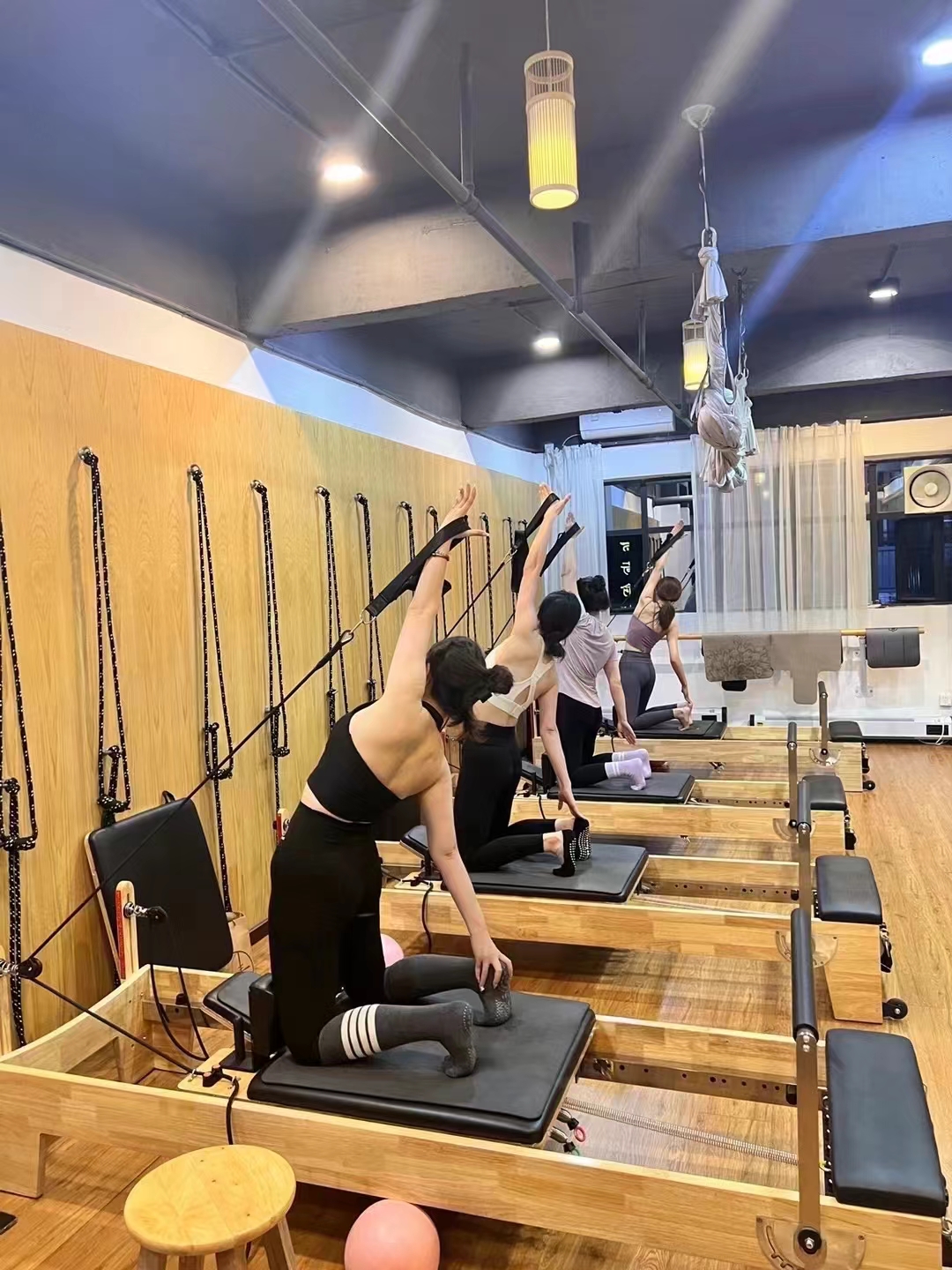
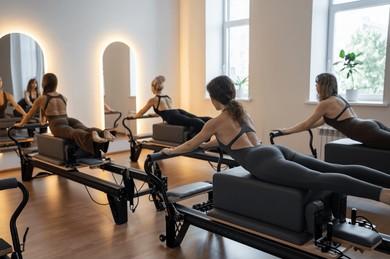
Many boutique studios run dedicated chair sessions of 4–6 participants. These classes focus on glute strength, hip control, scapular stability and core sequencing. Because chairs take up so little room, a 20 m² training zone can host a full small group without crowding instructors. For distributors, this creates repeat bulk orders as studios scale their chair class timetable.
3. Complementary Reformer & Tower Programming
Top studios treat stability chairs as add-on tools rather than standalone equipment. Instructors insert chair work into reformer sessions to isolate weak links: ankle mobility, hamstring control, pelvic stability and shoulder dissociation. Studios that already own reformers and towers frequently add chairs to expand their repertoire without renting a larger space.
4. Pop-Up Classes, Corporate Wellness and Mobile Training
Lightweight chair models with transport wheels are ideal for off-site events, gym sublet spaces and travelling instructors. They are simpler to assemble, pack and transport than full reformers, opening a secondary customer segment beyond fixed brick-and-mortar studios.
Load Ratings, Safety Standards and Non-Negotiable Specs
Load rating is where many budget suppliers mislead buyers, and where distributors need to be crystal clear with their customers. The published static user weight limit is not the same as the dynamic cyclic load the chair sees during repeated pedal impact.
- Home-grade stability chair: Typically rated 100–120 kg. These are not suitable for commercial studio use. Hinges, spring anchors and pedal mounts fatigue quickly under daily back-to-back classes.
- Commercial-grade stability chair: Minimum recommended user load rating of 130–150 kg. Reliable manufacturers test frames, spring attachments and pedal mechanisms for thousands of loading cycles to meet commercial wear demands.
- European import compliance: Chairs sold to EU studios must comply with EN 957 fitness equipment safety standards. This covers pinch-point protection, frame stability under offset loading, spring containment and upholstery flammability requirements. Suppliers should provide a Declaration of Conformity alongside each bulk shipment to avoid customs hold-ups and liability risks for studio operators.
Additional specs to verify before quoting:
- Spring construction: Piano wire steel springs, colour coded, individually replaceable. Avoid elastic cord alternatives for commercial sale.
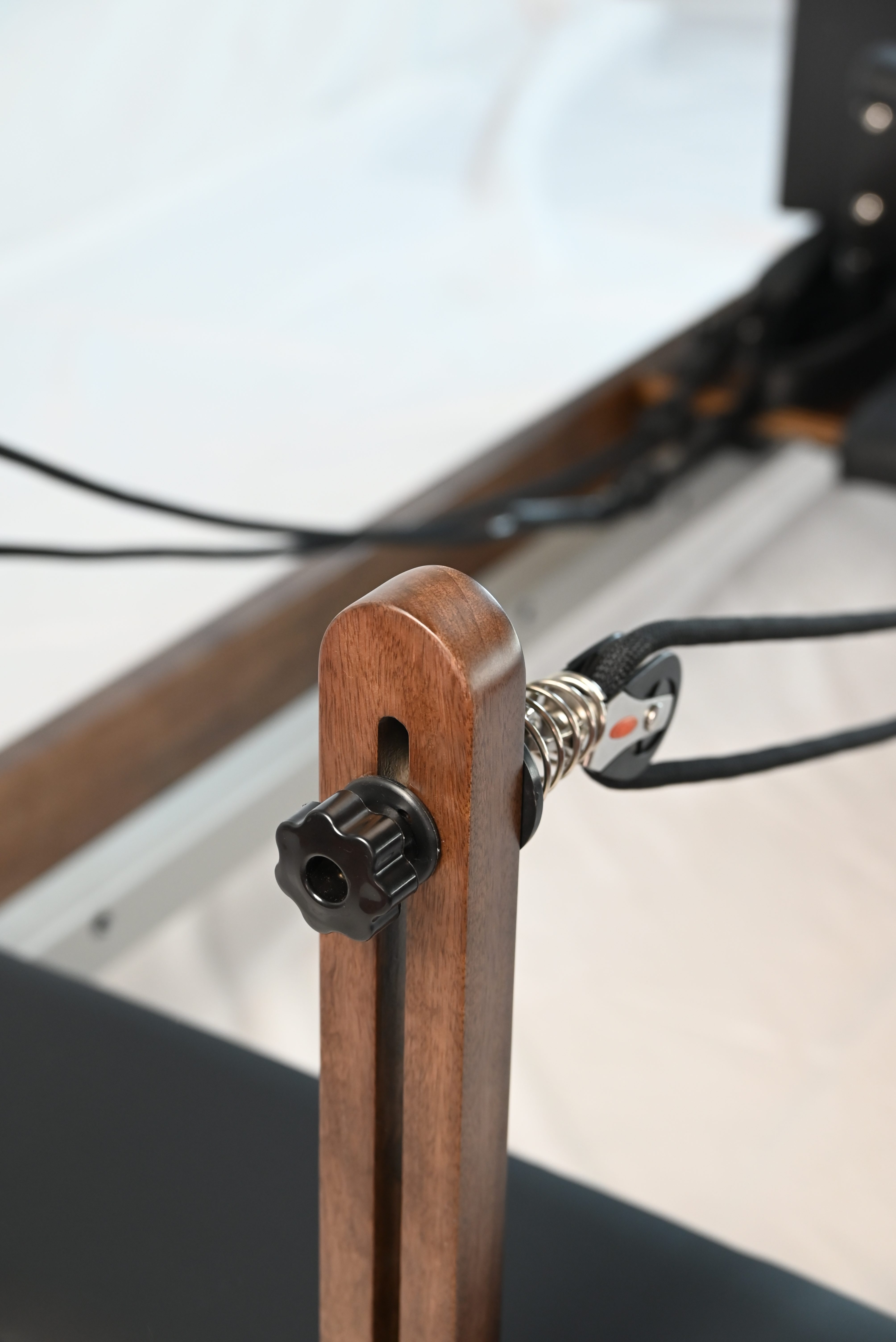
- Frame material: Solid oak or maple delivers premium aesthetic and quiet operation; aluminum is lighter for mobility; steel is low-cost but heavier and prone to rust in humid studios.
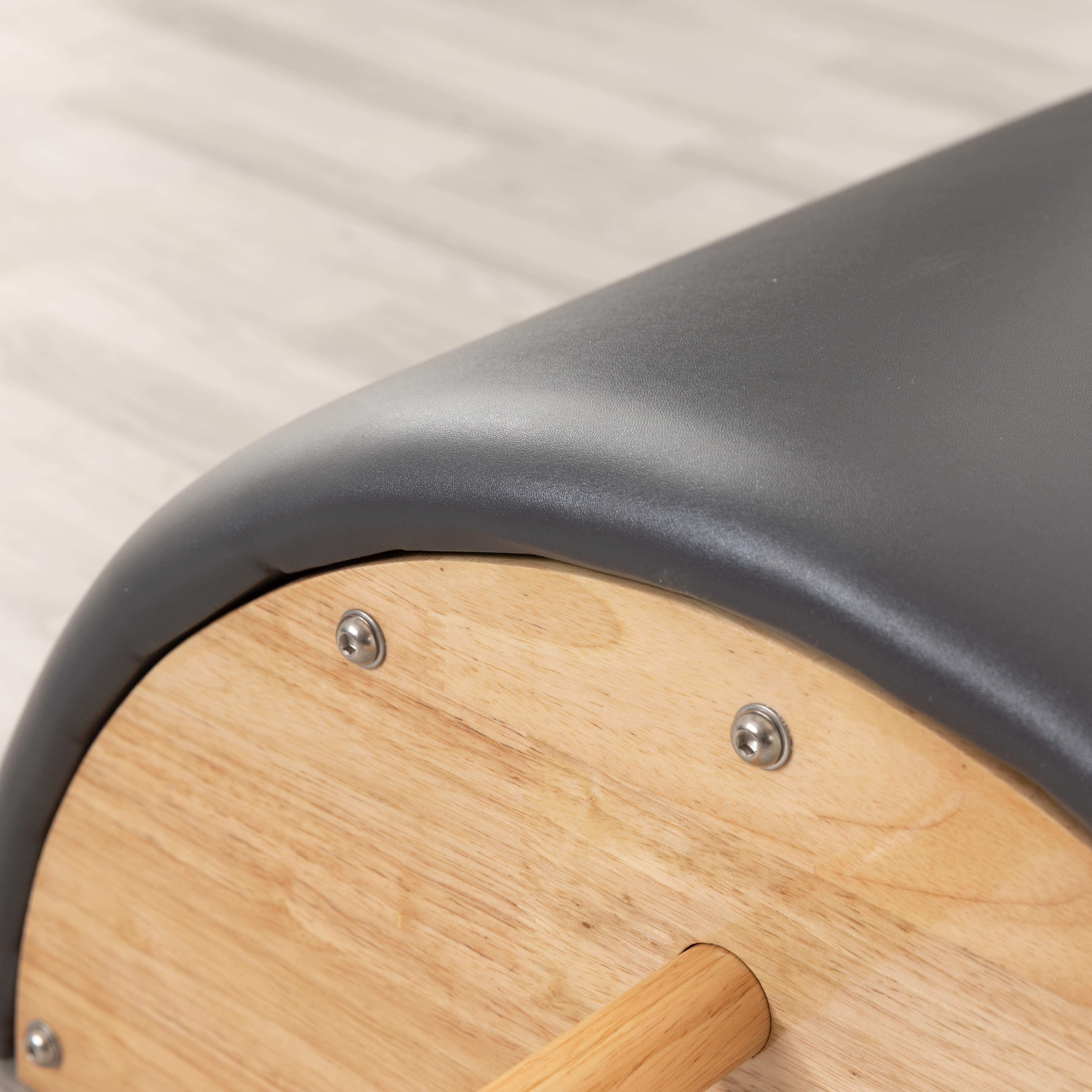
- Upholstery and foam: Sweat-resistant PU upholstery paired with high-density blue foam. Reinforced edge stitching prevents tearing from frequent client transfers.
- Pedal design: Non-slip surface, smooth hinge action, no metal pinch gaps around the spring housing.
- Warranty segmentation: Frame warranty, spring warranty and upholstery warranty should be listed separately. Moving pedal and spring anchor points are high-wear items; clarify whether warranty covers normal cyclic wear.
Stability Chair vs Reformer: Where It Fits in Your Product Portfolio
Distributors often struggle to position chairs correctly to customers. Use this simple positioning framework:
- Sell reformers when studios want full-body, flowing repertoire and dedicated reformer rooms.
- Sell stability chairs when studios need compact rehab tools, small group add-ons, or low-investment equipment to expand service offerings.
- Bundle chairs with reformers, jump boards and wall towers as a “studio starter package.” Bundles lift average order value and reduce the customer’s friction of sourcing from multiple vendors.
Bulk Purchase Tips for Pilates Distributors
1. Lock in Spec Consistency Across the Batch
Stability chairs have many small variable parts: spring tension, pedal height, upholstery colour, wood stain finish and shoulder rest dimensions. When ordering 10 units or more, demand a pre-production sample sign-off and a written spec sheet. Variations in spring tension between chairs will frustrate instructors and generate returns. Confirm whether your quote includes standard accessories like extra springs, shoulder blocks and hex key service kits.
2. Plan Container and Pallet Efficiency
Chairs stack well when properly palletized, but protruding pedals and shoulder supports waste container space. Work with your manufacturer to confirm nested packaging or detachable shoulder rests for ocean shipments. Ask for packaged dimensions and gross weight per unit before finalizing your FCL/LCL plan, so you avoid overbooking cargo or unexpected freight costs. Also confirm ISPM 15 heat treatment for wooden pallets for European and UK imports.
3. Negotiate Tiered Pricing and Spare-Part Stocking
Volume discounts usually kick in at 5, 10 and 25+ units. Beyond unit price, negotiate a spare parts allocation: springs, latches, pedal bushings and upholstery repair kits. Keeping a small spare-parts inventory locally cuts service turnaround time and builds loyalty with studio clients. Ask the supplier for spare-part price lists upfront rather than ordering replacements after a failure occurs.
4. Prepare Sales Support Assets for Your Team
Instructors buy based on demo and repertoire, not spec sheets alone. Request from your manufacturer:
- High-resolution side-by-side photos of single-pedal vs split-pedal models
- Short demo videos showing beginner, rehab and advanced chair sequences
- Clear safety data sheets and EN 957 compliance documents
- White-label catalog options if you serve resellers
These assets reduce your pre-sales workload and help your customers sell faster to their own studio members.
5. Build Clear Risk Disclosures Into Your Quotation
Explicitly separate commercial-grade and home-grade models on your price list. Do not market a 120 kg home chair for studio use. State load rating, cycle testing standard and warranty exclusions (abuse, improper assembly, worn springs from normal use) in every quotation. This is the most effective way to reduce disputes over defects after delivery.
6. Optimize Lead Time for Peak Studio Opening Seasons
Stability chairs are often last-minute add-ons when a studio finalizes its layout. Many distributors stock a small safety stock of popular chair models to capture urgent orders, while placing larger scheduled production runs for the spring and autumn studio launch peaks. Confirm supplier lead time, production scheduling flexibility and acceptable cancellation windows before committing large orders.
Common Mistakes Distributors Make When Sourcing Stability Chairs
The first and most costly error is prioritizing low price over pedal and spring hardware. Cheap chairs may look identical in photos, but poorly fitted pedal bearings develop play and wobble after a few months of daily classes. Instructors will reject them quickly, and your brand reputation suffers.
Second, overlooking assembly complexity. Some models arrive semi-knocked down. If your local technicians are responsible for final assembly, verify that the manufacturer provides clear assembly manuals and labelled parts. Missing hardware or ambiguous instructions can delay studio openings.
Third, ignoring regional market preference. European rehab studios lean toward split-pedal, maple-framed chairs with formal certification documents. Budget gyms and beginner studios may prefer simpler single-pedal aluminum versions. Matching the model to your buyer segment improves conversion.
Final Thoughts
The Pilates stability chair is not a secondary “small accessory.” It is a versatile, low-footprint revenue driver for both studios and their distributors. When you understand its rehab and group-class use cases, sell only properly rated commercial units, and structure bulk orders around consistent specs, spare parts and compliance documentation, you create a reliable product line that brings repeat bulk orders year after year. For any distributor building a balanced Pilates equipment catalog, the stability chair deserves a permanent spot alongside reformers, cadillacs and ladder barrels.